Showing posts with label Celts. Show all posts

May 28, 2016

British Celts have more steppe ancestry than British English

An interesting tidbit in a preprint about blood pressure genes:
We consistently obtained significantly positive f4 statistics, implying that both the modern Celtic samples and the ancient Saxon samples have more Steppe ancestry than the modern Anglo-Saxon samples from southern and eastern England. This indicates that southern and eastern England is not exclusively a genetic mix of Celts and Saxons.
Southeastern England is genetically very homogeneous. If the people there were a mix of ancient Celts and Saxons you'd expect them to be intermediate between modern Celts (who should have more Celtic ancestry than the modern English) and ancient Saxons (who should have more Saxon ancestry than the modern English).

But, it seems that the English have less steppe ancestry than both modern Celts and ancient Saxons, so they're not really intermediate. My guess is that the English have Norman ancestry that the Celts don't. While the original Normans were Scandinavians with presumably lots of steppe ancestry, I'd be surprised if the post-1066 Normans that settled England were not already heavily admixed with the "French" and so had less steppe ancestry than the modern British Celts from Wales and Scotland.

bioRxiv http://dx.doi.org/10.1101/055855

Population structure of UK Biobank and ancient Eurasians reveals adaptation at genes influencing blood pressure

Kevin Galinsky et al.

Analyzing genetic differences between closely related populations can be a powerful way to detect recent adaptation. The very large sample size of the UK Biobank is ideal for detecting selection using population differentiation, and enables an analysis of UK population structure at fine resolution. In analyses of 113,851 UK Biobank samples, population structure in the UK is dominated by 5 principal components (PCs) spanning 6 clusters: Northern Ireland, Scotland, northern England, southern England, and two Welsh clusters. Analyses with ancient Eurasians show that populations in the northern UK have higher levels of Steppe ancestry, and that UK population structure cannot be explained as a simple mixture of Celts and Saxons. A scan for unusual population differentiation along top PCs identified a genome-wide significant signal of selection at the coding variant rs601338 in FUT2 (p=9.16×10⁻⁹). In addition, by combining evidence of unusual differentiation within the UK with evidence from ancient Eurasians, we identified new genome-wide significant (p less than 5×10⁻⁸) signals of recent selection at two additional loci: CYP1A2/CSK and F12. We detected strong associations to diastolic blood pressure in the UK Biobank for the variants with new selection signals at CYP1A2/CSK (p=1.10×10⁻¹⁹)) and for variants with ancient Eurasian selection signals in the ATXN2/SH2B3 locus (p=8.00×10⁻³³), implicating recent adaptation related to blood pressure.

Link

July 28, 2012

Complex Y chromosome structure in East Tyrol (and more IE thoughts)

Cultural diversity can disappear in a few generations, but genetic diversity -barring major genocides or disasters- usually persists.

The East Tyrol region in Austria has been Germanic-speaking since the Middle Ages, but historical evidence documents the presence of Romance, Germanic, and Slavic groups in its territory. How can we untangle the origin of the different groups when they are all jumbled up together now, and all Germanic-speaking? Previous research has shown that patrilineal groups can be isolated on the basis of surnames, but in the case of East Tyrol, the wide adoption of surnames happened after the region had become linguistically Germanic.

The authors of the new paper exploited the structure of local toponyms, in particular pasture names. The figure on the left shows the concentrations of Slavic (panel A), Romance (panel B), and Germanic (panel C) pasture names. While Germanic pasture names are evenly distributed, there is a contrast between those of Slavic and Romance origin. From the paper:
From the 853 analyzed pasture names in East Tyrol 71% were derived from Germanic (Bavarian) etymons, 17% from Slavic etymons, and 12% from Romance etymons. While pasture names with Germanic etymons were evenly distributed in high density within the whole study area the names with Slavic etymons were spatially focused in the east and north of East Tyrol (Fig. 2). Geographically, these are the lower Drau, Isel, Kals, Virgen and the Defereggen valleys (Fig. 1). No names with Slavic etymons were found in the southwestern Puster valley (Fig. 2). The pasture names with Romance etymons focus mainly in the southern part of East Tyrol (Gail, Puster, and Villgraten valley, Fig. 2). The slight northeastward trend observed in the distribution of Romance etymons is solely caused by the Kals valley, a medieval Romance linguistic enclave, which was separated from the Romance main territory in the 10th century [36]. On the basis of these results, East Tyrol was divided into two regions of former Romance (Puster, Gail, and Villgraten valley; region A) and Slavic (Isel, lower Drau, Defereggen, Virgen, and Kals valley; region B) main settlement (Fig. 2).
The authors dissected the occurrence of different haplogroups in the two contrasting regions (A: Romance, and B: Slavic) in some great detail:

Splitting the East Tyrolean population sample into regions A and B resulted in a partitioning of haplogroups E-M78, R-M17, R-M412/S167*, and R-S116*. E-M78, R-M17 and R-S116* Y chromosomes were exclusively found in region B whereas samples assigned to R-M412/S167*, R-U106/S21, and R-U152/S28 reached higher frequencies in region A (Fig. 3, Table S7). When attributing the samples to the fathers' and grandfathers' places of birth/residence, as reported by the participants, practically identical patterns were obtained for most of the haplogroups (Fig. 3). 
Y chromosomes belonging to haplogroups G-P15, I-M253, and J-M304 showed much lower regionalization in their frequencies (Fig. 3) at all three generation levels.

The non-localization of the G-P15, I-M253, and J-M304 seems reasonable as these may represent what is common in these populations (and one could indeed speculate -on the basis of current ancient DNA knowledge- that they correspond to Neolithic, Paleolithic, and Bronze Age processes respectively)

Two of the most interesting findings are:
Haplogroup R-M412/S167* was found at low frequencies in the combined East Tyrolean sample. However, the R-M412/S167* chromosomes were sorted by the subdivision of the study area and reached in region A levels of ~14% whereas their frequency in region B was well below the 5% threshold. At the probands and fathers level of analysis region A featured approximately fourfold higher frequencies of these chromosomes than region B. This ratio changed to about nine when placing the samples at the grandfathers' places of birth/residence. These contrasts remained statistically significant after correcting for multiple comparisons [22] at the fathers and grandfathers analysis level.
and:
The western border of the geographic expansion of haplogroup R-M17 Y chromosomes is to be found in Central Europe and largely follows the political border separating present-day Poland (57%) and Germany (East: ~30%, South: ~14%, West: ~10%) [42]. Frequencies of about 15% and 10% were also found for Austria [18] and North-East Italy [48], respectively. In South Italy and in West Europe R-M17 chromosomes are not present at informative frequencies. 
In this study, the proportion of Y chromosomes carrying the derived M17 allele was 14.1%, a value that nearly perfectly matched those reported for West Austria (North Tyrol, 15.4%) and South Germany (Munich; 14.3%) [18], [42]. However, haplogroup R-M17 was completely absent in the East Tyrolean sub-sample from region A, but made up to 16% in region B. This result remained practically unchanged when assigning the probands to their respective fathers' or grandfathers' places of birth/residence (Fig. 3).
The new study reinforces my belief that R-M17 was not originally present in the Italo-Celtic branch of Indo-European. Together with the paucity of the same lineage in Albanians (~5%), Armenians (less than 5%), and its quite uneven distribution in Greeks, it is becoming increasingly clear that R-M17 may represent a late entrant that affected minimally southern and western Europe.

The fountain of its spread was probably a trans-Caspian (?) Central Asian staging point that followed a counter-clockwise route into Europe that spawned the northern (Germanic and Balto-Slavic) groups of Europe and the Indo-Iranians, who remained longer in their BMAC homeland, finally breaking down during the 2nd millennium BC. This would also harmonize with the increasing evidence for complementary R-M17 distributions in Europe and Asia, associated with the Z93 marker. 


It might appear that Z93+ chromosomes may track the later expansion of the Indo-Iranian world. I have observed before that R-M17 seems distributed in a long arc north and east of the Caspian, and it is perhaps in different points along this arc that the dominant European (NW) and Asian (SE) types emerged out of the early Neolithic population.

Combining this insight with an analysis of Y chromosome variation within the Graeco-Armeno-Aryan group, it appears that Graeco-Armenian is characterized predominantly by J2+R1b related lineages, while Indo-Iranian by J2+R1a related lineages. The evidence for Tocharian would involve J2+R1b related lineages.  Overall, it would appear that the earliest J2 core of PIE affected two different groups of populations living on complementary sides of the Caspian:

  • The trans-Caspian R-M17 population followed an early (3rd, or late 4th millennium BC?) north-west trajectory into Europe (associated with northern European groups such as Balto-Slavic and Germanic) as well as a later expansion (2nd millennium BC? associated with climatic deterioration in BMAC) that brought Iranian speakers to the steppe, as well as to Iran, and Indo-Aryans to South Asia.
  • The cis-Caspian, trans-Caucasian R-M269 population followed an early (late 4th millennium, early 3rd millennium?) expansion into Europe, probably together with J2 in the Balkans (Graeco-Phrygian, perhaps Thracian), and arriving in the form of Bell Beakers in Western Europe (Italo-Celtic), as well as a later (2nd-1st millennium BC?) expansion to the east (Tocharians)
This long excursus was necessary as a preamble to an explanation on what happened in Europe itself, which brings us back to the topic of the current paper:

  • The lack of structure between regions A and B with respect to haplogroup J, together with the great difference in levels of this haplogroup between Italy and the Celtic world,  suggests that Italian J-related lineages  may have been inflated in proto-historical and historical times. There are candidates a-plenty: Greeks, Etruscans, Trojans to name but three. Excess of J in Italy, relative to the Celtic world, clearly relates to the abundant traditions of eastern origins for the historical groups of Italy.
  • It would appear that during proto-history, most of Europe was dominated by three sets of IE people (R-M269 in the west, who had transmitted Proto-Celto-Italic; R-M17 in the northeast of Proto-Balto-Slavic speech, and Proto-Germanic in-between, participating in both worlds, and --appropriately-- often linked with either Italo-Celtic or Balto-Slavic linguistically)
  • There were other (now-extinct) groups as well: the Illyrians vs. Thracians in the Balkans with complementary Y chromosome distributions, the former including an extra chunk of aboriginal legacy (haplogroup I), no doubt due to the much more difficult terrain of the western Balkans. These are contrasted with our final group, the Greeks who straddled three worlds (the Paleo-Mediterranean world of the first farmers, the Thraco-Phrygian world linked to the Indo-Iranians at a deeper level, and the Anatolian world)
The boundaries between these various groups were a little blurred in the course of history. But, apparently, they were still a little clearer during the Middle Ages, and probably much clearer before the Völkerwanderung of the Germans, and the expansion of the Slavs.


Geneticists are executing a remarkable pincer movement, zeroing in on the period of European ethnogenesis from both the remote past and the present: through a study of ancient DNA from the dawn of history, they are beginning to understand how Europe was peopled, layer after layer of settlement; and through the study of surnames and toponyms they are drilling ever deeper into the pre-genealogical past. Together with much anticipated technological progress related to full genome sequencing and ancient DNA extraction, it will not be long before the history of Europe will be laid bare in remarkable detail.

PLoS ONE 7(7): e41885. doi:10.1371/journal.pone.0041885

Pasture Names with Romance and Slavic Roots Facilitate Dissection of Y Chromosome Variation in an Exclusively German-Speaking Alpine Region

Harald Niederstatter et al.

The small alpine district of East Tyrol (Austria) has an exceptional demographic history. It was contemporaneously inhabited by members of the Romance, the Slavic and the Germanic language groups for centuries. Since the Late Middle Ages, however, the population of the principally agrarian-oriented area is solely Germanic speaking. Historic facts about East Tyrol's colonization are rare, but spatial density-distribution analysis based on the etymology of place-names has facilitated accurate spatial mapping of the various language groups' former settlement regions. To test for present-day Y chromosome population substructure, molecular genetic data were compared to the information attained by the linguistic analysis of pasture names. The linguistic data were used for subdividing East Tyrol into two regions of former Romance (A) and Slavic (B) settlement. Samples from 270 East Tyrolean men were genotyped for 17 Y-chromosomal microsatellites (Y-STRs) and 27 single nucleotide polymorphisms (Y-SNPs). Analysis of the probands' surnames revealed no evidence for spatial genetic structuring. Also, spatial autocorrelation analysis did not indicate significant correlation between genetic (Y-STR haplotypes) and geographic distance. Haplogroup R-M17 chromosomes, however, were absent in region A, but constituted one of the most frequent haplogroups in region B. The R-M343 (R1b) clade showed a marked and complementary frequency distribution pattern in these two regions. To further test East Tyrol's modern Y-chromosomal landscape for geographic patterning attributable to the early history of settlement in this alpine area, principal coordinates analysis was performed. The Y-STR haplotypes from region A clearly clustered with those of Romance reference populations and the samples from region B matched best with Germanic speaking reference populations. The combined use of onomastic and molecular genetic data revealed and mapped the marked structuring of the distribution of Y chromosomes in an alpine region that has been culturally homogeneous for centuries.

Link

March 08, 2012

A first look at the genome of the Tyrolean Iceman

Thanks to the publication of the Tyrolean Iceman's (reconstructed on the left) genome sequence, by Keller et al. (2012), I have been able to include him in a joint analysis with 2,671 other individuals, previously assembled for the K7b and K12b calculators of the Dodecad Project.

I have essentially repeated the unsupervised ADMIXTURE analysis from scratch, with two differences:
  • The dataset now includes Oetzi, and
  • The number of markers has been reduced to 44,435 by intersecting the 166,770 SNPs used in K7b/K12b with the SNPs available for Oetzi
I had predicted that Oetzi would turn out "Mediterranean" in his genomic profile, and the published analysis seems to have confirmed this by discovering that his closest modern kin are Sardinians, a Mediteranean population. Sardinians are usually modal for the various "Mediterranean", and "Atlantic_Med" components inferred by the Dodecad Project.

Thankfully, the ADMIXTURE analysis in both the K=7 and the K=12 case, resulted in the same solution as in K7b and K12b, despite the inclusion of Oetzi and the fact that a smaller number of markers were used. There are slight variations in the admixture proportions compared to the K7b/K12b numbers, and an expected increase in "noise levels" in the minor components, but the overall solution appears to be the same.

The results for Oetzi and the reference populations, including Dodecad populations with 5+ members are included in the spreadsheet.


Below, I will briefly comment on them.

K=7


Oetzi turns out to be 51.9% "Southern" and 43.1% "Atlantic_Baltic" in the K=7 analysis, with noise levels of the other components. The salient point is that he seems to be lacking the "West Asian" component, unlike most Europeans, except Basques and Sardinians, who have:

Basques: 27.6% "Southern" and 69.5% "Atlantic_Baltic"
Sardinians: 46.2% "Southern" and 52% "Atlantic_Baltic"

So, Oetzi does appear to be most Sardinian-like in this analysis, and indeed to be a little more "Southern" than extant Sardinians. This is consistent with Keller et al. (2012) which finds him to cluster with Sardinians and to be a bit more "southern" (in PCA space) than Sardinians.

K=12

Oetzi turns out to be 57.7% "Atlantic_Med" and 22.3% "Caucasus" in this analysis. Once again, this makes him quite similar to Sardinians who are 64.9% "Atlantic_Med" and 21.3% "Caucasus". Two components are salient in their absence: the "Gedrosia" component which is present in non-Sardinian modern Italians, and the "North_European" component which is also present in the same.

Discussion


If we compare Oetzi with modern Europeans, he certainly appears to be most Sardinian-like. If we compare him to modern Italians (the samples N_Italian_D, North_Italian, as well as the neighboring Tuscan, TSI30, and C_Italian_D) populations, he appears to possess many of the same components (including Atlantic_Med, Caucasus, Southwest_Asian, and Northwest_African in non-trace quantities).

This of course does not indicate that Oetzi was of "mixed" ancestry, since ADMIXTURE components are but imperfect reflections of ancestral populations. It does, however, indicate that his profile consisted of many of the same elements found in Italy today, but in different proportions. Moreover, any additional or "exotic" ancestry in Oetzi cannot have existed in substantial amounts so as to render the inferred proportions (in terms of modern populations) nonsensical.

The three exceptions to this rule are the "West_Asian" component in K=7 and the "Gedrosia"/"North_European" components in K=12, which are conspicuous in their absence. And, given that all three of these have their present-day center of weight in more eastern longitudes, we can be fairly certain that present-day Italians have been affected by people from the east, by one or more routes.

This is, again, reasonable, and in agreement with the observation of Keller et al. (2012) -pictured on the left- that the Iceman occupies a "western"/"southern" position relative to modern Italians, and is consistent with the idea that modern Italians were formed by an eastward shift (in the case of more southern Italians) and a northeastward shift (in the case of more northern Italians).

We can have near-absolute certainty that a "North European" element was present in northernmost Italy by at least the first half of the first millennium BC, the time of the Hallstatt culture of Central Europe and of historical references about the arrival of Celts in Cisalpine Gaul. Oetzi is dated to the latter half of the 4th millennium BC. Hence, there is an intervening period of about 2.5k years between the two; it will be interesting to sample individuals from that time period to see when -within that time interval- the arrival of this trans-Alpine element occurred. It will also be very interesting to sample individuals from further north, east, and west, to ascertain the full spatial extent of "Oetzi-like" individuals during the early Copper Age.

Similarly, we can be certain that more "eastern" elements were present in Southern Italy by at least the time of the Greek colonization, which occurred at much the same time as the arrival of the Celts in the north. However, since all Italians are eastward shifted relative to Oetzi, even those from furthermost north, it is likely that the eastward shift of modern Italians preceded the historical colonization and that some of the myths preserved by Roman and Greek writers about eastern origins of various pre-archaic Greek and pre-Etruscan Italian peoples may hold an element of truth.

At present, we are disadvantaged by the fact that we are trying to place ancient individuals within a modern genetic landscape. Oetzi's genome suggests the fluidity of this landscape as we move into the past. Thankfully, it is all but certain that we will soon obtain full genome sequences from other prehistoric and historic individuals from different spots in space and time, so our understanding of how West Eurasians came to be is only bound to improve.

March 05, 2011

Celto-Germans vs. Balto-Slavs

Here are the first two dimensions of a multidimensional scaling plot of the following samples:
  • Dodecad Ancestry Project: 6 Poles, 12 Russians (Russian_D), 11 Germans, 19 Scandinavians, 6 Mixed Slavs (various West and East Slav combinations), 17 Britons, 17 Irish
  • HGDP: 25 Russians from Vologda
  • Behar et al. (2010): 10 Lithuanians, 9 Belorussians
Applying MCLUST over these first two dimensions and with K=2, the following breakup of individuals ensues:

It's fascinating that Cluster #1 (which corresponds to the assortment of individuals on the left of the MDS plot) includes only Balto-Slavic individuals (65 in total), while Cluster #2 (on the right, includes all 64 Celto-Germanic individuals plus 2 Poles and a mixed Slav.

This surprising concordance is even more striking once we consider that one of the "mixed Slavs" in my sample may be of Prussian origin within present-day Poland. I will be happy to tell the Poles in my sample which cluster they belong to if they write to me at the Dodecad Project e-mail address.

A lot has transpired since the ancient ethnographers divided the little-known peoples of the far north into Keltoi and Skythai, or since the Franco-Russian anthropologist Deniker divided the light-pigmented Northern Europeans into a race nordique and a race orientale. So, it is a bit surprising to see that a basic division of northern Europeans into East and West has stood the test of time. (*)

(*) Minus the Finnic peoples of northeastern Europe who, as has become clear, owe their genetic distinctiveness to a Siberian element in their ancestry, tying them to their linguistic cousins in the east.

December 04, 2010

Y-chromosome gene pool of Western Slavs

Interesting tidbit from the paper:
Age calculations based on evolutionary and pedigree
mutation rates gave significantly different date estimates,
5.5–8.0 and 2.3–3.4 ky, respectively. In our opinion,
the age calculations of the subcluster R1a1-WSL
based on the pedigree mutation rate appear to be more
consistent with the archeological record, as well as with
the limited distribution of this Y-STR subcluster in
Europe.
So, this paper, together with two other papers on Roma, and the one on Maronites, is added to my recent enumeration of cases where the pedigree (or germline, or genealogical) mutation rate gives better results than the "evolutionary" rate. Since both analysis of the Y-STR mutation model and empirical data suggests the superiority of the pedigree rate, it is perplexing why the evolutionary rate continues to persist in the literature.

Getting back to the paper:
Southern parts of present Poland were under Celtic influence. In the second century B.C., the Celts arrived in southern Poland via the Moravia and Bohemia regions, where they prevailed with their La Te`ne culture from the fifth century B.C. Therefore, it is probable that the R1a/R1b proportion varied in those regions according to the degree of influence of one population or another (i.e., Slavic or
Celtic).
I recently suggested a possible Celtic or Germanic link with some R1b subclades, and the presence of both R-U106 and R-U152 clades in Western Slavs (from the Myres et al.) paper suggests that both processes may have been important. It will be interesting to see ancient DNA studies confirm/disprove these hypotheses about an ethnic affiliation of particular Y-chromosome lineages.

American Journal of Physical Anthropology DOI: 10.1002/ajpa.21253

Similarities and Distinctions in Y Chromosome Gene Pool of Western Slavs

Marcin Wozniak et al.

Analysis of Y chromosome Y-STRs has proven to be a useful tool in the field of population genetics, especially in the case of closely related populations. We collected DNA samples from 169 males of Czech origin, 80 males of Slovakian origin, and 142 males dwelling Northern Poland. We performed Y-STR analysis of 12 loci in the samples collected (PowerPlex Y system from Promega) and compared the Y chromosome haplotype frequencies between the populations investigated. Also, we used Y-STR data available from the literature for comparison purposes. We observed significant differences between Y chromosome pools of Czechs and Slovaks compared to other Slavic and European populations. At the same time we were able to point to a specific group of Y-STR haplotypes belonging to an R1a haplogroup that seems to be shared by Slavic populations dwelling in Central Europe. The observed Y chromosome diversity may be explained by taking into consideration archeological and historical data regarding early Slav migrations.

August 25, 2010

R1b founder effect in Central and Western Europe

Post will be updated after I read the paper. (Last Update: Aug. 29)

UPDATE I:

From the paper:
The ages of various haplogroups in populations were estimated using the
methodology described by Zhivotovsky et al,30 modified according to Sengupta
et al,10 using the evolutionary effective mutation rate of 6.9 x 10^-4 per 25 years.
The accuracy and appropriateness of this mutation rate has been independently
confirmed in several deep-rooted pedigrees of the Hutterites.
Of course readers of the blog are aware that I disagree with the use of the evolutionary rate. My comments on the Hutterites paper will be posted separately after I read it. I will simply say that there are numerous cases where the use of the genealogical rate makes better sense of the evidence than use of the "evolutionary" rate. Off the top of my head, the genealogical rate harmonizes with the Genghis Khan cluster, the expansion of Na-Dene speakers into the Americas, the expansion of Balto-Slavic, the Bronze Age spread of Semitic speakers, in accordance with the linguistic evidence, the expansion of Bantu in Angola, more recent British surnames, the formation of Arabian kingdoms, Greek colonization of Sicily, and the Bronze Age origin of Indo-Aryans and Finno-Ugrians (and I skipped a few).

UPDATE II (Aug 26):

Here is the phylogeny of R-M207 from the paper. For reference, the R-M207 page from ISOGG.


UPDATE III (Aug 26):

Going through the material in this paper in a systematic manner is not easy, so I will probably do a potpourri of updates covering various topics of interest.


As noted in the other recent paper, and shown in the above Figure from the current one, R-U106 peaks in northern Europe. Its frequency (including the R-U198 sublineage) is 36.8% in the Netherlands, 20.9% in Germany and Austria, 18.2% in Denmark, 18.2% in England, 12.6% in Switzerland, 7.5% in France, 6.1% in Ireland, 5.9% in Poland, 5.6% in north Italy 4.4% in Czech Republic and Slovakia, 3.5% in Hungary, 4.8% in Estonia, 4.3% in south Sweden, 2.5% in Spain and Portugal, 1.3% in eastern Slavs, 0.8% in south Italy, 0.6% in Balkan Slavs, 0.5% in Greeks (i.e. 2 of 193 Cretans, and no mainland Greeks), 0.4% in Turks, 0% in Middle East.

The age of R-U106 is estimated by the authors as 8.7ky BP, which translates to about 2.5ky BP with the germline rate. The existence of R-U106 as a major lineage within the Germanic group is self-evident, as Germanic populations have a higher frequency against all their neighbors (Romance, Irish, Slavs, Finns). Indeed, highest frequencies are attained in the Germanic countries, followed by countries where Germanic speakers are known to have settled in large numbers but to have ultimately been absorbed or fled (such as Ireland, north Italy, and the lands of the Austro-Hungarian empire). South Italy, the Balkans, and West Asia are areas of the world where no Germanic settlement of any importance is attested, and correspondingly R-U106 shrinks to near-zero.

UPDATE IV (Aug 26):

Another informative lineage, as noted in the other recent paper as well is R-U152:


Of interest is the fact that while
R-U152 has a clear French-Italian center of weight, the locations exhibiting highest STR variance are Germany and Slovakia, i.e., Central Europe. My guess is that R-U152 originated in Central Europe spreading to the west and south, perhaps with Italo-Celtic speakers or some subset thereof. In its home territory of Central Europe, its frequency decreased by the introduction of the Germanic and Slavic speaking elements which dominate the region.

Irrespective of what the ultimate origin of R-U152 is, it provides us with a good diagnostic marker for population movements out of the French-Italian area. In Italy for example it is noted at 26.6% for the north and 10.5% in the south. It would be extremely interesting to see its occurrence in Balkan Vlachs, as this would confirm/disprove the Italian component in their origin. However, R-U152 occurs in 7.3% of Cretans, suggesting introgression Y-chromosomes of North Italian (Venetian) origin, from the 4-century period of Venetian rule of the island. It also occurs in 4.1% of Greeks, where it might come from any period since the Roman annexation of the Hellenistic states to the Vlachs. However, its presence at only 1.8% of Romanians makes a large Italian contribution to the Romanian population unlikely. Balkan R-U152 chromosomes should be better resolved to determine when they arrived from the northwest.

The paucity of R-U152 in Turks (0.6%) make tales of wandering Galatians less likely to be true. There is no doubt that Galatians settled in Anatolia, but they were probably so few in numbers that they did not permanently alter the population. Knowledgeable readers should chime in about the Lebanese Christian R1b which was posited as a signature of the Crusades a couple of years ago, and its position in the phylogeny.

UPDATE V (Aug 26):

The most commong R1b subgroup in Europe is R-M269 and the most common subgroup is R-L23 which encompasses the vast majority of European R-M269 chromosomes. It is interesting to see where R-M269(xL23) is concentrated. In Europe I see cases in Germany, Switzerland, Slovenia, Poland, Hungary, Russia, the Ukraine. It is most prominent, however, in the Balkans, where every population except Croatia mainland (N=108) possesses it. In the Caucasus it does not exist except in the northeast. In Turkey and Iran there is some, albeit it is not clear in which regions.

UPDATE VI (Aug 27):

The authors write with respect to haplogroup R-V88:
With the exception of rareincidences of R1b-V88 in Corsica, Sardinia13 and Southern France(Supplementary Table S4), there is nearly mutually exclusive patterning of V88 across trans-Saharan Africa vs the prominence of P297-related varieties widespread across the Caucasus, Circum-Uralic regions, Anatolia and Europe. The detection of V88 in Iran, Palestine and especially the Dead Sea, Jordan (Supplementary Table S4) provides an insight into the back to Africa migration route.
Haplogroup R-V88 has been the subject of a recent study and was associated with the migration of Chadic speakers in Africa. It is difficult to say whether or not the authors' results really provide any insight into an alleged movement of this haplogroup from Asia to Africa, as it occurs in only a single Palestinian, and a single Iranian. Neither is the higher frequency (13.7%) observed in the Amman and Dead Sea area of Jordan really evidence of its antiquity there.

Neither the aforementioned paper nor the current one presents any evidence (e.g., Y-STR variance) for any great antiquity of the Asian R-V88 with respect to the African one. Indeed, with the exception of the aforementioned Jordanian sample, R-V88 is rare in Asia, while it is widespread in African Berbers. I see no clear reason at present to think that it migrated to Africa from Asia, and not to think of it as a relic of an older, widely dispersed R1b population leading to R-V88 in Africa itself.

UPDATE VII (Aug 28):

The paper repeats the standard claims about the origin of R1b and its main sublineage R-M269 in Asia, but presents no new information that would support this claim. With the state of the evidence, I see no real reason to prefer a West Asian to a Southeastern European origin for this haplogroup.

I don't give much credence to small differences in Y-STR variance, due to the large confidence intervals associated with such estimates, and it is interesting that the authors do not present an argument from Y-STR variation about the origin of R1b, preferring to make broad statements about Mesolithic-Neolithic movements into Europe.

A study of supplementary table S2 which gives coalescent times reveals that there is no clear pattern of greater Asian diversity within haplogroup R1b or its subclades. And, while Central-Western Europe does appear to be an outgrowth of R1b rather than a place of origin (with the dominance of derived R-M412 lineages) there is nothing in the paper that would make one prefer West Asia to Southeastern Europe as a place of origin.

Personally I think the issue cannot be settled yet, but there are reasons to prefer the latter option. An Asian origin of R1b has a major parsimony hurdle: it would require a seemingly directed drang nach westen for R1b, into Europe, and into North Africa, with a paucity of R1b in the opposite direction (among Arabians and to the south and in South Asia) and a scattering of very young R-M73 and R-M269 to the east of Europe.

UPDATE VIII (Aug 29):


R-S116 shows maximum Y-STR diversity in France and Germany but maximum frequency in Iberia and the British Isles. In the latter region it is represented mainly by R-M529 with the R-M222 subclade being particularly prominent in Ireland but also North England. It would be interesting to see data for Scotland, and I do not doubt that R-M222 would be prominent there as well. R-S116 also shows signs of being a Celtic, or Celtiberian-related lineage.

European Journal of Human Genetics doi: 10.1038/ejhg.2010.146

A major Y-chromosome haplogroup R1b Holocene era founder effect in Central and Western Europe

Natalie M Myres et al.

The phylogenetic relationships of numerous branches within the core Y-chromosome haplogroup R-M207 support a West Asian origin of haplogroup R1b, its initial differentiation there followed by a rapid spread of one of its sub-clades carrying the M269 mutation to Europe. Here, we present phylogeographically resolved data for 2043 M269-derived Y-chromosomes from 118 West Asian and European populations assessed for the M412 SNP that largely separates the majority of Central and West European R1b lineages from those observed in Eastern Europe, the Circum-Uralic region, the Near East, the Caucasus and Pakistan. Within the M412 dichotomy, the major S116 sub-clade shows a frequency peak in the upper Danube basin and Paris area with declining frequency toward Italy, Iberia, Southern France and British Isles. Although this frequency pattern closely approximates the spread of the Linearbandkeramik (LBK), Neolithic culture, an advent leading to a number of pre-historic cultural developments during the past ≤10 thousand years, more complex pre-Neolithic scenarios remain possible for the L23(xM412) components in Southeast Europe and elsewhere.

Link

May 10, 2009

ESHG 2009 abstracts

ESHG 2009 is in two weeks, and there are some very interesting abstracts, including a tantalizing new study on Y-chromosome haplogroup R1b1b2 (R-M269).

Phylogeography of human Y chromosome haplogroup R1b1b2 (R-M269) in Europe
F. Cruciani et al.

The human Y chromosome haplogroup R1b1b2 (R-M269) displays an extremely wide geographic distribution within Europe, with a decreasing frequency cline from Iberia (frequencies up to 90%) towards the Balkans (usually less than 10%). Previous studies have proposed that the observed R1b1b2 frequency cline is due to a population expansion from an Iberian Ice-age refugium after the LGM (Malaspina et al. 1998; Semino et al. 2000).

In this study, we explored the phylogeography of the human Y chromosome haplogroup R1b1b2 by analyzing more than 2,000 males from Europe. The haplogroup-defining marker M269 (Cruciani et al. 2002), and two additional internal markers (U106 and U152, Sims et al 2007) which identify internal branches (R1b1b2g and R1b1b2h) were analyzed. The paragroup R1b1b2*(xR1b1b2g, R1b1b2h) and the haplogroups R1b1b2g and R1b1b2h showed quite different frequency distribution patterns within Europe, with frequency peaks in the Iberian Peninsula, northern Europe and northern Italy/France, respectively. The overall frequency pattern of R1b1b2 haplogroup is suggestive of multiple events of migration and expansion within Europe rather than a single and uniform spread of people from an Iberian Ice-age refugium.

References:

Malaspina et al. (1998) Am J Hum Genet 63:847-860
Semino et al. (2000) Science 290:1155-1159
Cruciani et al. (2002) Am J Hum Genet 70:1197-1214
Sims et al. (2007) Hum Mutat 28:97
Note that in the abstract below, the authors refer to Slavopaionians, not Macedonians.

Y chromosome haplogroup R1a is associated with prostate cancer risk among Macedonian males
D. Plaseska-Karanfilska et al.

Prostate cancer (PC) is one of the most common male-specific cancers. Its incidence varies considerably between populations. Recent surveys suggest that PC is influenced by both genetic and environmental factors, although the etiology of the disease remains unknown in the majority of cases. Certain Y chromosomal lineages have been suggested to predispose individuals to prostate cancer in Japanese population, but no association has been found among Korean and Swedish patients. The aim of this study was to investigate the association between Y chromosomal haplogroups and predisposition to prostate cancer in Macedonian men. We studied 84 PC patients and 126 males from the general population of Macedonian ethnic origin. A total of 28 markers have been studied by multiplex PCR and SNaPshot analysis. Nineteen different Y haplogroups were determined; the most frequent being I1b-P37b, E3b1-M78, R1a-SRY 1532, R1b-P25 and J2b1a-M241. The frequency of R1a was significantly higher in PC patients (20.2%) in comparison with the controls (9.5%) [p=0.027; OR=2.41 (1.09-5.36)]. When stratified according to age, even stronger association was observed between haplogroup R1a and prostate cancer in patients of >65 years of age [p=0.004; OR=3.24 (1.41-7.46)]. Our results suggest that Y chromosome haplogroup R1a is associated with an increased prostate cancer risk in Macedonian men.


The genetic position of Western Brittany (Finistère, France) in the Celtic Y chromosome landscape
K. Rouault et al.

Brittany, a large peninsula located at the western part of France, is of particular interest because of its historical settlement and its relative geographic and cultural isolation. Brittany was invaded by waves of migration from Britain and Ireland between the 4th and 7th centuries and, therefore, belongs to the Brythonic branch of the Insular Celtic language. We have focused our study on the department of Finistère, the most western territorial unit of Brittany, and its administrative and historical areas. To explore the diversity of the Y-chromosome, we analyzed a total of 348 unrelated males using a combination of 23 biallelic markers and 12 microsatellite loci. The molecular analysis revealed that 82.2% of the Y chromosomes fell into haplogroup R1b, placing Finistère within the Western European landscape. Interestingly, at a microgeographical level, differences were detected by the haplogroup R1a* being confined to the south of the department, while haplogroups E3b, F, G, J2, K and R1a1 were found in the north. Nevertheless, geographical distribution of haplogroups and haplotypes suggested territorial homogeneity inside Finistère. Most of the Y-chromosomal gene pool in Finistère is shared with European, especially British, populations, thus corroborating the historical reports of ancient migrations to Brittany. Finally, the results are consistent with those obtained from classic genetic markers and support the Celtic paternal heritage of the Finistère population.

Mitochondrial Genome Diversity in Tungusic-speaking Populations (Even and Evenki) and Resettlement of Arctic Siberia After the Last Glacial Maximum
I. O. Mazunin et al.

The present study includes the Even/Evenki, hunters and reindeer-breeders, sampled from a few localities scattered across their vast geographic range encompassing low Yana-Indigirka-Kolyma in the west and the Sea of Okhotsk coast in the east. The mtDNA data show a very close affinity of the Even/Evenki with the Yukaghir, typical reindeer hunters, dominating in extreme northeastern Siberia until the middle of 18th century but now being on the brink of extinction. We found that the majority of mtDNA diversity in the Tungusic-speaking populations was accounted for by Siberian-East Eurasian lineages C2, C3, D2, D3, D4-D9 and G1. The similarity in the haplogroup C and D mtDNA intrinsic variation between the Even and Yukaghir populations is pronounced and indicates that the Even/Evenki harbor an essential portion of the ancestral Yukaghir pool. The phylogeography of the D4-D9 point to an early Neolithic phase expansion initiated northward to the northern and eastern perimeters of former Beringia. Concerning unique D2* lineage (Volodko et al. 2008), the network analysis encompassing four complete sequences, three of the Yukaghir from the low Indigirka-Kolyma region and one of the Evenk from the upper reaches of the Aldan River would suggest that the founding haplotype (1935-8683-14905) for D2* originated within western part of former Beringia. In the meanwhile, the core of the Even/Evenki mtDNA pool residing in the midst of the Yukaghir ancient territory would represent a recent amalgamation of the remnants of the Yukaghir and northern Tungusic-speakers (Even/Evenki) originated in the mid-Amur region.

X-chromosomal haplotypes in global human populations
V. A. Stepanov, I. Y. Khitrinskaya;

To reconstruct the origin and evolution of X-chromosomal lineages in global human populations we investigated the genetic diversity in 23 population samples (about 1500 individuals totally) using SNP markers in a single linkage disequilibrium region of ZFX gene. About sixty haplotypes belonging to 3 phylogenetic branches (A, B, and F) originated from the single African root were found in the total sample. Branch A includes mostly African haplotypes, whereas four major haplotypes belonging to different sub-branches of B (haplotype E8) and F (haplotypes H4, I3 and I11) were present in Eurasia. Major haplotype of the older branch B (E8) is almost evenly distributed among Eurasian populations. Haplotypes of the younger phylogenetic branches demonstrates clinal distribution with the sharp frequency changes from East to West. Haplotype H4 is presumably “Eastern-Eurasian”. It reaches the highest frequency in Eastern and South-Eastern Asians. Haplotypes I3 and I11 in the contrary show the clear frequency gradient from West to East with the highest frequency in Europeans, moderate frequency in Central Asia, and the minimal frequency in North-East and South-East Asia. The total level of genetic differentiation of global human populations estimated by the analysis of molecular variance of X-chromosomal haplotypes (Fst = 9.1%) is quite high and roughly corresponds to those measured for most other types of genetic markers except Y-chromosomal haplogroups which are characterized by the much higher level of between-population differences.

Dissecting the genetic make-up of Central Eastern Sardinia using a high density set of sex and autosomal markers

L. M. Pardo

Genetic isolates are valuable for identifying genetic variations underlying complex traits. However, prior knowledge of the genetic structure of the isolate is fundamental for carrying-out genome-wide association studies (GWAS) in these populations. The Sardinian population is currently the target of GWAS because of its ancient origin and long-standing isolation. To perform GWAS in Sardinia, we aim to characterize a subpopulation from the archaic area of Central-Eastern Sardinia at the genomic level. We used sex-specific markers (Y-chromosome and mtDNA) to assess the heterogeneity of the founder lineages and the divergence from other populations. In addition, we used a dense set of autosomal markers (SNP 5.0 array, Affymetrix) to investigate genome-wide Linkage Disequilibrium, to construct a Copy Number Variation map and to estimate pair-wise kinship and inbreeding.We first determined Y-chromosome lineages in 256 unrelated Sardinians using biallelic and microsatellite markers. Our analysis showed that the frequency of the major Y haplogroups clearly sets this population apart from other European haplogroups. The analysis of microsatellite markers revealed a high degree of gene diversity. Pairwise kinship and inbreeding were estimated in 113 subjects using 77709 autosomal SNP markers. We found that 16% of the subject pairs shared identical-by descent alleles more often than expected by chance. Furthermore, 60% of the subjects had low inbreeding coefficient values. Our preliminary results confirm that Sardinia is genetically different from other populations, as shown by Y-chromosome markers. The kinship and inbreeding estimates indicate some degree of relatedness among Sardinians, as expected for an isolated population.

Genetic differences between four European populations

V. Moskvina et al.

Population stratification can distort the results of genome-wide association studies (GWAS). One approach to deal with this inflation of the statistic is to estimate the inflation factor and adjust the detection statistic accordingly. However, the evolutionally forces work with different strength in some regions of the human genome, e.g. around the lactase gene (LCT) and the HLA region, making such an adjustment inappropriate.

We examined the population differences in four European populations (Scotland, Ireland, Sweden and Bulgaria) using data from GWAS performed with the Affymetrix 6.0 array at the Broad Institute. We show that there are >20,000 SNPs which are highly (p less than 10-6) significantly stratified between the four populations, after genome wide Bonferroni correction for multiple testing. We then examined the top 20 stratified regions to see what genes might have caused the top differences, using a highly conservative cut-off of p less than 10-40. Some of the loci span genes reported before: hair colour and pigmentation (HERC2, EXOC2), the LCT gene, genes involved in NAD metabolism, and genes involved in immunity (HLA and the Toll-like receptor genes TLR10, TLR 1, TLR 6). Among the top hits were several genes which have not yet been reported as stratified within European populations, indicating that they might also provide a selective advantage. Some involve other immunity genes (CD99, ILT6), but others show no obvious effect on positive selection: several zinc fingers, and most intriguingly, FOXP2, implicated in speech development. Future GWAS should take into consideration any positive associations with these genes.
Genomic runs of homozygosity: population history and disease

R. McQuillan

Runs of homozygosity (ROH), resulting from the inheritance from both parents of identical haplotypes, are abundant in the human genome. ROH length is determined partly by the number of generations since the common ancestor: offspring of cousin matings have long ROH, while the numerous shorter ROH reflect shared ancestry tens and hundreds of generations ago. In studies of European populations we show that Froh, a multipoint estimate of individual autozygosity derived from genomic ROH, distinguishes clearly between subpopulations classified in terms of demographic history and correlates strongly with pedigree-derived inbreeding coefficients. In a global population dataset, analysis of ROH allows categorisation of individuals into four major groups, inferred to have (a) parental relatedness in the last 150 years (many south and west Asians), (b) shared parental ancestry arising hundreds to thousands of years ago through population isolation and restricted effective population size (Ne), but little recent inbreeding (Oceanians, African hunter-gatherers, some European and south Asian isolates), (c) both ancient and recent parental relatedness (Native Americans), and (d) only the background level of shared ancestry relating to continental Ne (east Asians, urban Europeans; African agriculturalists). Long runs of homozygosity are therefore a widespread and underappreciated characteristic of our genomes which record past consanguinity and population isolation and provide a unique record of individual demographic history. Individual ROH measures also allow quantification of the disease risk arising from polygenic recessive effects. We present preliminary data from a survey of the effects of ROH on quantitative disease-related traits and disease risk.


European Lactase Persistence Allele is Associated With Increase in Body Mass Index

J. A. Kettunen et al.

The global prevalence of obesity, usually indexed by body mass index (BMI) cut-offs, has increased significantly in the recent decades, mainly due to positive energy balance. However, the impact of a selection for specific genes cannot be excluded. Here we have tested the association between BMI and one of the best known genetic variants showing strong selective pressure: the functional variant in the cis-regulatory element of the lactase gene. We tested this variant since it is presumed to provide nutritional advantage in specific physical and cultural environments. We found that the variant responsible for lactase persistence among Europeans was also associated with higher BMI in a Nordic population sample (p = 1.3*10-5) of 15 209 individuals, the size of the effect being close to that of FTO. We tested the effect of population stratification and concluded that the association was not due to population substructure.

April 30, 2008

Proposed link between Y chromosome haplogroup and Central European Celts

David Faux has written a 84-page paper on a proposed link between Celts and marker S28 / U152 within the R1b haplogroup.

A Genetic Signal of Central European Celtic Ancestry:Preliminary Research Concerning Y-Chromosome Marker S28 / U152

David K. Faux

"The goal of the present study is to use historical references (via the Greco – Roman Classical authors), plus linguistic and archaeological data, to link the Hallstatt and La Tene Celtic people of Central Europe to a Y-chromosome marker, S28 / U152. The hypothesis under consideration is that all who are S28 positive (thus placed in the phylogenetic haplogroup R1b1c10 / R1b1b2h) are living descendants of these ancient Celtic people who emerged from an Alpine European homeland; with the possible exception of distantly related folk who reside along the Mediterranean coast south to Sardinia."

Link (pdf)

September 23, 2006

Oppenheimer on British Origins

I have glanced through many popular books on human population genetics (HPG), and I find most of them to be worthless. Unlike physics or other established sciences, where popularizers work against the background of well-established theories, HPG popularizers are working with a field that is fairly new, and where many theories are fiercely debated. As a result, they run the constant risk of either presenting elaborate theories that are demolished by newer findings, reading more to the evidence than is warranted by the facts, or dumbing down the material to such a degree, that anyone with even a superficial knowledge of the field loses all interest.

I had enjoyed reading Stephen Oppenheimer's previous book The Real Eve; even though I disagreed with many of the things written in it, at least it was a thoughtful and informative read, which really tried to interpret and present the best available evidence. Even though Oppenheimer is not a professional geneticist, his book was more thoughtful and "deep" than most of the high-profile figures of the field.

Oppenheimer has a new book out about the origins of the British, and a new article in Prospect magazine:
Given the distribution of Celtic languages in southwest Europe, it is most likely that they were spread by a wave of agriculturalists who dispersed 7,000 years ago from Anatolia, travelling along the north coast of the Mediterranean to Italy, France, Spain and then up the Atlantic coast to the British Isles. There is a dated archaeological trail for this. My genetic analysis shows exact counterparts for this trail both in the male Y chromosome and the maternally transmitted mitochondrial DNA right up to Cornwall, Wales, Ireland and the English south coast.

Further evidence for the Mediterranean origins of Celtic invaders is preserved in medieval Gaelic literature. According to the orthodox academic view of "iron-age Celtic invasions" from central Europe, Celtic cultural history should start in the British Isles no earlier than 300 BC. Yet Irish legend tells us that all six of the cycles of invasion came from the Mediterranean via Spain, during the late Neolithic to bronze age, and were completed 3,700 years ago.

I have mostly accepted the traditional theory of Central European origins of the Celts, even though I know (or care) very little about that subject. I am not sure how Oppenheimer derives them from Southwest Europe, but that idea makes some excellent sense. After all, the Celts were first identified by classical writers in Southwestern, not Central Europe, and that is where their languages survived to this day.

The idea that the Celts were drawn from the same dispersal out of the southeast into southwest Europe is also attractive because it explains readily the commonalities between Celtic and Italic languages; it also harmonizes with the relative lack of DNA "signals" that would link the inhabitants of Western Europe with those of Central Europe. It fits quite well into the emerging picture of Indo-European dispersals out of Southeastern Europe, with Italo-Celts being responsible for maritime pioneer colonization across the northern Mediterranean, Germanics being responsible for northward movements from Central European descendants of the Linearbandkeramik, and Balto-Slavs derived from northeastern movements of the Bronze Age which brought Corded Ware type people into contact with the Finno-Ugric substratum of eastern Europe.

Oppenheimer also addresses the idea of an Anglo-Saxon imposed apartheid in Britain:
Some geneticists still cling to the genocide story. Research by several genetics teams associated with University College London has concentrated in recent years on proving the wipeout view on the basis of similarities of male Y chromosome gene group frequency between Frisia/north Germany and England. One of the London groups attracted press attention in July by claiming that the close similarities were the result of genocide followed by a social-sexual apartheid that enhanced Anglo-Saxon reproductive success over Celtic.

The problem is that the English resemble in this way all the other countries of northwest Europe as well as the Frisians and Germans. Using the same method (principal components analysis, see note below), I have found greater similarities of this kind between the southern English and Belgians than the supposedly Anglo-Saxon homelands at the base of the Danish peninsula. These different regions could not all have been waiting their turn to commit genocide on the former Celtic population of England. The most likely reason for the genetic similarities between these neighbouring countries and England is that they all had similar prehistoric settlement histories.

...

The orthodox view is that the entire population of the British Isles, including England, was Celtic-speaking when Caesar invaded. But if that were the case, a modest Anglo-Saxon invasion is unlikely to have swept away all traces of Celtic language from the pre-existing population of England. Yet there are only half a dozen Celtic words in English, the rest being mainly Germanic, Norman or medieval Latin. One explanation is that England was not mainly Celtic-speaking before the Anglo-Saxons. Consider, for example, the near-total absence of Celtic inscriptions in England (outside Cornwall), although they are abundant in Ireland, Wales, Scotland and Brittany.


I like the idea that England was not mainly Celtic speaking before the invasion of Anglo-Saxons. For one thing, the native inhabitants of the British Isles were not identified as Celts by the ancient writers; this is puzzling if they were kinsmen of the continental Celts. The existence of Celts in the British Isles is of course proven on linguistic grounds, but their dominance is very speculative. It is probably due to the fact that the Celts are the only identifiable non-Germanic inhabitants of the Isles who have left a linguistic and cultural legacy (to some extent), so pre-Anglo-Saxons are assumed -wrongly- to have been Celtic.

August 30, 2006

"Celts" in Xinjiang

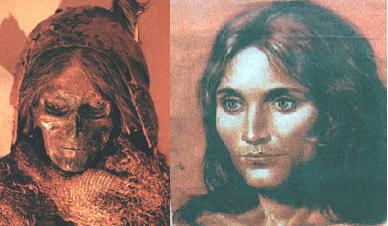
PhDiva criticizes a despicable Independent article titled "A meeting of civilisations: The mystery of China's celtic mummies". As I noted in a discussion list:
There is no evidence that the Urumqi mummies spoke Celtic languages, or that they were Europeans, or even Indo-Europeans. The DNA evidence can only be used to show that they were of West Eurasian, not European origin. As for their language, none of them have been accompanied, as far as I know, by any writings. It is reasonable that they might have spoken an Indo-European language, although by no means proven.

It is a sad state of affairs that editors allow such misleading information to be published.
One of the many idiotic statements in the article:
The Loulan Beauty, for example, was claimed by the Uighurs as their symbol in song and image, although genetic testing now shows that she was in fact European.
The "Loulan Beauty" may be one of the ancestors of the Uighurs, and she certainly belongs to the archaeological heritage of the region. Thus, it is reasonable and understandable that she will be made a symbol by the current inhabitants, however tenuous the connection.

Even the Slavs of Bulgaria identify with the ancient Thracians, the Turks identify with the Hittites and other extinct Anatolians, the Arabs of Egypt identify with the Egyptians, and the modern Germanic-speaking Britons identify with the "Celts". Such sentiments are understandable, albeit naive.

What is not excusable is to excise a part of Central Asian history and claim that it belongs to Europeans, or even more absurdly to Celts. However, we should perhaps excuse the journalist for his misstep, since he lives in a country where even professional geneticists have consistently oversold their research to a credulous public ready to swallow up stories about "Viking", "Celtic", or "Pictish" origins.

January 02, 2006

Some aspects of J2 distribution

Haplogroup J2 consists exclusively of two separate subclades: J2a-M410 and J2b-M12.

Crete, occupying the southmost of the Greek world has an M12/M172 ratio of 2.2% [1]. This ratio is 20% [1] or 42.2% [2], a weighted average of 26%. In Northern Greece (Macedonia) it is 43.2% [2].

In Albania, the same ratio is 100% in the small sample of [1] and 54.6% as reported by [2], a weighted average of 55%.

In Bulgaria, the ratio is 28.6% [1] and in Romania, the ratio is 0% in the good sample of [1]. In the Ukraine it is 32.9% [2]

According to [3], the ratio is high in Serbs (66.3%). The few Croatians and Herzegovinians belonging in haplogroup J2 belong to the M12 clade, giving a ratio of 100% [2,3]. Similarly in Poland (100%) [2], and Czech Republic/Slovakia (50%) [1].

The distinction between the Western and Eastern Balkans that I have spoken of before is clear in this regard. M12 clade comprises the majority of J2 in the West and the minority in the East. Moreover, Slavic speakers of continental Europe belong more to the M12 clade, whereas those bordering Black Sea are more inclined to have a low frequency of M12, including the non-Slavic Romanians who lack M12 altogether. In historical times, the Balkans were inhabited by several Indo-European peoples which could be classified in the macro-groups of Illyrians (west) and Thracians (east). Greek trade and settlement occurred in both the Adriatic and the Black Sea, but the Greek presence was probably heavier and more long-lasting (until recent times) in the latter region.

Italy resembles the Greek-Black Sea area. Southern Italy has a ratio of 12.4%, while Northern Italy has a ratio of 25% [1]. North-Central Italy (35.7%), and two Calabrian samples (1%), and Sicily (0%). The latter two locations were Greek speaking for the major part of their recorded history.

Turkey resembles the Greek-Black Sea-South Italian area with an overall ratio of 7.1% [4]. Turkey was primarily Greek, Armenian and Kurdish speaking before the arrival of the Altaic-speaking Turks. Before that, it was also home to a variety of languages, including several extinct languages of the Indo-European family such as Hittite, Luvian, Palaic, Lydian, Lycian, Phrygian, and Celtic.

[1] Di Giacomo (2004)
[2] Semino (2004)
[3] Pericic (2006)
[4] Cinnioglu (2004)

Some random (?) facts


"The Phrygians had an equipment very like that of the Paphlagonians with some slight difference. Now the Phrygians, as the Macedonians say, used to be called Brigians during the time that they were natives of Europe and dwelt with the Macedonians; but after they had changed into Asia, with their country they changed also their name and were called Phrygians. The Armenians were armed just like the Phrygians, being settlers from the Phrygians. Of these two together the commander was Artochmes, who was married to a daughter of Dareios." Herodotus, vii, 73

"Phrygia is the Greek name of an ancient state in western-central Anatolia (modern Turkey), extending from the Eskishehir area east to (perhaps) Bogazköy and Alishar Hüyük within the Halys River bend. The Assyrians, a powerful state in northern Mesopotamia to the south, called the state Mushki; what its own people called it is unknown. We know from their inscriptions that the Phrygians spoke an Indo-European language. Judging from historical records supported by ceramic evidence, settlers migrating from the Balkans in Europe first settled here a hundred or more years following the destruction of the Hittite empire (ca. 1200 BC)." The Metropolitan Museum of Art: 'Phrygia, Gordion, and King Midas in the Late Eighth Century B.C.'

"There is evidence that in ancient times a distinct subfamily of Indo-European languages existed that is now called Thraco-Phrygian. To it belonged Phrygian (an ancient and now extinct Indo-European language of Anatolia) and Thracian (a now dead Indo-European tongue of the Balkans in antiquity). Modern Armenian may well be a direct descendant of Phrygian." The Columbia Encyclopedia: 'Armenian language'

"All the unrooted trees agree that there are four supergroups of IE languages (Balto-Slavonic, Romano-Germano-Celtic, Armenian-Greek, and Indo-Iranian)" Rexova K. (2003) Cladistic analysis of languages: Indo-European classification based on lexicostatistical data, Cladistics 19(2)

Interpolated map of haplogroup J2a frequency. Extracted from Sengupta et al. (in press).

Image Hosted by ImageShack.us

Ancient Phrygia, map extracted from Ancient Anatolia web site.

Image Hosted by ImageShack.us

August 11, 2005

Basque Y chromosomes

Very interesting new paper on Y chromosomal diversity disproving the idea that the Basques are an especially ancient population or somehow representative of the ancestral European gene pool. The following sentence should probably be framed by scientists trying to correlate the findings of modern population genetics with the historical-archaeological record:
An ad hoc mining of the historical record can lead to a spurious association of any finding in human population genetics with any historical episode that could potentially explain it.
European Journal of Human Genetics (advance online publication)

The place of the Basques in the European Y-chromosome diversity landscape

Santos Alonso et al.

Abstract

There is a trend to consider the gene pool of the Basques as a 'living fossil' of the earliest modern humans that colonized Europe. To investigate this assumption, we have typed 45 binary markers and five short tandem repeat loci of the Y chromosome in a set of 168 male Basques. Results on these combined haplotypes were analyzed in the context of matching data belonging to approximately 3000 individuals from over 20 European, Near East and North African populations, which were compiled from the literature. Our results place the low Y-chromosome diversity of Basques within the European diversity landscape. This low diversity seems to be the result of a lower effective population size maintained through generations. At least some lineages of Y chromosome in modern Basques originated and have been evolving since pre-Neolithic times. However, the strong genetic drift experienced by the Basques does not allow us to consider Basques either the only or the best representatives of the ancestral European gene pool. Contrary to previous suggestions, we do not observe any particular link between Basques and Celtic populations beyond that provided by the Paleolithic ancestry common to European populations, nor we find evidence supporting Basques as the focus of major population expansions.

Link

April 26, 2005

Somerled's Viking roots

DNA shows Celtic hero Somerled's Viking roots

A HISTORIC Celtic hero credited with driving the Vikings out of western Scotland was actually descended from a Norseman, according to research by a leading DNA expert.

According to traditional genealogies, Somerled, who is said to have died in 1164 after ousting the Vikings from Argyll, Kintyre and the Western Isles, was descended from an ancient royal line going back to when the Scots were living in Ireland.

...

Prof Sykes’ studies of three Scottish clans have also led to the conclusion that some 500,000 people alive today are descended from Somerled - a number only bettered by Genghis Khan, who, among historical figures studied to date, has an estimated 16 million living descendants.

The MacDonald, MacDougall and MacAllister clans all claim descent from Somerled and Prof Sykes found that between 25 and 45 per cent of them shared the same Y-chromosome, of a kind normally found in Norway but rare in Scotland and Ireland.

By analysing the rate of mutation in DNA samples from clan members, Prof Sykes was able to show that the Y-chromosome came from a common ancestor who lived roughly 1,000 years ago.

He then tested five chiefs from the clans and discovered they all shared the same chromosome, which convinced him that the common ancestor must be Somerled, Lord of the Isles, in keeping with clan histories.

January 27, 2005

Distribution of Eastern European haplotype in Europe

According to the recent article on Y-STR variation in Europe, a particular haplotype, 16-13-17-25-10-11-13 (over DYS19, DYS389I, DYS389II, DYS390, DYS391, DYS392 and DYS393) seems to be ancestral for haplogroup R1a and occurs (together with its one-step neighbors) in a frequency of 30.6% in "Eastern Europe" vs. only 0.6% in "Western Europe". This haplotype is highly suggestive of Eastern European origin.

A search of this haplotype in YHRD gave the following result:

Free Image Hosting at www.ImageShack.us

Note that red color indicates presence of the haplotype, while blue indicates its absence. It appears that there is core Eastern European area where the haplotype is present, and this includes most (all?) Slavo-Baltic countries. In Scandinavia, the Netherlands, Belgium and the British Isles the haplotype is mostly lacking(*), which seems to indicate its likely absence in the Proto-Germanic gene pool; this is not true for Germany, Austria and Switzerland, reflecting historical contacts with Slavic and Baltic peoples. The haplotype is also mostly lacking in the Italo-Celtic world, and in the Southern Balkans, again illustrating its essentially Balto-Slavic likely origin (in most cases).

The omnipresence of the Eastern European haplotype in Balto-Slavic lands make it likely that it was part of the Proto-Balto-Slavs, and its geographical extent on the map is a rough approximation for the genetic influence of the representatives of that branch of the Indo-European family.(**)

(*) Note that two of the sites of the British Isles are of Indo-Pakistani populations where R1a achieves a high frequency and a third one is cosmopolitan London.
(**) Or possible of Indo-Iranians as the presence of the marker in the Indian subcontinent, as well as in Iran demonstrates. This influence was, however, probably minimal in Europe until recently.

October 07, 2004

The origin of ethnocentrism

As I have mentioned previously, I doubt that ethnocentrism is adaptive, i.e., that it is due to genetic factors and that it has evolved. In this post, I will discuss my views on the origin of ethnocentrism. But, before I get into that, I'll summarize the evidence which leads me to doubting a "genetically induced ethnocentrism."

First, altruistic acts to co-ethnics are usually detrimental to one's genetic interests, because co-ethnics are much further removed genetically than your close kin. So, you can't afford to spend too much on them (in terms of fitness), and not only do you have to spend a little on them but you also need to benefit many of them to realize any benefit in terms of "inclusive fitness".

Second, an argument from history: time and again peoples have allied themselves with alien peoples against their co-ethnics, e.g., in WWII, where the northern Europoid Germans allied with the southern Europoid Italians and Mongoloid Japanese against the northern Europoid Anglo-Americans and Slavs.

Third, an argument from historical change, e.g., the transformation of Germans from ultra-ethnocentrics of c. 1940 to quite non-ethnocentric today, or of the Japanese from aggressive ethnocentrics to mild passive ones, or of the Americans who restricted immigration in the 1920s to the Americans who opened the gates of the USA to the Races of Mankind in the 1960s. Or, of the Jews who have have thousands of years of history transitioning between aggressive ethnocentrism, passive ethnocentrism, assimilationism/internationalism.

Fourth, again from history, the evidence of so many irrational "last stands" where people have chosen to be anhilated (reducing their genetic fitness to 0) rather than be enslaved (thus maintaining some genetic fitness), i.e., ethnocentric behavior that does not make sense in terms of genetic fitness.

Such arguments lead me to the conclusion that ethnocentrism is usually maladaptive, and thus cannot have possibly been selected for. But, this still leaves us with the experience of ethnocentrism. So, if ethnocentrism exists, and it is not adaptive, why does it exist?

In my view, ethnocentrism is a learned behavior (cf. third argument above). No one is "born" to be ethnocentric. Everyone learns to be ethnocentric as part of the socialization process. To see why this is the case, consider the many millions of immigrants to the US (in the days before globalization and multiculturalism) who have happily shed one ethnic identity for another. Or, the Janissaries, tied by "shared genetic interests" with Greeks and Slavs, but fighting for the Muslim Ottoman genetic interests due to the fact that they learned a Muslim Ottoman ethnic identity. Or all those who have acquired an internationalist perspective due to travelling the world or being exposed to internationalist ideology.

It must be emphasized that ethnocentrism is impossible without an ethnic identity. And an ethnic identity is socially constructed; no one is born with a knowledge or tendency of being e.g., German. You become a member of an ethnic group. Note that this has nothing to do with choosing your ethnic group; it simply states that we don't have hard-wired ethnicities.

Let's take four examples to see why this is the case. We will cover all possible combinations of genetic proximity and current level of "ethnocentrism":

  • Imagine that Bosnian Muslim and Christian children are abducted and raised in a far away land where they are told that they are part of the same group. Clearly, there would be no ethnocentrism in this example, as their ethnic identities are non-genetic in origin.
  • Now, imagine that in a Catholic nation, a new sect appears which opposes Catholicism [you don't actually have to imagine this if you know something about the Reformation]. Members of this sect start aggregating in new places of worship and adopt various new cultural traits distinguishing them from the Catholics. Again, the two groups are not genetically different, although with continued separation they may eventually become so. But still, members of the two groups will become ethnocentric, supporting members of the in-group.
  • Then, imagine that Japanese and White Californian children are brought up by ethnocentric leaders, which teach them to dislike white and mongoloid people respectively.
  • Or, conversely imagine a time machine transporting young would-be kamikaze from Imperial Japan into 21st century California and raising them as "Americans".

These examples clearly illustrate that ethnicity and its attendant ethnocentrism are learned behaviors. Often they are rationalized in terms of genetic factors (i.e., "blood") but they are not inherently genetic.

The ethnicity meme [1] is of course successful, as nearly all living humans are part of an ethnic group and have various degrees of ethnocentrism. There is need for an explanation for its success.

I have no doubt that the origin of the ethnicity meme must be sought in kinship groups. Proto-ethnic groups were nothing more than kinship groups consisting of a few families. In that sense their ethnocentrism would make sense in terms of kin selection, due to the high relatedness coeffciient between their members. The origin of ethnic groups in kinship groups explains much of the language of ethnicity (e.g., fatherland, brothers, etc.), but it would be a mistake to think that ethnic groups are maintained by extended family ties.

The origin of proper "large" ethnic groups must be sought in the Neolithic period, when the aggregation of tribes into larger units based on systems of trade and exchange and complex political organization first become possible.
These new ethnic groups were no longer homogeneous, as they consisted of unrelated tribes which had adopted common cultural elements, spoke the same language or recognized the same "king'.

These groups were no longer genetically homogeneous, at least not enough for kin nepotism to justify most altruistic acts in favor of co-ethnics. On the other hand, their existence was profitable to both their members (since civilization depends on large numbers) and to their rulers. For this reason, large ethnic groups were successful.

The ethnicity meme was cemented by two forces: the psychological profit of belonging in a large, or illustrious group, and the fear of "not-belonging" or "rejection from the tribe" which feeds on the universal human need for social contact.

Both these psychological mechanisms are self-evident and they express perfectly the historical record of ethnocentrism, unlike genetic rationalizations for the same phenomena.

For example, the Hellenic ethnicity spread, according to Thucydides at least, as different "tribes" associated themselves with "Hellen and his sons". Clearly, the Proto-Hellenic ethnic group's prestige was what led to many people being added to its ranks, and this process continued into historical times.

Or, we may look at the spread of the Roman ethnicity, which spread from a small Italian town to the point where millions around the Mediterranean considered themselves to be Roman. More recently, we see the expansion of the Magyars in Hungary, a relatively minor element growing in numbers due to its prestige as conquerors of Pannonia.

But, the opposite phenomenon is also seen, e.g., the anhilation of Celtic ethnicity after the Romans conquered the Gauls, or of (almost) all ethnicities of Asia Minor when Alexander conquered Asia.

Ethnicity is also maintained by fear, e.g., the fear of shame which led the Spartans to death rather to defeat, or the Souliotes over the cliff. It is the same fear which ensures that young men will always be ready to die for their country [2], since the opposite would bring shame.

Conclusions

Ethnocentrism is the attitude of aiding one's ethnic group even at personal expense. While this sometimes increases a person's inclusive fitness, it most often does not. Therefore, ethnocentrism is generally not an adaptive trait, and hence cannot have evolved. Instead, it is proposed that ethnocentrism is dependent on the creation of an ethnic identity, and ethnic identity emerges from the need of small tribes and individuals to join forces for mutual benefit, and from the desire of rulers to control many individuals and to extend their power. However, this still leaves the question open on why ethnocentrism is such a popular cultural element, and it is proposed that it persists because it serves a psychological need (a feeling of power and belonging), while its dissolution is tagged with costs of rejection and shame.

Notes

[1] I don't particularly like the idea of "memes", but in this case it fits quite well the origin and development of ethnic identities,.
[2] Of course when ethnic identity is eroded, as in e.g., the USA, most young men are not ready to die for their country.

August 14, 2004

Celtic Origins on the Atlantic Facade of Europe

A new study re-evaluates mtDNA evidence, in conjunction with Y-chromosomal and autosomal DNA, to trace the origins of Celtic-speaking populations of Western Europe. The main conclusion is that while some Central European origin can't be ruled out using genetic data, current and former Celtic speakers seem to share a common ancestry with other non-Celtic populations of the Atlantic zone of Europe.

Am. J. Hum. Genet., 75:000, 2004

The Longue Durée of Genetic Ancestry: Multiple Genetic Marker Systems and Celtic Origins on the Atlantic Facade of Europe

Brian McEvoy et al.

Celtic languages are now spoken only on the Atlantic facade of Europe, mainly in Britain and Ireland, but were spoken more widely in western and central Europe until the collapse of the Roman Empire in the first millennium A.D. It has been common to couple archaeological evidence for the expansion of Iron Age elites in central Europe with the dispersal of these languages and of Celtic ethnicity and to posit a central European "homeland" for the Celtic peoples. More recently, however, archaeologists have questioned this "migrationist" view of Celtic ethnogenesis. The proposition of a central European ancestry should be testable by examining the distribution of genetic markers; however, although Y-chromosome patterns in Atlantic Europe show little evidence of central European influence, there has hitherto been insufficient data to confirm this by use of mitochondrial DNA (mtDNA). Here, we present both new mtDNA data from Ireland and a novel analysis of a greatly enlarged European mtDNA database. We show that mtDNA lineages, when analyzed in sufficiently large numbers, display patterns significantly similar to a large fraction of both Y-chromosome and autosomal variation. These multiple genetic marker systems indicate a shared ancestry throughout the Atlantic zone, from northern Iberia to western Scandinavia, that dates back to the end of the last Ice Age.

Link