Apart from the historical interest, this study might be useful to further calibrate the Y-chromosome molecular clock. The Y-SNP mutation rate was previously calibrated with a Chinese pedigree that went down to ~1800AD, and this is potentially much deeper.
arXiv:1412.6274 [q-bio.PE]
Y Chromosome of Aisin Gioro, the Imperial House of Qing Dynasty
Shi Yan, Harumasa Tachibana, Lan-Hai Wei, Ge Yu, Shao-Qing Wen, Chuan-Chao Wang
(Submitted on 19 Dec 2014)
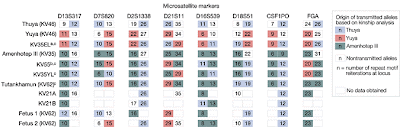
House of Aisin Gioro is the imperial family of the last dynasty in Chinese history - Qing Dynasty (1644 - 1911). Aisin Gioro family originated from Jurchen tribes and developed the Manchu people before they conquered China. By investigating the Y chromosomal short tandem repeats (STRs) of 7 modern male individuals who claim belonging to Aisin Gioro family (in which 3 have full records of pedigree), we found that 3 of them (in which 2 keep full pedigree, whose most recent common ancestor is Nurgaci) shows very close relationship (1 - 2 steps of difference in 17 STR) and the haplotype is rare. We therefore conclude that this haplotype is the Y chromosome of the House of Aisin Gioro. Further tests of single nucleotide polymorphisms (SNPs) indicates that they belong to Haplogroup C3b2b1*-M401(xF5483), although their Y-STR results are distant to the "star cluster", which also belongs to the same haplogroup. This study forms the base for the pedigree research of the imperial family of Qing Dynasty by means of genetics.
Link

Showing posts with label Famous DNA. Show all posts
Showing posts with label Famous DNA. Show all posts
January 01, 2015
December 02, 2014
Remains of Richard III identified
From the paper:
Four of the modern relatives were found to belong to Y-haplogroup R1b-U152 (x L2, Z36, Z56, M160, M126 and Z192)13, 14 with STR haplotypes being consistent with them comprising a single patrilinear group. One individual (Somerset 3) was found to belong to haplogroup I-M170 (x M253, M223) and therefore could not be a patrilinear relative of the other four within the time span considered, indicating that a false-paternity event had occurred within the last four generations.
...
In contrast to the Y-haplotypes of the putative modern relatives, Skeleton 1 belongs to haplogroup G-P287, with a corresponding Y-STR haplotype. Thus, the putative modern patrilinear relatives of Richard III are not genetically related to Skeleton 1 through the male line over the time period considered. However, this is not surprising, given an estimated average false-paternity rate of ~1–2% (refs 12, 17, 18). The putative modern relatives and Richard III are related through a male relative (Edward III) four generations up from Richard III (Fig. 1a and Supplementary Fig. 2), and a false-paternity event could have happened in any of the 19 generations separating Richard III and the 5th Duke of Beaufort, on either branch of the genealogy descending from Edward III. Indeed, even with a conservative false-paternity rate18 (see Supplementary Methods) the chance of a false-paternity occuring in this number of generations is 16%.
Nature Communications 5, Article number: 5631 doi:10.1038/ncomms6631
Identification of the remains of King Richard III
Turi E. King et al.
Abstract
In 2012, a skeleton was excavated at the presumed site of the Grey Friars friary in Leicester, the last-known resting place of King Richard III. Archaeological, osteological and radiocarbon dating data were consistent with these being his remains. Here we report DNA analyses of both the skeletal remains and living relatives of Richard III. We find a perfect mitochondrial DNA match between the sequence obtained from the remains and one living relative, and a single-base substitution when compared with a second relative. Y-chromosome haplotypes from male-line relatives and the remains do not match, which could be attributed to a false-paternity event occurring in any of the intervening generations. DNA-predicted hair and eye colour are consistent with Richard’s appearance in an early portrait. We calculate likelihood ratios for the non-genetic and genetic data separately, and combined, and conclude that the evidence for the remains being those of Richard III is overwhelming.
Link
September 07, 2014
Jack the Ripper = Aaron Kosminski (?)

The landmark discovery was made after businessman Russell Edwards, 48, bought the shawl at auction and enlisted the help of Dr Jari Louhelainen, a world-renowned expert in analysing genetic evidence from historical crime scenes. Using cutting-edge techniques, Dr Louhelainen was able to extract 126-year-old DNA from the material and compare it to DNA from descendants of Eddowes and the suspect, with both proving a perfect match.
...
Because of the genome amplification technique, I was also able to ascertain the ethnic and geographical background of the DNA I extracted. It was of a type known as the haplogroup T1a1, common in people of Russian Jewish ethnicity. I was even able to establish that he had dark hair.
Now that it’s over, I’m excited and proud of what we’ve achieved, and satisfied that we have established, as far as we possibly can, that Aaron Kosminski is the culprit.DNA never ceases to amaze... Hopefully a more detailed report on this discovery will appear in time.
October 22, 2013
A Persian in China (Y chromosome of Sayyid Ajjal)
Quite remarkable that a Persian (Sayyid Ajjal) would leave many descendants in faraway China, and one of this descendants (Zheng He) would one day set out to explore the West (from the perspective of China). A nice reminder of how far a Y-chromosome lineage might travel, even in the span of a couple of centuries.
arXiv:1310.5466 [q-bio.PE]
Present Y chromosomes support the Persian ancestry of Sayyid Ajjal Shams al-Din Omar and Eminent Navigator Zheng He
Chuan-Chao Wang et al.
Sayyid Ajjal is the ancestor of many Muslims in areas all across China. And one of his descendants is the famous Navigator of Ming Dynasty, Zheng He, who led the largest armada in the world of 15th century. The origin of Sayyid Ajjal's family remains unclear although many studies have been done on this topic of Muslim history. In this paper, we studied the Y chromosomes of his present descendants, and found they all have haplogroup L1a-M76, proving a southern Persian origin.
Link
arXiv:1310.5466 [q-bio.PE]
Present Y chromosomes support the Persian ancestry of Sayyid Ajjal Shams al-Din Omar and Eminent Navigator Zheng He
Chuan-Chao Wang et al.
Sayyid Ajjal is the ancestor of many Muslims in areas all across China. And one of his descendants is the famous Navigator of Ming Dynasty, Zheng He, who led the largest armada in the world of 15th century. The origin of Sayyid Ajjal's family remains unclear although many studies have been done on this topic of Muslim history. In this paper, we studied the Y chromosomes of his present descendants, and found they all have haplogroup L1a-M76, proving a southern Persian origin.
Link
October 14, 2013
Y-chromosome of Napoleon the Great

Such a well-resolved haplotype may now make it possible to both (i) find descendants and relatives of Napoleon that may be unaware of this connection, and (ii) to more precisely determine the ultimate origins of the house of Buonaparte.
International Journal of Sciences 2(9)
Reconstruction of the Lineage Y Chromosome Haplotype of Napoléon the First
Gerard Lucotte, Jacques Macé, Peter Hrechdakian
As part of the Napoléon I Genome (NIG) project we have reconstructed, based on more than one hundred Y-STRs (Y-short tandem repeats), the complete Y-haplotype of the non-recombinant part of the Y-chromosome (NRY) of French Emperor Napoléon I (1769-1821). We already knew the allelic values at Y-markers of the Y-chromosome of Napoléon I, but only for the palindromic STR YCAIIa and b and for the non-palindromic Y-STR DYS19. The present reconstruction aims to compare the allelic values at Y-STRs of the DNA of Charles Napoléon (C.N.), the living 4th generation descendant of Jérôme Bonaparte (Napoléon I’s youngest brother), with those of Alexandre Colonna Walewski (A.C.W.), the living 4th generation descendant of Count Alexandre Walewski (the son born of the union between Napoléon I and Countess Maria Walewska). We have previously established that Napoléon I, C.N. and A.C.W. are of the same Y-haplogroup E1b1b1b2a1. The allelic values for C.N. and A.C.W. are the same for ninety-three other non-palindromic markers (belonging to ninety different STRs) and for thirty-eight other palindromic markers (belonging to fifteen different STRs); these values then constitute those deduced in the reconstruction of the allelic values of the STR markers of the Napoléon I’s Y-haplotype. Four non-palindromic STRs and two palindromic STRs have different allelic values in C.N. and A.C.W.; we have deduced the allelic value of Napoléon I for one (DYS454), and the probable allelic values for two (Y-GATA-C4 and DYS712) of these non-palindromic variable STRs. To sum up, we have established, by reconstruction of the lineage, the allelic values of the markers of Napoléon I’s Y-haplotype for a total of one-hundred and thirty-three different Y-STR markers.
Link (pdf)
October 09, 2013
House of Bourbon belonged to Y-haplogroup R1b1b2a1a1b* (R-Z381*)

It is nice that this study was made possible by the co-operation of three patrilineal Bourbon descendants. I've mentioned before that the European nobility is an untapped resource for historical/genetic studies, as they can often document much longer lines of descent than most others, so it's good to see that at least some descendants of kings are willing to contribute to this kind of research.
European Journal of Human Genetics advance online publication 9 October 2013; doi: 10.1038/ejhg.2013.211
Genetic genealogy reveals true Y haplogroup of House of Bourbon contradicting recent identification of the presumed remains of two French Kings
Maarten H D Larmuseau et al.
Genetic analysis strongly increases the opportunity to identify skeletal remains or other biological samples from historical figures. However, validation of this identification is essential and should be done by DNA typing of living relatives. Based on the similarity of a limited set of Y-STRs, a blood sample and a head were recently identified as those belonging respectively to King Louis XVI and his paternal ancestor King Henry IV. Here, we collected DNA samples from three living males of the House of Bourbon to validate the since then controversial identification of these remains. The three living relatives revealed the Bourbon’s Y-chromosomal variant on a high phylogenetic resolution for several members of the lineage between Henry IV and Louis XVI. This ‘true’ Bourbon’s variant is different from the published Y-STR profiles of the blood as well as of the head. The earlier identifications of these samples can therefore not be validated. Moreover, matrilineal genealogical data revealed that the published mtDNA sequence of the head was also different from the one of a series of relatives. This therefore leads to the conclusion that the analyzed samples were not from the French kings. Our study once again demonstrated that in order to realize an accurate genetic identification of historical remains DNA typing of living persons, who are paternally or maternally related with the presumed donor of the samples, is required.
Link
June 14, 2013
Prince William's Indian matrilineage?
William has a hint of Indian in his DNA, find British researchers
Personally, I wouldn't be so quick in discounting the traditional genealogical story. A lineage that occurs at a frequency of 0.3% will almost certainly be missed in any small sample if it occurs at similar trace frequencies in other populations.
Researchers have sourced William’s Indian ancestry to Eliza Kewark, his great-great-great-great-great grandmother, who was assumed to be Armenian, but now has been revealed as an Indian by genetic research.Chaubey et al. (2008) is an article that touches upon the subject of R30b.
...
“Through genealogy we traced two living direct descendants of Eliza and by reading the sequence of their mtDNA, we showed not only that they matched, but also that it belongs to a haplogroup called R30b, thus determining Eliza Kewark’s haplogroup,” the research team revealed.
The haplogroup, which is a group of related ancestral lineages, in this case was revealed to be rare and found only in South Asia. Other related branches of R30a and R30* are also entirely South Asian.
“This confirms therefore that the mtDNA of Eliza Kewark of Surat was of Indian heritage. R30b is rare even in India, where roughly 0.3 per cent of people carry this lineage,” the researchers revealed.
Personally, I wouldn't be so quick in discounting the traditional genealogical story. A lineage that occurs at a frequency of 0.3% will almost certainly be missed in any small sample if it occurs at similar trace frequencies in other populations.
January 24, 2013
Upcoming Richard III documentary
From Channel 4:
With the support of historians, the University of Leicester's archaeologists identified a possible location of the monastery as the car park for Leicester City Council's Social Services department. However as Richard Buckley, Head of the University of Leicester's Archaeology Services tells the programme: "...the chance of finding Richard was, I don't know, a million to one." Yet the dig commenced and on the very first day a male skeleton was discovered - which careful examination would later reveal to have curvature of the spine and battle injuries including a head wound.This will air on Feb 4.
For the last three months, the remains has been subjected to some of the most cutting edge technology and forensic testing in existence - with Channel 4 capturing every moment. In specialist labs in Leicester and across the country, the bones have been subjected to CT scans, they have been carbon-dated, DNA has been extracted to be compared to that of one his living descendants, the source of the spinal curvature has been investigated - and the entire body has been subjected to rigorous testing to reveal blow-by-blow how this individual died and how he was buried.
Perhaps most fascinating of all, using technology developed to identify human remains in crime investigations, scientists have been busily re-creating the face these bones belong to - this image will be revealed exclusively in the programme the night it airs. And of course, Richard III: The King in the Car Park will reveal the results of what could be one of the most astonishing archaeological discoveries in recent history - whether England's missing king has indeed been recovered.
January 01, 2013
Y-chromosome and mtDNA of Henri IV


The majority of the clones generated show an U5b* mtDNA haplotype defined by three nucleotide changes at positions 16239T 16270T 16311C (see Supplementary material). The three HVR1 diagnostic positions were confirmed in two different amplifications of the L16185-H16378 HVR1 fragment, proving that the results are reproducible. This mtDNA haplotype is present so far in one single individual from France (originally published in [10]) in an in-house database of 22,807 published European sequences, and it is absent in all people involved in the laboratory analysis.If I followed the trail of ancestry correctly, this matrilineage leads all the way to a Tochter von Egisheim in the 11th century.
Forensic Science International Available online 30 December 2012
Genetic comparison of the head of Henri IV and the presumptive blood from Louis XVI (both Kings of France)
Philippe Charlier et al.
A mummified head was identified in 2010 as belonging to Henri IV, King of France. A putative blood sample from the King Louis XVI preserved into a pyrographically decorated gourd was analyzed in 2011. Both kings are in a direct male-line descent, separated by seven generations. We have retrieved the hypervariable region 1 of the mitochondrial DNA as well as a partial Y-chromosome profile from Henri IV. Five STR loci match the alleles found in Louis XVI, while another locus shows an allele that is just one mutation step apart. Taking into consideration that the partial Y-chromosome profile is extremely rare in modern human databases, we concluded that both males could be paternally related. The likelihood ratio of the two samples belonging to males separated by seven generations (as opposed to unrelated males) was estimated as 246.3, with a 95% confidence interval between 44.2 and 9729. Historically speaking, this forensic DNA data would confirm the identity of the previous Louis XVI sample, and give another positive argument for the authenticity of the head of Henri IV.
Link
December 21, 2012
Y chromosome of Ramesses III
From the paper:
Ethiohelix has more.
Added in my compendium of ancient Y chromosome studies.
BMJ 2012; 345 doi: http://dx.doi.org/10.1136/bmj.e8268
Revisiting the harem conspiracy and death of Ramesses III: anthropological, forensic, radiological, and genetic study
Abstract
Objective To investigate the true character of the harem conspiracy described in the Judicial Papyrus of Turin and determine whether Ramesses III was indeed killed.
Design Anthropological, forensic, radiological, and genetic study of the mummies of Ramesses III and unknown man E, found together and taken from the 20th dynasty of ancient Egypt (circa 1190-1070 BC).
Results Computed tomography scans revealed a deep cut in Ramesses III’s throat, probably made by a sharp knife. During the mummification process, a Horus eye amulet was inserted in the wound for healing purposes, and the neck was covered by a collar of thick linen layers. Forensic examination of unknown man E showed compressed skin folds around his neck and a thoracic inflation. Unknown man E also had an unusual mummification procedure. According to genetic analyses, both mummies had identical haplotypes of the Y chromosome and a common male lineage.
Conclusions This study suggests that Ramesses III was murdered during the harem conspiracy by the cutting of his throat. Unknown man E is a possible candidate as Ramesses III’s son Pentawere.
Link
Genetic kinship analyses revealed identical haplotypes in both mummies (table 1⇓); using the Whit Athey’s haplogroup predictor, we determined the Y chromosomal haplogroup E1b1a.
Ethiohelix has more.
Added in my compendium of ancient Y chromosome studies.
BMJ 2012; 345 doi: http://dx.doi.org/10.1136/bmj.e8268
Revisiting the harem conspiracy and death of Ramesses III: anthropological, forensic, radiological, and genetic study
Abstract
Objective To investigate the true character of the harem conspiracy described in the Judicial Papyrus of Turin and determine whether Ramesses III was indeed killed.
Design Anthropological, forensic, radiological, and genetic study of the mummies of Ramesses III and unknown man E, found together and taken from the 20th dynasty of ancient Egypt (circa 1190-1070 BC).
Results Computed tomography scans revealed a deep cut in Ramesses III’s throat, probably made by a sharp knife. During the mummification process, a Horus eye amulet was inserted in the wound for healing purposes, and the neck was covered by a collar of thick linen layers. Forensic examination of unknown man E showed compressed skin folds around his neck and a thoracic inflation. Unknown man E also had an unusual mummification procedure. According to genetic analyses, both mummies had identical haplotypes of the Y chromosome and a common male lineage.
Conclusions This study suggests that Ramesses III was murdered during the harem conspiracy by the cutting of his throat. Unknown man E is a possible candidate as Ramesses III’s son Pentawere.
Link
December 06, 2012
Sneak peek at new version of 23andMe ancestry analysis via Jeff Probst
You can watch a 9min clip here.
Paternal haplogroup ("traces to France and Germany"):

Anyone care to speculate what that is? The foci in eastern India and absence in parts of NW Europe and the Balkans throw me off.
And what of his maternal haplogroup ("Northern Africa" "pastoralists" "Berbers"):

I would have guessed U6 or M1, but the focus east of the Caspian throws me off again. 23andMe may have potentially very large sample sizes, so perhaps their frequency maps may be even better than ones published in the literature, so I'm genuinely curious what this might be.
Various other info: his dad "top 1% Neandertal", no evidence of "Asian" or "Jewish".
Anyway, onto the main course, i.e., the new Ancestry composition:

One thing that I like about this is the assignment of a portion of ancestry to a "Nonspecific Northern European" group, which is a feature I haven't seen before. I am told that this feature will launch very soon, so it will be interesting to see how well it works across many individuals.
Paternal haplogroup ("traces to France and Germany"):

Anyone care to speculate what that is? The foci in eastern India and absence in parts of NW Europe and the Balkans throw me off.
And what of his maternal haplogroup ("Northern Africa" "pastoralists" "Berbers"):

I would have guessed U6 or M1, but the focus east of the Caspian throws me off again. 23andMe may have potentially very large sample sizes, so perhaps their frequency maps may be even better than ones published in the literature, so I'm genuinely curious what this might be.
Various other info: his dad "top 1% Neandertal", no evidence of "Asian" or "Jewish".
Anyway, onto the main course, i.e., the new Ancestry composition:

One thing that I like about this is the assignment of a portion of ancestry to a "Nonspecific Northern European" group, which is a feature I haven't seen before. I am told that this feature will launch very soon, so it will be interesting to see how well it works across many individuals.
December 04, 2012
Tomb of Genghis Khan found?
Newsweek has a story on the purported finding of the tomb of Genghis Khan. An excerpt:
In any case, it would be great to read the headline "Genome sequence of Genghis Khan" in your Nature or Science news feed one fine evening a few years down the road, so let's keep our fingers crossed that it may yet happen.
PS: On an unrelated topic, I sometimes wonder why there has not been more work on "famous DNA"? This would provide an incredible way of involving the public in cutting edge science. It might also help historical research, and while the location of Genghis Khan's tomb is obscure, those of other famous potentates like Tamerlane, or the Ottoman Sultans, or a good number of European royals are not.
Of course, there may not be much scientific interest in many such persons, but if Einstein's brain continues to be the subject of reputable studies in good journals, why isn't Einstein's genome so studied? Or Newton's, Darwin's, Beethoven's, or any other intellectual giant's whose burial place is known? I'm not naive enough to think that such an approach would reveal a "genius gene" they all possessed, but still, it is not inconceivable that something of interest about their origins -if not their genetic predispositions- might turn up.
A multidisciplinary research project uniting scientists in America with Mongolian scholars and archeologists has the first compelling evidence of the location of Khan’s burial site and the necropolis of the Mongol imperial family on a mountain range in a remote area in northwestern Mongolia.
Among the discoveries by the team are the foundations of what appears to be a large structure from the 13th or 14th century, in an area that has historically been associated with this grave. Scientists have also found a wide range of artifacts that include arrowheads, porcelain, and a variety of building material.
“Everything lines up in a very compelling way,” says Albert Lin, National Geographic explorer and principal investigator of the project, in an exclusive interview with Newsweek.Whether this is the real thing or not, you gotta love that this has been made possible:
In a laboratory at the California Institute for Telecommunications and Information Technology at University of California, San Diego, Lin and his team combed through the massive volumes of ultrahigh-resolution satellite imagery and built 3-D reconstructions from radar scans in their search for clues to where Genghis Khan may be buried. As part of an unprecedented open-source project, thousands of online volunteers sifted through 85,000 high-resolution satellite images to identify any hidden structures or odd-seeming formations.Apparently there is concern of the local authorities about grave robbing, so it does not seem that the site will be excavated anytime soon. And, perhaps, the central position of Genghis Khan in modern Mongolian culture might make the disinternment of any human remains from the area a difficult proposition politically.
In any case, it would be great to read the headline "Genome sequence of Genghis Khan" in your Nature or Science news feed one fine evening a few years down the road, so let's keep our fingers crossed that it may yet happen.
PS: On an unrelated topic, I sometimes wonder why there has not been more work on "famous DNA"? This would provide an incredible way of involving the public in cutting edge science. It might also help historical research, and while the location of Genghis Khan's tomb is obscure, those of other famous potentates like Tamerlane, or the Ottoman Sultans, or a good number of European royals are not.
Of course, there may not be much scientific interest in many such persons, but if Einstein's brain continues to be the subject of reputable studies in good journals, why isn't Einstein's genome so studied? Or Newton's, Darwin's, Beethoven's, or any other intellectual giant's whose burial place is known? I'm not naive enough to think that such an approach would reveal a "genius gene" they all possessed, but still, it is not inconceivable that something of interest about their origins -if not their genetic predispositions- might turn up.
July 26, 2012
A look at Y chromosomes of Romania via Count Dracula
In short: researchers tried to see whether they could identify a specific Y chromosome lineage associated with the House of Basarab in Romania, the most famous member of which is Vlad the Impaler, an inspiration for the mythical Count Dracula. To do this, they tested Basarab-surnamed individuals, as well as the general Romanian population.
The whole exercise was, in a sense, a failure, since it neither disclosed a Basarab-specific lineage, nor resolved the historical question about the origin of the House of Basarab (Vlach or Cuman). But, it gave us some wonderful new data on Romania that is, of course, quite welcome.
This seems like a good candidate for a future ancient DNA study, assuming of course, that Vlad and his family are still in their final resting place, and there are brave enough researchers to disturb them (j/k).
On a more serious note, the authors correctly state that even if the Basarab house was originally Turkic, they could still have carried West Eurasian chromosomes, since incoming Turkic groups in Europe were not purely Mongoloid like their more remote ancestors. On the other hand, I note that most of the Basarab-surnamed individuals belonged to E-V13, I-P37.2, J-M241 all of which are almost certainly native Romanian. If one of them carries the original chromosome, then the odds are in favor of a Romanian origin, although nothing short of ancient DNA work can resolve the issue, assuming that's possible.
Table S1 contains the new Romanian data, and Table S2 data from surrounding populations (Hungary, Bulgaria, Ukraine).
PLoS ONE 7(7): e41803. doi:10.1371/journal.pone.0041803
Y-Chromosome Analysis in Individuals Bearing the Basarab Name of the First Dynasty of Wallachian Kings
Begoña Martinez-Cruz et al.
Vlad III The Impaler, also known as Dracula, descended from the dynasty of Basarab, the first rulers of independent Wallachia, in present Romania. Whether this dynasty is of Cuman (an admixed Turkic people that reached Wallachia from the East in the 11th century) or of local Romanian (Vlach) origin is debated among historians. Earlier studies have demonstrated the value of investigating the Y chromosome of men bearing a historical name, in order to identify their genetic origin. We sampled 29 Romanian men carrying the surname Basarab, in addition to four Romanian populations (from counties Dolj, N = 38; Mehedinti, N = 11; Cluj, N = 50; and Brasov, N = 50), and compared the data with the surrounding populations. We typed 131 SNPs and 19 STRs in the non-recombinant part of the Y-chromosome in all the individuals. We computed a PCA to situate the Basarab individuals in the context of Romania and its neighboring populations. Different Y-chromosome haplogroups were found within the individuals bearing the Basarab name. All haplogroups are common in Romania and other Central and Eastern European populations. In a PCA, the Basarab group clusters within other Romanian populations. We found several clusters of Basarab individuals having a common ancestor within the period of the last 600 years. The diversity of haplogroups found shows that not all individuals carrying the surname Basarab can be direct biological descendants of the Basarab dynasty. The absence of Eastern Asian lineages in the Basarab men can be interpreted as a lack of evidence for a Cuman origin of the Basarab dynasty, although it cannot be positively ruled out. It can be therefore concluded that the Basarab dynasty was successful in spreading its name beyond the spread of its genes.
January 13, 2012
Napoleon Bonaparte belonged to haplogroup E1b1b1c1* (E-M34*)
A previous paper on his mtDNA which was H. A previous study found that Hitler also belonged to haplogroup E1b1b. So, expect plenty of war and mayhem if a new European leader emerges with a haplogroup E1b1b chromosome -- and, yes, I'm joking.
Journal of Molecular Biology Research Vol 1, No 1 (2011)
Haplogroup of the Y Chromosome of Napoléon the First
Gerard Lucotte, Thierry Thomasset, Peter Hrechdakian
Abstract
This paper describes the finding of the determination of the Y-haplogroup of French Emperor Napoléon I (Napoléon Bonaparte). DNA was extracted from two islands of follicular sheaths located at the basis of two of his beard hairs, conserved in the Vivant Denon reliquary. The Y-haplogroup of Napoléon I, determined by the study of 10 NRY-SNPs (non-recombinant Y-single nucleotide polymorphisms), is E1b1b1c1*. Charles Napoléon, the current collateral male descendant of Napoléon I, belongs to this same Y-haplogroup; his Y-STR profile was determined by using a set of 37 NRY-STRs (non-recombinant Y-microsatellites).
Link
Journal of Molecular Biology Research Vol 1, No 1 (2011)
Haplogroup of the Y Chromosome of Napoléon the First
Gerard Lucotte, Thierry Thomasset, Peter Hrechdakian
Abstract
This paper describes the finding of the determination of the Y-haplogroup of French Emperor Napoléon I (Napoléon Bonaparte). DNA was extracted from two islands of follicular sheaths located at the basis of two of his beard hairs, conserved in the Vivant Denon reliquary. The Y-haplogroup of Napoléon I, determined by the study of 10 NRY-SNPs (non-recombinant Y-single nucleotide polymorphisms), is E1b1b1c1*. Charles Napoléon, the current collateral male descendant of Napoléon I, belongs to this same Y-haplogroup; his Y-STR profile was determined by using a set of 37 NRY-STRs (non-recombinant Y-microsatellites).
Link
December 29, 2011
Forensic analysis of King Tut and his relatives
DNA Tribes has released an analysis, based on 8 forensic autosomal STR markers, of the "Amarna Pharaohs". The analysis is based on data from Ancestry and Pathology in King Tutankhamun's Family.
The results of the DNA Tribes analysis can be seen below:

They seem to indicate that there is something definitely "African" about this collection of mummies. I have previously used PopAffiliator and STRUCTURE with CODIS markers. The results of that analysis suggest that even this small number of markers is sufficient to place a sample in a continental group with high accuracy, but insufficient to estimate levels of admixture. There is a new version of PopAffiliator, which, unfortunately, does not allow for incomplete data entry, and hence cannot be used to verify the results of the DNA Tribes analysis.
The DNA Tribes results are interesting, but may hinge upon a few marker values that are more prevalent in Africa than in Eurasia. Also, it is not clear which population(s) make up the "North African" group. It would be interesting to extract full genome sequences from Egyptian mummies in order to properly place them in the global genetic landscape.
Pictorial evidence in Egyptian art, as well as the statements of classical Greco-Roman authors strongly suggest that the ancient Egyptians occupied an intermediate position in the phenotypic continuum between Near Eastern and "Ethiopian" people. It is also clear that there was variation within ancient Egypt itself: geographic, temporal, and even perhaps social aspects of this variation may have existed. But these qualitative observations are no substitute for the harder type of evidence that can be provided by authentic ancient DNA.
Hopefully, the debate on the genetic identity of the ancient Egyptians can proceed on the basis of new data, although I am not holding my breath that this will happen anytime soon, both because of the fluid state of politics in Egypt itself, the existence of various fringe theories outside of Egypt, and, the rather controversial state of mummy DNA analysis itself.


They seem to indicate that there is something definitely "African" about this collection of mummies. I have previously used PopAffiliator and STRUCTURE with CODIS markers. The results of that analysis suggest that even this small number of markers is sufficient to place a sample in a continental group with high accuracy, but insufficient to estimate levels of admixture. There is a new version of PopAffiliator, which, unfortunately, does not allow for incomplete data entry, and hence cannot be used to verify the results of the DNA Tribes analysis.
The DNA Tribes results are interesting, but may hinge upon a few marker values that are more prevalent in Africa than in Eurasia. Also, it is not clear which population(s) make up the "North African" group. It would be interesting to extract full genome sequences from Egyptian mummies in order to properly place them in the global genetic landscape.
Pictorial evidence in Egyptian art, as well as the statements of classical Greco-Roman authors strongly suggest that the ancient Egyptians occupied an intermediate position in the phenotypic continuum between Near Eastern and "Ethiopian" people. It is also clear that there was variation within ancient Egypt itself: geographic, temporal, and even perhaps social aspects of this variation may have existed. But these qualitative observations are no substitute for the harder type of evidence that can be provided by authentic ancient DNA.
Hopefully, the debate on the genetic identity of the ancient Egyptians can proceed on the basis of new data, although I am not holding my breath that this will happen anytime soon, both because of the fluid state of politics in Egypt itself, the existence of various fringe theories outside of Egypt, and, the rather controversial state of mummy DNA analysis itself.
December 27, 2011
Y-chromosome of Emperor Cao Cao: O2

That's 4x deeper in time than the Y-haplogroup of Nurhaci. It would be great if a similar study could produce conclusive results for Confucius descendants.
And, I'm sure that the burial sites of many important European historical figures are well-known, as are the lines of descent of many descendants of the old nobility. In a roundabout way, we obtained the Y-DNA of Louis XVI, and Tsar Nicholas II, but there is plenty more to be discovered.
J Hum Genet. 2011 Dec 22. doi: 10.1038/jhg.2011.147. [Epub ahead of print]
Present Y chromosomes reveal the ancestry of Emperor CAO Cao of 1800 years ago.
Wang C, Yan S, Hou Z, Fu W, Xiong M, Han S, Jin L, Li H.
Abstract Emperor CAO Cao (155AD-220AD) is one of the most famous persons in Chinese history that had changed the history of East Asia. He claimed to be a descendant of Marquis CAO Can and therefore was of aristocratic ancestry. However, this claim has been suspected for around 1800 years. Here, we collected some present clans with full records of 70-100 generations claimed to be descendants of CAO Cao or CAO Can, and validated them by comparing their Y chromosomes. Haplotype O2-M268 is the only one that is enriched significantly in the Emperor's claimed descendant clans (P=9.323 × 10(-5), odds ratio=12.72) and, therefore, is most likely to be that of the Emperor. Moreover, our analysis showed that the Y chromosome haplotype of the Emperor is different from that of the Marquis (Haplotype O3-002611). Therefore, Emperor CAO Cao's claim was not supported by genetic evidence. This study offers a successful showcase of the utility of genetics in studying the ancient history.
September 15, 2011
Ötzi, the Tyrolean Iceman belonged to Y-haplogroup G2a4
G was the third most popular choice in my recent poll.
We now have G2a3 from Neolithic Linearbandkeramik in Derenburg and G2a in Treilles in addition to Ötzi from the Alps. G2a folk got around. He joins Stalin and Louis XVI as a famous G2a.
It was already clear with the discovery of G2a in France and Central Europe, that this otherwise uncommon present-day haplogroup in Europe was more prominent during the Neolithic, and Ötzi's data point seals the case.
In a sense, the triple G2a finds in Neolithic Europe confirm the origins of the European Neolithic population in West Asia, but renew the mystery as to how all the rest of the "players" of the European Y-DNA scene appeared on the scene, with everything except G and I first appearing in the ancient DNA record after the end of the Neolithic.
Ötzi has been added to the ancient Y-chromosome studies page.
September 07, 2011
Guess Ötzi's Y-DNA haplogroup

So, what do you guess will be the Iceman's haplogroup? Please vote only if you are at least somewhat familiar with Y-DNA haplogroups and their modern distribution, don't make random guesses. Also, feel free to enter your vote in the comments section, which will give you bragging rights in case you are right.
UPDATE: Poll is closed, here are the result for the 502 people who voted:

Here are my guesses:
Haplogroup: R1b, a conservative choice, since that is the modal haplogroup in the region
Ancestral mix: Predominantly "Mediterranean", also the modal component, and under the assumption that more "West European" and "West Asian" was added to the region in more recent times compared to the ancient population.
August 31, 2011
ICHG 2011 abstracts are online
You can search here. I will update this entry with any interesting abstracts I've identified and my early comments on them, if any.
Validating the authenticity of the pedigrees of Chinese Emperor CAO Cao of 1,800 years ago.
Estimating a date of mixture of ancestral South Asian populations.
Population genetics of Finland revisited - looking Eastwards.
UPDATE:
I will add abstracts to this entry one by one, with the newer ones added to the top of the post.
Demographic histories of African hunting-gathering populations inferred from genome-wide SNP variation.
S. Soi et al.Africa is the geographic origin of anatomically modern humans; it is also home to a third of all modern languages, including four major language families: Niger-Kordofanian, Afro-Asiatic, Nilo-Saharan, and Khoesan. Despite the importance of African populations for studying human origins and the complexity of demographic and linguistic relationships among African populations, genome-wide analyses of sub-Saharan variation have been sparse. To address this deficiency, we used Illumina 1M-Duo SNP arrays to genotype samples (N=697) from 44 sub-Saharan populations, which we supplemented with published data sets. Principal components analysis (PCA) and linear regression were used to assess the statistical effect of geography and linguistics on the partitioning of genetic variation. As ascertainment bias can distort the allele frequency spectrum, we examined patterns of linkage disequilibrium (LD), haplotype sharing, and identity by descent (IBD) to understand the demographic relationship among populations. To affirm that LD-based analyses were robust to ascertainment bias, we assessed the rank correlation of estimates of effective population size from the rate of LD decay within populations and estimates of population size based on the variance of microsatellite repeat lengths from previously published data (Spearman’s ρ=0.782, p=0.011). Additionally, the presence of long IBD tracts between individuals indicates recent common ancestry. Thus, we used the GERMLINE algorithm to infer IBD tracts between individuals in hunting-gathering populations and neighboring agriculturalist and pastoralist populations. To infer the time to most recent common ancestor and test demographic models while accounting for the confounding effects of migration and changes in population sizes, we employed Approximate Bayesian Computation (ABC) using summaries of haplotype frequency, diversity and sharing within and between populations. We report, for the first time, evidence for recent common ancestry of Ethiopian hunter-gatherers and the Kenyan Sanye/Dahalo, who speak a language with remnant clicks, with click-speaking eastern African Khoesan populations. This work supports archaeological and linguistic studies that indicate that the distribution of Khoesan speaking populations may have extended as far north as Ethiopia.
Not very surprising to me, as I detected a contribution of the "Palaeo_African" component (which has one of its peaks in San) in East Africans.
Comparative study of the Y chromosome diversity in some ethnic groups living in Iran and populations of the Middle East.
L. Andonian et al.Background: The main goal of this study is to conduct a population genetic study of: a) Armenians living in Iran, in the context of general Armenian population; and b) Iranian Azeris, one of the biggest ethno-linguistic communities, in comparison with other Turkic-speaking populations of the Middle East (from eastern Turkey, Azerbaijan Republic and Turkmenistan). Methods: Buccal cells of 89 Armenian males from central Iran, the descendants of Armenians forcibly moved to Iran in the beginning of 17th century CE, and 105 Turkic-speaking Azeri males from north-west Iran (Tabriz) were collected by mouth swabs. The samples were screened for 12 Single Nucleotide (SNP) and 6 microsatellite markers on the non-recombining portion of the Y chromosome. The results of genetic typing were statistically analyzed using Arlequin software. Results: Iranian Armenians display a moderate level of genetic variation and are genetically closer to Western Armenians which is in agreement with historical records. Iranian Azeris demonstrate much weaker genetic resemblance with Turkmens (as putative source population) than with their geographic neighbors. Conclusion: Political, religious and geographic isolation had moderate influence on the genetic structure of modern Iranian Armenians during the last four centuries, which is expressed in lower diversity of their patrilineal genetic legacy. The imposition of Turkic language to the populations of north-west Iran was realized predominantly by the process of elite dominance,i.e. by the limited number of invaders who left weak traces in the patrilineal genetic history of Iranian Azeris.
A direct characterization of human mutation.
J. X. Sun et al.Mutation and recombination provide the raw material of evolution. This study reports the largest study of new mutations to date: 2,058 germline mutations discovered by analyzing 85,289 Icelanders at 2,477 microsatellites. We find that the paternal-to-maternal mutation rate ratio is 3.3, and that the mutation rate in fathers doubles between the ages of 15 to 45 whereas there is no association to age in mothers. Strong length constraints apply for microsatellites, with longer alleles tending to mutate more often and decrease in length, whereas shorter alleles tending to mutate less often and increase in length. Based on these direct observations of the microsatellite mutation process, we build a model to estimate key parameters of evolution without calibration to the fossil record. The sequence substitution rate per base pair is estimated to be 1.84-2.21×10⁻⁸ per generation (95% credible interval). Human-chimpanzee speciation is estimated to be 3.92-5.91 Mya, challenging views of the Toumaï fossil as dating to >6.8 Mya and being on the hominin lineage since the final separation of humans and chimpanzees.
This microsatellite based estimate of human-chimp speciation contrasts with a recent SNP-based estimate of 7 million years.
Genetic structure of Jewish populations on the basis of genome-wide single nucleotide polymorphisms.
N. M. KopelmanThe Jewish population forms a genetically structured population, due to historical migrations and diverse histories of the various Jewish communities. Discerning the ancestry and population structure of different Jewish populations is important for understanding the complex history of the Jewish communities as well as for research on the genetic basis of disease. Using >500,000 genome-wide single-nucleotide polymorphisms, we investigated patterns of population structure in 438 samples from 30 Jewish populations in the context of additional samples from non-Jewish populations. The collection of Jewish populations studied incorporates a variety of populations not previously included in other genomic population structure studies of Jewish groups (e.g. NM Kopelman et al. 2009 BMC Genet 10:80; G Atzmon et al. 2010 AJHG 86:850-859; DM Behar et al. 2010 Nature 466:238-242; SM Bray et al. 2010 PNAS 107:16222-16227; JB Listman et al. 2010 BMC Genet 11:48). We identify fine-scale population structure within the Jewish samples, including notable distinctions separating Ashkenazi, Mizrahi, Sephardi, and North African populations. Additionally, we identify distinctions within major regional groups, including a separation among the North African populations of Libyan, Moroccan, and Tunisian Jewish samples and a separation among the Mizrahi populations of Bukharan, Georgian, Iranian, and Iraqi Jewish samples. These results supply enhanced information regarding Jewish population structure, providing a basis for further detailed analysis of the genetic history of Jewish populations.
Hopefully the wealth of this new Jewish and non-Jewish data will be made publicly available.
LD patterns in dense variation data reveal information about the history of human populations worldwide.
S. Myers et al.A detailed understanding of population structure in genetic data is vital in many applications, including population genetic analyses and disease gene mapping, and relates directly to human history. However, there are still few methods that directly utilize information contained in the haplotypic structure of modern dense, genome-wide variation datasets. We have developed a set of new approaches, founded on a model first introduced by Li and Stephens, which fully use this powerful information, and are able to identify the underlying structure in large datasets sampling 50 or more populations. Our methods utilize both Bayesian model-based clustering and principal component analyses, and by using LD information effectively, consistently outperform existing approaches in both simulated and real data. This allows us to infer ancestry with unprecedented geographical precision, in turn enabling us to characterize the populations involved in ancient admixture events and, critically, to precisely date such events. We applied our new techniques to combined data for 30 European populations sampled by us, or publicly available, and the worldwide HGDP data. We find almost all human populations have been influenced by mixture with other groups, with the Bantu expansion, the Mongol empire and the Arab slave trade leaving particularly widespread genetic signatures, and many more local events, for example North African (Moroccan) admixture into the Spanish that we date to 834-1394AD. Dates of admixture events between European groups and groups from North Africa and the Middle East, seen in multiple Mediterranean countries, vary between 800 and 1700 years ago, while Greece, Croatia and other Balkan states show signals of admixture consistent with Slavic migration from the north, which we date to 600-1000AD. At the finest scale, we are able to study admixture patterns in data gathered by a project (POBI) examining people within the British Isles. Our approaches reveal genetic differences between individuals from different UK counties, and show that the current UK genetic landscape was formed by a series of events in the millennium following the fall of the Roman Empire.
Existing methods (see comments below) for dating historical admixture events differ from each other by a factor of two, and they all assume a 2-population model. Hopefully the research described here will be an improvement, especially if it is encapsulated in an easy-to-use piece of software. It will definitely be interesting to see the evidence for Slavic admixture in the Balkans, which probably corresponds somewhat to the "East European" component discovered in the Dodecad Project which differentiates Balkan populations from their Italian and West Asian neighbors.
Evidence for extensive ancient admixture in different human populations.
Wall and Hammer have been arguing for archaic admixture for years, and there's a good chance they finally found the "smoking gun" here. I've argued before that Homo sapiens was not the only species in Africa at the time of its emergence, due to the great ecological diversity of the continent, and the long adaptation of humans there. We are unlikely to ever be able to find and sequence Paleolithic non-sapiens Homo from tropical Africa, but the signal is there to be discovered in modern African hunter-gatherers.J. Wall et al.We generated whole-genome sequences from four Biaka pygmies and analyzed them along with the publicly available genomes of 69 individuals from a range of different ethnicities. We scanned each of the 73 genomes for regions with unusual patterns of genetic variation that might have arisen due to ancient admixture with an ‘archaic’ human group. While a majority of the most extreme regions were really misalignment errors, we did find hundreds of regions that likely introgressed in from archaic human ancestors, and we estimate the amount and the timing of these ancient admixture events. These regions were found in the genomes of both sub-Saharan African and non-African populations. While Neandertals are a natural source population for ancient admixture into non-Africans, the source for ancient admixture into sub-Saharan African populations is less obvious.
Validating the authenticity of the pedigrees of Chinese Emperor CAO Cao of 1,800 years ago.
H. LiThis is probably the oldest attested Y-chromosome lineage currently available. Confucius next? It will be interesting to know how many likely Cao descendants there are today, as a control on the rate with which a socially-selected lineage can grow.
Deep pedigrees are of great value for studying the Y chromosome evolution. However, the authenticity of the pedigree information requires careful validation. Here, we validated some deep pedigrees in China with full records of 70-100 generations spanning over 1,800 years by comparing their Y chromosomes. The present clans of these pedigrees claim to be descendants of Emperor CAO Cao (155AD-220AD). Haplogroup O2-M268 is the only one that is enriched significantly in the claimed clans (P=9.323×10⁻⁵, OR=12.72), and therefore, is most likely to be that of the Emperor. Moreover, our analysis showed that the Y chromosome haplogroup of the Emperor is different from that of his claimed ancestry of the earlier CAO aristocrats (Haplogroup O3-002611). This study offers a successful showcase of the utility of genetics in studying the ancient history.
Exceptions to the "One Drop Rule"? DNA evidence of African ancestry in European Americans.
J. L. Mountain et al.Genetic studies have revealed that most African Americans trace the majority (75-80%, on average) of their ancestry to western Africa. Most of the remaining ancestry traces to Europe, and paternal lines trace to Europe more often than maternal lines. This genetic pattern is consistent with the "One Drop Rule,” a social history wherein children born with at least one ancestor of African descent were considered Black in the United States. The question of how many European Americans have DNA evidence of African ancestry has been studied far less. We examined genetic ancestry for over 77,000 customers of 23andMe who had consented to participate in research. Most live in the United States. A subset of about 60,000 shows genetic evidence of fewer than one in 16 great-great-grandparents tracing ancestry to a continental region other than Europe. They are likely to consider themselves to be entirely of European descent. We conducted two analyses to understand what fraction of this group has genetic evidence of some ancestry tracing recently to Africa. We first identified individuals whose autosomal DNA indicates that they are predominantly of European ancestry, but who carry either a mitochondrial (mt) DNA or Y chromosome haplogroup that is highly likely to have originated in sub-Saharan Africa. Of the 60,000 individuals with 95% or greater European ancestry, close to 1% carry an mtDNA haplogroup indicating African ancestry. Of approximately 33,000 males, about one in 300 trace their paternal line to Africa. We then identified the subset of these European Americans who have estimates of between 0.5% and 5.0% of ancestry tracing to Africa. This subset constitutes about 2% of this set of individuals likely to be aware only of their European ancestry. The majority (75%) of that group has a very small estimated fraction of African ancestry (about 0.5%), likely to reflect African ancestry over seven generations (about 200 years) ago. We estimate that, overall, at least 2-3% of individuals with predominantly European ancestry have genetic patterns suggesting relatively deep ancestry tracing to Africa. This fraction is far lower than the genetic estimates of European ancestry of African Americans, consistent with the social history of the United States, but reveals that a small percentage of “mixed race” individuals were integrating into the European American community (passing for White) over 200 years ago, during the era of slavery in the United States.
Hopefully this was not done with 23andMe's "Ancestry Painting" that grossly overestimates European ancestry with even East Africans and South Asians often getting >90% "European". The search for non-white ancestry seems to be a favorite pastime of many people who test at 23andMe, so this could potentially bias the results; on the other hand, I've encountered many, many more people who are seeking that illusive Amerindian ancestor of family lore, so, perhaps this is not as big of a problem for the detection of African ancestry.
P. MoorjaniLinguistic and genetic studies have shown that most Indian groups have ancestry from two genetically divergent populations, Ancestral North Indians (ANI) and Ancestral South Indians (ASI). However, the date of mixture still remains unknown. We analyze genome-wide data from about 60 South Asian groups using a newly developed method that utilizes information related to admixture linkage disequilibrium to estimate mixture dates. Our analyses suggest that major ANI-ASI mixture occurred in the ancestors of both northern and southern Indians 1,200-3,500 years ago, overlapping the time when Indo-European languages first began to be spoken in the subcontinent. These results suggest that this formative period of Indian history was accompanied by mixtures between two highly diverged populations, although our results do not rule other, older ANI-ASI admixture events. A cultural shift subsequently led to widespread endogamy, which decreased the rate of additional population mixtures.
I have previously highlighted that ROLLOFF, the method used by these authors produces age estimates that are about half the age of HAPMIX and StepPCO. As of this writing, ROLLOFF does not seem to be available for independent evaluation, so it is not entirely clear to me whether it, or the older methods, are right. It would be great if this issue is dealt with in the publication arising from this research.
Another issue that must be dealt with is the spurious inference that Ancestral North Indians are more closely related to Europeans than to West Asians in the previous publication on the ANI/ASI division, an inference that was an artifact of unequal sample sizes between Adygei and CEU.
Synthesis of autosomal and gender-specific genetic structures of the Uralic-speaking populations.
K. Tambets et al.
The variation of uniparentally inherited genetic markers - mitochondrial DNA (mtDNA) and non-recombining part of Y chromosome (NRY) - has suggested somewhat different demographic scenarios for the spread of maternal and paternal lineages of North Eurasians, in particular those speaking Uralic languages. The west-east-directed geographical component has evidently been the most important factor that has influenced the proportion of western and eastern Eurasian mtDNA types among Uralic-speakers. The palette of maternal lineages of Uralic-speakers resemble that of geographically close to them European or Western Siberian Indo-European and Altaic-speaking neighbours. However, the most frequent in North Eurasia NRY type N1c, that is a common patrilineal link between almost all Uralic-speakers of eastern and western side of the Ural Mountains, is rare among Indo-European-speakers, with a notable exception of Latvians, Lithuanians and North Russians. In this study the information of genetic variation of uniparentally inherited markers in Uralic-speaking populations from 13 Finno-Ugric and 3 Samoyedic speakers is combined with the results of their genome-wide analysis of 650 000 SNPs (Illumina Inc.) to assign their place in a landscape of autosomal variation of North Eurasian populations and globally. The genome-wide analysis of the genetic profiles of studied populations showed that the proportion between western and eastern ancestry components of Uralic-speakers is concordant with their mtDNA data and is determined mostly by geographical factors. Interestingly, among the Saami - the population which is often considered as a genetic outlier in Europe - the dominant western component is accompanied by about one third of the eastern component, making the Saami genetically more similar to Volga-Finnic populations than to their closest Fennoscandian-East Baltic neighbors. The high frequency of pan-northern-Eurasian paternal lineage N1c among Saami cannot explain this phenomenon alone - genetic ancestry profiles of autosomes of other Finnic- and Baltic-speaking populations, who share the high N1c with the Saami, do not show a considerable eastern Asian contribution to their genetic makeup.This study seems to include more Northern Eurasian references, but we will have to wait and see how its components are defined. Notice the slight discrepancy between its eastern Saami estimate (1/3) and that of the following study (22%), which is probably an artefact of the different range of samples used.
Population genetics of Finland revisited - looking Eastwards.
K. Rehnström et al.It is unfortunate that these researchers used HapMap populations to study admixture in Finns; the Chinese are, especially, not a very good proxy for the East Eurasian element in the Finnish population. There are much data available on North Eurasian populations at this point, so I find the continued use of HapMap populations puzzling; hopefully this will be remedied when this research finds itself in the journals.
We have previously reported that the genetic structure within Finland correlates well both with geography and known population history. While these studies have quantified the genetic distances between Finland and European neighbours to the south and the west, the influence of the Eastern and the Northern populations have not been described using genome-wide tools. Here we investigated the degree of Asian ancestry in Northern Europe. We also studied the genetic ancestry of geographic and linguistic neighbours of Finns, using genome-wide SNP data in a dataset comprising over 2200 individuals. First we quantied the proportions of European (represented by HapMap CEU) and Asian (HapMap CHB/JPT) genetic ancestry. Within Finland, the average Asian ancestry proportion varied from 2.5% in the Swedish speaking Finns to 5.1% in Northern Finland. The Saami population, being the indigenous inhabitants of Northern Finland, showed a surprisingly high proportion of Asian genetic ancestry (17.5%). We therefore hypothesize that, as genetic sharing between individuals in Northern Finland and Saami are higher than in other parts of the country, the Asian genetic ancestry in Finland could partly be through admixture with the Saami. Using a model-based estimation of individual ancestry, three ancestral populations provided a best fit for the combined Finnish and Saami dataset. Particularly, one of these ancestral populations was predominant in the Saami (average 78%), and higher in Northern Finland (average 14%) compared to the rest of the country (average 4%). Despite the fact that Finns are the closest relatives of the Saami of all populations included in this study, in general, our results show that language and genetics are only weakly related. The Finns are more closely related to most Indo-European speaking populations than to linguistically related populations such as the Saami. These analyses are currently being extended to sequence level variation using genome-wide sequence data for 100 Finns as part of the 1000 Genomes project, and 200 further individuals from the North-Eastern Finnish subisolate of Kuusamo. These 200 individuals provide good power to identify founder haplotypes within this isolate. Next, we aim to investigate the power to extend the imputation of haplotypes to the rest of Northern Finland as well as to the rest of the country.
The current Dodecad estimate of East Eurasian admixture in the 1000 Genomes FIN population is 5.9%, the bulk of which is "Northeast Asian", a component which peaks in Nganasan, Chukchi, and Koryak, and is also well-represented in Central Siberia among Selkups. I don't have 5 Swedish-speaking Finns to report an average yet, but the ones I have are in the ~2-4% "Northeast Asian" range.
I also ran a quick test of FIN together with CEU and CHB and ~186k SNPs I am currently considering for the next version Dodecad v4 of my ancestry analysis. At K=2, FIN is 3.7% Asian, which seems consistent with the authors reporting the highest Asian ancestry of 5.1% in northern Finland, and also shows how the use of CHB as an Asian reference underestimates the degree of Eastern Eurasian admixture.
May 24, 2011
Finding the founder of Stockholm
 Birger and his son belonged to Y-haplogroup I1 and had haplogroup H and Z1a mtDNA respectively. The presence of Z1a is interesting, suggesting that occasional Asian mtDNA sequences in Swedes may have been present in that population from a fairly early historical period. The female had mtDNA U5b1.
The authors also tested for the lactase persistence allele: Birger was heterozygous, and the other two individuals had the T (persistent) allele.
The Y-chromosome results will be added to the Ancient Y-chromosome studies page.
Annals of Anatomy - Anatomischer Anzeiger
doi:10.1016/j.aanat.2011.03.014
Finding the founder of Stockholm – A kinship study based on Y-chromosomal, autosomal and mitochondrial DNA
Helena Malmström et al.
Historical records claim that Birger Magnusson (died 1266), famous regent of Sweden and the founder of Stockholm, was buried in Varnhem Abbey in Västergötland. After being lost for centuries, his putative grave was rediscovered during restoration work in the 1920s. Morphological analyses of the three individuals in the grave concluded that the older male, the female and the younger male found in the grave were likely to be Birger, his second wife Mechtild of Holstein and his son Erik from a previous marriage. More recent evaluations of the data from the 1920s seriously questioned these conclusions, ultimately leading to the reopening and reexamination of the grave in 2002. Ancient DNA-analyses were performed to investigate if the relationship between the three individuals matched what we would expect if the individuals were Birger, Erik and Mechtild. We used pyrosequencing of Y-chromosomal and autosomal SNPs and compared the results with haplogroup frequencies of modern Swedes to investigate paternal relations. Possible maternal kinship was investigated by deep FLX-sequencing of overlapping mtDNA amplicons. The authenticity of the sequences was examined using data from independent extractions, massive clonal data, the c-statistics, and real-time quantitative data. We show that the males carry the same Y-chromosomal haplogroup and thus we cannot reject a father–son type of relation. Further, as shown by the mtDNA analyses, none of the individuals are maternally related. We conclude that the graves indeed belong to Birger, Erik and Mechtild, or to three individuals with the exact same kind of biological relatedness.
Link
Subscribe to:
Posts (Atom)