Showing posts with label U3. Show all posts

October 26, 2013

New aDNA capture method (plus some data on ancient individuals from Bulgaria, Denmark, and Peru)

This seems to present an alternative method for capture of ancient DNA libraries than the one used on the Tianyuan individual. It is mostly a methods paper, but also has some initial analysis of some ancient individuals. From the paper:
We were able to tentatively call mtDNA haplogroups for these samples (Table S1). The two Bulgarian Iron Age individuals (P192-1 and T2G5) fell into haplogroups U3b and HV(16311), respectively. Haplogroup U3 is especially common in the countries surrounding the Black Sea, including Bulgaria, and in the Near East, and HV is also found at low frequencies in Europe and peaks in the Near East.41 The three Peruvian mummies fell into haplogroups B2, M (an ancestor of D), and D1, all derived from founder Native American lineages and previously observed in both pre-Columbian and modern populations from Peru. 
P192-1 was an Iron Age Thracian; T2G5 was from an Iron Age Thracian tumulus burial.

Also:
For the Peruvian mummies, we also included 10 Native American individuals from Central and South America in the PCA (Figures 3E and 3F). Interestingly, all of the mummies fell between the Native American populations (KAR, MAY, AYM) and East Asian populations (JPT, CHS, CHB), as would be expected for a nonadmixed Native American individual (Figures 3E, 3F, and S2). These mummies belonged to the pre-Columbian Chachapoya culture, who, by some accounts, were unusually fair-skinned,39 suggesting a potential for pre- Columbian European admixture. However, based on our preliminary results, these individuals appear to have been ancestrally Native American. 
The Peruvian mummies were from 1000-1500AD, so it's not very surprising that they don't appear to have European admixture and to be "ancestrally Native American".

Hopefully a more complete analysis of this data and production of more data with this method will follow in the future.

The American Journal of Human Genetics (2013), http://dx.doi.org/10.1016/j.ajhg.2013.10.002

Pulling out the 1%: Whole-Genome Capture for the Targeted Enrichment of Ancient DNA Sequencing Libraries

Meredith L. Carpenter et al.

Most ancient specimens contain very low levels of endogenous DNA, precluding the shotgun sequencing of many interesting samples because of cost. Ancient DNA (aDNA) libraries often contain less than 1% endogenous DNA, with the majority of sequencing capacity taken up by environmental DNA. Here we present a capture-based method for enriching the endogenous component of aDNA sequencing libraries. By using biotinylated RNA baits transcribed from genomic DNA libraries, we are able to capture DNA fragments from across the human genome. We demonstrate this method on libraries created from four Iron Age and Bronze Age human teeth from Bulgaria, as well as bone samples from seven Peruvian mummies and a Bronze Age hair sample from Denmark. Prior to capture, shotgun sequencing of these libraries yielded an average of 1.2% of reads mapping to the human genome (including duplicates). After capture, this fraction increased substantially, with up to 59% of reads mapped to human and enrichment ranging from 6- to 159-fold. Furthermore, we maintained coverage of the majority of regions sequenced in the precapture library. Intersection with the 1000 Genomes Project reference panel yielded an average of 50,723 SNPs (range 3,062–147,243) for the postcapture libraries sequenced with 1 million reads, compared with 13,280 SNPs (range 217–73,266) for the precapture libraries, increasing resolution in population genetic analyses. Our whole-genome capture approach makes it less costly to sequence aDNA from specimens containing very low levels of endogenous DNA, enabling the analysis of larger numbers of samples.

Link (pdf)

July 14, 2012

Population strata in the West Siberian plain (Baraba forest steppe)

Also from the Population Dynamics in Prehistory and Early History (2012) volume, this is an awesome ancient DNA study which dissects a succession of archaeological cultures stretching from the beginning of the metal ages to the beginning of the Iron Age in a small region of West Siberia. As the authors write:
Our work is devoted to the analysis of human migration processes that occurred during the Bronze Age (4th–early 1st millennium BC) in the forest steppe zone between the Ob and Irtysh rivers (about 800 km from west to east). This area, known as Baraba forest steppe, stretches over 200 km from the taiga zone in the north to the steppes in the south.
The careful examination of the sequence of cultures, combining ancient mtDNA and physical anthropology paints a very compelling picture of the changes that occurred in the span of a few millennia in the Baraba forest steppe. The authors give the map on the left, with the caption: "Fig. 5 | Location of ancient human groups with a high frequency of mtDNA haplogroups U5, U4 and U2e lineages. The area of Northern Eurasian anthropological formation is marked by yellow region on the map (References: 1 Bramanti et al., 2009; 2Malmstrom et al., 2009; 3 Krause et al., 2010; 4 this study)".


The northern Eurasian anthropological formation actually combines eastern and western Eurasian features and may correspond to the Proto-Uralic type. Researchers have clashed about the origins of this population element, with some considering it a third Eurasian race that evolved independently of Caucasoids and Mongoloids, others assigning it to a much diverged branch of one of the two major Eurasian races, and still others considering it the product of admixture between east and west.


All indications are that the type, unlike the Caucasoid-Mongoloid mixtures that took place in Central Asia in the last 2 millennia, is of more ancient vintage, and represents an anthropological element that was indeed of Caucasoid-Mongoloid origins, but in the rather remote past. The authors write with respect to the most ancient periods:

In contrast to the occupation of the southern region of West Siberia, modern humans arrived in the Ob-Irtysh interfluve relatively late, at the end of the Pleistocene, about 13–14 thousand years ago (Okladnikov, Molodin, 1983; Petrin, 1986). The absence of burials dating back to this period in the region does not allow us to conduct a biological investigation of this earliest population. The most ancient anthropological material available is from the Neolithic period (4th–5th millennium BC). 
And, what of the earliest available material?
The anthropological analysis of the material allowed us to detect a specific craniological type in the Baraba population, which was assigned to one of the anthropological formations discovered by V.V. Bunak in 1956 through the analysis of Neolithic materials from the northern forest zone of the East European Plain. Bunak called it the “northern Eurasian anthropological formation” (Bunak, 1956).

This anthropological type developed in a zone that is intermediate to the geographic areas occupied by the classic Caucasoids and the Mongoloids. The exists substantial anthropological evidence showing a wide geographic distribution of this anthropological formation: from the Trans-Urals forest and the Barabian province of Western Siberia in the east to Karelia and the Baltic in the west (Chikisheva, 2010).
The mtDNA evidence seems to support the anthropological assessment:
We have analyzed 18 mtDNA samples from the Ust-Tartas population to date (Fig. 3). The results obtained thus far allow us to draw several preliminary conclusions about the genetic background in the region in the beginning of the Bronze Age. By the Early Metal Period the mtDNA pool structure was already mixed and consisted of both Western and Eastern Eurasian haplogroups in nearly equal proportions. The eastern Eurasian mtDNA cluster was represented by Haplogroups A, C, Z, D, which are most typical of modern and perhaps ancient populations located in the east of the region studied. Haplogroups C and D were predominantly represented by widely distributed root haplotypes. A lineage of Haplogroup A that was detected in two Ust-Tartas samples represents a subcluster that is apparently characteristic of West Siberia and the Volga-Ural Region. The observed presence of Haplogroup Z lineages with a high frequency in the Ust-Tartas group was unexpected, since these lineages are nearly absent in the gene pool of modern indigenous West Siberian populations.

It is worth noting that the Western Eurasian mtDNA haplogroups in the Ust-Tartas series were represented only by Haplogroup U lineages, and specifically by the three subgroups – U2e, U4, U5a1. These results are in agreement with previous data indicating that Haplogroup U lineages (particularly Subgroups U5 and U4) predominated in Eastern, Central and Northern European hunter-gatherer groups from 14000 to 4000 years ago (Bramanti et al., 2009; Malmstrom et al., 2009), and possibly in earlier periods (Krause et al., 2010). The geographic area within which this genetic feature is observed appears to be broad (Fig. 5). Apparently, Baraba was near the eastern periphery of this area.
We now have evidence of the zone of U dominance extending from Iberia in the west and all the way to Lake Baikal in the east. But, this zone is not homogeneous: its western, European, end appears to have lacked the East Eurasian lineages, while starting from Ukraine and to the East the U types were supplemented by the Mongoloid lineages.

But, there was structure within the U zone itself: according to Lillie et al. (same volume) in Ukraine during the 6th millennium BC, the West Eurasian types were represented by U1 and U3, a different mix than in the Baraba forest steppe, and haplogroup T was also present, while of the Mongoloid haplogroups only C was present.

As we head into the Bronze Age, the population of the region displayed signs of continuity:

The genetic analysis of the Odinovo and Krotovo groups (10 and 6 samples, respectively) (Fig. 3) did not reveal any differences between them and the previous Ust-Tartas group, such as the presence of new mtDNA haplogroups. The mtDNA pool structure was still mixed. The East Eurasian haplogroups were represented by the D, C, Z (in both the Odinovo and Krotovo groups) and A (in the Krotovo group) haplogroups. The East Eurasian lineages identified were phylogenetically close (lineages of haplogroups A, C, Z) or even identical (D haplogroup, 16223–16362 lineages) to the samples from the Ust-Tartas group. The West Eurasian part of the samples were represented by the U5a1 (Odinovo group) and U2e (Krotovo group) haplogroup lineages.  
Although only a small series of samples have been investigated thus far, the data obtained reveal continuity between the Odinovo and Krotovo populations and the earlier Ust-Tartas group. These findings are consistent with the autochthonous development of the Baraba populations during the Early and the beginning of the Middle Bronze Age, as well as with the anthropological evidence.  
It is during the Middle and Late Bronze ages that we begin to say the first intrusive lineage into the native population mix:
The anthropological analysis of the West Siberian Andronovo population shows at least four craniological types. Three types are related to the Palaeocaucasian race and are represented by proto-European anthropological type variants. The fourth, Mongoloid, component is autochthonous. The most intensive interactions between the Andronovo migrants and the indigenous populations apparently occurred in the Baraba forest steppe and the right bank of the upper Ob River (Chikisheva and Pozdnyakov, 2003).  
To investigate the putative impact of Andronovo migrants on the mtDNA pool structure of the indigenous populations in Baraba, mtDNA samples from the Late Krotovo (n=20) and Andronovo (n=20) groups in this region were analyzed (Fig. 3) and compared to recently published data (n=10) (Keyser et al., 2009) and our own unpublished data (n=6) on mtDNA lineages from West Siberian Andronovo populations located outside the Baraba forest steppe.  
The genetic influence of migrants can be detected by the appearance of a new mtDNA haplogroup that was absent in the populations preceding the migration wave. This new mtDNA haplogroup, a West Eurasian T haplogroup, was detected in the Late Krotovo population. The T haplogroup appears simultaneously (with a 15 % frequency) in the Krotovo and Andronovo groups, but was completely absent in all preceding Baraba populations. We therefore consider the appearance of the Haplogroup T-lineage as the most likely genetic marker of the Andronovo migration wave to the region.  
This assumption is confirmed by mtDNA studies of Andronovo groups from other West Siberian areas. Haplogroup T lineages were found, with a frequency of 25 %, in the samples (n=16) taken from two Andronovo groups from the Krasnoyarsk and upper Ob River areas.  
We also detected another remarkable feature in the mtDNA pool of the Andronovo group from Baraba. Most mtDNA samples belonged to haplogroups, such as the East Eurasian A and C haplogroups, that are typical of preceding Baraba indigenous populations. Still, these haplogroups were not found in the other West Siberian Andronovo groups. Apparently, the Andronovo group from Baraba assimilated the aboriginal Krotovo population, from which it obtained these East-Eurasian mtDNA haplogroups. Obviously, there was reciprocal genetic contact between the migrant and indigenous groups in the region. 

...

A small but informative series of mtDNA samples from the Baraba Late Bronze Age culture population (n=5) was analyzed (Fig. 3), revealing the presence of MtDNA lineages (East Eurasian A and C lineages) that mark the genetic continuity with aboriginal Baraba groups. At the same time, the series includes the Haplogroup-T lineage, which we believe marks the Andronovo migration wave to West Siberia. Our data is therefore consistent with the putative origin of the West Siberian Late Bronze Culture population as the result of interaction between the Baraba indigenous genetic substrate and the newly arrived group.
It is now clear that the Andronovo groups moving into the area possessed mtDNA haplogroup T and assimilated the locals with their U+East Eurasian mix. It is of course interesting that haplogroup T is the only non-U lineage found in the aforementioned study of Mariupol-type cemeteries from Neolithic Ukraine.

The earliest occurrence of haplogroup T is in the Pre-Pottery Neolithic B of the Near East (Tell Hallula), and this haplogroup appears all over the place in Neolithic Europe. While a recent article has suggested a pre-Neolithic dispersal of T subclades into Europe, on the basis of modern populations, this hypothesis is difficult to reconcile with the ancient DNA data.


Pending new discoveries, it appears likely that mtDNA haplogroup T represents a Neolithic entrant into the boreal zone of U dominance. This has, of course, substantial implications in the context of J.P. Mallory's concept of fault lines, as it demonstrates that the steppe populations did not evolve in isolation, but the dominant lineage in the Andronovo groups was a late entrant into the indigenous U-zone of the eastern European plain.


But, the story doesn't end here:

The analysis of mtDNA samples from the Chicha-1 population revealed some interesting patterns. Crucial changes in the composition of mtDNA haplogroups in the gene pool were observed as compared to the earlier Baraba groups studied (Fig. 3). Dominance of Western Eurasian haplogroups and the near absence of East Eurasian were observed. Additionally, several new West Eurasian haplogroups appeared in the region, including Haplogroups U1a, U3, U5b, K, H, J and W.  
The phylogeographic analysis suggests that the distribution and diversification centres of several of these mtDNA haplogroups and specific lineages are located on the west and south west of the Baraba forest steppe region, on the territory corresponding to modern-day Kazakhstan and Western Central Asia (Fig. 10). Apparently, the migration wave from the south strongly influenced the gene pool of the Baraba population in the transitional period from the Bronze to the Early Iron Age. The impact of the northern human groups was probably less evident in the south of the Baraba forest steppe, at least at the mtDNA level. 
The drastic appearance of a purely Caucasoid population at the Iron Age from a southern, east-Caspian origin perhaps corresponds to the arrival of the first steppe Iranians. The vector of proposed migration is reasonable, if we consider both the likely Indo-Iranian homeland east of the Caspian, as well as the literary evidence for Scythian mobility during this period.

All in all, this is commendable research which allows us to intuit a sequence of events:
  • An early mixture zone between Caucasoids and Mongoloids
  • The Bronze Age arrival of mtDNA-T bearing Andronovo groups, the first pastoralists entering the zone of U+East Eurasian boreal hunter-gatherers; these Caucasoid peoples admixed with the natives of the mixture zone.
  • The early Iron Age arrival of a full-blown set of Caucasoid mtDNA lineages from the south paving the way for the Iranian Scytho-Sarmatian period

Human migrations in the southern region of the West Siberian Plain during the Bronze Age: Archaeological, palaeogenetic and anthropological data


Molodin, Vyacheslav I. et al.


In this paper we present archaeological and anthropological data on human migrations in the Western Siberian foreststeppe region during the Bronze Age (4th–beginning of 1st millennium BC). These data, accumulated over forty years of intensive research in the region, are compared to new results showing the diversity of mitochondrial DNA (mtDNA) lineages in this region during that period (92 mtDNA samples from seven ancient human groups). Preliminary analyses have demonstrated the usefulness of ancient DNA in tracing and unravelling patterns of past human migrations.  


Link


Prehistoric populations of Ukraine: Migration at the later Mesolithic to Neolithic transition


Lillie, Malcolm C. et al.


This paper focuses on the identification of population movements during the Mesolithic and Neolithic periods in the Dnieper Basin region of Ukraine. We assess the evidence for migration from the perspective of individual life histories using a combination of palaeoanthropology/pathology, radiocarbon dating, stable isotopic studies of diet, and mtDNA. 


Link

January 22, 2010

Caucasoid mtDNA U3 and X2 in Taklamakan Desert

Related:
American Journal of Physical Anthropology doi:10.1002/ajpa.21257

Early Eurasian migration traces in the Tarim Basin revealed by mtDNA polymorphisms

Yinqiu Cui et al.

Abstract

The mitochondrial DNA (mtDNA) polymorphisms of 58 samples from the Daheyan village located in the central Taklamakan Desert of the Tarim Basin were determined in this study. Among the 58 samples, 29 haplotypes belonging to 18 different haplogroups were analyzed. Almost all the mtDNAs belong to a subset of either the defined Western or Eastern Eurasian pool. Extensive Eastern Eurasian lineages exist in the Daheyan population in which Northern-prevalent haplogroups present higher frequencies. In the limited existing Western Eurasian lineages, two sub-haplogroups, U3 and X2, that are rare in Central Asia were found in this study, which may be indicative of the remnants of an early immigrant population from the Near East and Caucasus regions preserved only in the Tarim Basin. The presence of U3 in modern and archeological samples in the Tarim Basin suggests that the immigration took place earlier than 2,000 years ago and points to human continuity in this area, with at least one Western lineage originating from the Near East and Caucasus regions.

Link

October 13, 2009

Migrationism strikes back

In 1939, Carleton Coon wrote the Races of Europe. In it, he used the "skulls and pots as migrations" paradigm of his times, to infer a number of Neolithic and post-Neolithic migrations into Europe. A map from the chapter on the Neolithic Invasions captures his conception of prehistory well:


This map was drawn before carbon dating had been invented. We now know much more about both the anthropology and archaeology of Europe. But, the main thrust of Coon's prehistorical narrative can be summarizes as arrows on a map, or, prehistory as a series of invasions. The closing paragraph from the Neolithic Invasions chapter sums up this view admirably:
Five invasions, then, converging on Europe from the south and east, brought a new population to Europe during the third millennium B.C., and furnished the racial material from which living European populations are to a large extent descended.
Today, carbon dating has pushed the arrival of the Neolithic to Europe into the 7th millennium BC, but, disregarding that detail, we can see that Coon thought that modern Europeans are primarily descended from Neolithic and post-Neolithic populations: farmers, seafarers and pastoralists from the south and east.

He did think that the Upper Paleolithic population had not disappeared completely, but the name he often used to describe them was survivors, which denoted quite clearly their limited contribution to the present-day population.

Acculturation & Demic Diffusion

After WWII, the arrows on a map paradigm was no longer in fashion. The transition from the old to the new prehistory did not happen overnight, but two new intellectual fashions gained ground: acculturation and demic diffusion.

The proponents of acculturation were motivated by a reaction to the pots and skulls paradigm. To the idea that the spread of a new pottery type, or a new type of skull morphology indicated the spread of a people across the map, they countered that (i) pottery could be exchanged, copied, and traded without the movement of people, and (ii) that conclusions based on typological old-style anthropology were unsupportable, and the limitless malleability of the human skull was affirmed.

In some respects, the acculturation hypothesis represented a valid response to the excesses of the pots and skulls tradition. But, they went a bit too far in presenting a picture of complete stasis, in which European people, seemingly fixed to the ground, participated only in "networks of exchange", only ideas and goods flowed, and all differences in physical type across long time spans were ascribed invariably to responses (genetic or plastic) to new technologies, but almost never to the introduction of a new population element.

Demic diffusion is not as extreme as the pure acculturation hypothesis, but it replaces the model of invasions and migrations represented by arrows with a purposeless random walk. Demic diffusion has been argued on both archaeological and genetic grounds.
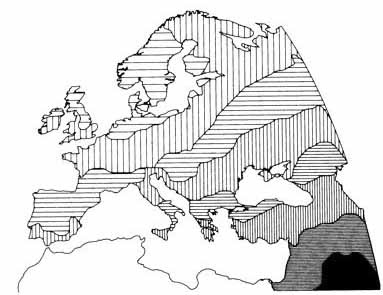
When Cavalli-Sforza and colleagues collected genetic data on modern Europeans, and subjected them to principal components' analysis made possible by modern computers, they discovered that the first principal component of genetic variation was oriented on a southeast-northwest axis.

At roughly the same time, the widespread dating of Neolithic sites across Europe proved that there was a fairly regular advent of farming, with the earlier sites found in Greece, and the latest ones in the Atlantic fringe and northern Europe.

Demic diffusion was summoned to explain these phenomena. Neolithic farmers, the story goes, did not particularly want to colonize Europe. Europe was colonized as a side-effect of a random process in which farmers moved away from their parent's home, while their population numbers grew due to the increased productivity of the farming economy.

The process was not seen as one of population replacement, however. Rather, it was seen as a slow movement of a wave of advance, in which farmers mixed with hunter-gatherers, and some of them moved on to populate new lands beyond the farmer-hunter frontier. The model predicted that the technology would spread without large-scale population replacement, as the hunters' genes would make a substantial contribution to farmers' gene pools at the furthest end of their expansion.

The Paleolithic Europeans make a comeback

Bryan Sykes' The Seven Daughters of Eve was a popular treatment of a new wave of acculturation-minded scholarship whose more formal expression was the masterful Tracing European Founder Lineages in the Near Eastern mtDNA Pool by Martin Richards et al.

Whereas Cavalli-Sforza and his colleagues had looked at dozens of polymorphisms, their synthetic PC maps of Europe didn't come with dates or easy explanations. The observed clines in Europe may have been due to Paleolithic, Neolithic, or even recent historical events. While they were consistent with the Neolithic demic diffusion hypothesis, the possibility existed that they may have been formed either earlier, or later than the Neolithic.

The new approach by Sykes, Richards, and their colleagues, looked at just mtDNA, but due to its being inherited from mother to daughter without recombination, they could (i) estimate the age of the common ancestors of the "European mothers", (ii) study the patterns of geographical distribution of their descendants to infer when and where they may have lived. Hence, the various stories about Katrine, Ulrike, Helena, etc. in Sykes's book.

The conclusions of the new methodology were clear (at least to the authors' satisfaction):
This robustness to differing criteria for the exclusion of back-migration and recurrent mutation suggests that the Neolithic contribution to the extant mtDNA pool is probably on the order of 10%–20% overall. Our regional analyses support this, with values of 20% for southeastern, central, northwestern, and northeastern Europe. The principal clusters involved seem to have been most of J, T1, and U3, with a possible H component. This would suggest that the early-Neolithic LBK expansions through central Europe did indeed include a substantial demic component, as has been proposed both by archaeologists and by geneticists (Ammerman and Cavalli-Sforza 1984; Sokal et al. Sokal et al., 1991 RR Sokal, NL Ogden and C Wilson, Genetic evidence for the spread of agriculture in Europe by demic diffusion, Nature 351 (1991), pp. 143–144.1991). Incoming lineages, at least on the maternal side, were nevertheless in the minority, in comparison with indigenous Mesolithic lineages whose bearers adopted the new way of life.

The picture of continuity since the Paleolithic was further supported in the much briefer article by Semino et al. (pdf) on The genetic legacy of Paleolithic Homo sapiens sapiens in extant Europeans: a Y chromosome perspective. This study, based mostly on the observation of rough congruences of the European map with some Y-chromosome markers set the stage for most Y-chromosome work in Europe for the next decade.

In today's terminology, this paper suggested that, like mtDNA, most European Y-chromosomes were Paleolithic in origin, and belonged in haplogroups R1b, R1a, and I which repopulated Europe from refugia in Iberia, the Ukraine, and the Balkans, after the last glaciation. To this set were added Neolithic immigrants from the Middle East bearing haplogroups J, G, and E1b1b, and Northern Asian immigrants from the east bearing haplogroup N1c.

Unfortunately, we do not have Y-chromosome data of Paleolithic age to determine the veracity of this scenario. Given present-day distributions, we can be fairly certain of a European origin (but when?) of haplogroup I, of a non-European origin of haplogroup E1b1b (via North Africa or the Middle East), and of N1c. A non-European origin of the entire haplogroups J and G in West Asia also seems quite probable.

The house of cards collapses

The beauty of science is that new data can always falsify cozy and plausible scientific theories. In the case of European prehistory, this occurred due to a combination of craniometric, archaeological, and mtDNA data.

Pinhasi and von Cramon-Taubadel (2009) examined skulls from the early Central European Neolithic (Linearbandkeramik) and found them to be closer to Neolithic skulls from Balkans and West Asia, rather than the per-farming Mesolithic populations.
Our results demonstrate that the craniometric data fit a model of continuous dispersal of people (and their genes) from Southwest Asia to Europe significantly better than a null model of cultural diffusion.
The authors correctly identified their data as rejecting cultural diffusion, but their conclusion that they supported demic diffusion was not warranted as there was really no evidence that Neolithic groups were "transformed" by gradual slow admixture with hunter-gatherers in their march into Europe. Their data could just as easily be explained by plain migration.

Archaeologists also made a strong case for a rapid diffusion of the Neolithic in the Mediterranean. Neolithic settlements appeared suddenly, fully-formed, occupied regions abandoned by Mesolithic peoples, and spread not slowly, in a wave of advance, but rapidly, as a full-fledged colonization:
Thus it appears that none of the earlier models for Neolithic emergence in the Mediterranean accurately or adequately frame the transition. Clearly there was a movement of people westward out of the Near East all of the way to the Atlantic shores of the Iberian Peninsula. But this demic expansion did not follow the slow and steady, all encompassing pace of expansion predicted by the wave and advance model. Instead the rate of dispersal varied, with Neolithic colonists taking 2,000 years tomove from Cyprus to the Aegean, another 500 to reach Italy, and then only 500–600 years to travel the much greater distance from Italy to the Atlantic (52).
In a different study Vanmontfort et al. studied the geographical distribution of farmers and hunter-gatherers during first contact in Central Europe. This contact did not involve either adoption of farming by hunter-gatherers (as in the acculturation hypothesis), or admixture with hunter-gatherers (as in the demic diffusion/wave of advance model). Rather, agriculturalists and hunter-gatherers tended to avoid each other for 1,000 years after first contact!
To conclude, the following model can be put forward. During the 6th Millennium cal BC, major parts of the loess region are exploited by a low density of hunter–gatherers. The LBK communities settle at arrival in locations fitting their preferred physical characteristics, but void of hunter–gatherer activity. Evidently, multiple processes and contact situations may have occurred simultaneously, but in general the arrival of the LBK did not attract hunter–gatherer hunting activity. Their presence rather restrained native activity to regions located farther away from the newly constructed settlements or triggered fundamental changes in the socio-economic organisation and activity of local hunter–gatherers. Evidence for the subsequent step in the transition dates to approximately one millennium later (Crombé and Vanmontfort, 2007; Vanmontfort, 2007).
The "Paleolithic" case won a short-lived victory when Haak et al tested mtDNA from early Central European farmers, discovering that they had a high frequency of haplogroup N1a which is rare in modern Europeans. This finding was interpreted as evidence that the incoming Neolithic farmers were few in numbers and were absorbed with barely a trace by the surrounding Mesolithic populations who adopted agriculture. Acculturation seemed to have won the day! The case was, however, tentative, and hinged on the assumption that the Paleolithic Europeans -who had not been tested yet- would have a gene pool similar to that of modern Europeans.

When hunter-gatherer mtDNA was tested in both Scandinavia (by Malmström et al) and Central/Eastern Europe (by Bramanti et al.), it turned out that continuity from the Paleolithic was rejected. Hunter-gatherers were dominated by mtDNA haplogroup U, and subgroups U4/U5 in particular. None of the other lineages postulated by Sykes et al. as being "Paleolithic" in origin were found in them. Moreover, there was substantial temporal overlap between hunter-gatherer and farmer cultures, but farmers seemed to lack mtDNA typical of hunter-gatherers and vice versa. Confirming the archaeological picture of the two groups avoiding each other, it now seemed that there was little genetic contact between the two, at least in the early age. The Neolithic spread by newcomers; there was no acculturation of Mesolithic people; there was no slow process of admixture between farmer and hunter along a wave of advance.

The gap between contemporaneous farmer and hunter mtDNA gene pools was as large as that found between modern Europeans and native Australians! The whole controversy about the relative contributions of the Neolithic and Paleolithic in the modern European gene pool was found to be beside the point. The modern European gene pool did not seem to be particularly similar to either Paleolithic hunter or Neolithic farmer: it possessed any haplogroups completely absent in pre-Neolithic Europe. And, it did not have a high frequency of the N1a "signature" haplogroup of the Neolithic. Selection, migration, or a combination of both had reshaped the European gene pool from the Neolithic onwards.

Where things stand

We have come full circle. Once again, Paleolithic Europeans assume the status of survivors, as their typical lineages are observed in a small minority of modern Europeans. The evidence for widespread acculturation of European hunter-gatherers or their significant genetic contribution to incoming farmers along a wave of advance is just not there. Hunters and farmers possessed distinctive gene pools, and farmers expanded with barely a trace of absorption of hunter gene pools.

Clearly many details remain to be filled out. What does seem certain, however, is that dramatic events took place starting at the Neolithic, and that modern Europeans trace their ancestry principally to Neolithic and post-Neolithic migrants, and not to the post-glacial foragers who inhabited the continent.

September 30, 2009

Some mtDNA links between Europe and Asia

I was planning on writing up a more complete narrative for this post, but I don't think the evidence is -as of yet- strong enough to support very strong speculation. I will simply say that the recent results of Bramanti et al. for a U-dominated older mtDNA stratum in Central/North-eastern Europe can be reasonably extended to cover both North-western Europe and northern Eurasia up to Lake Baikal, the prehistoric limit between Caucasoids and Mongoloids.

This boreal zone of U dominance contrasts with that of the Neolithic and Bronze Age inhabitants, where the familiar mix of ten or so main Caucasoid haplogroups makes its appearance, in various proportions and in various degrees of admixture at the eastern end of its expansion. The eastern Caucasoids were probably derived from both (i) West Asia via the spread of the Neolithic economy to the east wherever it could be ecologically supported, (ii) in the more northern parts, from migrations across the steppe from Central and Eastern Europe.

More ancient DNA research is needed to establish (i) how complete was the U dominance in the pre-Neolithic northern zone, and (ii) when, and where did the other Caucasoid haplogroups break into it.

Anyway, here is the post as it stands:

Ricaut et al. (2004) discovered the presence of mtDNA haplogroup N1a (16147A, 16172C, 16223T, 16248T, and 16355T) in an Iron Age Scytho-Siberian skeleton from the Altai, reporting the presence of haplogroup N1a among Iranians and upper caste Havik Brahmins from India.

The same sequence was detected in a Neolithic Central European (DER1) of the Linearbandkeramik (LBK) culture, with reported modern matches in Egypt and Armenia. The following haplogroups were detected in the Neolithic LBK gene pool: H*, N1a, K, HV, T2, V, J, W, U3.

A later study by Gokcumen et al. (2008) discovered the presence of N1a in modern Kazakhs from the Altai:
The haplotypic variation within the seven N1a samples was relatively high (Table 2), with these haplotypes belonging to both the European and Central Asian branches of this haplogroup, as recently defined by Haak et al. (2005). Thus, the source of N1a haplotypes in Altaian Kazakhs was unclear, although they seemed to have originated west of this part of Central Asia (Gokcumen et al., 2007).
Haplogroup N1a was found to be a genuine signature of the Central European Neolithic by contrasting its high representation in the LBK with the overwhelming presence of haplogroup U (and especially U5 and U4) mtDNA among the Paleolithic and Mesolithic populations of the region.

A separate Neolithic Funnel Beaker (TRB) sample from Scandinavia (Malmström et al. 2009) included only three individuals belonging to haplogroups H, J, and T. Obviously, a sample of 3 is insufficient, but the absence of haplogroup U in it parallels that of the LBK. By contrast, the contemporaneous Mesolithic Pitted Ware culture, represented by 19 samples had single instances of J, and T (which may be due to admixture with the TRB), a single instance of haplogroup V, one of the few ones thought to be European in origin, and a gene pool that was apparently dominated by haplogroups U4 and U5. The picture emerging from the northmost European hunter-gatherers is one of a restricted set of haplogroups where U subclades were dominant (about 3/4).

N1a was also detected in medieval high-status Hungarians:
Commoners show a predominance of mtDNA haplotypes and haplogroups (H, R, T), common in west Eurasia, while high-status individuals, presumably conquering Hungarians, show a more heterogeneous haplogroup distribution, with haplogroups (N1a, X) which are present at very low frequencies in modern worldwide populations and are absent in recent Hungarian and Sekler populations.
While, as we saw, N1a was frequent among Neolithic Central Europeans, its absence in Hungarian commoners suggests that it was re-introduced -in the high status individuals- from Asia.

Interestingly, there has been European and Asian mtDNA evidence that allows us to have a good idea of the mtDNA landscape on which N1a-bearing people migrated from west to east:

The pre-farming foragers of Europe were dominated by mtDNA haplogroup U. The easternmost sample in the aforementioned study was from Samara, in European Russia and consisted of a U5a, and a U5a1 sample. How far to the west and east did the U-dominated population of pre-Neolithic northern Caucasoids extend?

Neolithic Siberians from Lake Baikal, the eastermost anthropologically attested limit of prehistoric Caucasoid populations had only U5a as a Western Caucasoid element in a population dominated by Eastern Eurasian mtDNA. Similarly, the Lokomotiv Siberian burials from Lake Baikal only had U5a in an other Mongoloid mtDNA gene pool. Yu Hong, a Sogdian in China (1,400 years ago) also belonged to haplogroup U5.

U5a was not limited to the territory of Central Europe to China in ancient times. It was the haplogroup of Cheddar Man, a Paleolithic Briton, and U5a1 or U5a1a has also been detected in a Mycenaean from Bronze Age Greece. Interestingly, U5a1 seems to have decreased in frequency in Britain from the 4th c. to the present.

Is it possible that negative selection is affecting mtDNA frequencies in Europe? U-haplogroup turns up in many ancient DNA samples, but the discovery that it was absent (or non-detectible) in Neolithic farmers raises the possibility that its reduced frequency may be due to demography, i.e., the overwhelming of Paleolithic foragers by Neolithic (and later) intruders.

We know that in the Bronze and subsequent ages, Siberians from Krasnoyarsk belonged to a rich assortment of Caucasoid haplogroups. It seems that newcomers from the West joined the U-dominated earliest settlers:
Twenty samples were found to belong to west Eurasian haplogroups (U2, U4,
U5a1, T1, T3, T4, H5a, H6, HV, K, and I
), whereas the 6 remaining samples were attributed to east Eurasian haplogroups (Z, G2a, C, F1b and N9a).
At the other end of the Eurasiatic steppe, in the Bronze Age site of Eulau in Germany, the gene pool was also quite different from that of the Paleolithic inhabitants, with haplogroups K1b, U5b, I, H, X2, K1a2 detected.

Haplogroup X2 represents another link between the west and Siberia according to Reidla et al. (2003):
Overall, it appears that the populations of the Near East, the Caucasus, and Mediterranean Europe harbor subhaplogroup X2 at higher frequencies than those of northern and northeastern Europe (P less than .05) and that X2 is rare in Eastern European as well as Central Asian, Siberian, and Indian populations and is virtually absent in the Finno-Ugric and Turkic-speaking people of the Volga-Ural region. [...] the few Altaian (Derenko et al. 2001) and Siberian haplogroup X lineages are not related to the Native American cluster, and they are more likely explained by recent gene flow from Europe or from West Asia.
The Tubalar, Altaic speakers from the northeastern Altai showed a mixed Caucasoid-Mongoloid mtDNA gene pool, with the western component consisting of haplogroups H8, U4b, U5a1, and X2e:
Specifically, northeastern Altai appears to be a good candidate for the ancestral homeland of the haplogroup U4b, which is apparently ancient European. For some haplogroups, such as X2e, the relatively recent arrival to the Altai region is more likely.
Derenko et al. (2002) discovered a rich assortment of Caucasoid haplogroups in several populations from the Altai, including all aforementioned ones (H, HV1, J*, J1, J1b1, T1, T4, U1a, U2, U3, U4, U5a1, I, X and N1a):
The applied approach permitted identification of 60% of mtDNA types the majority of which had southern Caucasoid origin. Less than 10% of mtDNA types were of eastern European origin.
Derenko et al. (2003) also studied several populations from South Siberia where the Caucasoid component was much diminished (17%) with the following haplogroups present: H, U, J, T, I, N1a, X.

September 03, 2009

Central European farmers not descended from local hunter-gatherers (Bramanti et al. 2009)

This is the real power of DNA: the topic of whether central European farmers were the result of demic diffusion from the southeast or indigenous hunter-gatherers who adopted the agricultural economy has been endlessly debated in archaeological circles.

We are finally in a position to give an answer to the question, and the answer is in favor of the diffusionist camp and against the idea of acculturation by local hunter-gatherers. Surprisingly, modern Central Europeans do not appear to be a simple hunter-gatherer/farmer mix, suggesting that even later events (post-Neolithic) have shaped their genetic diversity.

This study is also a powerful argument against the idea of genetic continuity across long time spans. Most ancient DNA studies so far have reached a similar conclusion. Thus, it also destroys the supposed justification for continuity from Paleolithic Europe to modern times that early mtDNA work (of the Daughters of Eve variety) has proposed, hand in hand with the hunter acculturation hypothesis.

The paper is covered in National Geographic:
Central and western Europe's first farmers weren't crafty, native hunter-gatherers who gradually gave up their spears for seeds, a new study says.

Instead, they were experienced outsiders who arrived on the scene around 5500 B.C. with animals in tow—and the locals apparently didn't roll out the welcome wagon.

"Within a few generations, all the farmers—probably coming from southeast Europe—moved into central Europe bringing their culture, [livestock], and everything," Joachim Burger, a molecular archaeologist at the University of Mainz in Germany, said via email.

The finding is based on analysis of genetic material in the skeletal remains of ancient hunter-gatherers and early farmers found in Germany, Lithuania, Poland, and Russia—though farming is thought to have reached areas as far west as western France during the period of rapid expansion, about 7,500 years ago.

The study goes against a long-standing idea that Europe's first farmers were former hunter-gatherer populations that had settled the region after the last ice age, about 10,000 years ago.

Perhaps, the thinking went, the hunter-gatherers had observed farming practices during their travels or had learned from neighbors.

Instead, the researchers found, the hunter-gatherers and the early farmers remained segregated, according to the study, to be published tomorrow in the journal Science.
And the press release:
Analysis of ancient DNA from skeletons suggests that Europe's first farmers were not the descendants of the people who settled the area after the retreat of the ice sheets. Instead, the early farmers probably migrated into major areas of central and eastern Europe about 7,500 years ago, bringing domesticated plants and animals with them, says Barbara Bramanti from Mainz University in Germany and colleagues. The researchers analyzed DNA from hunter-gatherer and early farmer burials, and compared those to each other and to the DNA of modern Europeans. They conclude that there is little evidence of a direct genetic link between the hunter-gatherers and the early farmers, and 82 percent of the types of mtDNA found in the hunter-gatherers are relatively rare in central Europeans today.

For more than a century archaeologists, anthropologists, linguists, and more recently, geneticists, have argued about who the ancestors of Europeans living today were. We know that people lived in Europe before and after the last big ice age and managed to survive by hunting and gathering. We also know that farming spread into Europe from the Near East over the last 9,000 years, thereby increasing the amount of food that can be produced by as much as 100-fold. But the extent to which modern Europeans are descended from either of those two groups has eluded scientists despite many attempts to answer this question.

Now, a team from Mainz University in Germany, together with researchers from UCL (University College London) and Cambridge, have found that the first farmers in central and northern Europe could not have been the descendents of the hunter-gatherers that came before them. But what is even more surprising, they also found that modern Europeans couldn't solely be the descendents of either the hunter-gatherer alone, or the first farmers alone, and are unlikely to be a mixture of just those two groups. "This is really odd", said Professor Mark Thomas, a population geneticist at UCL and co-author of the study. "For more than a century the debate has centered around how much we are the descendents of European hunter-gatherers and how much we are the descendents of Europe's early farmers. For the first time we are now able to directly compare the genes of these Stone Age Europeans, and what we find is that some DNA types just aren't there - despite being common in Europeans today."

Humans arrived in Europe 45,000 years ago and replaced the Neandertals. From that period on, European hunter-gatherers experienced lots of climatic changes, including the last Ice Age. After the end of the Ice Age, some 11,000 years ago, the hunter-gatherer lifestyle survived for a couple of thousand years but was then gradually replaced by agriculture. The question was whether this change in lifestyle from hunter-gatherer to farmer was brought to Europe by new people, or whether only the idea of farming spread. The new results from the Mainz-led team seems to solve much of this long standing debate.

"Our analysis shows that there is no direct continuity between hunter-gatherers and farmers in Central Europe," says Prof Joachim Burger. "As the hunter-gatherers were there first, the farmers must have immigrated into the area."

The study identifies the Carpathian Basin as the origin for early Central European farmers. "It seems that farmers of the Linearbandkeramik culture immigrated from what is modern day Hungary around 7,500 years ago into Central Europe, initially without mixing with local hunter gatherers," says Barbara Bramanti, first author of the study. "This is surprising, because there were cultural contacts between the locals and the immigrants, but, it appears, no genetic exchange of women."

The new study confirms what Joachim Burger´s team showed in 2005; that the first farmers were not the direct ancestors of modern European. Burger says "We are still searching for those remaining components of modern European ancestry. European hunter-gatherers and early farmers alone are not enough. But new ancient DNA data from later periods in European prehistory may shed also light on this in the future."
And from archaeology.about.com:
A new study published by Barbara Bramanti and colleagues in Science Express on September 4, 2009, supports what some scholars have suspected all along—that the LBK likely were an in-migration of people from the Balkans, and that they did not, initially anyway, do much mixing at all with the earlier inhabitants of Europe.

Bramanti and her colleagues compared the mitochondrial DNA from 20 central European Upper Paleolithic, Mesolithic and Neolithic hunter-gatherers to that from 25 Neolithic farmers and 484 modern Europeans, spanning an age range from about 13,400 to 2,300 BC. The data shows that the early farmers and hunter-gatherers were from distinctively different populations.

This paper follows up on and to a degree contradicts with the hypothesis of an earlier paper that looked only at mtDA of the Neolithic farmers. That study (Haak et al. 2005) discovered that the farmers had a distinctive difference between the current residents of Europe, and hypothesized that that meant that the hunter-gatherers might have been more like the modern inhabitants, and thus, the LBK would have been only a minor component.
The earlier paper by Haak et al. they refer to.

(More technical details once I read the full paper)

UPDATE:

Pre-farming populations seem to have been dominated by mtDNA haplogroup U:
it is intriguing to note that 82% of our 22 hunter-gatherer individuals carried clade U (fourteen U5, two U4, and two unspecified U-types; table 1).
The hunter-gatherers had no N1a -which was a signature of early farmers in the Haak et al. paper- or of haplogroup H, the most common mtDNA haplogroup in Europeans today. The only non-U types in hunter-gatherers were all from the Ostorf site and included haplogroups T2e, J, and K.

The farmers:
In a previous study, we showed that the early farmers of Central Europe carried mainly N1a, but also H, HV, J, K, T, V, and U3 types (11, 12). We found no U5 or U4 types in that early farmer sample.
UPDATE I:

It is important to note the implications of this study: the most certain conclusion is that Neolithic farmers in Central Europe are very sharply differentiated from the Paleolithic-Mesolithic populations. This is clear evidence in favor of the diffusionist idea, since the acculturation hypothesis predicts that the mtDNA of the early farmers would be roughly that of the pre-farming population that picked up the new technology.

However, the evidence of this paper also contradicts the plain demic diffusion hypothesis. According to this hypothesis, farmer genes are gradually replaced by hunter genes as the farming economy spreads, because in each step there is a mix of farmer-indigenous populations which go on to colonize regions beyond the frontier. This is not what appears to have happened. Rather, it seems the farmers moved across Europe with very little interaction with pre-farmers. A long period of no contact between the LBK and foragers is actually supported by archaeology. I have termed this type of diffusion the "skipping stone":
In the Skipping Stone model, farmers move out in search of new territories before they have started to blend with the local foragers; the genetic impact of the initiators of the movement is preserved.
The great speed of the Linearbandkeramik farmers was also experienced by farmers who spread across the Mediterranean. The spread of agriculture in Europe does not appear to have been a slow process of interaction between farmer and forager, but rather a blitz by the first farmers, followed later, after the spread had already occurred by admixture with some of the foragers that remained.

We must also be certain not to jump into conclusions about the relative contributions of farmer and forager in the modern gene pool. Clearly both the idea of a predominantly "Paleolithic" and a predominantly "Neolithic" gene pool is problematic; such continuity is not really evident. However, the reasons for the discontinuity up to the present may be manifold: e.g., later population movements into Europe, or natural selection changing the gene pool without subsequent change of population.

What we do know is this: first farmers were not local foragers who abandoned the old ways for the new ones. Amalgamation between farmer and forager did not happen quickly as the farming economy spread. Finally it did happen, of course, and either because (i) there were few foragers in the mix, or (ii) their mtDNA was selected against, modern central Europeans have very little mitochondrial descent from the earliest European populations.

PS: Natural selection against forager mtDNA is not very outlandish. For example, a severe reduction of U5a1 and U5b haplogroup in Britain from ancient to modern times has been observed, which could potentially mark another data point in a process of selection against that haplogroup over time.

My personal guess is that both demography and selection may have played a role in the marginalization of hunter-gatherer mtDNA . LBK farmers were already 3 thousand years removed from the earliest agriculturalists of the Near East, so it is conceivable that they had evolved an mtDNA gene pool adapted to the new lifestyle that outcompeted the indigenous European one. But, the long period of isolation from foragers may mean that only farmer mtDNA benefited from the demographic boom associated with the new economy, and by the time relations between the two groups warmed up, the relatively few newcomers already dwarfed the older population demographically.

UPDATE II (Sep 4):

To understand the magnitude of the difference between farmers and hunter-gatherers, the authors calculate their Fst=0.163, which can be compared with a maximum value of 0.0327 among modern Europeans and 0.133 for modern Eurasians from Europe to Australia. Subsequently, the authors test the hypotheses of (a) continuity between hunter-gatherers and farmers, and (b) continuity between hunter-gatherers and modern Central Europeans, rejecting both.

This isn't very surprising in the light of the anthropological evidence in favor of diffusion of farmers from the Near East and against the acculturation hypothesis presented recently by Pinhasi et al. The very close relationship of the LBK skulls and their proximity to samples from Nea Nikomedeia in Greece and Catal Hoyuk in Anatolia contrasts with the Mesolithic populations.

UPDATE III (Sep 21):

Some possible anthropological evidence for post-LBK infusion into Central Europe:
Mesolithic Europeans display considerable variation in humero-clavicular and brachial indices yet none approach the extreme "hyper-polar" morphology of LBK humans from the MESV. In contrast, Late Neolithic and Early Bronze Age peoples display elongated brachial and crural indices reminiscent of terminal Pleistocene and "tropically adapted" recent humans. These marked morphological changes likely reflect exogenous immigration during the terminal Fourth millennium cal BC.

Science doi:10.1126/science.1176869

Genetic Discontinuity Between Local Hunter-Gatherers and Central Europe’s First Farmers

B. Bramanti et al.

Following the domestication of animals and crops in the Near East some 11,000 years ago, farming reached much of Central Europe by 7,500 years before present. The extent to which these early European farmers were immigrants, or descendants of resident hunter-gatherers who had adopted farming, has been widely debated. We compare new mitochondrial DNA (mtDNA) sequences from late European hunter-gatherer skeletons with those from early farmers, and from modern Europeans. We find large genetic differences between all three groups that cannot be explained by population continuity alone. Most (82%) of the ancient hunter-gatherers share mtDNA types that are relatively rare in Central Europeans today. Together, these analyses provide persuasive evidence that the first farmers were not the descendants of local hunter-gatherers but immigrated into Central Europe at the onset of the Neolithic.

Link

June 13, 2008

Ancient mtDNA from Sampula population in Xinjiang

From the paper:
Physical anthropology of Shao et al. revealed that the ancient human bones from Sampula exhibited primarily Mongoloid characteristics with certain European features, but Han et al. believed that Sampula populations are mainly of European character and actually are close to that of the Eastern Mediterranean type.

...

In conclusion, the analysis of mtDNA haplogroup distribution showed that the ancient Sampula was a complex population of European and Asian, corresponding to the physical anthopology result of Shao et al.

Progress in Natural Science, Volume 17, Issue 8 August 2007 , pages 927 - 933

Mitochondrial DNA analysis of ancient Sampula population in Xinjiang

Chengzhi Xie et al.

Abstract

The archaeological site fo Sampula cemetery was located about 14 km to the southwest of the Luo County in Xinjiang Khotan, China, belonging to the ancient Yutian kingdom. 14C analysis showed that this cemetery was used from 217 B.C. to 283 A. D. Ancient DNA was analysed by 364 bp of the mitochondrial DNA hypervariable region 1 (mtDNA HVR-1), and by six restriction fragment length polymorphism (RFLP) sites of mtDNA coding region. We successfully extracted and sequenced intact stretches of maternally inherited mtDNA from 13 out of 16 ancient Sampula samples. The analysis of mtDNA haplogroup distribution showed that the ancient Sampula was a complex population with both European and Asian Characteristics. Median joining network of U3 sub-haplogroup and multi-dimensional scaling analysis all showed that the ancient Sampula had maternal relationship with Ossetian and Iranian.

Link

May 07, 2008

mtDNA from Grave Circle B in Mycenae

A new preprint on mitochondrial DNA from Grave Circle B in Mycenae. Unfortunately, the authors report that they could not get any autosomal or Y chromosome DNA, however they did manage to obtain four mtDNA sequences (out of 22 individuals) which appear to be authentic, and which belonged to haplogroups UK ("heart-shaped face" individuals Γ55 and Γ58, possibly brother and sister), U5a1 or U5a1a ("long-faced" individual Ζ59) and the Cambridge Reference Sequence ("heart-shaped face" individual Α62), which is "compatible in the region sequenced
with various haplogroups including H, HV1, J, U, U3 and U4 (but not UK, U5a1 or U5a1a)." The pictures of the individuals are from Making faces : using forensic and archaeological evidence, by John Prag and Richard Neave, College Station : Texas A & M University Press, 1997 (ISBN 0890967849), first row: Γ55, Γ58, second row: Ζ59, Α62.

UPDATE: Certainly, the brother-sister inference is plausible, but strangely there was an observed case of a married couple from Sicily which also happened to be both in haplogroup U5a1a. Perhaps we'll never know.

UPDATE 2: I think this woman will be pleasantly surprised.

UPDATE 3: A nice podcast with Keri Brown, where she talks a lot about ancient DNA and its challenges (not about the Mycenaean work though). Also, a previous publication by the same group on the challenges of authentication of ancient DNA.

In the current paper they were able to distinguish some of the contaminant DNA of the lead author who handled the work because it had one of her unusual mutations, and conclude that while it is possible that the discovered sequences may be contaminants, it is more likely that they are not. It would certainly make a good detective story to try to find out the mtDNA sequence of the late J. Lawrence Angel who handled the remains extensively, or any other individuals associated with them.

UPDATE 4 (From the supplementary material). This confirms that by UK the authors mean the haplogroup more commonly known as K:

Γ55: "Positions 16224 and 16311 characterise haplogroup UK. Position 16093 is not characteristic of any haplogroup so may be either an artefact or a private mutation."
Γ58: "The endogenous DNA that is not AB therefore belongs to a haplogroup that differs from the CRS at 16224. The only possibilities are Z, which should also display mutations within MtC at 16185, 16223 and 16260, and UK. We therefore conclude that Γ58 contains endogenous DNA of haplogroup UK."
Z59: "MtF sequences were also obtained from the second Ζ59 extraction, and all six of these
differ from the CRS at 16256, 16266 and 16270 (highlighted in red in sequences 2f77, 2f78, 2f79,
2f80, 2f81, 2f82). Position 16266 is associated with haplogroup Y, and positions 16256 and 16270
with U5a1 and U5a1a. ... On balance, we conclude that Ζ59 contains endogenous DNA of
one of either haplogroup U5a1 or U5a1a, although Y remains a possibility."
A62: "The single MtC sequence that could be obtained (2c49) lacked the mutation at 16172 suggesting that this bone was not contaminated with AB DNA. Elsewhere the sequences conformed with the CRS, consistent in the region sequenced with various haplogroups (e.g. H, HV1, J, U, U3 and U4). None of the positions within this region diagnostic of UK (16224, 16311), U5a1 (16192, 16256, 16270), U5a1a (16256, 16270) or Y (16231, 16266) were mutated: hence there is no evidence for the presence of endogenous DNA of these haplogroups."

Journal of Archaeological Science doi:10.1016/j.jas.2008.04.010

Kinship between burials from Grave Circle B at Mycenae revealed by ancient DNA typing

Abigail S. Bouwmana, Keri A. Browna, N. W. Prag A.Johnb and Terence A. Brown

The richness of the burials in Grave Circle B at Mycenae, Greece, indicate that the 35 people interred there held elite status during their lifetimes 3500 years ago. It has been speculated that the groups of burials represent different dynasties or branches of the same family. To test this hypothesis, we carried out an exhaustive ancient DNA (aDNA) study of 22 of the skeletons. We
were unable to identify nuclear aDNA in any specimen, but we obtained authentic mitochondrial aDNA sequences for four individuals. The results were compared with facial reconstructions and interpreted within the archaeological context represented by the organisation of the graves and the positions of the burials within the graves. We conclude that the contemporaneous male Γ55 and female Γ58 skeletons, which both possess the UK mitochondrial haplogroup, were brother and sister. The implication is that Γ58 was buried in Grave Circle B not because of a marital connection but because she held a position of authority by right of birth. The results illustrate the difficulty in using aDNA to study kinship relationships between archaeological specimens, but also show that aDNA can advance understanding of kinship when used to test hypotheses constructed from other evidence.

Link

April 23, 2008

mtDNA of Jordanians

Related: Jordanian Y chromosomes

Ann Hum Biol. 2008 Mar-Apr;35(2):212-31.

Mitochondrial DNA variation in Jordanians and their genetic relationship to other Middle East populations.

González AM, Karadsheh N, Maca-Meyer N, Flores C, Cabrera VM, Larruga JM.

Background: The Levant is a crucial region in understanding human migrations between Africa and Eurasia. Although some mitochondrial DNA (mtDNA) studies have been carried out in this region, they have not included the Jordan area. This paper deals with the mtDNA composition of two Jordan populations. Aim: The main objectives of this article are: first, to report mtDNA sequences of an urban and an isolate sample from Jordan and, second, to compare them with each other and with other nearby populations. Subjects and methods: The analyses are based on HVSI and HVSII mtDNA sequences and diagnostic RFLPs to unequivocally classify into haplogroups 101 Amman and 44 Dead Sea unrelated individuals from Jordan. Results: Statistical analysis revealed that, whereas the sample from Amman did not significantly differ from their Levantine neighbours, the Dead Sea sample clearly behaved as a genetic outlier in the region. Its outstanding Eurasian haplogroup U3 frequency (39%) and its south-Saharan Africa lineages (19%) are the highest in the Middle East. On the contrary, the lack ((preHV)1) or comparatively low frequency (J and T) of Neolithic lineages is also striking. Although strong drift by geographic isolation could explain the anomalous mtDNA pool of the Dead Sea sample, the fact that its mtDNA lineage composition mirrors, in geographic origin and haplogroup frequencies, its Y-chromosome pool, points to founder effect as the main cause. Ancestral M1 lineages detected in Jordan that have affinities with those recently found in Northwest but not East Africa question the African origin of the M1 haplogroup. Conclusion: Results are in agreement with an old human settlement in the Jordan region. However, in spite of the attested migratory spreads, genetically divergent populations, such as that of the Dead Sea, still exist in the area.

Link

April 22, 2006

mtDNA of Polish Roma

Ann Hum Genet. 2006 Mar;70(2):195-206.

Mitochondrial DNA Diversity in the Polish Roma.

Malyarchuk BA, Grzybowski T, Derenko MV, Czarny J, Miscicka-Sliwka D.

Mitochondrial DNA variability in the Polish Roma population has been studied by means of hypervariable segment I and II (HVS I and II) sequencing and restriction fragment-length polymorphism analysis of the mtDNA coding region. The mtDNA haplotypes detected in the Polish Roma fall into the common Eurasian mitochondrial haplogroups (H, U3, K, J1, X, I, W, and M*). The results of complete mtDNA sequencing clearly indicate that the Romani M*-lineage belongs to the Indian-specific haplogroup M5, which is characterized by three transitions in the coding region, at sites 12477, 3921 and 709. Molecular variance analysis inferred from mtDNA data reveals that genetic distances between the Roma groups are considerably larger than those between the surrounding European populations. Also, there are significant differences between the Bulgarian Roma (Balkan and Vlax groups) and West European Roma (Polish, Lithuanian and Spanish groups). Comparative analysis of mtDNA haplotypes in the Roma populations shows that different haplotypes appear to demonstrate impressive founder effects: M5 and H (16261-16304) in all Romani groups; U3, I and J1 in some Romani groups. Interestingly, haplogroup K (with HVS I motif 16224-16234-16311) found in the Polish Roma sample seems to be specific for Ashkenazi Jewish populations.

Link

April 10, 2006

mtDNA of ancient Cumanians

A few years ago, I had proposed a mechanism for the arrival of Mongoloid genes into Europe. A paper on the Cumanians illustrates how these Mongoloid invaders turn out to be Caucasoid in terms of their mtDNA:
This study is the first aDNA characterization of one of the many historically attested eastern pastoral nomad populations that migrated into Europe—in this case, into the Carpathian basin during the 13th century. These archeological Cumanian samples belong to six haplogroups. One of these haplogroups belongs to the M lineage (haplogroup D) and is characteristic of Eastern Asia, but this is the second most frequent haplogroup in southern Siberia too. All the other haplogroups (H, V, U, U3, and JT) are West Eurasian, belonging to the N macrohaplogroup. Out of the eleven remains, four samples belonged to haplogroup H, two to haplogroup U, two to haplogroup V, and one each to the JT, U3, and D haplogroups. Modern Hungarian samples represent 15 haplogroups. All but one is a West Eurasian haplogroup [the remaining one is East Asian (haplogroup F)], but all belong to the N lineage. Four haplogroups (H, V, U*, JT), present in the ancient samples, can also be found in the modern Hungarians, but only for haplogroups H and V were identical haplotypes found. Haplogroups U3 and D occur exclusively in the ancient group, and 11 haplogroups (HV, U4, U5, K, J, J1a, T, T1, T2, W, and F) occur only in the modern Hungarian population. Haplogroup frequency in the modern Hungarian population is similar to other European populations, although haplogroup F is almost absent in continental Europe; therefore the presence of this haplogroup in the modern Hungarian population can reflect some past contribution.

Our results suggest that the Cumanians, as seen in the excavation at Csengele, were far from genetic homogeneity. Nevertheless, the grave artifacts are typical of the Cumanian steppe culture; and five of the six skeletons that were complete enough for anthropometric analysis appeared Asian rather than European (Horváth 1978, 2001), including two from the mitochondrial haplogroup H, which is typically European. It is interesting that the only skeleton for which anthropological examination indicated a partly European ancestry was that of the chieftain, whose haplotype is most frequently found in the Balkans.

Added to the Ancient DNA Compendium.

Human Biology
Volume 77, Number 5, October 2005

Bogácsi-Szabó, Erika. et al.

Mitochondrial DNA of Ancient Cumanians: Culturally Asian Steppe Nomadic Immigrants with Substantially More Western Eurasian Mitochondrial DNA Lineages

The Cumanians were originally Asian pastoral nomads who in the 13th century migrated to Hungary. We have examined mitochondrial DNA from members of the earliest Cumanian population in Hungary from two archeologically well-documented excavations and from 74 modern Hungarians from different rural locations in Hungary. Haplogroups were defined based on HVS I sequences and examinations of haplogroup-associated polymorphic sites of the protein coding region and of HVS II. To exclude contamination, some ancient DNA samples were cloned. A database was created from previously published mtDNA HVS I sequences (representing 2,615 individuals from different Asian and European populations) and 74 modern Hungarian sequences from the present study. This database was used to determine the relationships between the ancient Cumanians, modern Hungarians, and Eurasian populations and to estimate the genetic distances between these populations. We attempted to deduce the genetic trace of the migration of Cumanians. This study is the first ancient DNA characterization of an eastern pastoral nomad population that migrated into Europe. The results indicate that, while still possessing a Central Asian steppe culture, the Cumanians received a large admixture of maternal genes from more westerly populations before arriving in Hungary. A similar dilution of genetic, but not cultural, factors may have accompanied the settlement of other Asian nomads in Europe.

Link

November 11, 2005

mtDNA of early central European farmers

A new study in Science examines ancient mtDNA from Central Europe and more precisely from the Linearbandkeramik (LBK) and the related Alföldi Vonaldiszes Kerámia (AVK) cultures. The farmers of the LBK are responsible for the spread of agriculture in Central and Northern Europe, and hence their genetic composition is of particular interest:
From a total of 57 LBK/AVK individuals analyzed, 24 individuals (42%) revealed reproducibly successful amplifications of all four primer pairs from at least two independent extractions usually sampled from different parts of the skeleton. Eighteen of the sequences belonged to typical western Eurasian mtDNA branches; there were seven H or V sequences, five T sequences, four K sequences, one J sequence, and one U3 sequence (table S1). These 18 sequences are common and widespread in modern Europeans, Near Easterners, and Central Asians, and thus these 18 lineages lack the detailed temporal or geographic discrimination required to test the hypotheses we are examining, even though some of them have previously been suggested to be of Neolithic origin on the basis of modern DNA studies (15). We therefore concentrated on the mtDNA types identified in the other six individuals.

The most striking result is that 6 of the 24 Neolithic skeletons are of the distinctive and rare N1a branch. For verification, we sequenced 517 clones derived from independent extractions from different parts of the six individuals. All six showed the suite of mutations characteristic of the N1a lineage. Five of these six individuals display different N1a types, whereas Flomborn 1 and Derenburg 3 show identical N1a types (Table 1).
It is not surprising that the early Neolithic farmers belonged mainly to several well-known Caucasoid haplogroups. What is surprising is that a particular lineage, N1a which occurs at a low frequency in modern Europeans was found at a very high frequency in the ancient farmers. Moreover, it occurred in different sites, hence it appears to be a genuine distinguishing feature of the LBK, and not simply a peculiarity of some local population.

The reduction of frequency of N1a in the modern sample is 150-fold. As the authors suggest, genetic drift alone cannot account for this enormous reduction, and the reduction can be explained either because (a) modern central Europeans are primarily descended from Paleolithic ones and not from the Neolithic culture bearers, or (b) the genetic legacy of the early farmers has been wiped out by subsequent population movements into Central Europe:
These simulations reject the simple hypothesis in which modern Europeans are direct descendants of these first farmers and have lost N1a mainly by genetic drift. Hence the simulations confirm that the first farmers in Central Europe had limited success in leaving a genetic mark on the female lineages of modern Europeans. This is in contrast to the success of the Neolithic farming culture itself, which subsequently spread all over Europe, as the archaeological record demonstrates. One possible explanation is that the farming culture itself spread without the people originally carrying these ideas. This includes the possibility that small pioneer groups carried farming into new areas of Europe, and that once the technique had taken root, the surrounding hunter-gatherers adopted the new culture and then outnumbered the original farmers, diluting their N1a frequency to the low modern value. Archaeological research along the Western periphery of LBK and isotope studies of some of our sampled individuals seem to support the idea that male and female hunter-gatherers were integrated into the Neolithic communities (3, 10, 29). This hypothesis implies that N1a was rare or absent in Mesolithic Europeans, which may be a reasonable assumption given the rarity of the N1a type anywhere in the world (Fig. 3). An alternative hypothesis is a subsequent post–early-Neolithic population replacement in Europe, eliminating most of the N1a types. Archaeological evidence for such an event is as yet scant.
Free Image Hosting at www.ImageShack.us

In the supplemental data we can see that there are some modern matches to the 6 ancient mtDNA sequences belonging to haplogroup N1a.
  • The sequence of Derenburg 3/Flomborn 1 occurs in the Chuvashi, in Slovakia, in Yemen, in Mashhad \Ostan-e-Khorasan, in Turkmen from Turkmenistan, in Iran, in Estonia, and in Sweden
  • The sequence of Derenburg 1 occurs in Cairo Egypt, and Armenia.
  • The sequence of Halberstadt 2 is not found elsewhere.
  • The sequence of Unterwiederstedt 5 is not found elsewhere.
  • The sequence of Ecsegfalva 1 is not found elsewhere
In conclusion, it appears that modern central Europeans are very little physically descended from the early Neolithic culture bearers of the same region. What we really need now is for other early Neolithic samples from other parts of Europe, Western Eurasia, and Northern Africa to be studied, to see whether N1a was a peculiarity of the LBK, or it was a genuine feature of the first farmers.

PS: It should be noted that an alternative explanation for the great reduction in the frequency of N1a would be some form of negative selection. This suggestion is entirely speculative, but it should be kept in mind.

Update: I have added a link to this study to the Ancient DNA compendium.

Update 2: The major weakness of the study -apart from not having anything to say about selection- is that it assumes that haplogroup N1a was brought into Central Europe by the Neolithic farmers. However, there is no reason to suppose that this is the case. The authors arbitrarily label N1a as Neolithic, but they have no evidence that N1a was brought by the immigrant farmers and does not represent an indigenous component. Indeed, their own map shows that the particular cluster of N1a found in modern Europeans is not found in Greece or Turkey where the Neolithic of Europe originated. So, it is just as likely that N1a may be indigenous to central Europe and the Neolithic was associated with some of the other 18 sequences that were found in the Linear Pottery sample. Indeed, if N1a turns out to be Paleolithic, then the conclusions of their study will be completely reversed, and the great decrease in frequency of N1a would indicate an almost complete replacement of Paleolithic people by Neolithic farmers.

In conclusion: the authors don't present any evidence for N1a being Neolithic by either measuring a high frequency in originary areas of the Neolithic (Anatolia and Greece), or by sampling ancient populations from the originary areas. Hence, their conclusions are entirely arbitrary.

Science, Vol 310, Issue 5750, 1016-1018 , 11 November 2005

Ancient DNA from the First European Farmers in 7500-Year-Old Neolithic Sites

Wolfgang Haak et al.

The ancestry of modern Europeans is a subject of debate among geneticists, archaeologists, and anthropologists. A crucial question is the extent to which Europeans are descended from the first European farmers in the Neolithic Age 7500 years ago or from Paleolithic hunter-gatherers who were present in Europe since 40,000 years ago. Here we present an analysis of ancient DNA from early European farmers. We successfully extracted and sequenced intact stretches of maternally inherited mitochondrial DNA (mtDNA) from 24 out of 57 Neolithic skeletons from various locations in Germany, Austria, and Hungary. We found that 25% of the Neolithic farmers had one characteristic mtDNA type and that this type formerly was widespread among Neolithic farmers in Central Europe. Europeans today have a 150-times lower frequency (0.2%) of this mtDNA type, revealing that these first Neolithic farmers did not have a strong genetic influence on modern European female lineages. Our finding lends weight to a proposed Paleolithic ancestry for modern Europeans.

Link