Showing posts with label Iranian. Show all posts

April 13, 2015

Haplogroup G1, Y-chromosome mutation rate and migrations of Iranic speakers

The origin of Iranian speakers is a big puzzle as in ancient times there were two quite different groups of such speakers: nomadic steppe people such as Scythians and settled farmers such as Persians and Medes.

I am guessing that the story of Iranian origins will only be solved in correlation to their Indo-Aryan brethren and their more distant Indo-European relations.

Clearly, G1 cannot be Proto-Indo-European as it has a rather limited distribution in Eurasia, but it could very well have been a marker of a subset of Indo-Europeans. If it was present in ancestral Iranians, then this would geographically constrain the places where ancestral Iranians were formed.

PLoS ONE 10(4): e0122968. doi:10.1371/journal.pone.0122968

Deep Phylogenetic Analysis of Haplogroup G1 Provides Estimates of SNP and STR Mutation Rates on the Human Y-Chromosome and Reveals Migrations of Iranic Speakers

Oleg Balanovsky et al.

Y-chromosomal haplogroup G1 is a minor component of the overall gene pool of South-West and Central Asia but reaches up to 80% frequency in some populations scattered within this area. We have genotyped the G1-defining marker M285 in 27 Eurasian populations (n= 5,346), analyzed 367 M285-positive samples using 17 Y-STRs, and sequenced ~11 Mb of the Y-chromosome in 20 of these samples to an average coverage of 67X. This allowed detailed phylogenetic reconstruction. We identified five branches, all with high geographical specificity: G1-L1323 in Kazakhs, the closely related G1-GG1 in Mongols, G1-GG265 in Armenians and its distant brother clade G1-GG162 in Bashkirs, and G1-GG362 in West Indians. The haplotype diversity, which decreased from West Iran to Central Asia, allows us to hypothesize that this rare haplogroup could have been carried by the expansion of Iranic speakers northwards to the Eurasian steppe and via founder effects became a predominant genetic component of some populations, including the Argyn tribe of the Kazakhs. The remarkable agreement between genetic and genealogical trees of Argyns allowed us to calibrate the molecular clock using a historical date (1405 AD) of the most recent common genealogical ancestor. The mutation rate for Y-chromosomal sequence data obtained was 0.78×10⁻⁹ per bp per year, falling within the range of published rates. The mutation rate for Y-chromosomal STRs was 0.0022 per locus per generation, very close to the so-called genealogical rate. The “clan-based” approach to estimating the mutation rate provides a third, middle way between direct farther-to-son comparisons and using archeologically known migrations, whose dates are subject to revision and of uncertain relationship to genetic events.

Link

March 27, 2014

Major new article on the deep origins of Y-haplogroup R1a (Underhill et al. 2014)

Five years ago, Underhill et al. (2009) presented a major advance in the study of haplogroup R1a. Much new knowledge was added in the interim by genetic genealogists and some scientists,  and now a major new paper by Peter Underhill comes to update our knowledge of this important and widely spread human lineage.

The shallow coalescence time within R1a will not surprise many genetic genealogists while its diversification in the vicinity of present-day Iran might. A ~5-7kyBP coalescence would make the expansion of R1a lineages presumably visible to future ancient DNA studies which will probably be the final arbiter of the veracity of the date estimate in this paper and its postulated place of origin.

I'll try to digest what the new information has to say about Eurasian prehistory, but in the meantime...


... I will, however, take some time to highlight the passing of the guard from Y-STRs to Y-SNPs which I had long ago anticipated. There is some lingering controversy about the substitution rate on the Y chromosome is, but it is hopeful that this will be resolved before not too long as the price of whole genome sequencing is always dropping and the samples sequenced in this study are probably the first of many to come.

In any case:
Our phylogeographic data lead us to conclude that the initial episodes of R1a-M420 diversification occurred in the vicinity of Iran and Eastern Turkey, and we estimate that diversification downstream of M417/Page7 occurred ~5800 years ago. This suggests the possibility that R1a lineages accompanied demic expansions initiated during the Copper, Bronze, and Iron ages, partially replacing previous Y-chromosome strata, an interpretation consistent with albeit limited ancient DNA evidence.54, 60 However, our data do not enable us to directly ascribe the patterns of R1a geographic spread to specific prehistoric cultures or more recent demographic events. High-throughput sequencing studies of more R1a lineages will lead to further insight into the structure of the underlying tree, and ancient DNA specimens will help adjudicate the molecular clock calibration. Together these advancements will yield more refined inferences about pre-historic dispersals of peoples, their material cultures, and languages.
It would of course be great to get some ancient DNA data from Iran and Eastern Turkey:
Among the 120 populations with sample sizes of at least 50 individuals and with at least 10% occurrence of R1a, just 6 met these criteria, and 5 of these 6 populations reside in modern-day Iran. Haplogroup diversities among the six populations ranged from 0.78 to 0.86 (Supplementary Table 4). Of the 24 R1a-M420*(xSRY10831.2) chromosomes in our data set, 18 were sampled in Iran and 3 were from eastern Turkey. Similarly, five of the six observed R1a1-SRY10831.2*(xM417/Page7) chromosomes were also from Iran, with the sixth occurring in a Kabardin individual from the Caucasus. Owing to the prevalence of basal lineages and the high levels of haplogroup diversities in the region, we find a compelling case for the Middle East, possibly near present-day Iran, as the geographic origin of hg R1a.
Also, the finding that...
The four subhaplogroups of Z93 (branches 9-M582, 10-M560, 12-Z2125, and 17-M780, L657) constitute a multifurcation unresolved by 10 Mb of sequencing; it is likely that no further resolution of this part of the tree will be possible with current technology. Similarly, the shared European branch has just three SNPs.
... seems to imply some Copper-to-Bronze Age guys did more than their fair share of fathering.

European Journal of Human Genetics , (26 March 2014) | doi:10.1038/ejhg.2014.50

The phylogenetic and geographic structure of Y-chromosome haplogroup R1a

Peter A Underhill et al.

R1a-M420 is one of the most widely spread Y-chromosome haplogroups; however, its substructure within Europe and Asia has remained poorly characterized. Using a panel of 16 244 male subjects from 126 populations sampled across Eurasia, we identified 2923 R1a-M420 Y-chromosomes and analyzed them to a highly granular phylogeographic resolution. Whole Y-chromosome sequence analysis of eight R1a and five R1b individuals suggests a divergence time of ~25 000 (95% CI: 21 300–29 000) years ago and a coalescence time within R1a-M417 of ~5800 (95% CI: 4800–6800) years. The spatial frequency distributions of R1a sub-haplogroups conclusively indicate two major groups, one found primarily in Europe and the other confined to Central and South Asia. Beyond the major European versus Asian dichotomy, we describe several younger sub-haplogroups. Based on spatial distributions and diversity patterns within the R1a-M420 clade, particularly rare basal branches detected primarily within Iran and eastern Turkey, we conclude that the initial episodes of haplogroup R1a diversification likely occurred in the vicinity of present-day Iran.

Link

October 26, 2013

Afghan mega-paper (Di Cristofaro et al.)

The admixture results nicely presented on a map:


The authors note that none of the ancestral components peaks in Central Asia, concluding that this region has been a destination rather than a source of population movements. I certainly agree that Central Asia has a lot of recent history affecting it from virtually all directions. On the other hand, we should be cautious about interpreting geographical clines in terms of directionality of population movement; a good example is Sardinia which often emerges as a "focus" of Mediterranean ancestry, but this does not mean that it is the origin of such ancestry. It would certainly be interesting to remove the layers of more recent ancestry from Central Asia to see what was there before the last few thousand years.

The PCA based on autosomal data:


The Y-chromosome haplogroup data can be found in Figure S7. The authors comment:
94% of the chromosomes are distributed within the following 9 main haplogroups: R-M207 (34%), J-M304 (16%), C-M130 (15%), L-M20 (6%), G-M201 (6%), Q-M242 (6%), N-M231 (4%), O-M175 (4%) and E-M96 (3%). Within the core haplogroups observed in the Afghan populations, there are sub-haplogroups that provide more refined insights into the underlying structure of the Y-chromosome gene pool. One of the important sub-haplogroups includes the C3b2b1-M401 lineage that is amplified in Hazara, Kyrgyz and Mongol populations. Haplogroup G2c-M377 reaches 14.7% in Pashtun, consistent with previous results [31], whereas it is virtually absent from all other populations. J2a1-Page55 is found in 23% of Iranians, 13% of the Hazara from the Hindu Kush, 11% of the Tajik and Uzbek from the Hindu Kush, 10% of Pakistanis, 4% of the Turkmen from the Hindu Kush, 3% of the Pashtun and 2% of the Kyrgyz and Mongol populations. Concerning haplogroup L, L1c-M357 is significantly higher in Burusho and Kalash (15% and 25%) than in other populations. L1a-M76 is most frequent in Balochi (20%), and is found at lower levels in Kyrgyz, Pashtun, Tajik, Uzbek and Turkmen populations. Q1a2-M25 lineage is characteristic of Turkmen (31%), significantly higher than all other populations. Haplogroup R1a1a-M198/M17 is characterized by its absence or very low frequency in Iranian, Mongol and Hazara populations and its high frequency in Pashtun and Kyrgyz populations.


PLoS ONE 8(10): e76748. doi:10.1371/journal.pone.0076748

Afghan Hindu Kush: Where Eurasian Sub-Continent Gene Flows Converge

Julie Di Cristofaro et al.

Despite being located at the crossroads of Asia, genetics of the Afghanistan populations have been largely overlooked. It is currently inhabited by five major ethnic populations: Pashtun, Tajik, Hazara, Uzbek and Turkmen. Here we present autosomal from a subset of our samples, mitochondrial and Y- chromosome data from over 500 Afghan samples among these 5 ethnic groups. This Afghan data was supplemented with the same Y-chromosome analyses of samples from Iran, Kyrgyzstan, Mongolia and updated Pakistani samples (HGDP-CEPH). The data presented here was integrated into existing knowledge of pan-Eurasian genetic diversity. The pattern of genetic variation, revealed by structure-like and Principal Component analyses and Analysis of Molecular Variance indicates that the people of Afghanistan are made up of a mosaic of components representing various geographic regions of Eurasian ancestry. The absence of a major Central Asian-specific component indicates that the Hindu Kush, like the gene pool of Central Asian populations in general, is a confluence of gene flows rather than a source of distinctly autochthonous populations that have arisen in situ: a conclusion that is reinforced by the phylogeography of both haploid loci.

Link

October 22, 2013

A Persian in China (Y chromosome of Sayyid Ajjal)

Quite remarkable that a Persian (Sayyid Ajjal) would leave many descendants in faraway China, and one of this descendants (Zheng He) would one day set out to explore the West (from the perspective of China). A nice reminder of how far a Y-chromosome lineage might travel, even in the span of a couple of centuries.

arXiv:1310.5466 [q-bio.PE]

Present Y chromosomes support the Persian ancestry of Sayyid Ajjal Shams al-Din Omar and Eminent Navigator Zheng He

Chuan-Chao Wang et al.

Sayyid Ajjal is the ancestor of many Muslims in areas all across China. And one of his descendants is the famous Navigator of Ming Dynasty, Zheng He, who led the largest armada in the world of 15th century. The origin of Sayyid Ajjal's family remains unclear although many studies have been done on this topic of Muslim history. In this paper, we studied the Y chromosomes of his present descendants, and found they all have haplogroup L1a-M76, proving a southern Persian origin.

Link

July 05, 2013

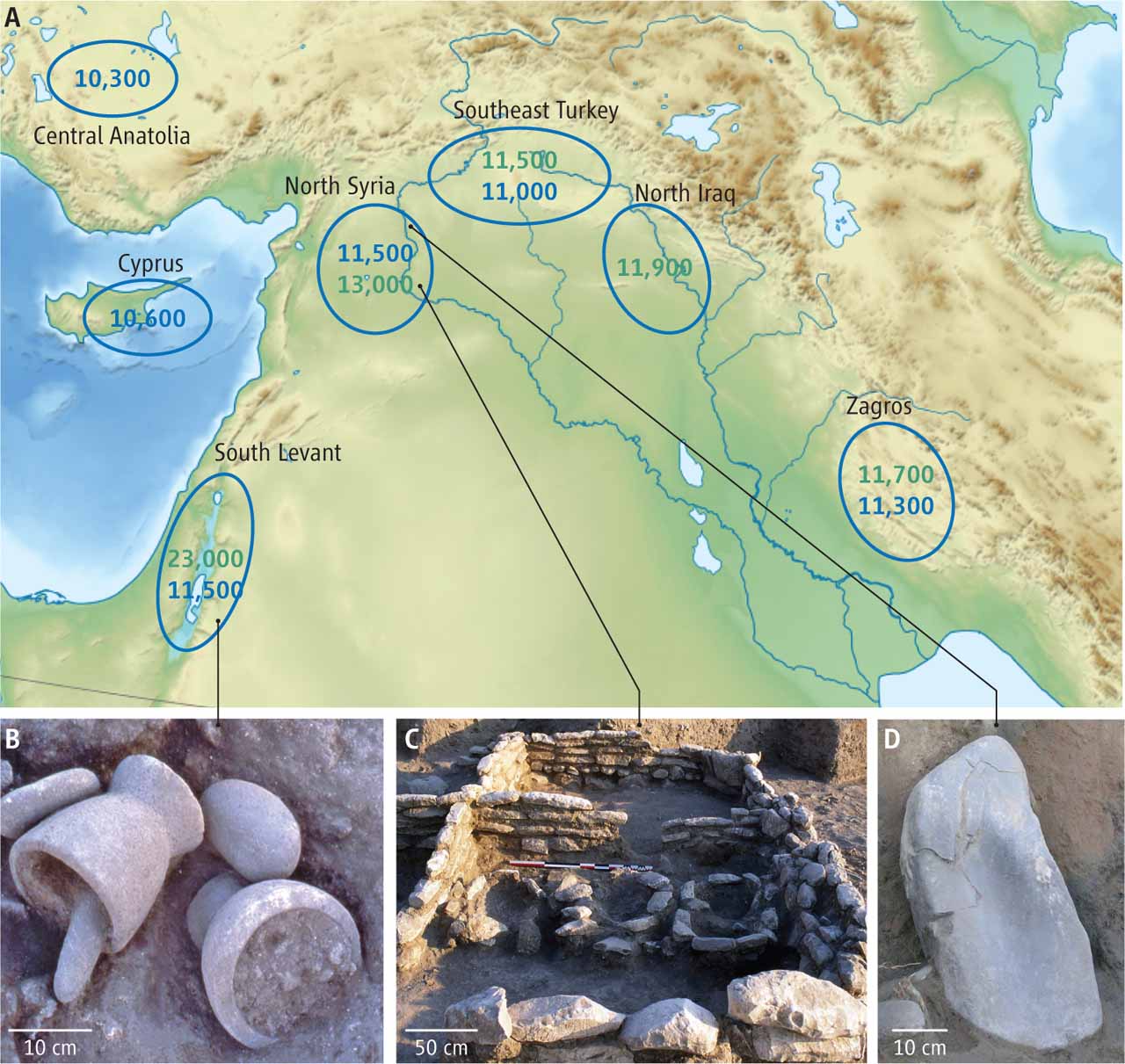
Early agriculture from Iran

A quite useful map from the press release of this paper:


The following map from an accompanying perspective is also quite interesting; "Dates in blue denote early cultivation of wild cereals" but "Ongoing excavations in central Anatolia and Cyprus are pushing dates back in these areas."


The issue of whether there was a single or (more likely multiple) areas of early agriculture is potentially important as it would imply that there were genetically differentiated (due to geographic distance) populations in the Neolithic womb of nations. In a global, or even a Eurasian context, these populations would be relatively genetically close, but not identical; it would be interesting to see to what extent present-day differentiation in the Near East reflects those early differences as opposed to more recent events.

Science 5 July 2013: Vol. 341 no. 6141 pp. 65-67

Emergence of Agriculture in the Foothills of the Zagros Mountains of Iran

Simone Riehl et al.

The role of Iran as a center of origin for domesticated cereals has long been debated. High stratigraphic resolution and rich archaeological remains at the aceramic Neolithic site of Chogha Golan (Ilam Province, present-day Iran) reveal a sequence ranging over 2200 years of cultivation of wild plants and the first appearance of domesticated-type species. The botanical record from Chogha Golan documents how the inhabitants of the site cultivated wild barley (Hordeum spontaneum) and other wild progenitor species of modern crops, such as wild lentil and pea. Wild wheat species (Triticum spp.) are initially present at less than 10% of total plant species but increase to more than 20% during the last 300 years of the sequence. Around 9800 calendar years before the present, domesticated-type emmer appears. The archaeobotanical remains from Chogha Golan represent the earliest record of long-term plant management in Iran.

Link

May 31, 2013

Origins of the Maykop phenomenon

Unfortunately this is in German, so I can only read it with a lot of effort and the help of Google Translate. Anyway, it seems to argue against the "Uruk expansion from Mesopotamia" hypothesis and point towards Central Asia, with the author finding parallels of the Maykop culture in the Kura valley and Lake Urmia area. That would certainly fit the bill of a more "eastern" PIE homeland as I mention in one of my posts below -if we accept, as many do- an IE identity for at least elements within the Maikop culture.

It would be great if ancient DNA was ever able to shed some light on archaeological controversies such as this. It has already done so in Europe, where the discovery of a Mediterranean-like TRB farmer in Sweden destroyed theories of "acculturation" in the diffusion of the Neolithic economy into that continent, and I'm sure that similarly interesting things were taking place during prehistory in other parts of the world.


A couple of related recent posts:

Praehistorische Zeitschrift. Volume 87, Issue 1, Pages 1–28

Kaukasus und Orient: Die Entstehung des „Maikop-Phänomens“ im 4. Jahrtausend v.Chr.

Mariya Ivanova

[English abstract] Graves and settlements of the 5th millennium BC in North Caucasus attest to a material culture that was related to contemporaneous archaeological complexes in the northern and western Black Sea region. Yet it was replaced, suddenly as it seems, around the middle of the 4th millennium BC by a “high culture” whose origin is still quite unclear. This archaeological culture named after the great Maikop kurgan showed innovations in all areas which have no local archetypes and which cannot be assigned to the tradition of the Balkan-Anatolian Copper Age. The favoured theory of Russian researchers is a migration from the south originating in the Syro-Anatolian area, which is often mentioned in connection with the socalled “Uruk expansion”. However, serious doubts have arisen about a connection between Maikop and the Syro-Anatolian region. The foreign objects in the North Caucasus reveal no connection to the upper reaches of the Euphrates and Tigris or to the floodplains of Mesopotamia, but rather seem to have ties to the Iranian plateau and to South Central Asia. Recent excavations in the Southwest Caspian Sea region are enabling a new perspective about the interactions between the “Orient” and Continental Europe. On the one hand, it is becoming gradually apparent that a gigantic area of interaction evolved already in the early 4th millennium BC which extended far beyond Mesopotamia; on the other hand, these findings relativise the traditional importance given to Mesopotamia, because innovations originating in Iran and Central Asia obviously spread throughout the Syro-Anatolian region independently thereof.

Link

December 05, 2012

Y chromosomes in Iranians and Tajiks (Malyarchuk et al. 2013)

An interesting paper on Iranian and Tajik Y chromosomes. Iranian Y chromosomes were comprehensively studied by Grugni et al. but it is always good to have additional samples.


I have mentioned before the apparent distinction between west and east Iranians in terms of haplogroup J/R1a frequencies, with high ratios in Persians and Kurds, and low ones in Pathans, and this seems to be reinforced here; the Tajiks are speakers of Persian (hence "western") but trace their ancestry to the east of the modern country of Iran, and in-between Persians and eastern Iranians.

The absence of R1a in this Kurdish sample, coupled with high J frequency parallels the situation in the Kurdish Anatolian settlement studied by Gokcument et al., as well as the Georgian Kurmanji sample studied by Nasidze et al. On the other hand, R1a is present in the Kurmanji samples from Turkey and Turkmenistan in the latter study, as well as in the aforementioned Kurdish sample from Iran by Grugni et al. and the Kurdish sample from Turkmenistan studied by Wells et al. I'd say that there is potential variation of this haplogroup within Kurdish groups, which might be worth further exploration.

It would also be very interesting to study the haplogroup I chromosomes from this region. Do they represent historical introgression from Europe, or are they, perhaps, local basal clades that reinforce the idea of a relic distribution of I in West Asia, prior to the migration into Europe, that was recently suggested by the discovery of IJ* chromosomes in Iran by Grugni et al.?


Annals of Human Biology, 2013; Early Online: 1–7

Y-chromosome variation in Tajiks and Iranians

Boris Malyarchuk et al.

Aim: The purpose of this study was to characterize Y-chromosome diversity in Tajiks from Tajikistan and in Persians and Kurds from Iran.

Method: Y-chromosome haplotypes were identified in 40 Tajiks, 77 Persians and 25 Kurds, using 12 short tandem repeats (STR) and 18 binary markers.

Results: High genetic diversity was observed in the populations studied. Six of 12 haplogroups were common in Persians, Kurds and Tajiks, but only three haplogroups (G-M201, J-12f2 and L-M20) were the most frequent in all populations, comprising together 60% of the Y-chromosomes in the pooled data set. Analysis of genetic distances between Y-STR haplotypes revealed that the Kurds showed a great distance to the Iranian-speaking populations of Iran, Afghanistan and Tajikistan. The presence of Indian-specific haplogroups L-M20, H1-M52 and R2a-M124 in both Tajik samples from Afghanistan and Tajikistan demonstrates an apparent genetic affinity between Tajiks from these two regions.

Conclusions: Despite the marked similarities between Y-chromosome gene pools of Iranian-speaking populations, there are differences between them, defined by many factors, including geographic and linguistic relationships.

Link

November 23, 2012

The comings and goings of Near Eastern and European domestic pigs (Ottoni et al. 2012)

This is an excellent paper whose findings re: pig domestication seem to parallel many of my own observations regarding the flow of human populations. It is open access, so you can read it for yourselves, but the following figure illustrates the situation admirably:


The left-right arrangement of the columns corresponds to a west-east longitude across West Asia. It can be easily seen that some of the early domestic samples (yellow, bottom row) are concentrated in the west (Y1 haplotype), while others (blue, Arm1T) in the east.

Neolithic European samples possessed the Y1 haplotype, but lacked the Arm1T one. So, the authors conclude that:
The ancient Anatolian data presented here reveal that both wild and possibly domestic Neolithic pigs (identified using traditional metrics) possessed Y1 haplotypes ... The presence of these lineages corroborates the supposition that the earliest domestic pigs in Europe originated from populations originally domesticated in the Near East, conclusively linking the Neolithization of Europe with Neolithic cultures of western Anatolia (Larson et al. 2007a; Haak et al. 2010).
I have repeatedly highlighted the "puzzle" of the early European Neolithic: the signature Y-haplogroup G2a was unaccompanied by other common Near Eastern lineages, and the modal "West Asian" ancestral component in present-day West Asian populations seems to have been absent in early Neolithic samples, which were dominated by a "Sardinian-like" population. I have argued that this meant that the European Neolithic was drawn from a limited founder source that was more "Mediterranean/Southern" autosomally than "West Asian", at least in terms of the components identified by the Dodecad Project.

In Europe itself, the early Near Eastern domestic pigs were replaced by European ones:

Ancient DNA extracted from early Neolithic domestic pigs in Europe resolved this paradox by demonstrating that early domestic pigs in the Balkans and central Europe shared haplotypes with modern Near Eastern wild boar (Larson et al. 2007a). The absence of Near Eastern haplotypes in pre-Neolithic European wild boar suggested that early domestic pigs in Europe must have been introduced from the Near East by the mid 6th millennium BC before spreading to the Paris basin by the early 4th millennium BC (Larson et al. 2007a). 
By 3,900 BC, however, virtually all domestic pigs in Europe possessed haplotypes  from an indigenous European domestication process (Larson et al. 2007a) only found in European wild boar. This genetic turnover may have resulted from the accumulated introgression of local female wild boar into imported domestic stocks, or from an indigenous European domestication process (Larson et al. 2007a).
We have seen that early Neolithic domestic pigs came from Western Anatolia, but apparently these did not last, but were replaced in Europe by pigs carrying mtDNA of European wild boar. An additional possibility is that the European wild boar were better adapted to local conditions in Europe, so the stock of European farmers gradually became "local" due to artificial/natural selection favoring the local "European" type. It might also be that in accordance with Bergmann's rule, European-descended pigs were simply bigger, and thus more economically productive.

In any case, the interesting thing is that pigs carrying the "European" haplotype went the other way, crossing from Europe to Asia. The beginning of this process seems to have occurred in the Middle Bronze Age:

The temporal and geographic distribution of genetic haplotypes presented in our study demonstrates that the first AMS dated pig with European ancestry (haplotype A) appeared almost 1,000 years earlier than the Armenian samples in a Late Bronze Age context (~1,600-1,440 BC) at Lidar Höyük (fig. 1). An even earlier Middle Bronze Age specimen from the same site also possessed a European signature, but a direct
AMS date for this specimen could not be obtained.
I have written how increased mobility and long-range networks associated with the new metallurgical class facilitated commerce during the Bronze Age. The authors suggest the possibility of Minoan-Mycenaean/Hittite involvement during the Bronze Age, which are certainly plausible conduits for European pigs to have crossed the Aegean at this time. But, as you can see from the figure, the "European" pigs are still outliers during the Middle and Bronze Ages, but become common in the Iron Age sample from Lidar Höyük, and eventually replacing local types throughout Anatolia and Armenia, but, apparently, not Iran:
The frequency of pigs with European ancestry increased rapidly from the 12th century BC, and by the 5th century AD domestic pigs exhibiting a Near Eastern genetic signature had all but disappeared across Anatolia and the southern Caucasus. Though we did not detect European signatures in the ancient Iranian samples (fig. 1), the eastward spread of European lineages may have continued into Iran later than the Iron Age since European lineages have been found in wild caught modern Iranian samples (Larson et al. 2007a).
Of course a 12th century BC increase in European domestic pigs is entirely consistent -chronologically- with the Phrygian/Armenian settlement in Anatolia, and this association is further reinforced by the lack of European signatures in pigs from Iran where Phrygo-Armenians did not settle. The increase in European pigs could later be mediated by the Greek colonization, and the increase in trade during antiquity, just as trade would later introduce East Asian pig DNA into Europe.

The beautiful temporal transect presented in the Figure may also prove useful for students of ancient human DNA. I'd love to see how humans living close to sites #14-16, dominated by Arm1T haplotypes throughout history might differ from those of Neolithic West Anatolia, and whether the "mixed" Iron Age sample from Lidar Höyük shows evidence of the arrival of European-like human populations to accompany the European pigs.

Mol Biol Evol (2012) doi: 10.1093/molbev/mss261

Pig domestication and human-mediated dispersal in western Eurasia revealed through ancient DNA and geometric morphometrics

Claudio Ottoni et al.

Zooarcheological evidence suggests that pigs were domesticated in Southwest Asia ∼8,500 BC. They then spread across the Middle and Near East and westward into Europe alongside early agriculturalists. European pigs were either domesticated independently or appeared so as a result of admixture between introduced pigs and European wild boar. These pigs not only replaced those with Near Eastern signatures in Europe, they subsequently also replaced indigenous domestic pigs in the Near East. The specific details of these processes, however, remain unknown. To address questions related to early pig domestication, dispersal, and turnover in the Near East, we analyzed ancient mitochondrial DNA and dental geometric morphometric variation in 393 ancient pig specimens representing 48 archeological sites (from the Pre-Pottery Neolithic to the Medieval period) from Armenia, Cyprus, Georgia, Iran, Syria and Turkey. Our results firstly reveal the genetic signature of early domestic pigs in Eastern Turkey. We also demonstrate that these early pigs differed genetically from those in western Anatolia that were introduced to Europe during the Neolithic expansion. In addition, we present a significantly more refined chronology for the introduction of European domestic pigs into Asia Minor that took place during the Bronze Age, nearly 1,000 years earlier than previously detected. By the 5th century AD, European signatures completely replaced the endemic lineages possibly coinciding with the demographic and societal changes during the Anatolian Bronze and Iron Ages.

Link

November 20, 2012

U7 in Rostov Scythians

I found it quite interesting that in terms of mtDNA, the Rostov Scythians studied by der Sarkissian resembled closely the Shugnans of Tajikistan, who speak an eastern Iranian language. The author finds links between the Scythians and the "Central Asian Corridor", in particular with respect to mtDNA haplogroup U7.

This "Central Asian Corridor" sensu der Sarkissian (Iraq, Iran, Pakistan, India) seems to touch Frachetti's Inner Asian Mountain Corridor (shown below) in the region of the Pamirs.


Interestingly, the Sughnans belong, anthropologically to the Pamir-Ferghana type, which was also called Central Asian interfluvial type, the rivers in question being the Oxus and Jaxartes (Amu Darya and Syr Darya). And, of course, between these two rivers was the heartland of the Bactria Margiana Archaeological Complex, which I have previously linked with the Indo-Iranians.

Wells et al. studied Y-chromosomes of Sughnans, Yagnobis and other Iranic survivals of Tajikistan more than 10 years ago, and it will be very well worth revisiting them with newer methods. The area east of the Caspian and west of the IAMC intersects so much history, that any data from from it (new or ancient) would be extremely useful.

In my own experiments there has been an unambiguous "South Asian" genetic component in almost all Iranic peoples, even the westernmost Kurds. While the interpretation of this component is not easy, it does point to a genetic relationship between its possessors and Central/South Asia, with notable contrasts between Kurds/Iranians and their non-Iranic Armenian/Anatolian/Caucasian neighbors.

The occurrence of mtDNA haplogroup U7 in the Rostov Scythians is also consistent with a link between the Iranian nomads who penetrated into Europe with the area east of the Caspian, and it is also, of course, consistent with the narrative of Herodotus who recorded the migration of the Scythians into Europe.

There is a widely held theory that the origin of the Indo-Iranians are to be sought in eastern Europe. That theory appears inconsistent both with the "South Asian" autosomal signal in Iranic groups, and with the mtDNA evidence. Consider, again, the evidence of der Sarkissian:


Now, if Rostov Scythians were primarily descended from Mesolithic West Eurasians or even Bronze Age ones, then we would expect them to cluster at the "top", approaching the northern Europeoid extrema of PWC and Bronze Age Altai (ALT-BA). On the contrary, their position is well to the "south" of all European Bronze Age groups, and intermediate between Europeans and Iron Age Asian groups from south Siberia and Kazakhstan (KUR-IA, KAZ-IA). Again, this is compatible with an east-west migration during the Iron Age.

It might be worth speculating on the possible autosomal history of the steppe, for which the mtDNA evidence complements others: I offer that the long-term trend will be one of diminishing "North European", increasing "West Asian" and "East Eurasian" influences across the Neolithic-Bronze-Iron Age boundaries. At the western end of the steppe, there may also be "Mediterranean"/Sardinian-like infusions from the Balkans and Central Europe, although these clearly did not influence Inner/South Asia (where Mediterranean components shrink to non-existence), and Europe proper was mostly the recipient rather than the emitter of populations to Asia. Hopefully, autosomal data to test this conjecture will be made available in the coming years.

October 03, 2012

rolloff analysis of South Indian Brahmins as Armenian+Chamar

The first analysis of this population showed that there were negative f3(Brahmin; X, Y) signals when X were a variety of West European, Balkan, and West Asian population, and Y either the Chamar or North Kannadi. In the first analysis I used Orcadians and North Kannadi. I have now carried out a new rolloff analysis on 470,559 SNPs, using Armenians_Y and Chamar_M as the reference populations.

The exponential fit can be seen below.
The admixture date is 142.814 +/- 15.010 generations, or 4,140 +/- 440 years, which seems to correspond quite well with commonly accepted dates for the formation of Indo-Iranian.

I have previously observed that:

These patterns can be well-explained, I believe, if we accept that Indo-Iranians are partially descended not only from the early Proto-Indo-Europeans of the Near East, but also from a second element that had conceivable "South Asian" affiliations. The most likely candidate for the "second element" is the population of the Bactria Margiana Archaeological Complex (BMAC). The rise and demise of the BMAC fits well with the relative shallowness of the Indo-Iranian language family and its 2nd millennium BC breakup, and has been assigned an Indo-Iranian identity on other grounds by its excavator. As climate change led to the decline and abandonment of BMAC sites, its population must have spread outward: to the Iranian plateau, the steppe, and into South Asia, reinforcing the linguistic differentiation that must have already began over the extensive territory of the complex.
Quite possibly, as the West Asian element began mixing with the Sardinian-like population in Greece, another branch of the Indo-Europeans made its appearance east of the Caspian, in the territory of the BMAC, admixing with South Asian-like populations. Thus, it might seem that the Graeco-Aryan clade of Indo-European broke down during the Bronze Age, with one branch heading off to the Balkans, and another to the east. 

This scenario would also explain how the likely J2-bearing population associated with the earliest Proto-Indo-Europeans may have acquired the contrasting pattern I have previously described: the western (cis-Caspian) population would have admixed with R1b-bearers who occupy the "small arc" west and south of the Caspian, while the eastern (trans-Caspian) populations would have admixed with R1a-bearers who occupy the "large arc" in the flatlands north and east of the Caspian. It would also explain how the "western" branch (Graeco-Armenian) would have picked up Sardinian-like "Atlantic_Med" admixture, which is absent in the "eastern" Indo-Iranian branch.

At the same time, this scenario would explain the lack of "North European" admixture in the "western" branch (since this was shielded by the Caucasus and Black Sea from the northern Europeoids who may have lived north of these barriers), and explain it in the "eastern" branch (since the BMAC agriculturalists were in contact with presumably northern Europeoid groups inhabiting the steppelands, unhindered by any major physical barriers). (The relative absence of this admixture in the Graeco-Armenian branch may be advanced on the strength of its absence in Armenians, the evidence of a Sardinian-like Iron Age individual from Bulgaria, and the historical-era timing of admixture for the Greek population.)

It would be interesting to carry out similar experiments on Iranian groups, to see if they, too, present a similar pattern of admixture.

August 20, 2012

Visualizing admixture differences with ACD tool

Vaêdhya has created a new ACD tool that allows one to visualize differences between sets of populations in terms of admixture components. He also posts two examples of the application of his tool on data generated by myself in the Dodecad Project, as well as by the Harappa Project.

 I have speculated about the origins of Indo-Iranians before, noting that the evidence links even the Kurds with a "South Asian" component; in subsequent higher-resolution analysis, such as the K12b, it appeared that this component was related to the Gedrosia component. In any case, the evidence is clear about the links of different Iranian and Indo-Aryan groups, so it is nice that this can be made evident with the ACD tool and data from the Harappa Project. Notice the excess of the Baloch (~Gedrosia) component in Kurds and Iranians in contradistinction to the Indo-European Armenians and Semitic Assyrians. It is fairly clear to me that the Iranian ancestral homeland is to be sought to the east, with the Bactria-Margiana Archaeological Complex (BMAC) being a good candidate for its location.

In a second plot, Vaêdhya uses Dodecad data to contrast patterns of differences in Northeastern Europe. Here, too, the patterns are clear, with Finns, and secondarily Russians showing an excess of Siberian ancestry relative to Poles. This is, no doubt, due to the Finnic element, which links Finns, and the Uralic substratum in Russians with Siberia. A second contrast is between Finns and Russians/Poles. The latter have more of the Caucasus component, a probable legacy of the Bronze Age Indo-European invasion of Europe. A final contrast is the higher Atlantic_Med element in Poles, which suggests an excess of early Neolithic farmer ancestry, or, admixture with West European populations such as Germans and others who possess more of this component than Slavs.

July 24, 2012

Archaeometallurgy in the Mediterranean

Continuing a discussion on metallurgical innovation which I began here.

Some interesting excerpts from a book chapter:
Tin bronze first appeared in Mesopotamia and Anatolia during the third millennium B.C., or Early Bronze Age (Pare 2000a:6–7). In the Mediterranean,the transition from arsenical to tin bronze took place during the course of the Middle Bronze Age (late third to early second millennium B.C.in the eastern Mediter-ranean, somewhat later in the west). The implication (Renfrew 1972:313–319) that tin bronze was an independent development in the northeast Aegean is contradicted by lead isotope analyses which show that most copper or bronze objects from sites such as Troy, Poliochni, and Kastri were not produced from local ores (Muhly and Pernicka 1992; Pernicka 1998:140–141). Exactly what caused the transition from arsenical to tin bronze is not well understood: as an alloy, tin bronze is not mechanically superior to arsenical copper (Pernicka 1998:135–136).Unlike arsenic, moreover, tin is not widely available as a mineral, and new trade networks would have been required to enable its distribution. However, it may have been easier to control the quality of tin bronze, and the production of tin bronze would have overcome the problem of working with toxic arsenic fumes (Charles 1978:30;Pare 2000a:7).

Given the limited number of tin deposits in the region, the source(s) of tin usedin the prehistoric eastern Mediterranean has always been a highly controversial issue. The suggestion that Afghanistan served as a prime source of tin for Bronze Age eastern Mediterranean societies is based in part on the existence of its rich tin resources (Muhly and Pernicka 1992:315;Weeks 1999:60–61).Muhly (1999:21) recently argued that Afghanistan or central Asia provided the tin that supplied the bronze industries of Mesopotamia, Anatolia, and the eastern Mediterranean, including Cyprus. Cuneiform documents from the early second millennium B.C., moreover, point to a trade network that brought tin from the east to the early states of Anatolia and Mesopotamia (Maddin et al.1977:41:Weeks 1999),and thence to the Mediterranean. Weisgerber and Cierny (2002,with fuller references) now maintain that prehistoric tin mining (second millennium B.C.), attested at the sites of Karnab (Uzbekhistan) and Musciston (Tajikistan), provided an important source of tin for Anatolia and Mesopotamia, if not for the Mediterranean. In contrast, Yener and Vandiver (1993) have argued that (very limited) tin deposits in the Taurus Mountains of southern Turkey were exploited during the Early Bronze Age. Their argument has been challenged by several scholars (e.g.,Muhly 1993;Weisgerberand Chierny 2002:180–181;papers in Journal of Mediterranean Archaeology 5[1995]) who maintain that the archaeological evidence is unclear,and far too limited to demonstrate anything beyond local use. Even if tin from the Taurus were mined during the Early Bronze Age, it now seems more likely that central Asia provided at least some of the tin used during the Middle-Late Bronze Ages,when tin bronze was far more widely produced, traded, and consumed in the Mediterranean. 
... 
By the Late Neolithic period (ca.4800–3100 B.C.), most people living in the Mediterranean region produced their own food, lived the year round in sedentary communities and increasingly were involved in intricate social and economic exchanges. By the beginning of the Bronze Age, certain alliances, special-interest groups, or even individual local leaders came to control access to raw materials in demand: obsidian, precious or semi-precious stones, metals such as gold, silver, copper, and tin, and a range of more perishable goods. From about 3000 B.C.onward – corresponding to the Chalcolithic period (Argaric culture) in Spain, the Final Neolithic in Italy, and the Early Bronze Age in the Aegean and eastern Mediterranean – the production and trade in metals increasingly became a key factor in promoting social change (Giardino 2000b;Knapp 1990a;Levy et al.2002;Manning 1994;Ruiz Taboada and Montero Ruiz 1999).  
...  
Technological innovations may be seen as progressive by managers and elites, but for the people who mined ores or smelted metals they were also potentially disruptive, forming the backdrop for social change as well as social abuse (Heskel andLamberg-Karlovsky 1980:260–261;Stollner 2003:427–429). Miners and metal-smiths often use ideology as a means to maintain, resist,or change their power base within society. Because elites who control and organize metallurgical produc-tion often use material culture to restructure relations of power (Gamble 1986:39), we may also expect such transformations to be visible in the archaeological record. 
...  
Consequently, there is little room to doubt that innovations in technology had deep-seated and long-lasting social and ecological effects, placing constraints as well as conferring benefits on Bronze Age mining and metallurgical production. In social terms, whereas the intensified production of copper employing an advanced technology did not preclude a strong sense of local community, such factors served to increase social distinctions between those at the top of the control structure and those at the bottom (Hardesty 1988:102,116;Knapp 1986b;2003). 
...  
The trade in metals during the Chalcolithic period was carried out on a very limited scale, and most metals were certainly consumed in the same area where they were produced (cf.Gale 1991). During the Early Bronze Age (third millennium B.C.), technological innovations like the longboat and sail facilitated the bulk transport of raw materials or manufactured goods on a much larger scale than ever before (Broodbank 1989). 
... 
Metals and metallurgy wielded an immense impact on Mediterranean Bronze Age societies, clearly evident in all the fundamental changes seen in the archaeological record from the end of the Chalcolithic period (Copper Age) onward. During the Bronze Age,innovations in maritime transport and the earliest cultivation of olives and vines stimulated the economy of the Mediterranean region and spurred some of its inhabitants to produce metals, take part in maritime trade, manufacture distinctive artifacts, and build domestic and public structures that represented the earliest towns and ceremonial complexes in the Mediterranean. The advent and spread of metallurgy promoted greater social distinctions,as certain individuals or groups acquired new wealth and prestige items. Because tin had to be imported in order to produce bronze, long-distance trade was stimulated. Duringthe second millennium B.C., gold, silver, copper, and tin came to represent what Sherratt (2000:83) has termed “convertible”value, both in an economic sense and in the literal sense that they could be consumed, stored, redistributed, or recycled in diverse forms and for various symbolic or ideological ends.Such documentary evidence as exists, exclusively in the eastern Mediterranean, is frequently preoccupied with these self-same metals (Liverani 1990:205–223,247–266;Moran,inKnapp 1996:21–25).

A remarkable series of social and economic changes thus were linked closely to all the innovative developments in extractive and metallurgical technologies,and tothe increasingly widespread and intensified production and distribution of metalsand metal objects. These changes include but are not limited to: (1) the proliferation of settlements and the emergence of town centers;(2) the development and expansion in interregional trade;(3) the growth of palatial regimes and city-state kingdoms,with their attendant writing systems (notably in the eastern Mediterranean);(4) the development and refinement of craft specialization and the spread of an iconographic koine;(5) the elaboration of mortuary rituals and burials with large quantities of precious metal goods;(6) the widespread occurrence of metal hoards and the related trade in recycled and scrap metal. The circulation of goods, ideas, and ideologies across geographic,cultural,and economic boundaries represents a social transaction,one that entangled producers, distributors, and consumers in wider relations of alliance and dependence, patronage and privilege, prestige and debt (Thomas 1991:123–124). Certain occupational identities came to be focused around metallurgical production and trade, and Cyprus even gave its name to the island’s most prominent product: copper ore (Muhly 1973:174–175).The coming of the Age of Iron, subsequent to all the developments discussed in this study, itself relied on extractive and smelting technologies developed during theBronze Age,together with the use of carburization, all of which are linked directly(albeit over the millennia) to the dramatic social and economic changes that ushered in the Industrial Revolution and the beginnings of the modern era.If it is indeed the case that “metals make the world go round” (Pare 2000b),nowhere can this slogan be better and more widely illustrated than in the prehistoric Bronze Age of the Mediterranean.

Archaeometallurgy in the Mediterranean: The Social Context of Mining, Technology, and Trade

Vasiliki Kassianidou and A.Bernard Knapp

Link

July 19, 2012

Huge study on Y-chromosome variation in Iran (Grugni et al. 2012)

This is the equivalent of a box of candy for anyone interested in Eurasian (pre-)history. I will have digest all the goodies within, and post any of my comments as updates to this post.

UPDATE I: Here is the table of haplogroup frequencies for easy reference:

One of the most interesting finds is the presence of a few IJ-M429* chromosomes  in the sample. Haplogroup IJ encompasses the major European I subclade, and the major West Asian J subclade. The discovery of IJ* chromosomes is consistent with the origin of this haplogroup in West Asia; it is widely believed that haplogroup I represents a pre-Neolithic lineage in Europe, although at present there are no Y chromosome-tested pre-Neolithic remains.

There is also a wide assortment of Q and R in Iran. While some of these may be intrusive (e.g., the 42.6% of Q1a2 in Turkmen, likely a legacy of their Central Asian origins), the overall picture appears consistent with a deep presence of these lineages in Iran. This is especially true for haplogroup R where pretty much every paragroup and derived group is present, excepting those likely to have originated recently elsewhere.

UPDATE II: From the paper:
Although accounting only for 25% of the total variance, the first two components (Figure 3) separate populations according to their geographic and ethnic origin and define five main clusters: East-African, North-African and Near Eastern Arab, European, Near Eastern and South Asian. The 1stPC clearly distinguishes the East African groups (showing a high frequency of haplogroup E) from all the others which distribute longitudinally along the axis with a wide overlapping between European and Arab peoples and between Near Eastern and South Asian groups. The 2ndPC separates the North-African and Near Eastern Arabs (characterized by the highest frequency of haplogroup J1) from Europeans (characterized by haplogroups I, R1a and R1b) and the Near Easterners from the South Asians (due to the distribution of haplogroups G, R2 and L). Iranian groups do not cluster all together, occupying intermediate positions among Arab, Near Eastern and Asian clusters. In this scenario, it is worth of noticing the position of three Iranian groups: (i) Khuzestan Arabs (KHU-Ar) who, despite their Arabic origin, are close to the Iranian samples; (ii) Armenians from Tehran (THE-Ar), whose position, in the upper part of the Iranian distribution, indicates a close affinity with the Near Eastern cluster, while their position near Turkey and Caucasus groups, due to the high frequency R1b-M269 and other European markers (eg: I-M170), is in agreement with their Armenia origin; (iii) Sistan Baluchestan (SB-Ba) that clusters with its neighbouring Pakistan.
UPDATE III: There are lots of little details in the haplogroup distribution that make historical sense. For example, C3 exists in Assyrians from Azarbaijan, and both C*, C3, and O exists in Zoroastrians from Yazd. It is often forgotten that before the spread of Islam, and quite time thereafter, Inner Asia was teeming with Zoroastrians and Nestorian Christians. It seems quite likely that these outliers represent a legacy of these communities.

UPDATE IV: I have a feeling that Razib will take exception with this statement: "Ancient Persian people were firstly characterized by the Zoroastrianism. After the Islamization, Shi'a became the main doctrine of all Iranian people."


UPDATE V: This confirms my observation from the recent studies in Afghanistan, that there is an inverse relationship of J2a and R1a in Iranian-speaking groups, with an excess of the latter among the eastern Iranians, and of the former among the Persians. From the paper:
Among the different J2a haplogroups, J2a-M530 [46] is the most informative as for ancient dispersal events from the Iranian region. This lineage probably originated in Iran where it displays its highest frequency and variance in Yazd and Mazandaran (Figure 2). Taking into account its microsatellite variation and age estimates along its distribution area (Tables S3 and S7), it is likely that its diffusion could have been triggered by the Euroasiatic climatic amelioration after the Last Glacial Maximum and later increased by agriculture spread from Turkey and Caucasus towards southern Europe. The high variance observed in the Italian Peninsula is probably the result of stratifications of subsequent migrations and/or of the presence of sub-lineages not yet identified. Of interest in the M530 network (Figures 2 and S3) is the presence of a lateral branch that is characterized by a DYS391 repeat number equal to 9. Differently from previous observations [46], this branch is not restricted to Anatolian Greek samples being shared with different eastern Mediterranean coastal populations. The M530 diffusion pattern seems to be also shared by the paragroups J2a-M410* and J2a-PAGE55*. In addition, the variance distribution of the rare R1b-M269* Y chromosomes, displaying decreasing values from Iran, Anatolia and the western Black Sea coastal region, is also suggestive of a westward diffusion from the Iranian plateau, although more complex scenarios can be still envisioned because of its non-star like structure.
Of course, the idea that the diffusion of J2a related lineages ties in with early agricultural expansions has been with us for a long time, but it is time to abandon it. First of all, as we have seen, J2a diminishes greatly as we head towards South Asia; it certainly doesn't look like the lineage of the multitude of agricultural settlements that sprang up along the southeastern vector soon after the invention of agriculture. Second, it is lacking so far in all ancient Y chromosome data from Europe down to 5,000 years ago. It seems much more probably that J2 related lineages spread from the highlands of West Asia much later. 


The "age estimates" are the result of using the inappropriate "evolutionary mutation rate", and become even older because of the inclusion of the DYS388 marker that is very stable in many haplogroups but very mutable within haplogroup J. On the left you can see frequency, Y-STR variance, and haplotype network structures for various J-related groups.


It is unfortunate that there is no progress in the phylogeographic assessment of R1a in this paper. There have been substantial discoveries of SNPs within this haplogroup as a result of commercial testing; however there is clearly an ascertainment bias in the newer discoveries, as almost all these SNPs have been detected in Europeans. The new paper confirms the high levels of Y-STR variance in India, Pakistan, and Iran. Together with the cornucopia of related paragroups in Iran, there is little doubt that this haplogroup originated in the general area of Central/South Asia.


Personally, as I have stated before, I would relate this R1a with Neolithic peoples living east of the Caspian, in contrast to the R1b bearers who lived west and south of it. These two populations came under the influence of the Indo-Europeans and spread in different directions. The Indo-Iranians were then initially the mixed descendants of the Indo-Europeans and the R1a old agricultural population, and were formed in the territory of the Bactria-Margiana Archaeological Complex. 


This also explains the contrast between Iranian and Armenian groups: the latter mostly lack the R1a lineage, contrasting with all Iranian groups (even their Kurdish neighbors) who possess it. Conversely, Iranian groups, and especially eastern Iranians and Indo-Ayrans lack the R1b lineage. This is due to the fact that neither R1a nor R1b were originally part of the Indo-European community, but their geographical position was such that they came under the influence of the Indo-Europeans when the latter began their expansion.


UPDATE VI: I have created my own dendrogram using the Y-haplogroup frequencies and the hclust package of R (default parameters):


From top to bottom, one can identify some clusters:

  • Eastern Europe, further broken down into Balkans and Slavic+Hungary
  • West Asian/Caucasus
  • Iranian Proper
  • Arab

These correspond largely to the clusters identified by the authors, with India and the Turkmen sample emerging as the clear outliers. I omitted the Ethiopian samples, since E-M78 was not resolved phylogenetically, causing the Ethiopians to group with the likely E-V13 from the Balkans.

UPDATE VII: I have also run MCLUST over the haplogroup frequency data over the MDS representation of the distance matrix. The maximum number of 10 clusters occurred with 5 MDS dimensions retained. Population assignments in the 10 clusters can be found in the table below:


Iran/Azerbaijan_Gharbi+Tehran_(Assyrian) 1
Iran/Lorestan_(Lur) 1
Iran/Tehran_(Armenian) 1
Iran/Azerbaijan_Gharbi_(Azeri) 2
Iran/Hormozgan_(Bandari+Afro-Iranian) 2
Iran/Hormozgan/Qeshmi 2
Iran/Khorasan_(Persian) 2
Iran/Kurdistan_(Kurd) 2
Iran/Sistan_Baluchestan_(Baluch) 2
Pakistan 2
Iran/Fars+Isfahan_(Persian) 3
Iran/Gilan_(Gilak) 3
Iran/Yazd+Tehran_(Zoroastrian) 3
Turkey/Central 3
Turkey/East 3
Turkey/West_ 3
Iran/Golestan_(Turkmen) 4
India 4
Iran/Khuzestan_(Arab) 5
Egypt_(Arab) 5
Iraq/Baghdad 5
Oman 5
Saudi_Arabia 5
Tunisia 5
United_Arab_Emirates 5
Iran/Mazandaran_(Mazandarani) 6
Iran/Yazd_(Persian) 6
Balkarian 6
Georgia 6
Albania 7
Greece 7
Bosnia 8
Croatia 8
Slovenia 8
Czech_Republic 9
Hungary 9
Poland 9
Ukraine 9
Iraq_(Marsh_Arab) 10
Qatar 10
Yemen 10


We can ignore cluster #4 which consists of the two outliers (India + Turkmen). The rest of the clusters seem relatively coherent. Notice, for example, the Arabian cluster #10, Balkan cluster #8, Eastern European cluster #9, Greek-Albanian cluster #7, Mixed Arab cluster #5.

PLoS ONE 7(7): e41252. doi:10.1371/journal.pone.0041252

Ancient Migratory Events in the Middle East: New Clues from the Y-Chromosome Variation of Modern Iranians

Viola Grugni et al.


Knowledge of high resolution Y-chromosome haplogroup diversification within Iran provides important geographic context regarding the spread and compartmentalization of male lineages in the Middle East and southwestern Asia. At present, the Iranian population is characterized by an extraordinary mix of different ethnic groups speaking a variety of Indo-Iranian, Semitic and Turkic languages. Despite these features, only few studies have investigated the multiethnic components of the Iranian gene pool. In this survey 938 Iranian male DNAs belonging to 15 ethnic groups from 14 Iranian provinces were analyzed for 84 Y-chromosome biallelic markers and 10 STRs. The results show an autochthonous but non-homogeneous ancient background mainly composed by J2a sub-clades with different external contributions. The phylogeography of the main haplogroups allowed identifying post-glacial and Neolithic expansions toward western Eurasia but also recent movements towards the Iranian region from western Eurasia (R1b-L23), Central Asia (Q-M25), Asia Minor (J2a-M92) and southern Mesopotamia (J1-Page08). In spite of the presence of important geographic barriers (Zagros and Alborz mountain ranges, and the Dasht-e Kavir and Dash-e Lut deserts) which may have limited gene flow, AMOVA analysis revealed that language, in addition to geography, has played an important role in shaping the nowadays Iranian gene pool. Overall, this study provides a portrait of the Y-chromosomal variation in Iran, useful for depicting a more comprehensive history of the peoples of this area as well as for reconstructing ancient migration routes. In addition, our results evidence the important role of the Iranian plateau as source and recipient of gene flow between culturally and genetically distinct populations.

Link

July 14, 2012

Population strata in the West Siberian plain (Baraba forest steppe)

Also from the Population Dynamics in Prehistory and Early History (2012) volume, this is an awesome ancient DNA study which dissects a succession of archaeological cultures stretching from the beginning of the metal ages to the beginning of the Iron Age in a small region of West Siberia. As the authors write:
Our work is devoted to the analysis of human migration processes that occurred during the Bronze Age (4th–early 1st millennium BC) in the forest steppe zone between the Ob and Irtysh rivers (about 800 km from west to east). This area, known as Baraba forest steppe, stretches over 200 km from the taiga zone in the north to the steppes in the south.
The careful examination of the sequence of cultures, combining ancient mtDNA and physical anthropology paints a very compelling picture of the changes that occurred in the span of a few millennia in the Baraba forest steppe. The authors give the map on the left, with the caption: "Fig. 5 | Location of ancient human groups with a high frequency of mtDNA haplogroups U5, U4 and U2e lineages. The area of Northern Eurasian anthropological formation is marked by yellow region on the map (References: 1 Bramanti et al., 2009; 2Malmstrom et al., 2009; 3 Krause et al., 2010; 4 this study)".


The northern Eurasian anthropological formation actually combines eastern and western Eurasian features and may correspond to the Proto-Uralic type. Researchers have clashed about the origins of this population element, with some considering it a third Eurasian race that evolved independently of Caucasoids and Mongoloids, others assigning it to a much diverged branch of one of the two major Eurasian races, and still others considering it the product of admixture between east and west.


All indications are that the type, unlike the Caucasoid-Mongoloid mixtures that took place in Central Asia in the last 2 millennia, is of more ancient vintage, and represents an anthropological element that was indeed of Caucasoid-Mongoloid origins, but in the rather remote past. The authors write with respect to the most ancient periods:

In contrast to the occupation of the southern region of West Siberia, modern humans arrived in the Ob-Irtysh interfluve relatively late, at the end of the Pleistocene, about 13–14 thousand years ago (Okladnikov, Molodin, 1983; Petrin, 1986). The absence of burials dating back to this period in the region does not allow us to conduct a biological investigation of this earliest population. The most ancient anthropological material available is from the Neolithic period (4th–5th millennium BC). 
And, what of the earliest available material?
The anthropological analysis of the material allowed us to detect a specific craniological type in the Baraba population, which was assigned to one of the anthropological formations discovered by V.V. Bunak in 1956 through the analysis of Neolithic materials from the northern forest zone of the East European Plain. Bunak called it the “northern Eurasian anthropological formation” (Bunak, 1956).

This anthropological type developed in a zone that is intermediate to the geographic areas occupied by the classic Caucasoids and the Mongoloids. The exists substantial anthropological evidence showing a wide geographic distribution of this anthropological formation: from the Trans-Urals forest and the Barabian province of Western Siberia in the east to Karelia and the Baltic in the west (Chikisheva, 2010).
The mtDNA evidence seems to support the anthropological assessment:
We have analyzed 18 mtDNA samples from the Ust-Tartas population to date (Fig. 3). The results obtained thus far allow us to draw several preliminary conclusions about the genetic background in the region in the beginning of the Bronze Age. By the Early Metal Period the mtDNA pool structure was already mixed and consisted of both Western and Eastern Eurasian haplogroups in nearly equal proportions. The eastern Eurasian mtDNA cluster was represented by Haplogroups A, C, Z, D, which are most typical of modern and perhaps ancient populations located in the east of the region studied. Haplogroups C and D were predominantly represented by widely distributed root haplotypes. A lineage of Haplogroup A that was detected in two Ust-Tartas samples represents a subcluster that is apparently characteristic of West Siberia and the Volga-Ural Region. The observed presence of Haplogroup Z lineages with a high frequency in the Ust-Tartas group was unexpected, since these lineages are nearly absent in the gene pool of modern indigenous West Siberian populations.

It is worth noting that the Western Eurasian mtDNA haplogroups in the Ust-Tartas series were represented only by Haplogroup U lineages, and specifically by the three subgroups – U2e, U4, U5a1. These results are in agreement with previous data indicating that Haplogroup U lineages (particularly Subgroups U5 and U4) predominated in Eastern, Central and Northern European hunter-gatherer groups from 14000 to 4000 years ago (Bramanti et al., 2009; Malmstrom et al., 2009), and possibly in earlier periods (Krause et al., 2010). The geographic area within which this genetic feature is observed appears to be broad (Fig. 5). Apparently, Baraba was near the eastern periphery of this area.
We now have evidence of the zone of U dominance extending from Iberia in the west and all the way to Lake Baikal in the east. But, this zone is not homogeneous: its western, European, end appears to have lacked the East Eurasian lineages, while starting from Ukraine and to the East the U types were supplemented by the Mongoloid lineages.

But, there was structure within the U zone itself: according to Lillie et al. (same volume) in Ukraine during the 6th millennium BC, the West Eurasian types were represented by U1 and U3, a different mix than in the Baraba forest steppe, and haplogroup T was also present, while of the Mongoloid haplogroups only C was present.

As we head into the Bronze Age, the population of the region displayed signs of continuity:

The genetic analysis of the Odinovo and Krotovo groups (10 and 6 samples, respectively) (Fig. 3) did not reveal any differences between them and the previous Ust-Tartas group, such as the presence of new mtDNA haplogroups. The mtDNA pool structure was still mixed. The East Eurasian haplogroups were represented by the D, C, Z (in both the Odinovo and Krotovo groups) and A (in the Krotovo group) haplogroups. The East Eurasian lineages identified were phylogenetically close (lineages of haplogroups A, C, Z) or even identical (D haplogroup, 16223–16362 lineages) to the samples from the Ust-Tartas group. The West Eurasian part of the samples were represented by the U5a1 (Odinovo group) and U2e (Krotovo group) haplogroup lineages.  
Although only a small series of samples have been investigated thus far, the data obtained reveal continuity between the Odinovo and Krotovo populations and the earlier Ust-Tartas group. These findings are consistent with the autochthonous development of the Baraba populations during the Early and the beginning of the Middle Bronze Age, as well as with the anthropological evidence.  
It is during the Middle and Late Bronze ages that we begin to say the first intrusive lineage into the native population mix:
The anthropological analysis of the West Siberian Andronovo population shows at least four craniological types. Three types are related to the Palaeocaucasian race and are represented by proto-European anthropological type variants. The fourth, Mongoloid, component is autochthonous. The most intensive interactions between the Andronovo migrants and the indigenous populations apparently occurred in the Baraba forest steppe and the right bank of the upper Ob River (Chikisheva and Pozdnyakov, 2003).  
To investigate the putative impact of Andronovo migrants on the mtDNA pool structure of the indigenous populations in Baraba, mtDNA samples from the Late Krotovo (n=20) and Andronovo (n=20) groups in this region were analyzed (Fig. 3) and compared to recently published data (n=10) (Keyser et al., 2009) and our own unpublished data (n=6) on mtDNA lineages from West Siberian Andronovo populations located outside the Baraba forest steppe.  
The genetic influence of migrants can be detected by the appearance of a new mtDNA haplogroup that was absent in the populations preceding the migration wave. This new mtDNA haplogroup, a West Eurasian T haplogroup, was detected in the Late Krotovo population. The T haplogroup appears simultaneously (with a 15 % frequency) in the Krotovo and Andronovo groups, but was completely absent in all preceding Baraba populations. We therefore consider the appearance of the Haplogroup T-lineage as the most likely genetic marker of the Andronovo migration wave to the region.  
This assumption is confirmed by mtDNA studies of Andronovo groups from other West Siberian areas. Haplogroup T lineages were found, with a frequency of 25 %, in the samples (n=16) taken from two Andronovo groups from the Krasnoyarsk and upper Ob River areas.  
We also detected another remarkable feature in the mtDNA pool of the Andronovo group from Baraba. Most mtDNA samples belonged to haplogroups, such as the East Eurasian A and C haplogroups, that are typical of preceding Baraba indigenous populations. Still, these haplogroups were not found in the other West Siberian Andronovo groups. Apparently, the Andronovo group from Baraba assimilated the aboriginal Krotovo population, from which it obtained these East-Eurasian mtDNA haplogroups. Obviously, there was reciprocal genetic contact between the migrant and indigenous groups in the region. 

...

A small but informative series of mtDNA samples from the Baraba Late Bronze Age culture population (n=5) was analyzed (Fig. 3), revealing the presence of MtDNA lineages (East Eurasian A and C lineages) that mark the genetic continuity with aboriginal Baraba groups. At the same time, the series includes the Haplogroup-T lineage, which we believe marks the Andronovo migration wave to West Siberia. Our data is therefore consistent with the putative origin of the West Siberian Late Bronze Culture population as the result of interaction between the Baraba indigenous genetic substrate and the newly arrived group.
It is now clear that the Andronovo groups moving into the area possessed mtDNA haplogroup T and assimilated the locals with their U+East Eurasian mix. It is of course interesting that haplogroup T is the only non-U lineage found in the aforementioned study of Mariupol-type cemeteries from Neolithic Ukraine.

The earliest occurrence of haplogroup T is in the Pre-Pottery Neolithic B of the Near East (Tell Hallula), and this haplogroup appears all over the place in Neolithic Europe. While a recent article has suggested a pre-Neolithic dispersal of T subclades into Europe, on the basis of modern populations, this hypothesis is difficult to reconcile with the ancient DNA data.


Pending new discoveries, it appears likely that mtDNA haplogroup T represents a Neolithic entrant into the boreal zone of U dominance. This has, of course, substantial implications in the context of J.P. Mallory's concept of fault lines, as it demonstrates that the steppe populations did not evolve in isolation, but the dominant lineage in the Andronovo groups was a late entrant into the indigenous U-zone of the eastern European plain.


But, the story doesn't end here:

The analysis of mtDNA samples from the Chicha-1 population revealed some interesting patterns. Crucial changes in the composition of mtDNA haplogroups in the gene pool were observed as compared to the earlier Baraba groups studied (Fig. 3). Dominance of Western Eurasian haplogroups and the near absence of East Eurasian were observed. Additionally, several new West Eurasian haplogroups appeared in the region, including Haplogroups U1a, U3, U5b, K, H, J and W.  
The phylogeographic analysis suggests that the distribution and diversification centres of several of these mtDNA haplogroups and specific lineages are located on the west and south west of the Baraba forest steppe region, on the territory corresponding to modern-day Kazakhstan and Western Central Asia (Fig. 10). Apparently, the migration wave from the south strongly influenced the gene pool of the Baraba population in the transitional period from the Bronze to the Early Iron Age. The impact of the northern human groups was probably less evident in the south of the Baraba forest steppe, at least at the mtDNA level. 
The drastic appearance of a purely Caucasoid population at the Iron Age from a southern, east-Caspian origin perhaps corresponds to the arrival of the first steppe Iranians. The vector of proposed migration is reasonable, if we consider both the likely Indo-Iranian homeland east of the Caspian, as well as the literary evidence for Scythian mobility during this period.

All in all, this is commendable research which allows us to intuit a sequence of events:
  • An early mixture zone between Caucasoids and Mongoloids
  • The Bronze Age arrival of mtDNA-T bearing Andronovo groups, the first pastoralists entering the zone of U+East Eurasian boreal hunter-gatherers; these Caucasoid peoples admixed with the natives of the mixture zone.
  • The early Iron Age arrival of a full-blown set of Caucasoid mtDNA lineages from the south paving the way for the Iranian Scytho-Sarmatian period

Human migrations in the southern region of the West Siberian Plain during the Bronze Age: Archaeological, palaeogenetic and anthropological data


Molodin, Vyacheslav I. et al.


In this paper we present archaeological and anthropological data on human migrations in the Western Siberian foreststeppe region during the Bronze Age (4th–beginning of 1st millennium BC). These data, accumulated over forty years of intensive research in the region, are compared to new results showing the diversity of mitochondrial DNA (mtDNA) lineages in this region during that period (92 mtDNA samples from seven ancient human groups). Preliminary analyses have demonstrated the usefulness of ancient DNA in tracing and unravelling patterns of past human migrations.  


Link


Prehistoric populations of Ukraine: Migration at the later Mesolithic to Neolithic transition


Lillie, Malcolm C. et al.


This paper focuses on the identification of population movements during the Mesolithic and Neolithic periods in the Dnieper Basin region of Ukraine. We assess the evidence for migration from the perspective of individual life histories using a combination of palaeoanthropology/pathology, radiocarbon dating, stable isotopic studies of diet, and mtDNA. 


Link