Showing posts with label Facial composites. Show all posts

September 12, 2017

Sexual orientation from facial images

This is hardly surprising, as there is an obvious evolutionary advantage for people being able to "read faces" not only for sexuality but also for various cognitive, moral, and personality traits (see, e.g., heroes and villains, wizards and simpletons are often portrayed stereotypically in art).


Deep neural networks are more accurate than humans at detecting sexual orientation from facial images

Description: We show that faces contain much more information about sexual orientation than can be perceived and interpreted by the human brain. We used deep neural networks to extract features from 35,326 facial images. These features were entered into a logistic regression aimed at classifying sexual orientation. Given a single facial image, a classifier could correctly distinguish between gay and heterosexual men in 81% of cases, and in 74% of cases for women. Human judges achieved much lower accuracy: 61% for men and 54% for women. The accuracy of the algorithm increased to 91% and 83%, respectively, given five facial images per person. Facial features employed by the classifier included both fixed (e.g., nose shape) and transient facial features (e.g., grooming style). Consistent with the prenatal hormone theory of sexual orientation, gay men and women tended to have gender-atypical facial morphology, expression, and grooming styles. Prediction models aimed at gender alone allowed for detecting gay males with 57% accuracy and gay females with 58% accuracy. Those findings advance our understanding of the origins of sexual orientation and the limits of human perception. Additionally, given that companies and governments are increasingly using computer vision algorithms to detect people’s intimate traits, our findings expose a threat to the privacy and safety of gay men and women.

Link

December 17, 2013

Reconstruction of 5,500-year old "Stonehenge Man"

I don't see any mention of DNA in the article The face of prehistoric Britain: Forensic scientist uses Neolithic man's 5,500-year-old skull to create lifelike image as part of new £27m Stonehenge centre, so it's not clear whether the pigmentation attributed to "Stonehenge Man" is the artist's imagination or based on solid evidence.

From the article:
He is the star attraction of Stonehenge's new £27million modern visitor centre that has taken decades to produce. 
A Neolithic man has been brought to life after the most advanced forensic reconstruction of a face, based on a 5,500-year-old skeleton buried in a long barrow 1.5 miles from Stonehenge. 
The new face of the model, which has been carefully reconstructed to show people what life was like

November 13, 2010

Skin yellowness but not masculinity as indicators of male facial attractiveness


We should keep in mind that this sample was recruited from a fairly homogeneous population, and thus is not directly relevant if one is interested in attractiveness of people of different ancestry.

From the paper:
The regression retained only skin yellowness as a predictor of attractiveness, and the effect of skin yellowness was positive and highly significant (F(1,71) = 10.806, Beta = .366, t = 3.287, p less than .002). Skin lightness, redness and morphological masculinity did not significantly predict attractiveness (all p>.114, see Table 1).


On the left, faces that scored low/high in brightness (top), redness (middle), and yellowness (bottom). On the right, composites of low/high masculinity based on morphology (top row), ratings (middle row), and morphing of faces in a more feminine (bottom left) or more masculine direction (bottom right).
PLoS One. 2010 Oct 27;5(10):e13585.

Does masculinity matter? The contribution of masculine face shape to male attractiveness in humans.

Scott IM, Pound N, Stephen ID, Clark AP, Penton-Voak IS.

Abstract

BACKGROUND: In many animals, exaggerated sex-typical male traits are preferred by females, and may be a signal of both past and current disease resistance. The proposal that the same is true in humans - i.e., that masculine men are immunocompetent and attractive - underpins a large literature on facial masculinity preferences. Recently, theoretical models have suggested that current condition may be a better index of mate value than past immunocompetence. This is particularly likely in populations where pathogenic fluctuation is fast relative to host life history. As life history is slow in humans, there is reason to expect that, among humans, condition-dependent traits might contribute more to attractiveness than relatively stable traits such as masculinity. To date, however, there has been little rigorous assessment of whether, in the presence of variation in other cues, masculinity predicts attractiveness or not.

METHODOLOGY/PRINCIPAL FINDINGS: The relationship between masculinity and attractiveness was assessed in two samples of male faces. Most previous research has assessed masculinity either with subjective ratings or with simple anatomical measures. Here, we used geometric morphometric techniques to assess facial masculinity, generating a morphological masculinity measure based on a discriminant function that correctly classified >96% faces as male or female. When assessed using this measure, there was no relationship between morphological masculinity and rated attractiveness. In contrast, skin colour - a fluctuating, condition-dependent cue - was a significant predictor of attractiveness.

CONCLUSIONS/SIGNIFICANCE: These findings suggest that facial morphological masculinity may contribute less to men's attractiveness than previously assumed. Our results are consistent with the hypothesis that current condition is more relevant to male mate value than past disease resistance, and hence that temporally fluctuating traits (such as colour) contribute more to male attractiveness than stable cues of sexual dimorphism.

Link

October 29, 2010

Facial composite of "global human"

Razib points me to a Dutch article where a "global average" was created, by averaging 1470 people in 25 countries, taking into account population size. Not sure what the exact methodology is (feel free to comment if you have more info), but it looks plausible enough. Here is a link to the original article (in Dutch).

June 21, 2010

Brown-eyed men perceived to be more dominant

(Last Update June 21)

The authors discovered that males with brown eyes were considered more dominant than males with blue eyes, but when they altered their pictures to turn brown eyes into blue, the effect persisted. Thus, it is not the color itself that creates the impression of dominance, but rather other factors correlated with the brown-eyed phenotype.

One of these "other factors" could be chin breadth, which is known to be perceived as dominant. From the paper:
The question arises: why are brown-eyed males rated as more dominant than blue-eyed? Some facial features such as square jaws, thick eyebrows and broad cheekbones are linked with higher perceived dominance; facial submissiveness, on the other hand, is characterized by a round face with large eyes, smallish nose, and high eyebrows (Berry, 1990; Berry & Mcarthur, 1986; Cunningham,Barbee, & Pike, 1990; Mazur, Halpern, & Udry, 1994; Mueller & Mazur,1997; Thornhill & Gangestad, 1994). The morphological differences between blue-eyed and brown-eyed males were visualized by deformation of thin-plate splines (Fig. 3). In contrast with blue-eyed males, brown-eyed males have statistically broader and rather massive chins, broader (laterally prolonged) mouths, larger noses, and eyes that are closer together with larger eyebrows. In contrast, blue-eyed males show smaller and sharper chins, mouths that are laterally narrower, noses smaller, and a greater span between the eyes. Especially the broader massive chin, bigger nose, and larger eyebrows of brown-eyed males may explain their higher perceived dominance.

The authors propose that true genetic linkage between eye color and these other facial features is unlikely, as eye color is determined by few loci, and these are unlikely to be the same ones that influence these other facial features. Thus, they propose a different explanation, namely that blue-eyed and brown-eyed children are treated differently by their parents as they grow up, and this "different treatment" manifests itself phenotypically. The argument in favor of different treatment stems from the fact that many people are born blue-eyed, but their eye color is set to a darker shade eventually. The authors write:
It is possible that subjects with blue eyes are treated as a small child for a longer period than brown-eyed children. Such early social experience may have been literally ‘‘inscribed” into their faces, preserved until adulthood, and finally bring on the perception of higher submissiveness. Rosenberg and Kagan (1987, 1989) investigated the association between eye color and behavioral inhibition, revealing that children with blue eyes are more inhibited. Coplan et al. (1998) found a significant interaction between eye color and social wariness within preschoolers. Blueeyed males were rated as more socially wary, i.e. being more temperamentally inhibited, displaying more reticent behavior and having more internalizing problems, than males with brown eyes, though there were no differences between blue- and brown-eyed females (Coplan et al., 1998).

There is an alternative explanation, that requires neither genetic linkage nor an environmental factor such as upbringing. That factor is latent population structure.

In a truly long-term random mating population, and assuming that eye color is not genetically linked with e.g. chin breadth, then all combinations of chin breadth and eye color would occur with a probability determined entirely by the frequency of their genetic determinants in the population.

However, consider the possibility that the population is an incomplete mixture of a blue-eyed "facially submissive" population element, and a brown-eyed "facially dominant" one. If that was the case, then brown-eyed folks would tend to have dominant facial features by reason of their ancestry rather than any genetic linkage between the two traits.

As an analogy, consider a hypothetical population made up of Europeans and East Asians. Initially, there would be a statistical association between straight hair and short stature in the total population that would be entirely due to population structure rather than either pleiotropic effects of genes affecting both characters or genetic linkage of hair/stature genes.

The Czech population is intermediate in its bigonial diameter between Germans and Slovaks (its immediate neighbors) [1], they are also genetically intermediate between Germans and Slavs. Procopius noted in early medieval times that Slavs had intermediate pigmentation. So, I wouldn't discount the possibility that population structure due to incomplete blending may account for eye color/facial structure associations in this population.

UPDATE:

Here are some values for German and Czech males from [1].

Bigonial (go-go): 97.6 / 109.5
Nasal height (n-sn): 52 / 54.0
Nasal breadth (al-al): 34.0 / 36.2
Mouth breadth (ch-ch): 50.9 / 53.8
Intercanthal distance (en-en): 31.2/30.9

Unfortunately there is no data for the eyebrows, but all of the above differences are in the expected direction under my theory: Germans have narrower jaws, smaller noses, narrower mouths, and eyes placed further apart than Czechs.

So, I think it is quite likely that the blue-eyed facially submissive type found in this sample may have a German origin.

PS: I did an average of the blue- and brown-eyed averages for reference:


[1] International anthropometric study of facial morphology in various ethnic groups/races, Leslie G Farkas, J Craniofac Surg 16:615-46

Personality and Individual Differences
Volume 49, Issue 1, July 2010, Pages 59-64

Eye color predicts but does not directly influence perceived dominance in men

Karel Kleisner et al.

This study focuses on the relationship between eye color, gender, and psychological characteristics perceived from the human face. Photographs of 40 male and 40 female students were rated for perceived dominance and attractiveness. Attractiveness showed no relation with eye color. In contrast, eye color had a significant effect on perceived dominance in males: brown-eyed men were rated as more dominant than men with blue eyes. To control for the effect of eye color, we studied perceived dominance on the same photographs of models after changing the iris color. The eye color had no effect on perceived dominance. This suggests that some other facial features associated with eye color affect the perception of dominance in males. Geometric morphometrics have been applied to reveal features responsible for the differences in facial morphospace of blue-eyed and brown-eyed males.

Link

June 15, 2010

June 12, 2010

Composite faces of Iran

Made with Sqirlz Morph.

Here are the answers to the Guess his Origin challenges.

Composite of 8 Isfahan Jews:


Composite of 8 Yezd-i-Khast villagers:


Bonus: composite of 8 Kinareh villagers:


Another bonus: composite of 16 Lurs from Pusht-i-Kuh:


The pictures were taken from Henry Field's Contributions to the anthropology of Iran, Vol. 2 (1939). The individuals for each composite were the youngest ones, rejecting individuals with a peculiar expression/closed eyes/very open mouths/extreme asymmetries etc.

June 08, 2010

Guess the origin of this composite man

Vote in the poll, leave a comment (if you want) to justify your opinion, and feel free to repost this; I'd like to get a big sample of opinions before I give away the answer.

Here are the poll results:


January 13, 2010

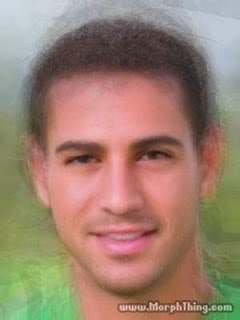
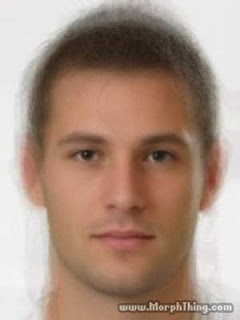
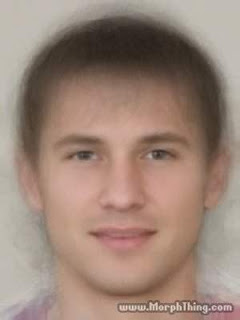
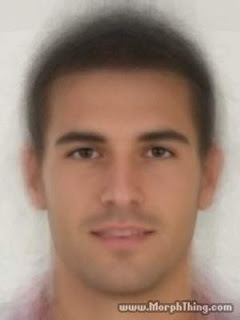
Another Four Composites: guess their origin

ANSWER (15/1/2010):

Israeli, Polish
Portuguese, Hungarian

END ANSWER

I won't reveal the origins of the four composites in the earlier post, since this would give out info on these four, all of which belong to a different group. Once again, guess away!


January 11, 2010

Guess the origin of these four composites

ANSWER (15/1/2010):

Russian, Cypriot
Romanian, Spanish

END ANSWER

These were sent to me by an Italian reader of the blog.

You can guess their country of origin, language group (e.g., Slavic, Germanic, Romance, Finno-Ugrian, Greek, etc.), geographical origin (N/S/W/E Europe or W/S/C Asia), or whatever else you can intuit about them.


December 01, 2009

Why Some Women Look Young for Their Age (Gunn et al. 2009)

On the left facial composites of younger/older (left/right) monozygotic/dizygotic twins (top/bottom).

PLoS ONE doi:10.1371/journal.pone.0008021

Why Some Women Look Young for Their Age

David A. Gunn et al.

Abstract

The desire of many to look young for their age has led to the establishment of a large cosmetics industry. However, the features of appearance that primarily determine how old women look for their age and whether genetic or environmental factors predominately influence such features are largely unknown. We studied the facial appearance of 102 pairs of female Danish twins aged 59 to 81 as well as 162 British females aged 45 to 75. Skin wrinkling, hair graying and lip height were significantly and independently associated with how old the women looked for their age. The appearance of facial sun-damage was also found to be significantly correlated to how old women look for their age and was primarily due to its commonality with the appearance of skin wrinkles. There was also considerable variation in the perceived age data that was unaccounted for. Composite facial images created from women who looked young or old for their age indicated that the structure of subcutaneous tissue was partly responsible. Heritability analyses of the appearance features revealed that perceived age, pigmented age spots, skin wrinkles and the appearance of sun-damage were influenced more or less equally by genetic and environmental factors. Hair graying, recession of hair from the forehead and lip height were influenced mainly by genetic factors whereas environmental factors influenced hair thinning. These findings indicate that women who look young for their age have large lips, avoid sun-exposure and possess genetic factors that protect against the development of gray hair and skin wrinkles. The findings also demonstrate that perceived age is a better biomarker of skin, hair and facial aging than chronological age.

Link

November 02, 2008

Sexy parents produce sexy daughters (but not sons)

A very interesting new paper in Animal Behaviour regarding the inheritance of masculinity/famininity and attractiveness. On the left are composites of 10 attractive parents and their daughters, and on the right composites of 10 unattractive parents and their daughters.

Not surprisingly, the attractive female looks similar to another facial composite in a recent study on facial correlates of sociosexuality by authors from the same institution (University of St. Andrews in the UK).

The difference between Fisherian runaway selection and "good genes" theory -mentioned below- is that in the former, a "sexy" trait is selected even though it has no adaptive value (such as the peacock's tail), while in the latter the latter the "sexy" trait is that which signifies good genetic qualities (e.g. health).

From the paper:
Our findings are supportive of both Fisherian processes and good genes theory. Both parents contributed to the attractiveness and femininity of daughters. We found that daughter's attractiveness was predicted independently by father's attractiveness and mother's femininity (and therefore, by default, mother's attractiveness). Fisherian selection processes would suggest that men have evolved preferences for sexually dimorphic facial characteristics in opposite-sex partners, and through human evolution these preferences have increased the frequency of feminine facial characteristics such as a slender chin, full lips and large eyes in women. Good genes theory predicts the same finding, although it suggests that feminine facial characteristics must by definition signal good quality, including possible cues to immunocompetence, fertility, youthfulness, health and perhaps even maternal tendencies

...

We are perplexed as to why we did not find any evidence for the inheritance of attractiveness in males, through either the female or male parent. Attractiveness, by its own definition, should be sexy, and while we found evidence for sexy parents–sexy daughters, we did not find the parallel in male offspring. While masculine dads produced masculine sons, in this study, sexy parents did not produce sexy sons.
UPDATE : For a possible solution to this paradox, see next post.

Animal Behaviour doi: 10.1016/j.anbehav.2008.07.031

Sexy sons and sexy daughters: the influence of parents' facial characteristics on offspring

R. Elisabeth Cornwell, and David I. Perrett

Abstract

Choosing a mate to maximize fitness underlies all sexual selection theories. Key to understanding mate choice is the inheritance of particular traits. Using family photos, we evaluated the predictions made by sexual selection theories for human mate choice concerning the inheritance of facial characteristics and assortment in facial appearance of parents. We found that both fathers' and mothers' attractiveness predicted the facial attractiveness of daughters: ‘sexy daughters’. Fathers and sons were related to each other in facial masculinity but not attractiveness, providing only partial evidence for ‘sexy sons’. Mothers and sons did not relate in masculinity–femininity; neither did fathers and daughters. Parents were similar in attractiveness but masculine men were not partnered to feminine women. Our findings support some predictions of Fisherian selection processes and ‘good genes’ theory but are less consistent with ‘correlated response theory’ and the immunocompetence handicap principle.

Link

October 06, 2008

Attractiveness of Hot or Not women


Pierre Tourigny over at flickr has posted facial composites of hot or not women based on their user ratings. Fatness-thinness seems to be the most salient feature of the attractiveness continuum, probably accounting for the really low ratings. For women that don't receive really low scores, no obvious pattern is apparent, although the top girl seems to have fairly large eyes and a narrow chin..

There are also composites of Miss Universe contestants by continent of origin and hot or not women based on age. Their creator uses the same program, Szirlz Morph that I have used to create these composites recently.

April 12, 2008

Breeding attractive faces in a computer

A nice paper which "breeded" attractive faces by using morphing and a genetic algorithm. The researchers created successive generations of faces by combining (with morphing) faces rated as attractive. They were able to create faces of increasing attractiveness in each subsequent generation.

I don't have the paper (send it to me if you do!), but a question is: does increasing attractiveness result from more averaging, or from the selection pressure imposed by raters? We do know that facial averaging has a beautifying effect: really attractive faces are not average, but average faces tend to be attractive. One could determine the effect of the selection pressure -above and beyond that of averaging- by comparing faces evolved under pressure with randomly bred faces.

Laryngoscope. 2008 Apr 7 [Epub ahead of print]

Evolving Attractive Faces Using Morphing Technology and a Genetic Algorithm: A New Approach to Determining Ideal Facial Aesthetics.

Wong BJ, Karimi K, Devcic Z, McLaren CE, Chen WP.

OBJECTIVES:: The objectives of this study were to: 1) determine if a genetic algorithm in combination with morphing software can be used to evolve more attractive faces; and 2) evaluate whether this approach can be used as a tool to define or identify the attributes of the ideal attractive face. STUDY DESIGN:: Basic research study incorporating focus group evaluations. METHODS:: Digital images were acquired of 250 female volunteers (18-25 y). Randomly selected images were used to produce a parent generation (P) of 30 synthetic faces using morphing software. Then, a focus group of 17 trained volunteers (18-25 y) scored each face on an attractiveness scale ranging from 1 (unattractive) to 10 (attractive). A genetic algorithm was used to select 30 new pairs from the parent generation, and these were morphed using software to produce a new first generation (F1) of faces. The F1 faces were scored by the focus group, and the process was repeated for a total of four iterations of the algorithm. The algorithm mimics natural selection by using the attractiveness score as the selection pressure; the more attractive faces are more likely to morph. All five generations (P-F4) were then scored by three focus groups: a) surgeons (n = 12), b) cosmetology students (n = 44), and c) undergraduate students (n = 44). Morphometric measurements were made of 33 specific features on each of the 150 synthetic faces, and correlated with attractiveness scores using univariate and multivariate analysis. RESULTS:: The average facial attractiveness scores increased with each generation and were 3.66 (+0.60), 4.59 (+/-0.73), 5.50 (+/-0.62), 6.23 (+/-0.31), and 6.39 (+/-0.24) for P and F1-F4 generations, respectively. Histograms of attractiveness score distributions show a significant shift in the skew of each curve toward more attractive faces with each generation. Univariate analysis identified nasal width, eyebrow arch height, and lip thickness as being significantly correlated with attractiveness scores. Multivariate analysis identified a similar collection of morphometric measures. No correlation with more commonly accepted measures such as the length facial thirds or fifths were identified. When images are examined as a montage (by generation), clear distinct trends are identified: oval shaped faces, distinct arched eyebrows, and full lips predominate. Faces evolve to approximate the guidelines suggested by classical canons. F3 and F4 generation faces look profoundly similar. The statistical and qualitative analysis indicates that the algorithm and methodology succeeds in generating successively more attractive faces. CONCLUSIONS:: The use of genetic algorithms in combination with a morphing software and traditional focus-group derived attractiveness scores can be used to evolve attractive synthetic faces. We have demonstrated that the evolution of attractive faces can be mimicked in software. Genetic algorithms and morphing provide a robust alternative to traditional approaches rooted in comparing attractiveness scores with a series of morphometric measurements in human subjects.

Link

April 10, 2008

Your attitude towards sex can be guessed by looking at your face

Restricted on the left, unrestricted on the right.

Evolution and Human Behavior doi:10.1016/j.evolhumbehav.2007.12.009

Facial correlates of sociosexuality

Lynda G. Boothroyd et al.

Abstract

Previous studies have documented variation in sexual behaviour between individuals leading to the notion of ‘restricted’ individuals (i.e., people who prefer long-term relationships) and ‘unrestricted’ individuals (i.e., people who are open to short-term relationships). This distinction is often referred to as sociosexual orientation. Observers have been previously found to distinguish sociosexuality from video footage of individuals, although the specific cues used have not been identified. Here we assessed the ability of observers to judge sexual strategy based specifically on cues in both facial composites and real faces. We also assessed how observers' perceptions of the masculinity/femininity and attractiveness of faces relate to the sociosexual orientation of the pictured individuals. Observers were generally able to identify restricted vs. unrestricted individuals from cues in both composites and real faces. Unrestricted sociosexuality was generally associated with greater attractiveness in female composites and real female faces and greater masculinity in male composites. Although male observers did not generally associate sociosexuality with male attractiveness, female observers generally preferred more restricted males' faces (i.e., those with relatively strong preferences for long-term relationships). Collectively, our results support previous findings that androgenisation in men is related to less restricted sexual behaviour and suggest that women are averse to unrestricted men.

Link

April 01, 2008

Guess their origin and rate their attractiveness

Each of these three men is a facial composite of individuals from a single European nation.


UPDATE (Apr 3):

The results of the poll are in:

Who is more attractive: Left: 155 (64%), Middle: 52 (21%), Right: 36 (15%)
The man on the Left is: Germanic: 130 (51%), Finno-Ugrian: 81 (32%), Slavic: 29 (11%), Romance: 11 (4%), Greek: 4 (2%)
The man in the Middle is: Slavic: 56 (26%), Germanic: 45 (21%), Romance: 45 (21%), Finno-Ugrian: 40 (18%), Greek: 31 (14%)
The man on the Right is: Slavic: 115 (53%), Greek: 44 (20%), Romance: 31 (14%), Finno-Ugrian: 14 (6%), Germanic: 14 (6%)

Readers got one of the three right in the majority.

UPDATE (Apr 4): They are Finno-Ugrian, Germanic, Slavic. I won't reveal their nationalities just yet because I plan to do some more comparisons.

March 28, 2008

Which of these two women is more attractive? (updated)


There are separate polls for male and female readers. Comments will open when the results are announced.

UPDATE (March 31): The results are now in:

MEN: Left: 369 (77%), Right: 109 (23%)
WOMEN: Left: 125 (58%), Right: 89 (42%)

Feel free to give your explanations for the findings, voice your preferences and the reasons for them, or speculate about what each of these two women represent!

UPDATE (April 1):


The names for search engines: Katherine Heigl, Alessandra Ambrosio, Kate Beckinsale, Eva Mendes, Jessica Alba, Scarlett Johansson, Jessica Biel, Marisa Miller, Ginger Rogers, Joan Fontaine, Jennifer Jones, Joan Crawford, Olivia de Havilland, Loretta Young, Jane Wyman.