September 12, 2017
Sexual orientation from facial images
Deep neural networks are more accurate than humans at detecting sexual orientation from facial images
Description: We show that faces contain much more information about sexual orientation than can be perceived and interpreted by the human brain. We used deep neural networks to extract features from 35,326 facial images. These features were entered into a logistic regression aimed at classifying sexual orientation. Given a single facial image, a classifier could correctly distinguish between gay and heterosexual men in 81% of cases, and in 74% of cases for women. Human judges achieved much lower accuracy: 61% for men and 54% for women. The accuracy of the algorithm increased to 91% and 83%, respectively, given five facial images per person. Facial features employed by the classifier included both fixed (e.g., nose shape) and transient facial features (e.g., grooming style). Consistent with the prenatal hormone theory of sexual orientation, gay men and women tended to have gender-atypical facial morphology, expression, and grooming styles. Prediction models aimed at gender alone allowed for detecting gay males with 57% accuracy and gay females with 58% accuracy. Those findings advance our understanding of the origins of sexual orientation and the limits of human perception. Additionally, given that companies and governments are increasingly using computer vision algorithms to detect people’s intimate traits, our findings expose a threat to the privacy and safety of gay men and women.
Link
July 17, 2014
Craniofacial feminization and the origin of behavioral modernity
Robert L. Cieri et al.
Abstract:
The past 200,000 years of human cultural evolution have witnessed the persistent establishment of behaviors involving innovation, planning depth, and abstract and symbolic thought, or what has been called “behavioral modernity.” Demographic models based on increased human population density from the late Pleistocene onward have been increasingly invoked to understand the emergence of behavioral modernity. However, high levels of social tolerance, as seen among living humans, are a necessary prerequisite to life at higher population densities and to the kinds of cooperative cultural behaviors essential to these demographic models. Here we provide data on craniofacial feminization (reduction in average brow ridge projection and shortening of the upper facial skeleton) in Homo sapiens from the Middle Pleistocene to recent times. We argue that temporal changes in human craniofacial morphology reflect reductions in average androgen reactivity (lower levels of adult circulating testosterone or reduced androgen receptor densities), which in turn reflect the evolution of enhanced social tolerance since the Middle Pleistocene.
Link
June 14, 2013
Menopause is caused by male preference for younger women (or is it?)
If a couple of women cease reproduction at 40 but one of them dies at 40 and the other at 50, there's a greater probability that the latter's offspring will survive and reproduce themselves.
So, increasing the gap between menopause and death increases the chances of success for offspring (because their mother lives longer to support them into adulthood). As childbirth becomes ever more dangerous (because of normal aging process) it "pays more" to stay alive and raise the kids already born than to gain more kids, at the risk of losing the ones you already have.
PLoS Comput Biol 9(6): e1003092. doi:10.1371/journal.pcbi.1003092
Mate Choice and the Origin of Menopause
Richard A. Morton et al.
Human menopause is an unsolved evolutionary puzzle, and relationships among the factors that produced it remain understood poorly. Classic theory, involving a one-sex (female) model of human demography, suggests that genes imparting deleterious effects on post-reproductive survival will accumulate. Thus, a ‘death barrier’ should emerge beyond the maximum age for female reproduction. Under this scenario, few women would experience menopause (decreased fertility with continued survival) because few would survive much longer than they reproduced. However, no death barrier is observed in human populations. Subsequent theoretical research has shown that two-sex models, including male fertility at older ages, avoid the death barrier. Here we use a stochastic, two-sex computational model implemented by computer simulation to show how male mating preference for younger females could lead to the accumulation of mutations deleterious to female fertility and thus produce a menopausal period. Our model requires neither the initial assumption of a decline in older female fertility nor the effects of inclusive fitness through which older, non-reproducing women assist in the reproductive efforts of younger women. Our model helps to explain why such effects, observed in many societies, may be insufficient factors in elucidating the origin of menopause.
Link
January 26, 2013
Beware of who you kiss
Prevalence and persistence of male DNA identified in mixed saliva samples after intense kissing.
Kamodyová N, Durdiaková J, Celec P, Sedláčková T, Repiská G, Sviežená B, Minárik G.
Abstract
Identification of foreign biological material by genetic profiling is widely used in forensic DNA testing in different cases of sexual violence, sexual abuse or sexual harassment. In all these kinds of sexual assaults, the perpetrator could constrain the victim to kissing. The value of the victim's saliva taken after such an assault has not been investigated in the past with currently widely used molecular methods of extremely high sensitivity (e.g. qPCR) and specificity (e.g. multiplex Y-STR PCR). In our study, 12 voluntary pairs were tested at various intervals after intense kissing and saliva samples were taken from the women to assess the presence of male DNA. Sensitivity-focused assays based on the SRY (single-copy gene) and DYS (multi-copy gene) sequence motifs confirmed the presence of male DNA in female saliva after 10 and even 60min after kissing, respectively. For specificity, standard multiplex Y-STR PCR profiling was performed and male DNA was found in female saliva samples, as the entire Y-STR profile, even after 30min in one sample. Our study confirms that foreign DNA tends to persist for a restricted period of time in the victim's mouth, can be isolated from saliva after prompt collection and can be used as a valuable source of evidence.
Link
January 17, 2013
Assortative mating for height in the UK
Are Human Mating Preferences with Respect to Height Reflected in Actual Pairings?
Gert Stulp et al.
Pair formation, acquiring a mate to form a reproductive unit, is a complex process. Mating preferences are a step in this process. However, due to constraining factors such as availability of mates, rival competition, and mutual mate choice, preferred characteristics may not be realised in the actual partner. People value height in their partner and we investigated to what extent preferences for height are realised in actual couples. We used data from the Millennium Cohort Study (UK) and compared the distribution of height difference in actual couples to simulations of random mating to test how established mate preferences map on to actual mating patterns. In line with mate preferences, we found evidence for: (i) assortative mating (r = .18), (ii) the male-taller norm, and, for the first time, (iii) for the male-not-too-tall norm. Couples where the male partner was shorter, or over 25 cm taller than the female partner, occurred at lower frequency in actual couples than expected by chance, but the magnitude of these effects was modest. We also investigated another preference rule, namely that short women (and tall men) prefer large height differences with their partner, whereas tall women (and short men) prefer small height differences. These patterns were also observed in our population, although the strengths of these associations were weaker than previously reported strength of preferences. We conclude that while preferences for partner height generally translate into actual pairing, they do so only modestly.
Link
April 16, 2012
Should incestuous marriages be allowed?
A brother and sister from Germany who had an incestuous relationship, arguing they had the right to a family life, have lost their European court case.Of course, I applaud the decision of the ECHR, but I take a rather different view on the justification of it.
Patrick Stuebing and Susan Karolewski had four children together, two of whom are described as disabled.
The European Court of Human Rights said Germany was entitled to ban incest.
Stuebing, who was convicted of incest and spent three years in prison, did not meet his natural sister until he tracked down his family as an adult.
He had been adopted as a child and only made contact with his natural relatives in his 20s.
The siblings grew close after their mother died.
Three of their four children are now looked after in care.
The couple insist that their love is no different to any other.
Regulation of marriage is central to the moral and legal codes of almost all human societies. Different societies limit marriage in diverse ways:
- Age (young people are generally disallowed from marrying, and early marriage has become legally and socially more difficult in much of the world)
- Sex (people of opposing sex may marry, although recently some societies have allowed same-sex marriage)
- Number (some societies demand exclusivity, while others allow for husbands to marry multiple wives, or more commonly for women to take multiple husbands)
- Relation (marriage between close relatives are often prohibited, (almost) universally for parent-offspring or sibling marriage; on the other hand cousin or uncle-niece marriage is prohibited in some societies, or encouraged in others)
- Race (there were formerly legal prohibitions of inter-racial marriage, and there are societies in which such marriages are often frowned upon still)
- Religion (some belief systems do not require that partners be of the same religion, while others do so)
- Social status (marriage across class or caste lines was formerly prohibited either legally or socially, and is still often uncommon)
- Former marriage status (divorce and re-marriage sometimes prohibited, provisions for widowhood, etc.)
If the matter is that of constitutional or other "rights", then the state oversteps its role in preventing two consenting persons from entering into the institution of marriage. Those who hold to this view, however, often promote the "right" to marriage of their own particular interest group (mostly of the homosexual community), but downplay similar claims to marriage of other groups (e.g., prohibition against polygamy, incest, young marriage, etc.)
There is a different line of thought, which frames the question of marriage in utilitarian terms. Marriage is seen as promoting child-rearing, family stability, engendering close social ties, and promoting the well-being and happiness of individuals. Again, those who hold to this view propose that their particular form of marriage is useful, while opposing certain forms of marriage for its adverse effects (e.g., the costs associated with invalids born of incestuous marriages, or increased expenditure when economic benefits are extended to new forms of marriage).
When the moral compass of a society atrophies, then its most fundamental institutions become the playing ground of lawyers and economists. Of course, this is a perfectly valid point of view -if one thinks that lawyers and economists, rather than ethicists and priests- make the better judges of what is to be allowed.
Proponents of the modern, secular, and democratic way of doing things will argue that it is an improvement for the rules to be made in the context of Constitutional Law, Democratic Choice, and Economic Expediency.
But, we must not forget that their chosen framework of accepted behavior is not as sure-footed as they may think, because what else is Democracy than the idea that the many are right over the few? What else is adherence to a Constitution than the faith in the idea that what men voted for generations ago should guide the behavior of the living? And, what else is Economics, other than the idea that human prosperity revolves around the maximization of some economic quantity?
To conclude: questions such as "should incestuous marriage be allowed?" force us all to think about who decides the "should."
December 22, 2011
Voice pitch and semen quality
PLoS ONE 6(12): e29271. doi:10.1371/journal.pone.0029271
Low Pitched Voices Are Perceived as Masculine and Attractive but Do They Predict Semen Quality in Men?
Leigh W. Simmons et al.
Women find masculinity in men's faces, bodies, and voices attractive, and women's preferences for men's masculine features are thought to be biological adaptations for finding a high quality mate. Fertility is an important aspect of mate quality. Here we test the phenotype-linked fertility hypothesis, which proposes that male secondary sexual characters are positively related to semen quality, allowing females to obtain direct benefits from mate choice. Specifically, we examined women's preferences for men's voice pitch, and its relationship with men's semen quality. Consistent with previous voice research, women judged lower pitched voices as more masculine and more attractive. However men with lower pitched voices did not have better semen quality. On the contrary, men whose voices were rated as more attractive tended to have lower concentrations of sperm in their ejaculate. These data are more consistent with a trade off between sperm production and male investment in competing for and attracting females, than with the phenotype-linked fertility hypothesis.
Link
December 20, 2011
Syphilis spread from the Americas in the last 500 years
A new comprehensive survey of the evidence, however, suggests that syphilis did come from the Americas due to Columbus' voyage, and that the evidence advanced for a pre-Columbian presence of the disease is not solid.
More:
“This is the first time that all 54 of these cases have been evaluated systematically,” says George Armelagos, an anthropologist at Emory University and co-author of the appraisal. “The evidence keeps accumulating that a progenitor of syphilis came from the New World with Columbus’ crew and rapidly evolved into the venereal disease that remains with us today.”
The appraisal was led by two of Armelagos’ former graduate students at Emory: Molly Zuckerman, who is now an assistant professor at Mississippi State University, and Kristin Harper, currently a post-doctoral fellow at Columbia University. Additional authors include Emory anthropologist John Kingston and Megan Harper from the University of Missouri.
“Syphilis has been around for 500 years,” Zuckerman says. “People started debating where it came from shortly afterwards, and they haven’t stopped since. It was one of the first global diseases, and understanding where it came from and how it spread may help us combat diseases today.”
Yrbk Phys Anthropol 54:99–133, 2011.
The origin and antiquity of syphilis revisited: An Appraisal of Old World pre-Columbian evidence for treponemal infection
Kristin N. Harper et al.
For nearly 500 years, scholars have argued about the origin and antiquity of syphilis. Did Columbus bring the disease from the New World to the Old World? Or did syphilis exist in the Old World before 1493? Here, we evaluate all 54 published reports of pre-Columbian, Old World treponemal disease using a standardized, systematic approach. The certainty of diagnosis and dating of each case is considered, and novel information pertinent to the dating of these cases, including radiocarbon dates, is presented. Among the reports, we did not find a single case of Old World treponemal disease that has both a certain diagnosis and a secure pre-Columbian date. We also demonstrate that many of the reports use nonspecific indicators to diagnose treponemal disease, do not provide adequate information about the methods used to date specimens, and do not include high-quality photographs of the lesions of interest. Thus, despite an increasing number of published reports of pre-Columbian treponemal infection, it appears that solid evidence supporting an Old World origin for the disease remains absent.
Link
August 01, 2011
The decline of the homosexual population (?)
- There are heritable factors predisposing one to homosexuality
- These factors when expressed in heterosexual individuals increase their fitness
- Homosexual marriage will greatly reduce the number of offspring born to homosexual parents
#2 seems to be based on a study that showed that heterosexual twins with a homosexual twin had more sex partners than those without. I find that very weak evidence, since sexual incontinence is not what produces children, and the most reproductively fertile people are usually those that marry young, not the ones who spend their youth with multiple sex partners. In any case, it is a very indirect measure of reproductive success.
#1 is the main reason for the seeming "paradox" of homosexuality: the (partial) genetic basis of homosexuality, together with the reduced fitness of homosexuals would result in negative selection that would penalize the trait: how could such genetic factors evolve (hence the need to create mechanisms such as in #2).
The problem, however, is that the analysis is based on a common-allele-common variant model. Homosexuality is relatively common, hence, it is mysterious how causative alleles for it would have grown in a population to levels necessary to account for the observed occurrence.
A real problem for that theory is that there is absolutely no evidence for such alleles. As far as I know not a single locus has been identified as being associated with homosexuality.
How can this be reconciled with the evidence for homosexuality being heritable?
The short answer is that homosexuality occurs in each generation de novo, perhaps due to an accretion of deleterious mutations impeding normal sexual behavior, or the chance recombination of commodity alleles that -in themselves- are neutral, but that -in combination- impede normal sexual reproductive behavior.
Rather than imagining the existence hypothetical and completely unattested alleles for homosexuality that persist in populations for many generations, we only have to accept the much more reasonable proposition that mutation load or simply an unfortunate draw from the recombination lottery produces a genome that predisposes its bearer to homosexual behavior, and hence to reduced genetic fitness.
So, there really is no great mystery: homosexuality is not a trait that persists due to elaborate balancing selection mechanisms, but rather the side effect of mundane negative selection: deleterious mutations that impede heterosexual attraction routinely occur in a small number of individuals de novo and these are culled from the gene pool in a few generations.
Hence, I predict that the homosexual population will not decline as a result of the legalization of homosexual marriage. Rather, a few percent of the population will continue to express the trait as they always have. It's also quite possible that the more tolerant social atmosphere may boost the non-genetic contributing factors to the trait, so an increase is not out of the question.
September 30, 2010
Preferred vs. actual mate body shape
From Preferred to Actual Mate Characteristics: The Case of Human Body Shape
Alexandre Courtiol et al.
The way individuals pair to produce reproductive units is a major factor determining evolution. This process is complex because it is determined not only by individual mating preferences, but also by numerous other factors such as competition between mates. Consequently, preferred and actual characteristics of mates obtained should differ, but this has rarely been addressed. We simultaneously measured mating preferences for stature, body mass, and body mass index, and recorded corresponding actual partner's characteristics for 116 human couples from France. Results show that preferred and actual partner's characteristics differ for male judges, but not for females. In addition, while the correlation between all preferred and actual partner's characteristics appeared to be weak for female judges, it was strong for males: while men prefer women slimmer than their actual partner, those who prefer the slimmest women also have partners who are slimmer than average. This study therefore suggests that the influences of preferences on pair formation can be sex-specific. It also illustrates that this process can lead to unexpected results on the real influences of mating preferences: traits considered as highly influencing attractiveness do not necessarily have a strong influence on the actual pairing, the reverse being also possible.
Link
June 01, 2010
Why do we have chins? (Thayer and Dobson 2010)
The most common biomechanical explanation for the chin is that it acts as a buttress against masticatory stress. However, recent evidence suggests that this hypothesis is unlikely [...] More recently Ichim et al. (2007) have suggested that speech production is associated with mechanical stresses acting on the mandibular symphysis due to tongue and orofacial muscle activity. Thus, they argue that the chin is an adaptive response to resist stresses caused by oblique contractions of the genioglossus muscles during speech. Computer simulations provide results that are consistent with the orofacial stress hypothesis (Ichim et al., 2007), but this hypothesis has yet to be fully tested.
A less well-established adaptive hypothesis, but one worth considering, is that chin shape variation is a consequence of sexual selection (e.g., Hershkovitz, 1970). Psychological studies of facial attractiveness suggest that a ‘‘broad chin’’ in males is correlated with social dominance, which some females may prefer in a potential mate
Our study provides the first quantitative evidence of sexual dimorphism in chin shape among a geographically diverse sample of modern humans. The presence of sexual dimorphism appears to refute mechanical explanations of the chin that preclude sexual dimorphism, such as the masticatory and orofacial stress hypotheses (e.g. Daegling, 1993; Ichim et al., 2007).
...
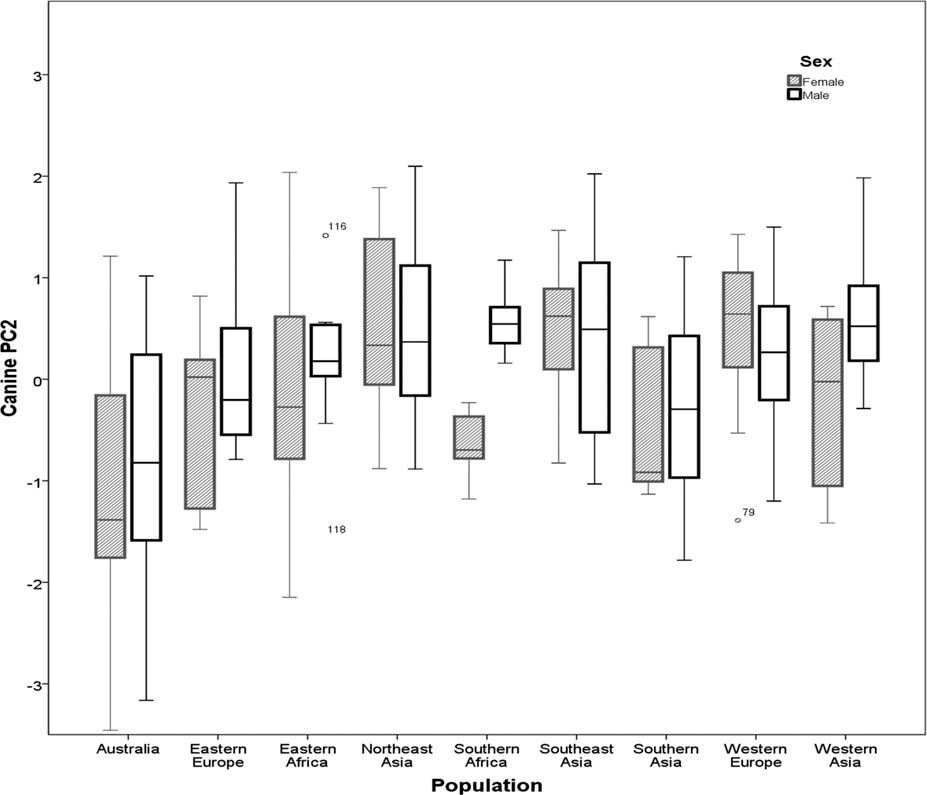
While the presence of sexual dimorphism is consistent with the hypothesis that sexual selection influences variation in chin shape, the degree of overlap between males and females requires further explanation. It is safe to say that the male chin pales in comparison to the more exaggerated ornaments found in other animals, such as the large and colorful tail of the peacock (Pavo cristatus) (Petrie, 1991). The modest contrasts in male and female chin shape indicated by our data (see Fig. 4) do not seem to fit a runaway process of selection driven by female choice (Fisher, 1958). We suggest there are at least two possible explanations for this pattern.
One hypothesis for why male chin shape is not more exaggerated is that some females may avoid mating with extremely aggressive males
Second, the large amount of overlap in male and female chin shape may be due to regional differences inchin shape dimorphism (see Fig. 6). Regional differencesin the level of dimorphism would tend to inflate within-sex variance in the pooled human sample, thereby reducingthe probability of finding between-sex differences.

Sexual dimorphism in chin shape: Implications for adaptive hypotheses
Zaneta M. Thayer, Seth D. Dobson
Abstract
The chin, or mentum osseum, is one of the most distinctive anatomical traits of modern humans. A variety of hypotheses for the adaptive value of the chin have been proposed, ranging from mechanical stress resistance to sexual selection via mate choice. While the sexual selection hypothesis predicts dimorphism in chin shape, most biomechanical hypotheses preclude it. Therefore determining the presence or absence of significant sexual dimorphism in chin shape provides a useful method for differentiating between various adaptive hypotheses; however, this has yet to be done due to a lack of quantitative data on chin shape. The goals of this study are therefore: (1) to introduce a new method for quantifying chin shape and (2) to determine the presence or absence of sexual dimorphism in chin shape in a diverse sample of modern humans. Samples were drawn from recent human skeletal collections representing nine geographic regions. Outlines of mentum osseum contours were quantified using elliptical Fourier function analysis (EFFA). Fourier coefficients were analyzed using principal components analysis (PCA). Sexual dimorphism in chin shape was assessed using PC loadings in the pooled geographic sample, and statistically significant differences were found. These findings provide the first quantitative, morphologically based evidence in support of adaptive hypotheses that predict dimorphism in chin shape, including the sexual selection hypothesis.
October 17, 2009
Facial shape preference in heterosexual and homosexual people
Arch Sex Behav. 2009 Oct 15. [Epub ahead of print]
Sex-Dimorphic Face Shape Preference in Heterosexual and Homosexual Men and Women.
Glassenberg AN, Feinberg DR, Jones BC, Little AC, Debruine LM.
Studies have used manipulated faces to test the preferences of heterosexual individuals for sexually dimorphic facial cues. In contrast to previous studies, which have generally excluded homosexual participants, we directly compared homosexual and heterosexual male and female preferences for manipulated sexual dimorphism in faces (homosexual males: n = 311; heterosexual males: n = 215; homosexual females: n = 159; heterosexual females: n = 218). Prior studies on sexual orientation and preferences for faces that were paired with masculine and feminine behavioral descriptors suggest that homosexual men prefer more masculine men and that homosexual women demonstrate no preference for either masculinity or femininity in women. In our study, we tested for similarities and differences among heterosexual and homosexual males and females with regard to their preferences for a more specific aspect of faces: sexual dimorphism of face shape. Homosexual men demonstrated stronger preferences for masculinity in male faces than did all of the other groups. Homosexual women demonstrated stronger preferences for masculinity in female faces than did heterosexual women. These results suggest attractiveness judgments of same-sex faces made by homosexual individuals are not a mirror image of those made by heterosexual individuals of the opposite sex. Our data suggest that face preferences of homosexual individuals reflect a system of biologically and socially guided preferences at least as complex as those found among heterosexual individuals.
Link
August 31, 2009
Eye-tracking of men's preferences for women's body shape
Eye-Tracking of Men's Preferences for Waist-to-Hip Ratio and Breast Size of Women.
Dixson BJ, Grimshaw GM, Linklater WL, Dixson AF.
Studies of human physical traits and mate preferences often use questionnaires asking participants to rate the attractiveness of images. Female waist-to-hip ratio (WHR), breast size, and facial appearance have all been implicated in assessments by men of female attractiveness. However, very little is known about how men make fine-grained visual assessments of such images. We used eye-tracking techniques to measure the numbers of visual fixations, dwell times, and initial fixations made by men who viewed front-posed photographs of the same woman, computer-morphed so as to differ in her WHR (0.7 or 0.9) and breast size (small, medium, or large). Men also rated these images for attractiveness. Results showed that the initial visual fixation (occurring within 200 ms from the start of each 5 s test) involved either the breasts or the waist. Both these body areas received more first fixations than the face or the lower body (pubic area and legs). Men looked more often and for longer at the breasts, irrespective of the WHR of the images. However, men rated images with an hourglass shape and a slim waist (0.7 WHR) as most attractive, irrespective of breast size. These results provide quantitative data on eye movements that occur during male judgments of the attractiveness of female images, and indicate that assessments of the female hourglass figure probably occur very rapidly.
Link
November 02, 2008
Maternal inheritance and male reproductive fitness
If a maternally inherited trait reduces the genetic fitness of a woman, then it will be under negative selection, and will be weeded out. If, on the other hand, it reduces the genetic fitness of a man, then it will not be affected at all: this reduction in fitness has no evolutionary effect since maternally inherited traits (e.g., mtDNA) are doomed in male bodies anyway.
Not surprisingly, such traits have been implicated in male sperm quality conditions, with e.g., specific haplogroups leading to reduced sperm count or mobility.
Sexual selection theory suggests that humans pick their mates because of their "good genes" (see other recent post). But this raises this issue: if males with good genes are selected for in each generation, then how come is a great reproductive skew maintained in the human species: why do some men produce many offspring while many produce none or a few? And, why do women often "cheat" on their mates, having children with others than their official mates.
Maternal inheritance explains this paradox: male reproductive variation due to the Y-chromosome or the autosomes can be shaped by evolution to produce males with good (well-adapted) genes, but maternally inherited factors cannot.
UPDATE: Interestingly, this may solve the paradox of non-inheritance of male attractiveness. While sexy parents have sexy daughters, apparently they don't tend to have especially attractive sons. This may be due to male-expressed maternally inherited traits. Such traits don't make their mothers' attractive (they are male expressed), and they are not inherited from their fathers.
Genetica. 2008 Sep;134(1):45-54.
Maternal inheritance, epigenetics and the evolution of polyandry
Zeh JA, Zeh DW.
Abstract
Growing evidence indicates that females actively engage in polyandry either to avoid genetic incompatibility or to bias paternity in favor of genetically superior males. Despite empirical support for the intrinsic male quality hypothesis, the maintenance of variation in male fitness remains a conundrum for traditional "good genes" models of sexual selection. Here, we discuss two mechanisms of non-Mendelian inheritance, maternal inheritance of mitochondria and epigenetic regulation of gene expression, which may explain the persistence of variation in male fitness traits important in post-copulatory sexual selection. The inability of males to transmit mitochondria precludes any direct evolutionary response to selection on mitochondrial mutations that reduce or enhance male fitness. Consequently, mitochondrial-based variation in sperm traits is likely to persist, even in the face of intense sperm competition. Indeed, mitochondrial nucleotide substitutions, deletions and insertions are now known to be a primary cause of low sperm count and poor sperm motility in humans. Paradoxically, in the field of sexual selection, female-limited response to selection has been largely overlooked. Similarly, the contribution of epigenetics (e.g., DNA methylation, histone modifications and non-coding RNAs) to heritable variation in male fitness has received little attention from evolutionary theorists. Unlike DNA sequence based variation, epigenetic variation can be strongly influenced by environmental and stochastic effects experienced during the lifetime of an individual. Remarkably, in some cases, acquired epigenetic changes can be stably transmitted to offspring. A recent study indicates that sperm exhibit particularly high levels of epigenetic variation both within and between individuals. We suggest that such epigenetic variation may have important implications for post-copulatory sexual selection and may account for recent findings linking sperm competitive ability to offspring fitness.
Link
September 08, 2008
Balancing selection and homosexuality
Genetic factors predisposing to homosexuality may increase mating success in heterosexuals
Brendan P. Zietsch et al.
Abstract
There is considerable evidence that human sexual orientation is genetically influenced, so it is not known how homosexuality, which tends to lower reproductive success, is maintained in the population at a relatively high frequency. One hypothesis proposes that while genes predisposing to homosexuality reduce homosexuals' reproductive success, they may confer some advantage in heterosexuals who carry them. However, it is not clear what such an advantage may be. To investigate this, we examine a data set where a large community-based twin sample (N=4904) anonymously completed a detailed questionnaire examining sexual behaviors and attitudes. We show that psychologically masculine females and feminine men are (a) more likely to be nonheterosexual but (b), when heterosexual, have more opposite-sex sexual partners. With statistical modelling of the twin data, we show that both these relationships are partly due to pleiotropic genetic influences common to each trait. We also find a trend for heterosexuals with a nonheterosexual twin to have more opposite-sex partners than do heterosexual twin pairs. Taken together, these results suggest that genes predisposing to homosexuality may confer a mating advantage in heterosexuals, which could help explain the evolution and maintenance of homosexuality in the population.
Link
April 10, 2008
Your attitude towards sex can be guessed by looking at your face
Restricted on the left, unrestricted on the right.Evolution and Human Behavior doi:10.1016/j.evolhumbehav.2007.12.009
Facial correlates of sociosexuality
Lynda G. Boothroyd et al.
Abstract
Previous studies have documented variation in sexual behaviour between individuals leading to the notion of ‘restricted’ individuals (i.e., people who prefer long-term relationships) and ‘unrestricted’ individuals (i.e., people who are open to short-term relationships). This distinction is often referred to as sociosexual orientation. Observers have been previously found to distinguish sociosexuality from video footage of individuals, although the specific cues used have not been identified. Here we assessed the ability of observers to judge sexual strategy based specifically on cues in both facial composites and real faces. We also assessed how observers' perceptions of the masculinity/femininity and attractiveness of faces relate to the sociosexual orientation of the pictured individuals. Observers were generally able to identify restricted vs. unrestricted individuals from cues in both composites and real faces. Unrestricted sociosexuality was generally associated with greater attractiveness in female composites and real female faces and greater masculinity in male composites. Although male observers did not generally associate sociosexuality with male attractiveness, female observers generally preferred more restricted males' faces (i.e., those with relatively strong preferences for long-term relationships). Collectively, our results support previous findings that androgenisation in men is related to less restricted sexual behaviour and suggest that women are averse to unrestricted men.
Link
April 10, 2007
Nicholas Wade on human sexuality
It is no surprise that the male and female versions of the human brain operate in distinct patterns, despite the heavy influence of culture. The male brain is sexually oriented toward women as an object of desire. The most direct evidence comes from a handful of cases, some of them circumcision accidents, in which boy babies have lost their penises and been reared as female. Despite every social inducement to the opposite, they grow up desiring women as partners, not men.
...
Presumably the masculinization of the brain shapes some neural circuit that makes women desirable. If so, this circuitry is wired differently in gay men. In experiments in which subjects are shown photographs of desirable men or women, straight men are aroused by women, gay men by men.
Such experiments do not show the same clear divide with women. Whether women describe themselves as straight or lesbian, “Their sexual arousal seems to be relatively indiscriminate — they get aroused by both male and female images,” Dr. Bailey said. “I’m not even sure females have a sexual orientation. But they have sexual preferences. Women are very picky, and most choose to have sex with men.”
...
Sexual orientation, at least for men, seems to be settled before birth. “I think most of the scientists working on these questions are convinced that the antecedents of sexual orientation in males are happening early in life, probably before birth,” Dr. Breedlove said, “whereas for females, some are probably born to become gay, but clearly some get there quite late in life.”
...
Several profound consequences follow from the fact that men have only one copy of the many X-related brain genes and women two. One is that many neurological diseases are more common in men because women are unlikely to suffer mutations in both copies of a gene.
Another is that men, as a group, “will have more variable brain phenotypes,” Dr. Arnold writes, because women’s second copy of every gene dampens the effects of mutations that arise in the other.
March 27, 2007
Preferred traits across nations and sexual orientations
Arch Sex Behav. 2007 Mar 23; [Epub ahead of print]
The Preferred Traits of Mates in a Cross-National Study of Heterosexual and Homosexual Men and Women: An Examination of Biological and Cultural Influences.
Lippa RA.
Department of Psychology, California State University, Fullerton, California, 92834, USA, rlippa@fullerton.edu.
BBC Internet survey participants (119,733 men and 98,462 women) chose from a list of 23 traits those they considered first, second, and third most important in a relationship partner. Across all participants, the traits ranked most important were: intelligence, humor, honesty, kindness, overall good looks, face attractiveness, values, communication skills, and dependability. On average, men ranked good looks and facial attractiveness more important than women did (d = 0.55 and 0.36, respectively), whereas women ranked honesty, humor, kindness, and dependability more important than men did (ds = 0.23, 0.22, 0.18, and 0.15). Sexual orientation differences were smaller than sex differences in trait rankings, but some were meaningful; for example, heterosexual more than homosexual participants assigned importance to religion, fondness for children, and parenting abilities. Multidimensional scaling analyses showed that trait preference profiles clustered by participant sex, not by sexual orientation, and by sex more than by nationality. Sex-by-nation ANOVAs of individuals' trait rankings showed that sex differences in rankings of attractiveness, but not of character traits, were extremely consistent across 53 nations and that nation main effects and sex-by-nation interactions were stronger for character traits than for physical attractiveness. United Nations indices of gender equality correlated, across nations, with men's and women's rankings of character traits but not with their rankings of physical attractiveness. These results suggest that cultural factors had a relatively greater impact on men's and women's rankings of character traits, whereas biological factors had a relatively greater impact on men's and women's rankings of physical attractiveness.
Link
January 05, 2007
Facial masculinity
In the study, 854 male and female subjects viewed a series of male head shots that had been digitally altered to exaggerate or minimize masculine traits. The participants then answered questions about how they expected the men in the photos to behave.
Overwhelmingly, participants said those with more masculine features were likely to be risky and competitive and also more apt to fight, challenge bosses, cheat on spouses and put less effort into parenting. Those with more feminine faces were seen as good parents and husbands, hard workers and emotionally supportive mates [compare examples].
Despite all the negative attributes, when asked who they would choose for a short-term relationship, women still selected the more masculine looking men. Brad and George then would be picks for a brief romance, if not the long haul.
Personal Relationships
Volume 13 Issue 4 Page 451 - December 2006
Male facial masculinity influences attributions of personality and reproductive strategy
DANIEL J. KRUGER
Abstract
Facial masculinity may be used as a cue in female mate choice, as it reflects the success of the male genotype in its developmental environment. Women may maximize reproductive success by using a conditional strategy favoring highly masculine facial features for short-term relationships and feminized facial features in men for long-term relationships. Three studies examine reactions to masculinized and feminized male facial composites. Properties of the original composite image affect ratings of critical attributes and the magnitude of the differences in ratings between versions undergoing identical processes of geometric manipulation (Study 1). Both men and women attribute personality, behavior, and mating strategies consistent with predictions derived from the good genes and mating trade-off hypotheses (Study 2). Participants accurately grouped behavioral tendencies related to high mating effort/risky strategies and high parenting effort/risk adverse strategies and associated mating effort more so with masculinized faces and parenting effort more so with feminized faces (Study 3). These results indicate that male facial masculinity serves as a visual cue for inferring personality and reproductive strategy.
Link
December 28, 2006
Sexual practices and preferences in China
Sexual Practices and Sexual Satisfaction: A Population Based Study of Chinese Urban Adults.
Parish WL, Luo Y, Stolzenberg R, Laumann EO, Farrer G, Pan S.
This study examined sexual satisfaction and its social and behavioral correlates among urbanites aged 20-64 in China, using data from a nationally representative sample of 1,194 women and 1,217 men with a spouse or other long-term sexual partner with whom they had sex during the last year. The results from structural equation models suggest a multiplex set of determinants of sexual satisfaction, including relationship characteristics, sexual knowledge and personal values, physical vitality, and environmental impediments. A large proportion of the effect of these background characteristics was mediated by frequent orgasms, varied sexual practices, and perceived partner affection. In particular, much of the effect of knowledge and beliefs was mediated through variety in sexual practices. While many of the observed patterns were shared among women and men, much of the effect of relationship characteristics was mediated through perceived partner affection for women. Men, in contrast, paid greater attention to his partner's physical attractiveness and to her extramarital sex. A sexual transition is well underway in urban China, even if more rapidly for men than for women. While knowledge and values are arguably more important in this transitional period, many antecedents of sexual well-being drawn from the literature on sexual behavior in developed Western countries are also applicable to urban China.
Link