Proc Biol Sci. 2006 Jan 7;273(1582):83-9.
Women use voice parameters to assess men's characteristics.
Bruckert L, Lienard JS, Lacroix A, Kreutzer M, Leboucher G.
The purpose of this study was: (i) to provide additional evidence regarding the existence of human voice parameters, which could be reliable indicators of a speaker's physical characteristics and (ii) to examine the ability of listeners to judge voice pleasantness and a speaker's characteristics from speech samples. We recorded 26 men enunciating five vowels. Voices were played to 102 female judges who were asked to assess vocal attractiveness and speakers' age, height and weight. Statistical analyses were used to determine: (i) which physical component predicted which vocal component and (ii) which vocal component predicted which judgment. We found that men with low-frequency formants and small formant dispersion tended to be older, taller and tended to have a high level of testosterone. Female listeners were consistent in their pleasantness judgment and in their height, weight and age estimates. Pleasantness judgments were based mainly on intonation. Female listeners were able to correctly estimate age by using formant components. They were able to estimate weight but we could not explain which acoustic parameters they used. However, female listeners were not able to estimate height, possibly because they used intonation incorrectly. Our study confirms that in all mammal species examined thus far, including humans, formant components can provide a relatively accurate indication of a vocalizing individual's characteristics. Human listeners have the necessary information at their disposal; however, they do not necessarily use it.
Link

March 07, 2006
Recent positive selection in humans
Yet another study on positive selection in modern humans; you can find many many more by searching for "recent selection" or "positive selection" via the site search on the right sidebar.
The findings are reported in PLoS Biology (free text). Nicholas Wade also covers the study in the New York Times:
PLoS Biology Volume 4 | Issue 3 | MARCH 2006
A Map of Recent Positive Selection in the Human Genome
Benjamin F. Voight1, Sridhar Kudaravalli1, Xiaoquan Wen1, Jonathan K. Pritchard1*
The identification of signals of very recent positive selection provides information about the adaptation of modern humans to local conditions. We report here on a genome-wide scan for signals of very recent positive selection in favor of variants that have not yet reached fixation. We describe a new analytical method for scanning single nucleotide polymorphism (SNP) data for signals of recent selection, and apply this to data from the International HapMap Project. In all three continental groups we find widespread signals of recent positive selection. Most signals are region-specific, though a significant excess are shared across groups. Contrary to some earlier low resolution studies that suggested a paucity of recent selection in sub-Saharan Africans, we find that by some measures our strongest signals of selection are from the Yoruba population. Finally, since these signals indicate the existence of genetic variants that have substantially different fitnesses, they must indicate loci that are the source of significant phenotypic variation. Though the relevant phenotypes are generally not known, such loci should be of particular interest in mapping studies of complex traits. For this purpose we have developed a set of SNPs that can be used to tag the strongest ∼250 signals of recent selection in each population.
Link
The findings are reported in PLoS Biology (free text). Nicholas Wade also covers the study in the New York Times:
Providing the strongest evidence yet that humans are still evolving, researchers have detected some 700 regions of the human genome where genes appear to have been reshaped by natural selection, a principal force of evolution, within the last 5,000 to 15,000 years.From the new paper:
The genes that show this evolutionary change include some responsible for the senses of taste and smell, digestion, bone structure, skin color and brain function.
Many of these instances of selection may reflect the pressures that came to bear as people abandoned their hunting and gathering way of life for settlement and agriculture, a transition well under way in Europe and East Asia some 5,000 years ago.
A fully rigorous estimation of the ages of the candidate sweeps is difficult with the current data. However, making the simplistic assumption of a star-shaped genealogy for the favored haplotypes and assuming a generation time of 25 y, suggests average ages of ≍6,600 years and ≍10,800 years in the non-African, and African populations, respectively (Materials and Methods).
...
Some of the strongest signals of recent selection appear in various types of genes related to morphology. For example, four genes involved in skin pigmentation show clear evidence of selection in Europeans (OCA2, MYO5A, DTNBP1, TYRP1). All four genes are associated with Mendelian disorders that cause lighter pigmentation or albinism, and all are in different genomic locations, indicating the action of separate selective events. One of these genes, OCA2, is associated with the third longest haplotype on a high frequency SNP anywhere in the genome for Europeans. A fifth gene, SLC24A5, has recently been shown by another group to impact skin pigmentation and to have a derived, selected allele near fixation in Europeans [45]. Though iHS has reduced power for alleles near fixation, SNPs near this gene also show strong iHS signals in Europeans (Table S2).
Various genes involved in skeletal development have also been targets of recent selection. Three related proteins involved in bone morphogenesis show signals of selection in Europeans (BMP3 and BMPR2) and in East Asians (BMP5). In addition, GDF5, a gene in which mutations cause skeletal malformations, shows strong signals of selection in both Europeans and East Asians. Other morphological features also appear to be targets of selection, including hair formation and patterning in Yoruba (the keratin cluster near 17q12; and FZD6).
An important type of selective pressure that has confronted modern humans is the transition to novel food sources with the advent of agriculture and the colonization of new habitats [19,21]. As noted above, we see a strong signal of selection in the alcohol dehydrogenase (ADH) cluster in East Asians, including the third longest haplotype around a high frequency allele in East Asians. A variety of genes involved in carbohydrate metabolism have evidence for recent selection, including genes involved in metabolizing mannose (MAN2A1 in Yoruba and East Asians), sucrose (SI in East Asians), and lactose (LCT in Europeans). Processing of dietary fatty acids is another system with signals of strong selection, including uptake (SLC27A4 and PPARD in Europeans), oxidation (SLC25A20 in East Asians) and regulation (NCOA1 in Yoruba and LEPR in East Asians). The latter gene (LEPR) is the leptin receptor and plays an important role in regulating adipose tissue mass.
Recent articles have proposed that genes involved in brain development and function may have been important targets of selection in recent human evolution [8,9]. While we do not find evidence for selection in the two genes reported in those studies (MCPH1 and ASPM), we do find signals in two other microcephaly genes, namely, CDK5RAP2 in Yoruba, and CENPJ in Europeans and East Asians [46]. Though there is not an overall enrichment for neurological genes in our gene ontology analysis, several other important brain genes also have signals of selection, including the primary inhibitory neurotransmitter GABRA4, an Alzheimer's susceptibility gene PSEN1, and SYT1 in Yoruba; the serotonin transporter SLC6A4 in Europeans and East Asians; and the dystrophin binding gene SNTG1 in all populations.
PLoS Biology Volume 4 | Issue 3 | MARCH 2006
A Map of Recent Positive Selection in the Human Genome
Benjamin F. Voight1, Sridhar Kudaravalli1, Xiaoquan Wen1, Jonathan K. Pritchard1*
The identification of signals of very recent positive selection provides information about the adaptation of modern humans to local conditions. We report here on a genome-wide scan for signals of very recent positive selection in favor of variants that have not yet reached fixation. We describe a new analytical method for scanning single nucleotide polymorphism (SNP) data for signals of recent selection, and apply this to data from the International HapMap Project. In all three continental groups we find widespread signals of recent positive selection. Most signals are region-specific, though a significant excess are shared across groups. Contrary to some earlier low resolution studies that suggested a paucity of recent selection in sub-Saharan Africans, we find that by some measures our strongest signals of selection are from the Yoruba population. Finally, since these signals indicate the existence of genetic variants that have substantially different fitnesses, they must indicate loci that are the source of significant phenotypic variation. Though the relevant phenotypes are generally not known, such loci should be of particular interest in mapping studies of complex traits. For this purpose we have developed a set of SNPs that can be used to tag the strongest ∼250 signals of recent selection in each population.
Link
March 06, 2006
Prevalence of depression has been greatly exaggerated
The high percentages of depression have been greatly exaggerated (EurekAlert)
The Methodology of Community Surveys leads to an overestimate of mental illness
According to widely reported community-based research, almost half the U.S. population suffers from depression. But research by two sociologists indicates that percentage is greatly exaggerated or is a misrepresentation.
The Methodology of Community Surveys leads to an overestimate of mental illness
According to widely reported community-based research, almost half the U.S. population suffers from depression. But research by two sociologists indicates that percentage is greatly exaggerated or is a misrepresentation.
The extraordinarily high rates of untreated mental illness reported by community studies are false, say Allan V. Horwitz, a sociology professor in the Institute of Health at Rutgers University, and Jerome Wakefield, a professor in the School of Social Work at New York University. Community studies rely on standard, closed-format questions about symptoms with no context provided to differentiate between reactions to normal life stress (i.e., a death, a romantic break up, work or school stress) and pathological conditions that indicate clinical mental illness.
"These numbers are largely a product of survey methodologies that, by nature, overstate the number of people with mental illness." Reporting the findings in Contexts magazine (Winter 2006), published by the American Sociological Association, the authors state, "Moreover, because people experiencing normal reactions to stressful events are less likely than the truly disordered to seek medical attention, such questions are bound to inflate estimates of the rate of untreated disorder."
In the past, diagnoses relied on treatment studies, but it became apparent that the number of treated patients understated the problem for a variety of reasons such as lack of access to treatment and reluctance to seek appropriate help. Today tightly structured questions are used in community studies to allow researchers to better diagnose a population.
The problem is that the criteria used in the community surveys are not necessarily valid for diagnosing mental disorders. One reason for this is that people self-select when seeking treatment and use their judgment to decide if their feelings exceed normal responses to stressful events. Second, clinicians make contextual judgments when they diagnose patients because some depressive symptoms might occur as a normal response to a loss of a job or a marriage unraveling. In surveys, interviewers are forbidden to judge the validity of a response or discuss the intent of a question. In addition, the duration criteria of community surveys only require that symptoms last at least two weeks, causing transient and self-correcting problems to be counted as disorders.
"In contrast to clinical settings," say Horwitz and Wakefield, "symptom-based diagnoses in community studies consider everyone who reports enough symptoms as having the mental disorder of depression. Symptoms that would not require treatment may nevertheless qualify as a disorder in a community survey."
"Community surveys could more adequately separate normal responses to stressful situations from mental disorders by including questions about the context in which symptoms develop and persist," say Horwitz and Wakefield. The decision not to include contextual criteria in community surveys, they speculate, might have to do not only with efficiency and practicality but also with resistance to change by groups that benefit from high rates of mental health problems.
There are a number of reasons that these high rates are perpetuated. One is that political support is more likely for an agency devoted to preventing and treating a widespread disease such as the National Institute of Mental Health. Another reason is that pharmaceutical companies capitalize on these survey findings to broaden their markets. The explosive growth in sales of antidepressants may indicate its effectiveness. Lastly, advocacy groups lay claim to the prevalence of mental disorders. They equate the millions of people that surveys identify with disorders with the serious mental disorders in order to reduce the social distance between the mentally disordered and others, thereby lowering the stigma. This may only hinder the truly disabled by shifting resources from where it is truly needed.
March 05, 2006
March 03, 2006
Altruistic human infants
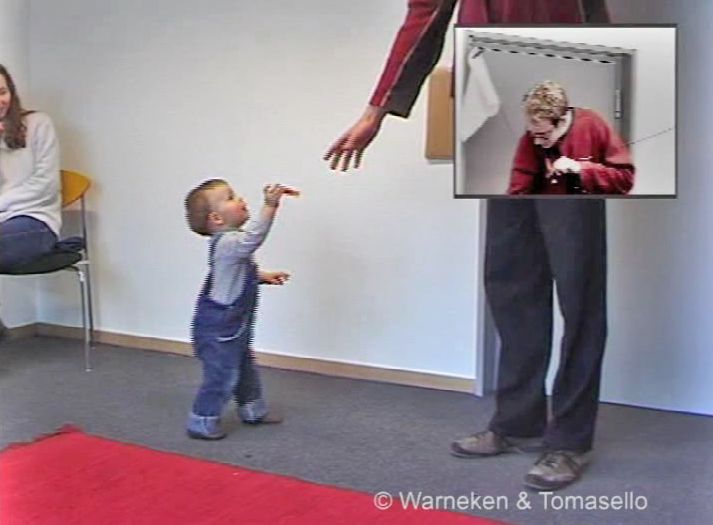 A new paper in Science demonstrates the altruism exhibited by 18-month old infants. Altruism involves spending effort to do something to help another person, even if the altruist derives no benefit. In many situations the infants helped strangers, even people they had just met to achieve some simple tasks. The same experiments were also carried with chimpanzees, who helped much less. According to the authors, to perform an altruistic act requires some cognitive complexity, i.e., to realize what the person is trying to achieve, to realize that they are hindered, and to know what one can do to help them, and of course to be able to physically help them. These experiments with infants demonstrate that human individuals are altruistic very early in their life, just as they become able to offer their assistance.
The authors also tried to see if chimpanzees would act altruistically in similar situations. They did so, but at a lower rate than human infants, indicating that some degree of altruism may have been present in the common ancestor of humans and chimpanzees.
Science Vol. 311. no. 5765, pp. 1301 - 1303
Altruistic Helping in Human Infants and Young Chimpanzees
Felix Warneken and Michael Tomasello
Human beings routinely help others to achieve their goals, even when the helper receives no immediate benefit and the person helped is a stranger. Such altruistic behaviors (toward non-kin) are extremely rare evolutionarily, with some theorists even proposing that they are uniquely human. Here we show that human children as young as 18 months of age (prelinguistic or just-linguistic) quite readily help others to achieve their goals in a variety of different situations. This requires both an understanding of others' goals and an altruistic motivation to help. In addition, we demonstrate similar though less robust skills and motivations in three young chimpanzees.
Link
Bronze Age artists from Thera had advanced knowledge of geometry

A group of Greek researchers has studied spiral designs from the Aegean island of Thera which was home to a Bronze Age civilization related to the Minoan civilization of Crete. Spirals are mathematical curves which are described by specific formulas. It is however possible to create a spiral-like design even if someone has no knowledge of geometry. The researchers have shown that the Theran spirals follow very closely the geometrical spiral described by Archimedes, the Greek mathematician of the Hellenistic age, who lived more than 1,000 years after the demise of the Theran civilization. According to the researchers (subscription may be required):
Some spirals, such as the ones found on snail shells, are common in nature. And others can be easily made by unwinding a thread around a central peg. But the Archimedes' spiral is not like either of these. "Seemingly it does not exist in nature," the researchers say.Such a close match between the mathematically described spirals and the ones found in Thera is not possible by chance alone; someone who drew a spiral by freehand would simply not be able to match the mathematical form so closely. Therefore, it is likely that the Theran artists used a mechanical technique which made use of mathematics to produce these very precise decorative motifs.
"This is the earliest time that such advanced geometric figures have been spotted," says Papaodysseus. "The next such figures appear only 1,300 years later." The team report their work in the journal Archaeometry
Archaeometry, Volume 48, Number 1, February 2006, pp. 97-114(18)
DISTINCT, LATE BRONZE AGE (c. 1650bc) WALL-PAINTINGS FROM AKROTIRI, THERA, COMPRISING ADVANCED GEOMETRICAL PATTERNS
C. Papaodysseus et al.
Abstract:
This paper studies a set of wall-paintings of the Late Bronze Age (c. 1650bc) initially decorating the internal walls of the third floor of the edifice called `Xeste 3', excavated at Akrotiri, Thera, whose restoration is now in progress. It deals with the methods used for the drawing of the geometrical figures appearing in these wall-paintings. It is demonstrated that most of the depicted configurations correspond with accuracy to geometrical prototypes such as linear spirals and canonical polygons. It is pointed out that the steady lines of the figures, their remarkable repeatability, the precision of the geometrical shapes and their even distribution in the wall-paintings indicate a very distinctive use of the `Xeste 3' third floor, which is now investigated.
Link
March 02, 2006
Neanderthal and modern human hunters from the Southern Caucasus
A new paper in Current Anthropology suggests that Neanderthals were as gifted at hunting as modern humans.
CURRENT ANTHROPOLOGY Volume 47, Number 1, February 2006
Ahead of the Game
Middle and Upper Palaeolithic Hunting Behaviors in the Southern Caucasus
by Daniel S. Adler, Guy Bar-Oz, Anna Belfer-Cohen, and Ofer Bar-Yosef
Over the past several decades a variety of models have been proposed to explain perceived behavioral and cognitive differences between Neanderthals and modern humans. A key element in many of these models and one often used as a proxy for behavioral "modernity" is the frequency and nature of hunting among Palaeolithic populations. Here new archaeological data from Ortvale Klde, a late Middle–early Upper Palaeolithic rockshelter in the Georgian Republic, are considered, and zooarchaeological methods are applied to the study of faunal acquisition patterns to test whether they changed significantly from the Middle to the Upper Palaeolithic. The analyses demonstrate that Neanderthals and modern humans practiced largely identical hunting tactics and that the two populations were equally and independently capable of acquiring and exploiting critical biogeographical information pertaining to resource availability and animal behavior. Like lithic techno-typological traditions, hunting behaviors are poor proxies for major behavioral differences between Neanderthals and modern humans, a conclusion that has important implications for debates surrounding the Middle–Upper Palaeolithic transition and what features constitute "modern" behavior. The proposition is advanced that developments in the social realm of Upper Palaeolithic societies allowed the replacement of Neanderthals in the Caucasus with little temporal or spatial overlap and that this process was widespread beyond traditional topographic and biogeographical barriers to Neanderthal mobility.
Link
CURRENT ANTHROPOLOGY Volume 47, Number 1, February 2006
Ahead of the Game
Middle and Upper Palaeolithic Hunting Behaviors in the Southern Caucasus
by Daniel S. Adler, Guy Bar-Oz, Anna Belfer-Cohen, and Ofer Bar-Yosef
Over the past several decades a variety of models have been proposed to explain perceived behavioral and cognitive differences between Neanderthals and modern humans. A key element in many of these models and one often used as a proxy for behavioral "modernity" is the frequency and nature of hunting among Palaeolithic populations. Here new archaeological data from Ortvale Klde, a late Middle–early Upper Palaeolithic rockshelter in the Georgian Republic, are considered, and zooarchaeological methods are applied to the study of faunal acquisition patterns to test whether they changed significantly from the Middle to the Upper Palaeolithic. The analyses demonstrate that Neanderthals and modern humans practiced largely identical hunting tactics and that the two populations were equally and independently capable of acquiring and exploiting critical biogeographical information pertaining to resource availability and animal behavior. Like lithic techno-typological traditions, hunting behaviors are poor proxies for major behavioral differences between Neanderthals and modern humans, a conclusion that has important implications for debates surrounding the Middle–Upper Palaeolithic transition and what features constitute "modern" behavior. The proposition is advanced that developments in the social realm of Upper Palaeolithic societies allowed the replacement of Neanderthals in the Caucasus with little temporal or spatial overlap and that this process was widespread beyond traditional topographic and biogeographical barriers to Neanderthal mobility.
Link
The eclipse of the gene
CURRENT ANTHROPOLOGY Volume 46, Number S5, December 2005
Eclipse of the Gene and the Return of Divination
by Margaret Lock
Research in the field of epigenetics challenges the assumption on which the molecular genetics of the past 50 years has been based, namely, genetic determinism. This paper reviews the social science literature that considers the social effects of the application of molecular genetics and genetic testing in connection with Mendelian conditions. It is argued that anthropologists must now go farther and respond to the challenge posed by current moves toward the implementation of genetic profiling and testing for susceptibility genes. Following a discussion of ontological problems associated with molecular genetics raised by philosophers and biologists who subscribe to epigenetics, current knowledge about molecular and population genetics of late-onset Alzheimer's disease and cross-cultural findings about the epidemiology of this disease are introduced. These findings illustrate the provisional nature of these bodies of knowledge and the complexity associated with susceptibility genes, which makes estimations of probabilities of individual risk unrealistic. A controlled clinical trial is discussed in which first-degree relatives of Alzheimer's disease patients are genotyped for risk for late-onset Alzheimer's disease. In conclusion, the social implications of testing for susceptibility genes are discussed, with comments about the role that anthropologists might play in future research.
Link
Eclipse of the Gene and the Return of Divination
by Margaret Lock
Research in the field of epigenetics challenges the assumption on which the molecular genetics of the past 50 years has been based, namely, genetic determinism. This paper reviews the social science literature that considers the social effects of the application of molecular genetics and genetic testing in connection with Mendelian conditions. It is argued that anthropologists must now go farther and respond to the challenge posed by current moves toward the implementation of genetic profiling and testing for susceptibility genes. Following a discussion of ontological problems associated with molecular genetics raised by philosophers and biologists who subscribe to epigenetics, current knowledge about molecular and population genetics of late-onset Alzheimer's disease and cross-cultural findings about the epidemiology of this disease are introduced. These findings illustrate the provisional nature of these bodies of knowledge and the complexity associated with susceptibility genes, which makes estimations of probabilities of individual risk unrealistic. A controlled clinical trial is discussed in which first-degree relatives of Alzheimer's disease patients are genotyped for risk for late-onset Alzheimer's disease. In conclusion, the social implications of testing for susceptibility genes are discussed, with comments about the role that anthropologists might play in future research.
Link
February 28, 2006
Brazilian Y chromosomes
One of the lessons from the following paper is that microsatellite diversity does not always point to the correct direction of migration. If we knew nothing about Brazilians and Portuguese, we might be inclined to attribute the lower Portuguese genetic diversity to migration from Brazil to Portugal, even though the opposite is the case.
Genetica Volume 126, Numbers 1-2 Pages: 251 - 260
Y Chromosome Diversity in Brazilians: Switching Perspectives from Slow to Fast Evolving Markers
Denise R. Carvalho-Silva et al.
We have previously shown that the Y chromosomes of ‘white’ Brazilians have their immediate geographical origin in Europe, with low frequency of sub-Saharan African chromosomes and virtual absence of Amerindian contribution. The typing of slow evolving polymorphisms on the Y chromosome also revealed no differences between Brazilians and Portuguese, the bulk of European immigrants to Brazil, and even among Brazilians from distinct regions of Brazil, the latter being in sharp contrast with mtDNA data. In order to test if the lack of differentiation is a sex-biased and not a marker-biased phenomenon, we decided to study faster evolving Y chromosome markers in samples from Brazil and Portugal previously studied. The population structure revealed by this work confirmed that there were indeed no significant differences between Brazil and Portugal and no population differentiation within the four geographical regions of Brazil, suggesting that this phenomenon is unrelated to the nature of the markers typed. Nevertheless the fast evolving markers did uncover a higher within population diversity in Brazil than Portugal, which could be explained by the input of diverse European Y chromosomes carried by several migration waves to Brazil. Our present data highlight the significance of typing and combining Y markers that evolve according to distinct mutational paces to usefully assess the levels of diversity in a given population, and can be applied in the study of populations derived from distinct geographical origins such as the Brazilians.
Link
Genetica Volume 126, Numbers 1-2 Pages: 251 - 260
Y Chromosome Diversity in Brazilians: Switching Perspectives from Slow to Fast Evolving Markers
Denise R. Carvalho-Silva et al.
We have previously shown that the Y chromosomes of ‘white’ Brazilians have their immediate geographical origin in Europe, with low frequency of sub-Saharan African chromosomes and virtual absence of Amerindian contribution. The typing of slow evolving polymorphisms on the Y chromosome also revealed no differences between Brazilians and Portuguese, the bulk of European immigrants to Brazil, and even among Brazilians from distinct regions of Brazil, the latter being in sharp contrast with mtDNA data. In order to test if the lack of differentiation is a sex-biased and not a marker-biased phenomenon, we decided to study faster evolving Y chromosome markers in samples from Brazil and Portugal previously studied. The population structure revealed by this work confirmed that there were indeed no significant differences between Brazil and Portugal and no population differentiation within the four geographical regions of Brazil, suggesting that this phenomenon is unrelated to the nature of the markers typed. Nevertheless the fast evolving markers did uncover a higher within population diversity in Brazil than Portugal, which could be explained by the input of diverse European Y chromosomes carried by several migration waves to Brazil. Our present data highlight the significance of typing and combining Y markers that evolve according to distinct mutational paces to usefully assess the levels of diversity in a given population, and can be applied in the study of populations derived from distinct geographical origins such as the Brazilians.
Link
No significant crypto-Jewish ancestry in Spanish Americans
A new paper debunks the claim that Spanish-Americans are significantly crypto-Jewish, i.e., descended from Spanish Jews who hid their Jewish status to blend in, and eventually even forgot their origin.
Ann Hum Biol. 2006 Jan-Feb;33(1):100-11.
Toward resolution of the debate regarding purported crypto-Jews in a Spanish-American population: Evidence from the Y chromosome.
Sutton WK, Knight A, Underhill PA, Neulander JS, Disotell TR, Mountain JL.
Background: The ethnic heritage of northernmost New Spain, including present-day northern New Mexico and southernmost Colorado, USA, is intensely debated. Local Spanish-American folkways and anecdotal narratives led to claims that the region was colonized primarily by secret- or crypto-Jews. Despite ethnographic criticisms, the notion of substantial crypto-Jewish ancestry among Spanish-Americans persists. Aim: We tested the null hypothesis that Spanish-Americans of northern New Mexico carry essentially the same profile of paternally inherited DNA variation as the peoples of Iberia, and the relevant alternative hypothesis that the sampled Spanish-Americans possess inherited DNA variation that reflects Jewish ancestry significantly greater than that in present-day Iberia. Subjects and Methods: We report frequencies of 19 Y-chromosome unique event polymorphism (UEP) biallelic markers for 139 men from across northern New Mexico and southern Colorado, USA, who self-identify as 'Spanish-American'. We used three different statistical tests of differentiation to compare frequencies of major UEP-defined clades or haplogroups with published data for Iberians, Jews, and other Mediterranean populations. We also report frequencies of derived UEP markers within each major haplogroup, compared with published data for relevant populations. Results: All tests of differentiation showed that, for frequencies of the major UEP-defined clades, Spanish-Americans and Iberians are statistically indistinguishable. All other pairwise comparisons, including between Spanish-Americans and Jews, and Iberians and Jews, revealed highly significant differences in UEP frequencies. Conclusion: Our results indicate that paternal genetic inheritance of Spanish-Americans is indistinguishable from that of Iberians and refute the popular and widely publicized scenario of significant crypto-Jewish ancestry of the Spanish-American population.
Link
Ann Hum Biol. 2006 Jan-Feb;33(1):100-11.
Toward resolution of the debate regarding purported crypto-Jews in a Spanish-American population: Evidence from the Y chromosome.
Sutton WK, Knight A, Underhill PA, Neulander JS, Disotell TR, Mountain JL.
Background: The ethnic heritage of northernmost New Spain, including present-day northern New Mexico and southernmost Colorado, USA, is intensely debated. Local Spanish-American folkways and anecdotal narratives led to claims that the region was colonized primarily by secret- or crypto-Jews. Despite ethnographic criticisms, the notion of substantial crypto-Jewish ancestry among Spanish-Americans persists. Aim: We tested the null hypothesis that Spanish-Americans of northern New Mexico carry essentially the same profile of paternally inherited DNA variation as the peoples of Iberia, and the relevant alternative hypothesis that the sampled Spanish-Americans possess inherited DNA variation that reflects Jewish ancestry significantly greater than that in present-day Iberia. Subjects and Methods: We report frequencies of 19 Y-chromosome unique event polymorphism (UEP) biallelic markers for 139 men from across northern New Mexico and southern Colorado, USA, who self-identify as 'Spanish-American'. We used three different statistical tests of differentiation to compare frequencies of major UEP-defined clades or haplogroups with published data for Iberians, Jews, and other Mediterranean populations. We also report frequencies of derived UEP markers within each major haplogroup, compared with published data for relevant populations. Results: All tests of differentiation showed that, for frequencies of the major UEP-defined clades, Spanish-Americans and Iberians are statistically indistinguishable. All other pairwise comparisons, including between Spanish-Americans and Jews, and Iberians and Jews, revealed highly significant differences in UEP frequencies. Conclusion: Our results indicate that paternal genetic inheritance of Spanish-Americans is indistinguishable from that of Iberians and refute the popular and widely publicized scenario of significant crypto-Jewish ancestry of the Spanish-American population.
Link
February 27, 2006
A textbook debate over Hinduism
This LA Times story is about changes in California schoolbooks requested by Hindu organizations. The interesting paragraph:
The latest research actually reinforces the Aryan Invasion Theory. According to that theory, the caste system is not a simple "division of labor" as the revisionists would suggest, but rather a social structure imposed by an intrusive group. A prediction of that theory is that the upper caste in the Hindu system would carry a greater genetic legacy of non-South Asian ancestry. This prediction is supported by current evidence.
The indigenist school must explain why Brahmins are more "West Eurasian" genetically, if they were just assigned this role in a grand within-India "division of labor". A more parsimonious explanation is that they are more "West Eurasian" genetically because, well, their ancestors came from West Eurasia.
Moreover, the "division of labor" theory could accommodate exogenous origins for some Indian castes, but it does not explain why the elite group also happens to coincide with the exogenous group, namely the Brahmin caste. A more parsimonious explanationis that the elite group is also the exogenous group, because a group of outsiders took control of Indian society and placed themselves on top.
The most contentious issue involves the origins of Hinduism. The common historical view, included in all textbooks, is that Indo-Europeans from Central Asia, called Aryans, migrated to India and laid the faith's foundation. But Bajpai and the Hindu groups hotly dispute the idea of any Aryan migration, citing new DNA evidence for their view that Hinduism developed indigenously. They have asked that textbooks include both views.There is of course no new DNA evidence that Hinduism developed indigenously. The latest studies suggest that Indians are of largely indigenous origin, but that does not mean that their religion is. Hinduism is a blend of many elements, and the contribution of local elements in it should be acknowledged and celebrated, but the binding thread is the religion of the Vedic Indo-Aryans, Sanskrit, and the Brahmin caste.
The latest research actually reinforces the Aryan Invasion Theory. According to that theory, the caste system is not a simple "division of labor" as the revisionists would suggest, but rather a social structure imposed by an intrusive group. A prediction of that theory is that the upper caste in the Hindu system would carry a greater genetic legacy of non-South Asian ancestry. This prediction is supported by current evidence.
The indigenist school must explain why Brahmins are more "West Eurasian" genetically, if they were just assigned this role in a grand within-India "division of labor". A more parsimonious explanation is that they are more "West Eurasian" genetically because, well, their ancestors came from West Eurasia.
Moreover, the "division of labor" theory could accommodate exogenous origins for some Indian castes, but it does not explain why the elite group also happens to coincide with the exogenous group, namely the Brahmin caste. A more parsimonious explanationis that the elite group is also the exogenous group, because a group of outsiders took control of Indian society and placed themselves on top.
Cranial size and shape
S. P. Pickering (Correlation of brain and head measurements, and relation of brain shape and size to shape and size of the head, American Journal of Physical Anthropology, Volume 15, Issue 1, Date: October/December 1930, Pages: 1-52):
Why are brachycephalic heads more capacious? I don't think that anyone has discovered the exact reasons why this is the case, but here is my theory:
In general, human heads are longer than they are broad, and broader than they are high. Heads of course, like any other organ, are expensive things (developmentally), and this is particularly the case for humans where the head forms a substantially larger part of the body than in other mammals.
During human evolution, cranial capacity has increased. Cranial capacity is of course correlated with gross size: bigger people have a bigger cranial cavity, and a bigger brain.
However, things are not that simple. It can be easily proven that different shapes with the same surface area have a different capacity. In two dimensions, ellipses and ovals have a smaller capacity than round shapes with the same perimeter.
Thus, a broad head achieves a greater volume than a long one of equal surface. Since surface corresponds to bone mass, which corresponds to developmental cost, it is possible that a rounder head shape is more economical: it achieves the same volume with smaller cost.
The same is also true for the height of the skull. Since skulls tend to be broader than they are high, a skull that expands on the vertical plane will tend to approach a more spherical shape.
It is thus not surprising that according to Lahr and Wright's useful definition:
It is general knowledge that an increase in brain size runs parallel with an increase in head size and with a change from dolichocephaly to brachycephaly as we ascend the scale from the anthropoids to modern man. This appears primarily to be a volume phenomenon.A. Thomson (quoted in the above paper) notes that:
Given a cavity of oval or ellptical form with elastic walls, the more its contents are increased the greater will be the tendency to assume a spherical shape.Pickering studied cadavers and their weight and volume directly, rather than relying on estimations from cephalic measurements:
The specimens used in this work gave an average capacity for dolichocephalic skulls of 1402.8 cc.; for mesocephalic, 1474.8 and for brachycephalic, 1520.6 cc.Interestingly, according to K. Beals et al. (Brain size, cranial morphology, climate, and time machines. Current Anthropology, 25, 301-330. ) there is a +0.37 correlation between cranial capacity and the cephalic index, i.e., broader-headed, more brachycephalic populations also have bigger cranial capacities.
The same tendency was shown in the size of the brains. The average size of the brains in this series was for the dolichocephalic heads, 1135.4 cc.; for the mesocephalic, 1144.2 cc., and for the brachycephalic, 1180.7 cc.
The figures show a marked increase from the dolichocephalic to the brachycephalic type. Though the number of specimens of the dolichocephalic type is not sufficient to be conclusive proof, the fact that brachycephaly runs parallel with an increase in brain and head size is very evident.
Why are brachycephalic heads more capacious? I don't think that anyone has discovered the exact reasons why this is the case, but here is my theory:
In general, human heads are longer than they are broad, and broader than they are high. Heads of course, like any other organ, are expensive things (developmentally), and this is particularly the case for humans where the head forms a substantially larger part of the body than in other mammals.
During human evolution, cranial capacity has increased. Cranial capacity is of course correlated with gross size: bigger people have a bigger cranial cavity, and a bigger brain.
However, things are not that simple. It can be easily proven that different shapes with the same surface area have a different capacity. In two dimensions, ellipses and ovals have a smaller capacity than round shapes with the same perimeter.
Thus, a broad head achieves a greater volume than a long one of equal surface. Since surface corresponds to bone mass, which corresponds to developmental cost, it is possible that a rounder head shape is more economical: it achieves the same volume with smaller cost.
The same is also true for the height of the skull. Since skulls tend to be broader than they are high, a skull that expands on the vertical plane will tend to approach a more spherical shape.
It is thus not surprising that according to Lahr and Wright's useful definition:
...it is generally agreed that a modern skull should present a relatively small face tucked under the vault that is relatively short and high, a relatively vertical forehead, parietal enlargement, a relatively rounded occiput, a flexed cranial base, a canine fossa, an occipital protuberance in the occipital bone and mental eminence or chin. Most descriptions of modern H. sapiens would also include skeletal gracility as characterizing the group.or that according to K. L. Beals (Climate and the evolution of brachycephalization, American Journal of Physical Anthropology, Volume 62, Issue 4, Date: December 1983, Pages: 425-437):
During the Holocene, the [cranial] index increases under all climatic conditions.Hopefully, a new generation of scientists will overcome the knee-jerk reaction against studying cranial variation and cognitive function, perhaps by relying on cranial models built with 3D digitizers rather than the older methods based on lengths, arcs, and indices.
...
Turning to the Pleistocene, the mean hominid cranial index has increased 9 units.
February 25, 2006
Rare haplotypes in mtDNA
Hum Biol. 2005 Aug;77(4):443-56
Rare haplotypes in mtDNA: applications in the analysis of biosocial aspects of past human populations.
Izagirre N, Alzualde A, Alonso S, Paz L, Alonso A, de la Rua C.
We report on the use of rare mutations to tackle biosocial questions such as kinship and differential burial practices from past human populations. To do this, we have inferred nucleotide position 73 of HVS-II in individuals classified as belonging to haplogroup H from 76 human dental samples from the necropolis of Aldaieta (Basque Country, Spain, 6th-7th century) by means of PCR and restriction enzyme tests. The same analysis has been performed for 146 extant individuals from the northern Iberian peninsula. A combination of haplotype H and 73G in HVS-II, rare in extant populations (0.5-3%), has been found at a frequency of 20% in the ancient population of Aldaieta. These data can be explained in terms of the existence of different burial practices associated with a variety of factors, mainly social status and kinship. This hypothesis is also supported by archeological data. These results indicate that caution should be taken when making phylogenetic inferences from extinct populations, because an uncharacterized kinship can significantly bias allele frequencies.
Link
Rare haplotypes in mtDNA: applications in the analysis of biosocial aspects of past human populations.
Izagirre N, Alzualde A, Alonso S, Paz L, Alonso A, de la Rua C.
We report on the use of rare mutations to tackle biosocial questions such as kinship and differential burial practices from past human populations. To do this, we have inferred nucleotide position 73 of HVS-II in individuals classified as belonging to haplogroup H from 76 human dental samples from the necropolis of Aldaieta (Basque Country, Spain, 6th-7th century) by means of PCR and restriction enzyme tests. The same analysis has been performed for 146 extant individuals from the northern Iberian peninsula. A combination of haplotype H and 73G in HVS-II, rare in extant populations (0.5-3%), has been found at a frequency of 20% in the ancient population of Aldaieta. These data can be explained in terms of the existence of different burial practices associated with a variety of factors, mainly social status and kinship. This hypothesis is also supported by archeological data. These results indicate that caution should be taken when making phylogenetic inferences from extinct populations, because an uncharacterized kinship can significantly bias allele frequencies.
Link
February 23, 2006
Colonization of Europe by modern humans was more rapid than previously thought
Friom the paper:
These problems can be overcome by using new pre-treatment techniques that remove newer carbon contaminants, and by making use of stratified carbon samples taken from deep-sea sediments.
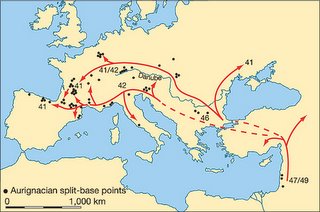
This is all very interesting, but it should be noted that the author's inferences are based on radiocarbon dating of Aurignacian remains. While it is generally believed that the Aurignacian was a creation of anatomically modern humans, there is no smoking gun link between the Aurignacian and modern human remains. In fact, it could well be argued that pushing the date of the Aurignacian further back in time may lend some support to the idea that Neandertals produced at least some of the Aurignacian assemblages.
Nature 439, 931-935 (23 February 2006) | doi:10.1038/nature04521
A new radiocarbon revolution and the dispersal of modern humans in Eurasia
Paul Mellars
Abstract
Radiocarbon dating has been fundamental to the study of human cultural and biological development over the past 50,000 yr. Two recent developments in the methodology of radiocarbon dating show that the speed of colonization of Europe by modern human populations was more rapid than previously believed, and that their period of coexistence with the preceding Neanderthal was shorter.
Link
The application of radiocarbon dating to these crucial early phases in modern human development has, however, been critically dependent on two potential sources of error in the accuracy of radiocarbon age estimates. The first is the impact of even miniscule quantities of contamination by more recent, intrusive carbon into the dated samples (Fig. 1a). This can be illustrated by the fact that contamination by only 1% of modern carbon in a sample actually 40,000 yr in age would reduce the measured age of the sample by over 7,000 yr... The second is the long-established recognition that the original proportion of 14C to 12C in the Earth's atmosphere has not remained constant over the past 50,000 yr, but has diverged sharply from present-day values, principally due to past variations in the intensity of the Earth's magnetic field and the shorter-term effects of sunspots on the amount of cosmic radiation reaching the upper atmosphere.
These problems can be overcome by using new pre-treatment techniques that remove newer carbon contaminants, and by making use of stratified carbon samples taken from deep-sea sediments.
The rapid spread of the early modern human populations was probably facilitated by a major improvement in climatic conditions in Europe between about 43,000–41,000 yr (calibrated) bp (the period of the Hengelo interstadial), which would inevitably have made a process of population expansion from southeast to northwest across Europe easier to achieve

This is all very interesting, but it should be noted that the author's inferences are based on radiocarbon dating of Aurignacian remains. While it is generally believed that the Aurignacian was a creation of anatomically modern humans, there is no smoking gun link between the Aurignacian and modern human remains. In fact, it could well be argued that pushing the date of the Aurignacian further back in time may lend some support to the idea that Neandertals produced at least some of the Aurignacian assemblages.
Nature 439, 931-935 (23 February 2006) | doi:10.1038/nature04521
A new radiocarbon revolution and the dispersal of modern humans in Eurasia
Paul Mellars
Abstract
Radiocarbon dating has been fundamental to the study of human cultural and biological development over the past 50,000 yr. Two recent developments in the methodology of radiocarbon dating show that the speed of colonization of Europe by modern human populations was more rapid than previously believed, and that their period of coexistence with the preceding Neanderthal was shorter.
Link
Iberian Origins of New World horses
J Hered. 2006 Feb 17; [Epub ahead of print]
Iberian Origins of New World Horse Breeds.
Luis C, Bastos-Silveira C, Cothran EG, Oom MD.
Fossil records, archaeological proofs, and historical documents report that horses persisted continuously in the Iberian Peninsula since the Pleistocene and were taken to the American continent (New World) in the 15th century. To investigate the variation within the mitochondrial DNA (mtDNA) control region of Iberian and New World horse breeds, to analyze their relationships, and to test the historical origin of New World horses, a total of 153 samples, representing 30 Iberian and New World breeds, were analyzed by sequencing mtDNA control region fragments. Fifty-four haplotypes were found and assigned to seven haplogroups. Reduced levels of variation found for the Menorquina, Sorraia, and Sulphur Mustang breeds are consistent with experienced bottlenecks or limited number of founders. For all diversity indices, Iberian breeds showed higher diversity values than South American and North American breeds. Although, the results show that the Iberian and New World breeds stem from multiple origins, we present a set of genetic data revealing a high frequency of Iberian haplotypes in New World breeds, which is consistent with historical documentation.
Link
Iberian Origins of New World Horse Breeds.
Luis C, Bastos-Silveira C, Cothran EG, Oom MD.
Fossil records, archaeological proofs, and historical documents report that horses persisted continuously in the Iberian Peninsula since the Pleistocene and were taken to the American continent (New World) in the 15th century. To investigate the variation within the mitochondrial DNA (mtDNA) control region of Iberian and New World horse breeds, to analyze their relationships, and to test the historical origin of New World horses, a total of 153 samples, representing 30 Iberian and New World breeds, were analyzed by sequencing mtDNA control region fragments. Fifty-four haplotypes were found and assigned to seven haplogroups. Reduced levels of variation found for the Menorquina, Sorraia, and Sulphur Mustang breeds are consistent with experienced bottlenecks or limited number of founders. For all diversity indices, Iberian breeds showed higher diversity values than South American and North American breeds. Although, the results show that the Iberian and New World breeds stem from multiple origins, we present a set of genetic data revealing a high frequency of Iberian haplotypes in New World breeds, which is consistent with historical documentation.
Link
Surnames and Y chromosomes
An interesting surname study shows that the probability of a surname match decreases as the surname frequency increases. In other words, it's quite unlikely that men with a common surname, say "Smith" will share a patrilineal ancestor, but very likely if the surname is rare.
Moreover, surname studies have forensic implications. By studying the Y chromosome it is possible to limit search to a few promising surnames. Of course, catching rapists is a worthwhile cause, but the recent success of an adopted teen to track down his biological father with Y-DNA testing shows, there are more sinister uses of this technology.
Curr Biol. 2006 Feb 21;16(4):384-388.
Genetic Signatures of Coancestry within Surnames.
King TE, Ballereau SJ, Schurer KE, Jobling MA.
Surnames are cultural markers of shared ancestry within human populations. The Y chromosome, like many surnames, is paternally inherited, so men sharing surnames might be expected to share similar Y chromosomes as a signature of coancestry. Such a relationship could be used to connect branches of family trees , to validate population genetic studies based on isonymy , and to predict surname from crime-scene samples in forensics . However, the link may be weak or absent due to multiple independent founders for many names, adoptions, name changes and nonpaternities, and mutation of Y haplotypes. Here, rather than focusing on a single name , we take a general approach by seeking evidence for a link in a sample of 150 randomly ascertained pairs of males who each share a British surname. We show that sharing a surname significantly elevates the probability of sharing a Y-chromosomal haplotype and that this probability increases as surname frequency decreases. Within our sample, we estimate that up to 24% of pairs share recent ancestry and that a large surname-based forensic database might contribute to the intelligence-led investigation of up to approximately 70 rapes and murders per year in the UK. This approach would be applicable to any society that uses patrilineal surnames of reasonable time-depth.
Link
Subscribe to:
Posts (Atom)