The latest ancient DNA studies from the British Isles (Schiffels et al and Martiniano et al. and Cassidy et al.) support continuity over the last 2,000 years. Sure, there were continued migrations like the arrival of the Anglo-Saxons, but these were very similar groups in the grand scheme of things.
But, while ancestrally the modern Briton is probably a descendant of the Britons of 2,000 years ago with some admixture from similar continental European groups, he is not the same, as (apparently) substantial genetic adaptation has continued to operate in Britain over the same period. A new preprint by Field, Boyle, Telis et al. makes the case for adaptation in a variety of traits in the ancestors of Britons over this period. Mind you, the genetic underpinnings of many important human traits known to have high heritability are currently unknown, but there is little doubt that selection would have affected traits beyond those detected in this study. I am quite curious to see whether the striking efflorescence of cultural achievement in Britain over the last half millennium could have (at least in part) a genetic underpinning.
Depigmentation is a trait whose genetic architecture is as well as understood as any. The results of this study might surprise writers of decades and centuries past who supposed that the spectrum of pigmentation of modern Europeans was the result of admixture-in varying measure- between Xanthochrooi and Melanchrooi races of primordial antiquity. All indications seem to be that depigmentation of hair, skin, and eyes did not co-occur in such a hypothetical race, but rather in different parts of the Caucasoid range, only reaching a high combined frequency in northern Europe to form the distinctive physical type that is distinctive of the natives of that region. It would be quite interesting to see how these traits evolved in Fennoscandia and the Baltic, regions that sport an even higher depigmentation than the British Isles. Traditionally, these areas were viewed as refuges of the Xanthochrooi but it may very well turn out to be that for whatever reason selection has acted in that area as well, as it did in the Eastern European plain where rather dark Bronze Age steppe groups gave way to rather light pigmented living eastern Slavs.
bioRxiv doi: http://dx.doi.org/10.1101/052084
Detection of human adaptation during the past 2,000 years
Yair Field, Evan A Boyle, Natalie Telis, Ziyue Gao, Kyle J Gaulton, David Golan, Loic Yengo, Ghislain Rocheleau, Philippe Froguel, Mark I McCarthy, Jonathan K Pritchard
Detection of recent natural selection is a challenging problem in population genetics, as standard methods generally integrate over long timescales. Here we introduce the Singleton Density Score (SDS), a powerful measure to infer very recent changes in allele frequencies from contemporary genome sequences. When applied to data from the UK10K Project, SDS reflects allele frequency changes in the ancestors of modern Britons during the past 2,000 years. We see strong signals of selection at lactase and HLA, and in favor of blond hair and blue eyes. Turning to signals of polygenic adaptation we find, remarkably, that recent selection for increased height has driven allele frequency shifts across most of the genome. Moreover, we report suggestive new evidence for polygenic shifts affecting many other complex traits. Our results suggest that polygenic adaptation has played a pervasive role in shaping genotypic and phenotypic variation in modern humans.
Link

Showing posts with label Lactose. Show all posts
Showing posts with label Lactose. Show all posts
March 20, 2016
Adaptation in the light of ancient genomes
Nature Communications 7, Article number: 10775 doi:10.1038/ncomms10775
Human adaptation and population differentiation in the light of ancient genomes
Felix M. Key, Qiaomei Fu, Frédéric Romagné, Michael Lachmann and Aida M. Andrés
The influence of positive selection sweeps in human evolution is increasingly debated, although our ability to detect them is hampered by inherent uncertainties in the timing of past events. Ancient genomes provide snapshots of allele frequencies in the past and can help address this question. We combine modern and ancient genomic data in a simple statistic (DAnc) to time allele frequency changes, and investigate the role of drift and adaptation in population differentiation. Only 30% of the most strongly differentiated alleles between Africans and Eurasians changed in frequency during the colonization of Eurasia, but in Europe these alleles are enriched in genic and putatively functional alleles to an extent only compatible with local adaptation. Adaptive alleles—especially those associated with pigmentation—are mostly of hunter-gatherer origin, although lactose persistence arose in a haplotype present in farmers. These results provide evidence for a role of local adaptation in human population differentiation.
Link
Human adaptation and population differentiation in the light of ancient genomes
Felix M. Key, Qiaomei Fu, Frédéric Romagné, Michael Lachmann and Aida M. Andrés
The influence of positive selection sweeps in human evolution is increasingly debated, although our ability to detect them is hampered by inherent uncertainties in the timing of past events. Ancient genomes provide snapshots of allele frequencies in the past and can help address this question. We combine modern and ancient genomic data in a simple statistic (DAnc) to time allele frequency changes, and investigate the role of drift and adaptation in population differentiation. Only 30% of the most strongly differentiated alleles between Africans and Eurasians changed in frequency during the colonization of Eurasia, but in Europe these alleles are enriched in genic and putatively functional alleles to an extent only compatible with local adaptation. Adaptive alleles—especially those associated with pigmentation—are mostly of hunter-gatherer origin, although lactose persistence arose in a haplotype present in farmers. These results provide evidence for a role of local adaptation in human population differentiation.
Link
August 07, 2015
Prehistoric farmers from northern Greece had lactose intolerance, brown eyes, dark skin
According to this:
Πολύ σημαντικό πρόσφατο εύρημα αποτελεί η ανάκτηση ολόκληρων γονιδιωμάτων από τρεις προϊστορικούς αγρότες, που έζησαν στη Βόρεια Ελλάδα 7.500 με 5.500 χρόνια πριν από σήμερα. Τα δεδομένα αυτά αναλύονται και αναμένεται να ρίξουν φως στις προγονικές σχέσεις των πρώτων Ευρωπαίων και να δώσουν πλήθος πληροφοριών, που συνδέονται με λειτουργικά και μορφολογικά χαρακτηριστικά. Ήδη, είναι γνωστό, ότι κάποιοι νεολιθικοί πρόγονοί μας δε μπορούσαν να πέψουν το γάλα, ήταν δηλαδή δυσανεκτικοί στη λακτόζη και είχαν καστανά μάτια και σκουρόχρωμη επιδερμίδα.Related video:
June 13, 2015
Into, out of, and across the Eurasian steppe
A new paper in Nature adds to the earlier study in the same journal by presenting data from 101 ancient Eurasians. The year is not yet halfway over, but it seems that the ancient DNA field is moving towards a new norm of studying dozens of individuals at a time and comprehensively tackling the "big problems" that have vexed archaeologists, linguists, and historians for decades if not centuries.


The first conclusion of the new study is the detection of the migration from the steppe to Europe that was the title piece of the earlier study. The authors do not present quantitative estimates of the amount of demographic replacement effected by the Yamnaya-to-Corded Ware migration, so it will be interesting to see if there are any minor significant differences in these. But, the two papers have different Yamnaya and Corded Ware samples, and yet arrive at qualitatively similar conclusions, so at least this part of the story should be considered firmly "settled".
The second conclusion is the migration from the European steppe to the Afanasievo culture of the Altai. This has been long-hypothesized based on the physical type of the Afanasievo people and their possession of a similar pastoralist/wheeled vehicle toolkit that would have allowed them to cover the huge difference between Europe and the Altai. This confirms movement #2 of the Anthony/Ringe model, although I doubt that this migration had anything to do with Tocharians as detailed below. But, it did happen.
The third conclusion is that the later steppe cultures of the Sintashta and Andronovo (putative Indo-Iranians according to some), were not a continuation of the Yamnaya-Afanasievo people, but had extra Neolithic farmer ancestry. So, it seems that Neolithic farmers entered the steppe, and the development of steppe cultures did not happen in isolation. Whether this involved migration of Corded Ware people (as the authors prefer), who were already a mixture of Yamnaya and Neolithic farmers, or some other mixture of Neolithic farmers with steppe populations (e.g., Tripolye plus Yamnaya) remains to be seen.
The fourth conclusion of the paper is that these steppe cultures were also later replaced by people of at least partial East Asian or "Native American"-like ancestry. So, it seems that movements into the steppe happened both on the western end (as the incursion of Neolithic farmer ancestry into the Sintashta proves), but also on the eastern end, with the Europeoid populations of western origin receiving admixture from the eastern periphery of the Eurasian steppe.
As for the Yamnaya, the authors do not find a very strong signal of admixture (as did the earlier study), which they attribute quite plausibly to the lack of eastern hunter-gatherers in their dataset. On the other hand, they claim that the "Caucasus" genetic component in the steppe populations was of steppe ancestry rather than Near Eastern/Caucasian origin as was claimed in the earlier paper. This is based on the statistic D(Yoruba, Armenia BA; Yamnaya, Corded Ware) that is not significantly different from zero. However, Corded Ware is a mixture of Yamnaya and European Neolithic, so the sign of this statistic is determined by the sign of the statistic D(Yoruba, Armenia BA; Yamnaya, European Neolithic). If Yamnaya was simply a steppe population, descendants of local people without ancestry from the Middle East/Caucasus, then this statistic would be positive because of the shared Middle Eastern ancestry of Armenia BA and European Neolithic. Whereas, if Yamnaya is a mixture of a steppe population and a Middle Eastern/Caucasian one, then the statistic would be positive/negative for the respective parts, which would be consistent with an average not different from zero. I am sure that when the new data is re-analyzed together with the eastern hunter-gatherers it will be clear that the Yamnaya are not a pure steppe population.
Nonetheless, I am quite glad to read a sentence such as this:
 Speaking of the Caucasus/Middle East, it seems clear as a first approximation that the Bronze Age Armenians are quite similar to modern Armenians. Whether the genetic continuity of Armenians extends beyond the Bronze Age, or Armenians were formed by mixture in the Bronze Age remains to be seen. The question of Armenian linguistic origins is of course separate as it is commonly understood that the Armenian language is unrelated to Anatolian languages and may have arrived in Armenia from the Balkans at around the Bronze Age-Iron Age transition.
The authors also study some phenotypic traits such as lactase peristence (Yamnaya had some, but overall prevalence was much lower than modern Europeans, hence lots of selection to the present), and skin eye pigmentation. Like Wilde et al., and Mathieson et al., the steppe populations seem to have had brown eyes. Given that so did Neolithic Europeans, and (presumably) ancient Middle Easterners/Caucasians, I think it's a good bet that Proto-Indo-Europeans (whatever solution to the PIE urheimat one accepts) were a brown-eyed people, or in the very least far from the blue-eyed "Aryans" of racial mythology. Even the Bronze Age and Iron Age Asians seem to have been a predominantly brown-eyed people, although the derived HERC2 allele seems to be at a higher frequency in them than in the steppe Europeans.
 The story of the Y-chromosomes seems very interesting, although these are not resolved to fine detail. The most interesting aspect of this part of the work is the appearance of haplogroup J in Iron Age samples from Russia, Armenia, and the Altai. This may tie in to the question of the Tocharian origins, which I have claimed were associated with R1b, rather than R1a (as the Indo-Iranians were). The modern Uygurs (who are partially of Tocharian origin) have both J2 and R1b, so were the recipients of West Eurasian elements other than the R1a that so seem to have dominated the eastern steppe, including the Afanasievo. I continue to think there's no evidence that the Afanasievo is Proto-Tocharian, as it's in the wrong place and 3,000 years before the attestation of Tocharian.
Overall this is an amazing study which adds a lot to what we know about Bronze Age Eurasia. Hopefully there is more to come in the second half of 2015, but for the time being there is plenty to chew on.
Nature 522, 167–172 (11 June 2015) doi:10.1038/nature14507
Population genomics of Bronze Age Eurasia
Morten E. Allentoft, Martin Sikora, Karl-Göran Sjögren, Simon Rasmussen, Morten Rasmussen, Jesper Stenderup, Peter B. Damgaard, Hannes Schroeder, Torbjörn Ahlström, Lasse Vinner, Anna-Sapfo Malaspinas, Ashot Margaryan, Tom Higham, David Chivall, Niels Lynnerup, Lise Harvig, Justyna Baron, Philippe Della Casa, Paweł Dąbrowski, Paul R. Duffy, Alexander V. Ebel, Andrey Epimakhov, Karin Frei, Mirosław Furmanek, Tomasz Gralak, Andrey Gromov, Stanisław Gronkiewicz, Gisela Grupe, Tamás Hajdu, Radosław Jarysz, Valeri Khartanovich, Alexandr Khokhlov, Viktória Kiss, Jan Kolář, Aivar Kriiska, Irena Lasak, Cristina Longhi, George McGlynn, Algimantas Merkevicius, Inga Merkyte, Mait Metspalu, Ruzan Mkrtchyan, Vyacheslav Moiseyev, László Paja, György Pálfi, Dalia Pokutta, Łukasz Pospieszny, T. Douglas Price, Lehti Saag, Mikhail Sablin, Natalia Shishlina, Václav Smrčka, Vasilii I. Soenov, Vajk Szeverényi, Gusztáv Tóth, Synaru V. Trifanova, Liivi Varul, Magdolna Vicze, Levon Yepiskoposyan, Vladislav Zhitenev, Ludovic Orlando, Thomas Sicheritz-Pontén, Søren Brunak, Rasmus Nielsen, Kristian Kristiansen & Eske Willerslev
The Bronze Age of Eurasia (around 3000–1000 BC) was a period of major cultural changes. However, there is debate about whether these changes resulted from the circulation of ideas or from human migrations, potentially also facilitating the spread of languages and certain phenotypic traits. We investigated this by using new, improved methods to sequence low-coverage genomes from 101 ancient humans from across Eurasia. We show that the Bronze Age was a highly dynamic period involving large-scale population migrations and replacements, responsible for shaping major parts of present-day demographic structure in both Europe and Asia. Our findings are consistent with the hypothesized spread of Indo-European languages during the Early Bronze Age. We also demonstrate that light skin pigmentation in Europeans was already present at high frequency in the Bronze Age, but not lactose tolerance, indicating a more recent onset of positive selection on lactose tolerance than previously thought.
Link


The first conclusion of the new study is the detection of the migration from the steppe to Europe that was the title piece of the earlier study. The authors do not present quantitative estimates of the amount of demographic replacement effected by the Yamnaya-to-Corded Ware migration, so it will be interesting to see if there are any minor significant differences in these. But, the two papers have different Yamnaya and Corded Ware samples, and yet arrive at qualitatively similar conclusions, so at least this part of the story should be considered firmly "settled".
The second conclusion is the migration from the European steppe to the Afanasievo culture of the Altai. This has been long-hypothesized based on the physical type of the Afanasievo people and their possession of a similar pastoralist/wheeled vehicle toolkit that would have allowed them to cover the huge difference between Europe and the Altai. This confirms movement #2 of the Anthony/Ringe model, although I doubt that this migration had anything to do with Tocharians as detailed below. But, it did happen.
The third conclusion is that the later steppe cultures of the Sintashta and Andronovo (putative Indo-Iranians according to some), were not a continuation of the Yamnaya-Afanasievo people, but had extra Neolithic farmer ancestry. So, it seems that Neolithic farmers entered the steppe, and the development of steppe cultures did not happen in isolation. Whether this involved migration of Corded Ware people (as the authors prefer), who were already a mixture of Yamnaya and Neolithic farmers, or some other mixture of Neolithic farmers with steppe populations (e.g., Tripolye plus Yamnaya) remains to be seen.
The fourth conclusion of the paper is that these steppe cultures were also later replaced by people of at least partial East Asian or "Native American"-like ancestry. So, it seems that movements into the steppe happened both on the western end (as the incursion of Neolithic farmer ancestry into the Sintashta proves), but also on the eastern end, with the Europeoid populations of western origin receiving admixture from the eastern periphery of the Eurasian steppe.
As for the Yamnaya, the authors do not find a very strong signal of admixture (as did the earlier study), which they attribute quite plausibly to the lack of eastern hunter-gatherers in their dataset. On the other hand, they claim that the "Caucasus" genetic component in the steppe populations was of steppe ancestry rather than Near Eastern/Caucasian origin as was claimed in the earlier paper. This is based on the statistic D(Yoruba, Armenia BA; Yamnaya, Corded Ware) that is not significantly different from zero. However, Corded Ware is a mixture of Yamnaya and European Neolithic, so the sign of this statistic is determined by the sign of the statistic D(Yoruba, Armenia BA; Yamnaya, European Neolithic). If Yamnaya was simply a steppe population, descendants of local people without ancestry from the Middle East/Caucasus, then this statistic would be positive because of the shared Middle Eastern ancestry of Armenia BA and European Neolithic. Whereas, if Yamnaya is a mixture of a steppe population and a Middle Eastern/Caucasian one, then the statistic would be positive/negative for the respective parts, which would be consistent with an average not different from zero. I am sure that when the new data is re-analyzed together with the eastern hunter-gatherers it will be clear that the Yamnaya are not a pure steppe population.
Nonetheless, I am quite glad to read a sentence such as this:
Populations in northern and central Europe were composed of a mixture of the earlier hunter-gatherer and Neolithic farmer10 groups, but received ‘Caucasian’ genetic input at the onset of the Bronze Age (Fig. 2).It seems that my prediction the the West_Asian component would appear in post-5ka Europeans and was related to Indo-Europeans has been adequately confirmed by the last two papers.

The authors also study some phenotypic traits such as lactase peristence (Yamnaya had some, but overall prevalence was much lower than modern Europeans, hence lots of selection to the present), and skin eye pigmentation. Like Wilde et al., and Mathieson et al., the steppe populations seem to have had brown eyes. Given that so did Neolithic Europeans, and (presumably) ancient Middle Easterners/Caucasians, I think it's a good bet that Proto-Indo-Europeans (whatever solution to the PIE urheimat one accepts) were a brown-eyed people, or in the very least far from the blue-eyed "Aryans" of racial mythology. Even the Bronze Age and Iron Age Asians seem to have been a predominantly brown-eyed people, although the derived HERC2 allele seems to be at a higher frequency in them than in the steppe Europeans.

Overall this is an amazing study which adds a lot to what we know about Bronze Age Eurasia. Hopefully there is more to come in the second half of 2015, but for the time being there is plenty to chew on.
Nature 522, 167–172 (11 June 2015) doi:10.1038/nature14507
Population genomics of Bronze Age Eurasia
Morten E. Allentoft, Martin Sikora, Karl-Göran Sjögren, Simon Rasmussen, Morten Rasmussen, Jesper Stenderup, Peter B. Damgaard, Hannes Schroeder, Torbjörn Ahlström, Lasse Vinner, Anna-Sapfo Malaspinas, Ashot Margaryan, Tom Higham, David Chivall, Niels Lynnerup, Lise Harvig, Justyna Baron, Philippe Della Casa, Paweł Dąbrowski, Paul R. Duffy, Alexander V. Ebel, Andrey Epimakhov, Karin Frei, Mirosław Furmanek, Tomasz Gralak, Andrey Gromov, Stanisław Gronkiewicz, Gisela Grupe, Tamás Hajdu, Radosław Jarysz, Valeri Khartanovich, Alexandr Khokhlov, Viktória Kiss, Jan Kolář, Aivar Kriiska, Irena Lasak, Cristina Longhi, George McGlynn, Algimantas Merkevicius, Inga Merkyte, Mait Metspalu, Ruzan Mkrtchyan, Vyacheslav Moiseyev, László Paja, György Pálfi, Dalia Pokutta, Łukasz Pospieszny, T. Douglas Price, Lehti Saag, Mikhail Sablin, Natalia Shishlina, Václav Smrčka, Vasilii I. Soenov, Vajk Szeverényi, Gusztáv Tóth, Synaru V. Trifanova, Liivi Varul, Magdolna Vicze, Levon Yepiskoposyan, Vladislav Zhitenev, Ludovic Orlando, Thomas Sicheritz-Pontén, Søren Brunak, Rasmus Nielsen, Kristian Kristiansen & Eske Willerslev
The Bronze Age of Eurasia (around 3000–1000 BC) was a period of major cultural changes. However, there is debate about whether these changes resulted from the circulation of ideas or from human migrations, potentially also facilitating the spread of languages and certain phenotypic traits. We investigated this by using new, improved methods to sequence low-coverage genomes from 101 ancient humans from across Eurasia. We show that the Bronze Age was a highly dynamic period involving large-scale population migrations and replacements, responsible for shaping major parts of present-day demographic structure in both Europe and Asia. Our findings are consistent with the hypothesized spread of Indo-European languages during the Early Bronze Age. We also demonstrate that light skin pigmentation in Europeans was already present at high frequency in the Bronze Age, but not lactose tolerance, indicating a more recent onset of positive selection on lactose tolerance than previously thought.
Link
June 10, 2015
101 ancient genomes from Bronze Age Eurasia
New data has been posted online. This seems related to this earlier post. Hopefully the study linked to this data will appear soon, but genome bloggers can get to it thanks to the early data release.
Investigation of Bronze Age in Eurasia by sequencing from 101 ancient human remains.
The Bronze Age (BA) of Eurasia (c. 3,000-1,000 years BC, 3-1 ka BC) was a period of major cultural changes. Earlier hunter-gathering and farming cultures in Europe and Asia were replaced by cultures associated with completely new perceptions and technologies inspired by early urban civilization. It remains debated if these cultural shifts simply represented the circulation of ideas or resulted from large-scale human migrations, potentially also facilitating the spread of Indo-European languages and certain phenotypic traits. To investigate this and the role of BA in the formation of Eurasian genetic structure, we used new methodological improvements to sequence low coverage genomes from 101 ancient humans (19 > 1X average depth) covering 3 ka BC to 600 AD from across Eurasia. We show that around 3 ka BC, Central and Northern Europe and Central Asia receive genetic input through people related to the Yamnaya Culture from the Pontic-Caspian Steppe, resulting in the formation of the Corded Ware Culture in Europe and the Afanasievo Culture in Central Asia. A thousand years later, genetic input from North-Central Europe into Central Asia gives rise to the Sintashta and Andronovo Cultures. During the late BA and Iron Age, the European-derived populations in Asia are gradually replaced by multi-ethnic cultures, of which some relate to contemporary Asian groups, while others share recent ancestry with Native Americans. Our findings are consistent with the hypothesised spread of Indo-European languages during early BA and reveal that major parts of the demographic structure of present-day Eurasian populations were shaped during this period. We also demonstrate that light skin pigmentation in Europeans was already present at high frequency during the BA, contrary to lactose tolerance, indicating a more recent onset of positive selection in the latter than previously believed.
Link
Investigation of Bronze Age in Eurasia by sequencing from 101 ancient human remains.
The Bronze Age (BA) of Eurasia (c. 3,000-1,000 years BC, 3-1 ka BC) was a period of major cultural changes. Earlier hunter-gathering and farming cultures in Europe and Asia were replaced by cultures associated with completely new perceptions and technologies inspired by early urban civilization. It remains debated if these cultural shifts simply represented the circulation of ideas or resulted from large-scale human migrations, potentially also facilitating the spread of Indo-European languages and certain phenotypic traits. To investigate this and the role of BA in the formation of Eurasian genetic structure, we used new methodological improvements to sequence low coverage genomes from 101 ancient humans (19 > 1X average depth) covering 3 ka BC to 600 AD from across Eurasia. We show that around 3 ka BC, Central and Northern Europe and Central Asia receive genetic input through people related to the Yamnaya Culture from the Pontic-Caspian Steppe, resulting in the formation of the Corded Ware Culture in Europe and the Afanasievo Culture in Central Asia. A thousand years later, genetic input from North-Central Europe into Central Asia gives rise to the Sintashta and Andronovo Cultures. During the late BA and Iron Age, the European-derived populations in Asia are gradually replaced by multi-ethnic cultures, of which some relate to contemporary Asian groups, while others share recent ancestry with Native Americans. Our findings are consistent with the hypothesised spread of Indo-European languages during early BA and reveal that major parts of the demographic structure of present-day Eurasian populations were shaped during this period. We also demonstrate that light skin pigmentation in Europeans was already present at high frequency during the BA, contrary to lactose tolerance, indicating a more recent onset of positive selection in the latter than previously believed.
Link
March 16, 2014
Lactase persistence and pastoralism in Africa
AJHG doi:10.1016/j.ajhg.2014.02.009
Genetic Origins of Lactase Persistence and the Spread of Pastoralism in Africa
Alessia Ranciaro et al.
In humans, the ability to digest lactose, the sugar in milk, declines after weaning because of decreasing levels of the enzyme lactase-phlorizin hydrolase, encoded by LCT. However, some individuals maintain high enzyme amounts and are able to digest lactose into adulthood (i.e., they have the lactase-persistence [LP] trait). It is thought that selection has played a major role in maintaining this genetically determined phenotypic trait in different human populations that practice pastoralism. To identify variants associated with the LP trait and to study its evolutionary history in Africa, we sequenced MCM6 introns 9 and 13 and ∼2 kb of the LCT promoter region in 819 individuals from 63 African populations and in 154 non-Africans from nine populations. We also genotyped four microsatellites in an ∼198 kb region in a subset of 252 individuals to reconstruct the origin and spread of LP-associated variants in Africa. Additionally, we examined the association between LP and genetic variability at candidate regulatory regions in 513 individuals from eastern Africa. Our analyses confirmed the association between the LP trait and three common variants in intron 13 (C-14010, G-13907, and G-13915). Furthermore, we identified two additional LP-associated SNPs in intron 13 and the promoter region (G-12962 and T-956, respectively). Using neutrality tests based on the allele frequency spectrum and long-range linkage disequilibrium, we detected strong signatures of recent positive selection in eastern African populations and the Fulani from central Africa. In addition, haplotype analysis supported an eastern African origin of the C-14010 LP-associated mutation in southern Africa.
Link
Genetic Origins of Lactase Persistence and the Spread of Pastoralism in Africa
Alessia Ranciaro et al.
In humans, the ability to digest lactose, the sugar in milk, declines after weaning because of decreasing levels of the enzyme lactase-phlorizin hydrolase, encoded by LCT. However, some individuals maintain high enzyme amounts and are able to digest lactose into adulthood (i.e., they have the lactase-persistence [LP] trait). It is thought that selection has played a major role in maintaining this genetically determined phenotypic trait in different human populations that practice pastoralism. To identify variants associated with the LP trait and to study its evolutionary history in Africa, we sequenced MCM6 introns 9 and 13 and ∼2 kb of the LCT promoter region in 819 individuals from 63 African populations and in 154 non-Africans from nine populations. We also genotyped four microsatellites in an ∼198 kb region in a subset of 252 individuals to reconstruct the origin and spread of LP-associated variants in Africa. Additionally, we examined the association between LP and genetic variability at candidate regulatory regions in 513 individuals from eastern Africa. Our analyses confirmed the association between the LP trait and three common variants in intron 13 (C-14010, G-13907, and G-13915). Furthermore, we identified two additional LP-associated SNPs in intron 13 and the promoter region (G-12962 and T-956, respectively). Using neutrality tests based on the allele frequency spectrum and long-range linkage disequilibrium, we detected strong signatures of recent positive selection in eastern African populations and the Fulani from central Africa. In addition, haplotype analysis supported an eastern African origin of the C-14010 LP-associated mutation in southern Africa.
Link
January 22, 2014
Lactase persistence and natural selection (Sverrisdóttir et al. 2014)
The big question is: did the present-day high allele frequency in Europeans happen because of natural selection or because of admixture with a population that was already lactase persistent?
For example, the lactase persistence allele occurs at a non-trivial frequency in present-day inhabitants of the Americas, whereas it was zero there a few thousand years ago, with the culprit being post-1492 European colonization. The frequency change in the Americas didn't happen because of natural selection, but because a new population (Europeans) moved in.
If admixture with a lactase persistent population L is at play, then the question remains how L became lactase persistent in the first place. However, this transforms the problem from (a) seeking something in the European cultural or natural environment acting as an agent of selection, into (b) seeking something in the cultural/natural environment of population L. I don't know what L might be, but seeking a population with lots of cows is a good place to start...
Mol Biol Evol (2014) doi: 10.1093/molbev/msu049
Direct estimates of natural selection in Iberia indicate calcium absorption was not the only driver of lactase persistence in Europe
Oddný Ósk Sverrisdóttir et al.
Lactase persistence (LP) is a genetically determined trait whereby the enzyme lactase is expressed throughout adult life. Lactase is necessary for the digestion of lactose – the main carbohydrate in milk – and its production is down-regulated after the weaning period in most humans and all other mammals studied. Several sources of evidence indicate that LP has evolved independently, in different parts of the world over the last 10,000 years, and has been subject to strong natural selection in dairying populations. In Europeans LP is strongly associated with, and probably caused by, a single C to T mutation 13,910bp upstream of the lactase (LCT) gene (-13,910*T). Despite a considerable body of research, the reasons why LP should provide such a strong selective advantage remains poorly understood. In this study we examine one of the most widely cited hypotheses for selection on LP – that fresh milk consumption supplements the poor vitamin D and calcium status of northern Europe's early farmers (the calcium assimilation hypothesis). We do this by testing for natural selection on -13,910*T using ancient DNA data from the skeletal remains of eight late Neolithic Iberian individuals, whom we would not expect to have poor vitamin D and calcium status because of relatively high incident UVB-light levels. None of the 8 samples successfully typed in the study had the derived T-allele. In addition, we reanalyse published data from French Neolithic remains to both test for population continuity and further examine the evolution of LP in the region. Using simulations that accommodate genetic drift, natural selection, uncertainty in calibrated radiocarbon dates, and sampling error, we find that natural selection is still required to explain the observed increase in allele frequency. We conclude that the calcium assimilation hypothesis is insufficient to explain the spread of lactase persistence in Europe.
Link
For example, the lactase persistence allele occurs at a non-trivial frequency in present-day inhabitants of the Americas, whereas it was zero there a few thousand years ago, with the culprit being post-1492 European colonization. The frequency change in the Americas didn't happen because of natural selection, but because a new population (Europeans) moved in.
If admixture with a lactase persistent population L is at play, then the question remains how L became lactase persistent in the first place. However, this transforms the problem from (a) seeking something in the European cultural or natural environment acting as an agent of selection, into (b) seeking something in the cultural/natural environment of population L. I don't know what L might be, but seeking a population with lots of cows is a good place to start...
Mol Biol Evol (2014) doi: 10.1093/molbev/msu049
Direct estimates of natural selection in Iberia indicate calcium absorption was not the only driver of lactase persistence in Europe
Oddný Ósk Sverrisdóttir et al.
Lactase persistence (LP) is a genetically determined trait whereby the enzyme lactase is expressed throughout adult life. Lactase is necessary for the digestion of lactose – the main carbohydrate in milk – and its production is down-regulated after the weaning period in most humans and all other mammals studied. Several sources of evidence indicate that LP has evolved independently, in different parts of the world over the last 10,000 years, and has been subject to strong natural selection in dairying populations. In Europeans LP is strongly associated with, and probably caused by, a single C to T mutation 13,910bp upstream of the lactase (LCT) gene (-13,910*T). Despite a considerable body of research, the reasons why LP should provide such a strong selective advantage remains poorly understood. In this study we examine one of the most widely cited hypotheses for selection on LP – that fresh milk consumption supplements the poor vitamin D and calcium status of northern Europe's early farmers (the calcium assimilation hypothesis). We do this by testing for natural selection on -13,910*T using ancient DNA data from the skeletal remains of eight late Neolithic Iberian individuals, whom we would not expect to have poor vitamin D and calcium status because of relatively high incident UVB-light levels. None of the 8 samples successfully typed in the study had the derived T-allele. In addition, we reanalyse published data from French Neolithic remains to both test for population continuity and further examine the evolution of LP in the region. Using simulations that accommodate genetic drift, natural selection, uncertainty in calibrated radiocarbon dates, and sampling error, we find that natural selection is still required to explain the observed increase in allele frequency. We conclude that the calcium assimilation hypothesis is insufficient to explain the spread of lactase persistence in Europe.
Link
August 04, 2013
Archaeology: The milk revolution

A couple of interesting quotes from this story:
That next step happened slowly, and it seems to have required the spread of lactase persistence. The LP allele did not become common in the population until some time after it first emerged: Burger has looked for the mutation in samples of ancient human DNA and has found it only as far back as 6,500 years ago in northern Germany.
...
Some of the LeCHE participants are now probing further back in time, as part of a project named BEAN (Bridging the European and Anatolian Neolithic), which is looking at how the first farmers and herders made their way into Europe. Burger, Thomas and their BEAN collaborators will be in Turkey this summer, tracing the origins of the Neolithic using computer models and ancient-DNA analysis in the hope of better understanding who the early farmers were, and when they arrived in Europe.
February 20, 2013
AAPA 2013 abstracts
The program of the 2013 meeting of the American Association of Physical Anthropologists is now online (pdf). As always, there is plenty of interest here, so I'll just highlight a few titles that caught my eye; feel free to add more in the comments.
Neolithic human mitochondrial haplogroup H genomes and the genetic origins of Europeans.
Investigating lactase persistence in a Medieval German cemetery: A step towards understanding the rise of the European lactase persistence polymorphism (-3910C/T).
Peeling back the layers: additional evidence for the date of the Petralona skull (Homo heidelbergensis), Greece.
Neolithic human mitochondrial haplogroup H genomes and the genetic origins of Europeans.
Haplogroup (hg) H dominates present-day Western European mitochondrial (mt) DNA variability (>40%), yet was less prevalent amongst early Neolithic farmers (~19%) and virtually absent in Mesolithic hunter-gatherers. To investigate this haplogroup’s significance in the maternal population history of Europeans we employed novel techniques such as DNA immortalization and hybridization-enrichment to sequence 39 hg H mt genomes from ancient human remains across a transect through time in Neolithic Central Europe. The results of our population genetic analyses reveal that the current patterns of diversity and distribution of hg H were largely established during the Mid-Neolithic, but with substantial genetic contributions from subsequent pan-European cultures such as the Bell Beakers, which expanded out of Iberia in the Late Neolithic (~2800 BC). Using a strict diachronic approach allowed us to reconcile ‘real-time’ genetic data from the most common European mtDNA hg with cultural changes that took place between the Early Neolithic (~5450 BC) and Bronze Age (~2200 BC) in Central Europe. This revealed the Late Neolithic (2800-2200 BC) as a dynamic period that profoundly shaped the genetic landscape of modern-day Europeans. Furthermore, linking ancient hg H genome sequences to specific points in time by using radiocarbon dates as tip calibrations allowed us to reconstruct a precise lineage history of hg H and to calculate a mutation rate 45% higher than traditional estimates based on the human/chimp split.Preliminary research on hereditary features of Yinxu Population.
... The 37 individuals sampled in this study have been discovered in middle to small size burials, and therefore constitute a representative sample to study Yinxu commoners’ society. Mitochondrial DNA analysis showed that the Yinxu population included the haplogroups D, G, A, C, Z, M10, M*, B, F and N9a. According to the analysis of molecular variance, the distribution frequency and the rare published data, the Yinxu population shows a closest genetic affinity with the populations of Dadianzi and Zhukaigou early Bronze Age sites (Inner Mongolia), but a more distant relation to the historical period populations. The Yinxu population is also very similar to the modern northern Han Chinese. ...
Investigating lactase persistence in a Medieval German cemetery: A step towards understanding the rise of the European lactase persistence polymorphism (-3910C/T).
Previous ancient DNA-based studies on the Neolithic found that the incidence of LP falls below detection levels in most regions. Our research shows that between the Neolithic and Medieval periods, the frequency of LP rose from near 0% to over 50%. Also, given that the frequency of LP genotypes in modern-day Germany is estimated at 78.5%, our results indicate that rather than being stable by the Medieval period, the lactase persistent genotype has continued to increase in frequency over the last 1000 years. This new evidence sheds light on the dynamic evolutionary history of the European lactase persistent trait and its global cultural implications.New Neanderthal remains from Kalamakia cave, Mani peninsula, Southern Greece.
Peeling back the layers: additional evidence for the date of the Petralona skull (Homo heidelbergensis), Greece.
,.. We conclude that there is no white sinter deposited directly on the skull and therefore the initial date of the skull given by Henning et al. and Grun’s revised date of ca. 200 ka are correct.Analysis of archaic introgression in Ötzi the Tyrolean Iceman, a 5300 year-old prehistoric modern human.
... We carried out a series of comparisons to address these questions. By examining the Neandertal similarity of individuals from the 1000 Genomes Project, we have substantially expanded the sample of Neandertal-human comparisons. We also examined the genome of the Tyrolean Iceman, a European from approximately 5300 years ago. This is the first comparison of Neandertal genomes to the genome of a prehistoric modern human individual.A quantitative approach for late Pleistocene hominin brain size.
... The results of our study show that Neanderthals have smaller brains than the Pleistocene AMH despite the fact that the latter are smaller in body mass. However, the Holocene AMH (7 populations) have smaller brain sizes than those of Neanderthals. ...Re-evaluating the functional and adaptive significance of Neandertal nasofacial anatomy.
... Among Middle and Late Pleistocene Homo, there is evidence that nasal morphology varies with climate, albeit within an archaic architectural nasofacial framework. Neandertal internal nasal dimensions are greater in both height and length than archaic humans from sub-Saharan Africa. Furthermore, while other aspects of the nose are relatively broad, superior internal breadth dimensions in Neandertals are narrowed relative to sub-Saharan archaics. These differences parallel those seen in modern humans, indicating that Neandertals had an increased capacity for nasal heat and moisture exchange over their African counterparts and thus exhibit clear evidence for cold-climate adaptation.
December 15, 2012
Selective sweeps from standing variation or new mutation
A very interesting paper that addresses the question of whether a selective sweep proceeds from standing variation (i.e., an allele already exists in the population, perhaps for a long time, and becomes "advantageous" only when it is paired with the right environmental stimulus), or from a new mutation (i.e., the selection pressure begins first, and a new allele appears by mutation and gets positively selected).
This question is of interest to me, because it might help interpret the occurrence of alleles that may be selected in one core region -where, perhaps, the selection pressure is highest, or they've had the most time to increase in frequency- but also occur at low or even trace frequencies in many more regions.
If selection occurs from standing neutral variation, then the occurrence of the allele in a wide geographical region is not particulary noteworthy; presumably the allele occurred at such frequencies in many places, but became selected in a few.
On the other hand, if an allele occurs from de novo mutation, then it's low frequency occurrence outside its core region is evidence of gene flow, and perhaps recent one. This gene flow may be facilitated by the selection pressure itself (i.e., when people move with the technology, e.g., milk, that creates this pressure in the first place).
PLoS Genet 8(10): e1003011. doi:10.1371/journal.pgen.1003011
Distinguishing between Selective Sweeps from Standing Variation and from a De Novo Mutation
Benjamin M. Peter et al.
An outstanding question in human genetics has been the degree to which adaptation occurs from standing genetic variation or from de novo mutations. Here, we combine several common statistics used to detect selection in an Approximate Bayesian Computation (ABC) framework, with the goal of discriminating between models of selection and providing estimates of the age of selected alleles and the selection coefficients acting on them. We use simulations to assess the power and accuracy of our method and apply it to seven of the strongest sweeps currently known in humans. We identify two genes, ASPM and PSCA, that are most likely affected by selection on standing variation; and we find three genes, ADH1B, LCT, and EDAR, in which the adaptive alleles seem to have swept from a new mutation. We also confirm evidence of selection for one further gene, TRPV6. In one gene, G6PD, neither neutral models nor models of selective sweeps fit the data, presumably because this locus has been subject to balancing selection.
Link
This question is of interest to me, because it might help interpret the occurrence of alleles that may be selected in one core region -where, perhaps, the selection pressure is highest, or they've had the most time to increase in frequency- but also occur at low or even trace frequencies in many more regions.
If selection occurs from standing neutral variation, then the occurrence of the allele in a wide geographical region is not particulary noteworthy; presumably the allele occurred at such frequencies in many places, but became selected in a few.
On the other hand, if an allele occurs from de novo mutation, then it's low frequency occurrence outside its core region is evidence of gene flow, and perhaps recent one. This gene flow may be facilitated by the selection pressure itself (i.e., when people move with the technology, e.g., milk, that creates this pressure in the first place).
PLoS Genet 8(10): e1003011. doi:10.1371/journal.pgen.1003011
Distinguishing between Selective Sweeps from Standing Variation and from a De Novo Mutation
Benjamin M. Peter et al.
An outstanding question in human genetics has been the degree to which adaptation occurs from standing genetic variation or from de novo mutations. Here, we combine several common statistics used to detect selection in an Approximate Bayesian Computation (ABC) framework, with the goal of discriminating between models of selection and providing estimates of the age of selected alleles and the selection coefficients acting on them. We use simulations to assess the power and accuracy of our method and apply it to seven of the strongest sweeps currently known in humans. We identify two genes, ASPM and PSCA, that are most likely affected by selection on standing variation; and we find three genes, ADH1B, LCT, and EDAR, in which the adaptive alleles seem to have swept from a new mutation. We also confirm evidence of selection for one further gene, TRPV6. In one gene, G6PD, neither neutral models nor models of selective sweeps fit the data, presumably because this locus has been subject to balancing selection.
Link
January 11, 2012
Lactase persistence in Neolithic Iberia
This is an extremely important study as it establishes the occurrence of lactase persistence in Neolithic Europe. This invalidates the idea proposed by some about a very late (post-Neolithic) introduction of lactase persistence into Europe by a pastoral population from the east, since we now have good evidence about the presence of this trait in a Neolithic sample from Atlantic Europe.
The frequency is higher than in the early Neolithic Linearbandkeramik (where it was absent in the tested samples), and lower than in present-day Basques, although levels of 27% are quite comparable to some modern south European populations. We are unlikely to detect the earliest occurrence of this trait (when it was limited to the original mutant and his descendants, prior to having a substantial advantage for digesting milk), but the new findings represent a new non-zero data point in the time series, which will certainly fill up as more points in space and time are tested.
European Journal of Human Genetics advance online publication 11 January 2012; doi: 10.1038/ejhg.2011.254
Low prevalence of lactase persistence in Neolithic South-West Europe
Theo S Plantinga et al.
The ability of humans to digest the milk component lactose after weaning requires persistent production of the lactose-converting enzyme lactase. Genetic variation in the promoter of the lactase gene (LCT) is known to be associated with lactase production and is therefore a genetic determinant for either lactase deficiency or lactase persistence during adulthood. Large differences in this genetic trait exist between populations in Africa and the Middle-East on the one hand, and European populations on the other; this is thought to be due to evolutionary pressures exerted by consumption of dairy products in Neolithic populations in Europe. In this study, we have investigated lactase persistence of 26 out of 46 individuals from Late Neolithic through analysis of ancient South-West European DNA samples, obtained from two burials in the Basque Country originating from 5000 to 4500 YBP. This investigation revealed that these populations had an average frequency of lactase persistence of 27%, much lower than in the modern Basque population, which is compatible with the concept that Neolithic and post-Neolithic evolutionary pressures by cattle domestication and consumption of dairy products led to high lactase persistence in Southern European populations. Given the heterogeneity in the frequency of the lactase persistence allele in ancient Europe, we suggest that in Southern Europe the selective advantage of lactose assimilation in adulthood most likely took place from standing population variation, after cattle domestication, at a post-Neolithic time when fresh milk consumption was already fully adopted as a consequence of a cultural influence.
Link
The frequency is higher than in the early Neolithic Linearbandkeramik (where it was absent in the tested samples), and lower than in present-day Basques, although levels of 27% are quite comparable to some modern south European populations. We are unlikely to detect the earliest occurrence of this trait (when it was limited to the original mutant and his descendants, prior to having a substantial advantage for digesting milk), but the new findings represent a new non-zero data point in the time series, which will certainly fill up as more points in space and time are tested.
European Journal of Human Genetics advance online publication 11 January 2012; doi: 10.1038/ejhg.2011.254
Low prevalence of lactase persistence in Neolithic South-West Europe
Theo S Plantinga et al.
The ability of humans to digest the milk component lactose after weaning requires persistent production of the lactose-converting enzyme lactase. Genetic variation in the promoter of the lactase gene (LCT) is known to be associated with lactase production and is therefore a genetic determinant for either lactase deficiency or lactase persistence during adulthood. Large differences in this genetic trait exist between populations in Africa and the Middle-East on the one hand, and European populations on the other; this is thought to be due to evolutionary pressures exerted by consumption of dairy products in Neolithic populations in Europe. In this study, we have investigated lactase persistence of 26 out of 46 individuals from Late Neolithic through analysis of ancient South-West European DNA samples, obtained from two burials in the Basque Country originating from 5000 to 4500 YBP. This investigation revealed that these populations had an average frequency of lactase persistence of 27%, much lower than in the modern Basque population, which is compatible with the concept that Neolithic and post-Neolithic evolutionary pressures by cattle domestication and consumption of dairy products led to high lactase persistence in Southern European populations. Given the heterogeneity in the frequency of the lactase persistence allele in ancient Europe, we suggest that in Southern Europe the selective advantage of lactose assimilation in adulthood most likely took place from standing population variation, after cattle domestication, at a post-Neolithic time when fresh milk consumption was already fully adopted as a consequence of a cultural influence.
Link
November 01, 2011
Y-haplogroups E-V13 and G2a in Neolithic Spain
I have not read the paper, so I can't comment in detail. Two quick comments:
The supporting information (pdf) has a lot of additional information.
PNAS doi: 10.1073/pnas.1113061108
Ancient DNA suggests the leading role played by men in the Neolithic dissemination
Marie Lacan et al.
The impact of the Neolithic dispersal on the western European populations is subject to continuing debate. To trace and date genetic lineages potentially brought during this transition and so understand the origin of the gene pool of current populations, we studied DNA extracted from human remains excavated in a Spanish funeral cave dating from the beginning of the fifth millennium B.C. Thanks to a “multimarkers” approach based on the analysis of mitochondrial and nuclear DNA (autosomes and Y-chromosome), we obtained information on the early Neolithic funeral practices and on the biogeographical origin of the inhumed individuals. No close kinship was detected. Maternal haplogroups found are consistent with pre-Neolithic settlement, whereas the Y-chromosomal analyses permitted confirmation of the existence in Spain approximately 7,000 y ago of two haplogroups previously associated with the Neolithic transition: G2a and E1b1b1a1b. These results are highly consistent with those previously found in Neolithic individuals from French Late Neolithic individuals, indicating a surprising temporal genetic homogeneity in these groups. The high frequency of G2a in Neolithic samples in western Europe could suggest, furthermore, that the role of men during Neolithic dispersal could be greater than currently estimated.
Link
- The discovery of G2a is added to the finds from Treilles, Derenburg, and the Alps. It is now virtually certain that the Neolithic transition in much of Europe, both inland, and coastal involved G2a-bearing men.
- The discovery of E-V13 in Spain is unexpected on a number of different reasons: there is relatively little of it there now; it had previously been associated with the inland route of the spread of agriculture, as well as the spread of the Greeks to Sicily and Provence, or Roman soldiers at a much later date.
At least for now, three of the major players of the European genetic landscape (E-V13, G2a, and I2a) have made their Neolithic appearance. Hopefully, as more ancient DNA is published, and even from later dates, more of them will turn up.
I will comment more when I get to read the paper.
UPDATE I:
From the paper:
For the six male samples, two complete and four partial Y-STRs haplotypes were obtained (Table 3). They allowed classification of individuals into two different haplogroups: G2a (individuals ave01, ave02, ave03, ave05, and ave06, which seem to share the same haplotype) and E1b1b1 (individual ave07). The four markers chosen to confirm belonging to these haplogroups (Y-E1b1b1-M35.1, Y-E1b1b1a1b-V13, Y-G2-M287, and Y-G2a-P15) were typed with a rate of 66%, which permitted confirmation that four males were G2a and one was E1b1b1a1b (Table 3).Analysis of shared haplotypes showed that the G2a haplotype found in ancient specimens is rare in current populations: its frequency is less than 0.3%(Table S3). The haplotype of individual ave07 is more frequent (2.44%), particularly in southeastern European populations (up to 7%). The Ave07 haplotype was also compared with current Eb1b1a2 haplotypes previously published (10–14). It appeared identical at the seven markers tested to five Albanian, two Bosnian, one Greek, one Italian, one Sicilian, two Corsican, and two Provence French samples and are thus placed on the same node of the E1b1b1a1b-V13 network as eastern, central, and western Mediterranean haplotypes (Fig. S1).
The ancient remains all appeared to lack the common European lactase persistence genotype.
On the mtDNA:
Mitochondrial HVS-I sequences were obtained for the seven individuals and can be classified into four different haplotypes (Table 2). All are still frequent in current European populations (Table S1), and three of them were also found in ancient Neolithic samples (Table S2). These haplotypes permitted the determination that the individuals ave01, ave02, and ave06 belonged to K1a, ave04 and ave05 to T2b, ave03 to H3, and ave07 to U5 haplogroups.
PNAS doi: 10.1073/pnas.1113061108
Ancient DNA suggests the leading role played by men in the Neolithic dissemination
Marie Lacan et al.
The impact of the Neolithic dispersal on the western European populations is subject to continuing debate. To trace and date genetic lineages potentially brought during this transition and so understand the origin of the gene pool of current populations, we studied DNA extracted from human remains excavated in a Spanish funeral cave dating from the beginning of the fifth millennium B.C. Thanks to a “multimarkers” approach based on the analysis of mitochondrial and nuclear DNA (autosomes and Y-chromosome), we obtained information on the early Neolithic funeral practices and on the biogeographical origin of the inhumed individuals. No close kinship was detected. Maternal haplogroups found are consistent with pre-Neolithic settlement, whereas the Y-chromosomal analyses permitted confirmation of the existence in Spain approximately 7,000 y ago of two haplogroups previously associated with the Neolithic transition: G2a and E1b1b1a1b. These results are highly consistent with those previously found in Neolithic individuals from French Late Neolithic individuals, indicating a surprising temporal genetic homogeneity in these groups. The high frequency of G2a in Neolithic samples in western Europe could suggest, furthermore, that the role of men during Neolithic dispersal could be greater than currently estimated.
Link
October 17, 2011
Iceman stories begin arriving!
The National Geographic has info, a teaser for an October 26 Nova special:
The genetic results add both information and intrigue. From his genes, we now know that the Iceman had brown hair and brown eyes and that he was probably lactose intolerant and thus could not digest milk—somewhat ironic, given theories that he was a shepherd. Not surprisingly, he is more related to people living in southern Europe today than to those in North Africa or the Middle East, with close connections to geographically isolated modern populations in Sardinia, Sicily, and the Iberian Peninsula. The DNA analysis also revealed several genetic variants that placed the Iceman at high risk for hardening of the arteries. ("If he hadn't been shot," Zink remarked, "he probably would have died of a heart attack or stroke in ten years.") Perhaps most surprising, researchers found the genetic footprint of bacteria known as Borrelia burgdorferi in his DNA—making the Iceman the earliest known human infected by the bug that causes Lyme disease.It seems that my prediction that the Iceman will turn out to be Mediterranean in terms of his autosomal genetic components was right!
I don't get, however, how lactose intolerance is incompatible with being a shepherd, since milk is widely used in southern Europe both as a raw product and for its cheese. I lack the lactose tolerance gene myself, but that doesn't keep me from having a glass of milk nearly every day. Lactose tolerance makes it possible for people to drink lots of milk; lactose intolerance does not make it impossible for them to drink any, or to enjoy its secondary products (such as cheese and butter).
May 31, 2011
Y-chromosome, mtDNA, and autosomal DNA from Treilles (5,000 years ago, Neolithic France)
 The paper is behind a paywall, but there is plentiful raw genetic data in the online supplement. I'll probably have much more to say on this when I read it, but here's the groundbreaking part:
Most of this sample belonged to haplogroup G2a-P15 with some I2a-P37.2 also represented.
G2a was also one of the haplogroups represented in a small sample from Neolithic Central Europe. I think we can now safely say that G2a may have been the main Neolithic link that ties the farmers that went north across the Balkans to Central Europe, and those that followed the western, maritime route to the Western Mediterranean. The unambiguous West Asian origin of this lineage should put to rest any ideas about Neolithic farmers in the Western Mediterranean being descended from indigenous Mesolithic foragers.
I-P37.2 is also quite interesting, as it is tied to the Balkans, but also modern Southwestern Europe (it is especially frequent in Sardinia in its derived M26+ form). ISOGG tells me that:
I2-M438 et al includes I2* which shows some membership from Armenia, Georgia and Turkey; I2a-P37.2, which is the most common form in the Balkans and Sardinia. I2a1-M26 is especially prevalent in Sardinia. I2b-M436 et al reaches its highest frequency along the northwest coast of continental Europe. I2b1-M223 et al occurs in Britain and northwest continental Europe. I2b1a-M284 occurs almost exclusively in Britain, so it apparently originated there and has probably been present for thousands of years.
If these aren't signals of a maritime pioneer colonization that followed the maritime route along the Mediterranean and Atlantic, I don't know what is.

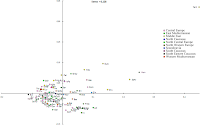 The Y-chromosome is an extreme outlier compared to modern groups, probably because of its heavy G2a domination, whereas the mtDNA from Treilles appears just like a normal and unexceptional Mediterranean-type population.
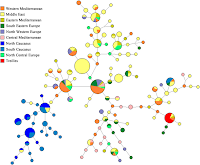
UPDATE V: The G2a median joining network shows that the Treilles haplotypes are disjoint from those that dominate the North Caucasus, with clear links to the Middle East, Central/East Mediterranean regions, as well as the South Caucasus.
Ancient DNA reveals male diffusion through the Neolithic Mediterranean route
Marie Lacan et al.
The Neolithic is a key period in the history of the European settlement. Although archaeological and present-day genetic data suggest several hypotheses regarding the human migration patterns at this period, validation of these hypotheses with the use of ancient genetic data has been limited. In this context, we studied DNA extracted from 53 individuals buried in a necropolis used by a French local community 5,000 y ago. The relatively good DNA preservation of the samples allowed us to obtain autosomal, Y-chromosomal, and/or mtDNA data for 29 of the 53 samples studied. From these datasets, we established close parental relationships within the necropolis and determined maternal and paternal lineages as well as the absence of an allele associated with lactase persistence, probably carried by Neolithic cultures of central Europe. Our study provides an integrative view of the genetic past in southern France at the end of the Neolithic period. Furthermore, the Y-haplotype lineages characterized and the study of their current repartition in European populations confirm a greater influence of the Mediterranean than the Central European route in the peopling of southern Europe during the Neolithic transition.
Link
What is absent is also quite interesting as what is present. The absence of E1b1b is consistent with my theory about the Bronze Age Greek expansion of that haplogroup in Europe that has been tied to the historical Greeks of the West Mediterranean.
R-M269 which, because of its apparent young Y-STR age has been tied by some to either the Mediterranean or Central European Neolithic is conspicuous absently from both at the moment. It may yet surface in a Neolithic context, but its absence this late from a region where, today, it is abundant only adds to its mystery. The absence of J2 is equally mysterious, as this is another putative Neolithic lineage which has failed to appear so far in a Neolithic context, while its J1 sister clade did make an appearance in much later aboriginals from the Canary Islands.
UPDATE I: Interestingly, some French researchers had noted a littoral distribution of haplogroups I, J, G in the Finistère, on the Atlantic side.
UPDATE II: I was reviewing my Ancient Y-chromosome studies compendium and one thing starts to become clear: how many of the earliest samples we have were dominated by 1-2 haplogroups, whereas there is a plethora of haplogroups in most modern populations: Treilles, Krasnoyarsk, Xiaohe, Pengyang all belonged to a single haplogroup, while Yangtze China to several lineages, all of which were in the O haplogroup.
Look at the MDS plot of the Y-chromosome and mtDNA from Treilles:

 The Y-chromosome is an extreme outlier compared to modern groups, probably because of its heavy G2a domination, whereas the mtDNA from Treilles appears just like a normal and unexceptional Mediterranean-type population.
Perhaps the modern Caucasus where particular ethnic groups are dominated by particular Y-haplogroups is a good analogy for prehistoric man, with many different groups with their signature haplogroups kept disjoint patrilineal gene pools before beginning to merge in late prehistorical and historical times.
UPDATE III: A poster at dna-forums as well as Ken Nordtvedt both agree that the I2a haplotypes belong to I-M26, a haplogroup that is modal in the SW Mediterranean, reaching very high frequencies in Sardinia. This may be consistent with the great biological continuity since the Neolithic in Sardinia, continuity which is also evident on the mtDNA. It also shows why the inference of pre-Neolithic I2a in Sardinia was flawed because of the use of the evolutionary mutation rate, while the origin and expansion of I-M26 in "genealogical rate" years becomes 5-7ky, consistent with the Neolithic origin of that haplogroup and the ancient DNA presence in Neolithic France.
UPDATE IV: Table S4 lists (in %) shared mtDNA lineages between Treilles and modern populations. The top ones are: Welsh (17.391), Cornish (16.667), Central Greeks (14.286), Bulgarians (12.5). Several Italian groups as well as South Tyrol Ladins and Germans are also greater than 10%.

UPDATE V: The G2a median joining network shows that the Treilles haplotypes are disjoint from those that dominate the North Caucasus, with clear links to the Middle East, Central/East Mediterranean regions, as well as the South Caucasus.
UPDATE VI: Some more good news: "The ancient DNA Lacan is now extracting from skeletons across France and Spain, Haak says, should provide more “piece[s] of the enormous puzzle we are trying to put together.”
PNAS doi: 10.1073/pnas.1100723108
Ancient DNA reveals male diffusion through the Neolithic Mediterranean route
Marie Lacan et al.
The Neolithic is a key period in the history of the European settlement. Although archaeological and present-day genetic data suggest several hypotheses regarding the human migration patterns at this period, validation of these hypotheses with the use of ancient genetic data has been limited. In this context, we studied DNA extracted from 53 individuals buried in a necropolis used by a French local community 5,000 y ago. The relatively good DNA preservation of the samples allowed us to obtain autosomal, Y-chromosomal, and/or mtDNA data for 29 of the 53 samples studied. From these datasets, we established close parental relationships within the necropolis and determined maternal and paternal lineages as well as the absence of an allele associated with lactase persistence, probably carried by Neolithic cultures of central Europe. Our study provides an integrative view of the genetic past in southern France at the end of the Neolithic period. Furthermore, the Y-haplotype lineages characterized and the study of their current repartition in European populations confirm a greater influence of the Mediterranean than the Central European route in the peopling of southern Europe during the Neolithic transition.
Link
May 24, 2011
Finding the founder of Stockholm
 Birger and his son belonged to Y-haplogroup I1 and had haplogroup H and Z1a mtDNA respectively. The presence of Z1a is interesting, suggesting that occasional Asian mtDNA sequences in Swedes may have been present in that population from a fairly early historical period. The female had mtDNA U5b1.
The authors also tested for the lactase persistence allele: Birger was heterozygous, and the other two individuals had the T (persistent) allele.
The Y-chromosome results will be added to the Ancient Y-chromosome studies page.
Annals of Anatomy - Anatomischer Anzeiger
doi:10.1016/j.aanat.2011.03.014
Finding the founder of Stockholm – A kinship study based on Y-chromosomal, autosomal and mitochondrial DNA
Helena Malmström et al.
Historical records claim that Birger Magnusson (died 1266), famous regent of Sweden and the founder of Stockholm, was buried in Varnhem Abbey in Västergötland. After being lost for centuries, his putative grave was rediscovered during restoration work in the 1920s. Morphological analyses of the three individuals in the grave concluded that the older male, the female and the younger male found in the grave were likely to be Birger, his second wife Mechtild of Holstein and his son Erik from a previous marriage. More recent evaluations of the data from the 1920s seriously questioned these conclusions, ultimately leading to the reopening and reexamination of the grave in 2002. Ancient DNA-analyses were performed to investigate if the relationship between the three individuals matched what we would expect if the individuals were Birger, Erik and Mechtild. We used pyrosequencing of Y-chromosomal and autosomal SNPs and compared the results with haplogroup frequencies of modern Swedes to investigate paternal relations. Possible maternal kinship was investigated by deep FLX-sequencing of overlapping mtDNA amplicons. The authenticity of the sequences was examined using data from independent extractions, massive clonal data, the c-statistics, and real-time quantitative data. We show that the males carry the same Y-chromosomal haplogroup and thus we cannot reject a father–son type of relation. Further, as shown by the mtDNA analyses, none of the individuals are maternally related. We conclude that the graves indeed belong to Birger, Erik and Mechtild, or to three individuals with the exact same kind of biological relatedness.
Link
March 01, 2011
Scarcity of lactase persistence in medieval Hungarians
The interesting finding of this paper is not so much the fact that conquering Magyars (who came from the east) lacked the common European allele for lactase persistence, but rather that the common folk largely did as well: there were only two individuals homozygous for the derived (persistent) allele, and one heterozygous one.
Am J Phys Anthropol DOI: 10.1002/ajpa.21490
Comparison of lactase persistence polymorphism in ancient and present-day Hungarian populations
Dóra Nagy et al.
The prevalence of adult-type hypolactasia varies ethnically and geographically among populations. A C/T–13910 single nucleotide polymorphism (SNP) upstream of the lactase gene is known to be associated with lactase non-persistence in Europeans. The aim of this study was to determine the prevalence of lactase persistent and non-persistent genotypes in current Hungarian-speaking populations and in ancient bone samples of classical conquerors and commoners from the 10th–11th centuries from the Carpathian basin; 181 present-day Hungarian, 65 present-day Sekler, and 23 ancient samples were successfully genotyped for the C/T-13910 SNP by the dCAPS PCR-RFLP method. Additional mitochondrial DNA testing was also carried out. In ancient Hungarians, the T-13910 allele was present only in 11% of the population, and exclusively in commoners of European mitochondrial haplogroups who may have been of pre-Hungarian indigenous ancestry. This is despite animal domestication and dairy products having been introduced into the Carpathian basin early in the Neolithic Age. This anomaly may be explained by the Hungarian use of fermented milk products, their greater consumption of ruminant meat than milk, cultural differences, or by their having other lactase-regulating genetic polymorphisms than C/T-13910. The low prevalence of lactase persistence provides additional information on the Asian origin of Hungarians. Present-day Hungarians have been assimilated with the surrounding European populations, since they do not differ significantly from the neighboring populations in their possession of mtDNA and C/T-13910 variants.
Link
This is quite unexpected, as present-day Hungarians have noticeable lactase persistence (pdf; Yuval Itan et al., A worldwide correlation of lactase persistence phenotype and genotypes). The origin of lactase persistence in Europeans had been dated to no earlier than the onset of the Neolithic, as it was absent in early Neolithic Central Europeans, as well as northern European hunter-gatherers.
A scenario in which most of the selection for LP occurred over the last millennium is quite difficult to believe, and this would imply that there was an influx of LP-folk into the Hungarian population to account for its present-day frequency. We urgently need data on other contemporaneous European population to determine whether they had LP frequencies similar to the present-day ones or not.
My guess is that these 10th-11th century Hungarians comprised, in accordance to what physical anthropology suggests, a mix of Mongoloid and Caucasoid types of eastern origin, both of which are expected to be low on LP, while present-day Hungarians are largely descended from pre- and post-Hungarian Central European Caucasoids who possessed the regular (for central Europeans) high LP frequency.
Am J Phys Anthropol DOI: 10.1002/ajpa.21490
Comparison of lactase persistence polymorphism in ancient and present-day Hungarian populations
Dóra Nagy et al.
The prevalence of adult-type hypolactasia varies ethnically and geographically among populations. A C/T–13910 single nucleotide polymorphism (SNP) upstream of the lactase gene is known to be associated with lactase non-persistence in Europeans. The aim of this study was to determine the prevalence of lactase persistent and non-persistent genotypes in current Hungarian-speaking populations and in ancient bone samples of classical conquerors and commoners from the 10th–11th centuries from the Carpathian basin; 181 present-day Hungarian, 65 present-day Sekler, and 23 ancient samples were successfully genotyped for the C/T-13910 SNP by the dCAPS PCR-RFLP method. Additional mitochondrial DNA testing was also carried out. In ancient Hungarians, the T-13910 allele was present only in 11% of the population, and exclusively in commoners of European mitochondrial haplogroups who may have been of pre-Hungarian indigenous ancestry. This is despite animal domestication and dairy products having been introduced into the Carpathian basin early in the Neolithic Age. This anomaly may be explained by the Hungarian use of fermented milk products, their greater consumption of ruminant meat than milk, cultural differences, or by their having other lactase-regulating genetic polymorphisms than C/T-13910. The low prevalence of lactase persistence provides additional information on the Asian origin of Hungarians. Present-day Hungarians have been assimilated with the surrounding European populations, since they do not differ significantly from the neighboring populations in their possession of mtDNA and C/T-13910 variants.
Link
March 31, 2010
Lactose intolerant prehistoric northern European hunter-gatherers (Malmstrom et al. 2010)
BMC Evolutionary Biology 2010, 10:89 doi:10.1186/1471-2148-10-89
High frequency of lactose intolerance in a prehistoric hunter-gatherer population in northern Europe
Helena Malmstrom et al.
Abstract (provisional)
Background
Genes and culture are believed to interact, but it has been difficult to find direct evidence for the process. One candidate example that has been put forward is lactase persistence in adulthood, i.e. the ability to continue digesting the milk sugar lactose after childhood, facilitating the consumption of raw milk. This genetic trait is believed to have evolved within a short time period and to be related with the emergence of sedentary agriculture.
Results
Here we investigate the frequency of an allele (-13910*T) associated with lactase persistence in a Neolithic Scandinavian population. From the 14 individuals originally examined, 10 yielded reliable results. We find that the T allele frequency was very low (5%) in this Middle Neolithic hunter-gatherer population, and that the frequency is dramatically different from the extant Swedish population (74%).
Conclusions
We conclude that this difference in frequency could not have arisen by genetic drift and is either due to selection or, more likely, replacement of hunter-gatherer populations by sedentary agriculturalists.
Link
High frequency of lactose intolerance in a prehistoric hunter-gatherer population in northern Europe
Helena Malmstrom et al.
Abstract (provisional)
Background
Genes and culture are believed to interact, but it has been difficult to find direct evidence for the process. One candidate example that has been put forward is lactase persistence in adulthood, i.e. the ability to continue digesting the milk sugar lactose after childhood, facilitating the consumption of raw milk. This genetic trait is believed to have evolved within a short time period and to be related with the emergence of sedentary agriculture.
Results
Here we investigate the frequency of an allele (-13910*T) associated with lactase persistence in a Neolithic Scandinavian population. From the 14 individuals originally examined, 10 yielded reliable results. We find that the T allele frequency was very low (5%) in this Middle Neolithic hunter-gatherer population, and that the frequency is dramatically different from the extant Swedish population (74%).
Conclusions
We conclude that this difference in frequency could not have arisen by genetic drift and is either due to selection or, more likely, replacement of hunter-gatherer populations by sedentary agriculturalists.
Link
February 16, 2010
Known lactase persistence (LP) genotypes don't explain LP in much of the world
A nice paper that should serve as a cautionary tale against generalizing genotype-phenotype interactions discovered into some populations into new ones.
The reason for this is simple: the known LP-related genotypes may be nullified/enhanced/otherwise affected by the general genomic background of the individual. While they do act -to a large extent, that's why they were discovered!- as on/off switches of lactase persistence in certain human populations, they do not do so generally across much of mankind.
While these results indicate (e.g. for clinicians) that an assessment of lactase peristence from genotype is iffy for certain contemporary human populations, they also cast doubt into certain archaeological correlations of lactase persistence.
Using both contemporary genotype frequencies, the few but increasing ancient DNA genotypes, as well as archaeological remains (e.g., milk residues in bowls), scientists are trying to determine when and how lactase persistence spread. But, this becomes more difficult, both because (a) the LP genotype can't really tell us whether a particular individual was LP or not - and hence lived in a heavily milk-reliant culture, and (b) we do not really know how LP interacted with the genomic backgrounds of individuals living during the Neolithic.
Map of LP frequency

Map of estimated LP based on genotype:

- Demography and selection in the spread of Lactase persistence in Europe (Gerbault et al. 2009)
- Lactase persistence in Greece and Italy
A worldwide correlation of lactase persistence phenotype and genotypes
Yuval Itan et al.
Abstract (provisional)
Background
The ability of adult humans to digest the milk sugar lactose - lactase persistence - is a dominant Mendelian trait that has been a subject of extensive genetic, medical and evolutionary research. Lactase persistence is common in people of European ancestry as well as some African, Middle Eastern and Southern Asian groups, but is rare or absent elsewhere in the world. The recent identification of independent nucleotide changes that are strongly associated with lactase persistence in different populations worldwide has led to the possibility of genetic tests for the trait. However, it is highly unlikely that all lactase persistence-associated variants are known. Using an extensive database of lactase persistence phenotype frequencies, together with information on how those data were collected and data on the frequencies of lactase persistence variants, we present a global summary of the extent to which current genetic knowledge can explain lactase persistence phenotype frequency.
Results
We used surface interpolation of Old World lactase persistence genotype and phenotype frequency estimates obtained from all available literature and perform a comparison between predicted and observed trait frequencies in continuous space. By accommodating additional data on sample numbers and known false negative and false positive rates for the various lactase persistence phenotype tests (blood glucose and breath hydrogen), we also apply a Monte Carlo method to estimate the probability that known lactase persistence-associated allele frequencies can explain observed trait frequencies in different regions.
Conclusion
Lactase persistence genotype data is currently insufficient to explain lactase persistence phenotype frequency in much of western and southern Africa, southeastern Europe, the Middle East and parts of central and southern Asia. We suggest that further studies of genetic variation in these regions should reveal additional nucleotide variants that are associated with lactase persistence.
Link
September 04, 2009
ASHG 2009 abstracts
It's that time of year again. Here is a list of abstracts from ASHG 2009 that caught my attention in three broad areas. It will be very interesting to see these when they become full papers, but if you are one of the lucky ones that goes to Hawaii this October and want to drop me a line about any of them, feel free to do so!
Population Genetics
Haplogroup H of mitochondrial DNA, a far echo of the West in the heart of Central Asia
Abraham's children in the genome era: Major Jewish Diaspora populations comprise distinct genetic clusters with shared Middle Eastern ancestry
The following study seems to demonstrate my recent suggestion of archaic admixture in Africa itself:
Characterizing the history of sub-Saharan African gene flow into southern Europe
Genetic diversity of European population isolates in the context of their geographic neighbors
Anthropometry
Super Y-chromosomes in Eurasia and the impact of social selection and Neolithic transition
Lactase Persistence; Multiple causal mutations in sub-Saharan pastoralists
Population Genetics
Haplogroup H of mitochondrial DNA, a far echo of the West in the heart of Central Asia
Through the millennia, Inner Asia played a pivotal role in shaping the history that greatly added to the cultural, ethnic, and genetic diversity observed throughout present Eurasia. Perhaps the two most significant phenomena witnessed in this part of the world were the ambitious expansion strategy employed by Mongolia’s most prominent personality, Genghis Khan and the complex network known as the Silk Road that for nearly 3,000 years contributed to the exchange of goods and the transmission of philosophy, art, and science that laid the foundation for the great civilizations of China, India, Egypt, Persia, Arabia, and Rome, and in several respects to the modern world. Over the last few years, through an international collaborative effort, researchers at the Sorenson Molecular Genealogy Foundation were able to collect 2,727 DNA samples, informed consents, and genealogical data in Mongolia, Kyrgyzstan, and Kazakhstan. All the samples were sequenced for the three hypervariable segments of the mitochondrial DNA (mtDNA) control region to assess the genetic composition of the modern population of these countries. We identified ~600 different haplotypes that could be ascribed to more than 30 haplogroups and sub-haplogroups. As expected, most haplogroups are typical of modern East Asian populations, but intriguingly, many different Western Eurasian clades were also identified, with a particular high incidence of H (~8.0%), the most common haplogroup in Europe. This feature cannot be attributed to genetic drift since different H sub-lineages have also been identified, each of them represented by several different haplotypes. The mtDNA distribution profile in the heart of Central Asia suggests a direct link between this area and Western Eurasia that could be explained by ancient migrations or by more recent historical events, such as Genghis Khan’s conquering efforts and trade or cultural exchanges along the Silk Route. To discriminate between these two possible scenarios, we are now analyzing a subset of these samples at the highest possible level of resolution - that of complete mtDNA sequences - focusing particularly on those H mtDNAs that seem to be the most informative considering their control-region haplotypes. Our preliminary data seems to be in favor of rather ancient genetic inputs from the West in shaping the peculiar mtDNA gene pool of Inner Asia’s present-day populations.
The following study seems to do precisely what I recently asked for:
However, as the PCA analysis shows, Ashkenazi Jews are distinct from both Europeans and non-Jewish Middle Eastern populations and cannot be viewed as a simple mix of the two; their distinctiveness must be -in part- due to the specific features of the small founder population of that community after it became effectively reproductively semi-isolated from gentiles after Roman times. It would be interesting to see different Jewish communities studied in the context of a broad variety of European and Middle Eastern populations, to determine whether Ashkenazi distinctiveness is specifically Ashkenazi or more generally Jewish distinctiveness; I would bet on a combination of the two.
Abraham's children in the genome era: Major Jewish Diaspora populations comprise distinct genetic clusters with shared Middle Eastern ancestry
Despite residence all over the world, Jewish populations have maintained continuous genetic, cultural, and religious tradition over 4,000 years. The unique ethnic makeup and social practices provide an invaluable opportunity to understand their genetic origins and migrations and to elucidate the genetic basis of complex disorders. To generate a comprehensive HapMap of ethnically diverse, healthy Jewish populations, we used the Affymetrix array 6.0 to genotype 381 samples recruited from 7 Jewish communities with different geographic origins: Eastern European Ashkenazim; Italian, Greek and Turkish Sephardim; Iranian, Iraqi, and Syrian Mizrahim (Middle Easterners). Here, we present population structure results from compiled datasets after merging with the Human Genome Diversity Project and the Population Reference Sample studies, which consisted of 146 non-Jewish Middle Easterners (Druze, Bedouin and Palestinian), 30 northern Africans (Mozabite from Algeria), 1547 Europeans, and 653 individuals from other African, Asian, Latin American, and Oceanian populations. Both principal component analyses and multi-dimensional scaling analysis of pairwise Fst distance show that Jewish populations form a cluster clearly distinct from all major continental populations. The results also reveal a finer population substructure in which each of 7 Jewish populations studied here form distinctive clusters - in each instance within group Fst was smaller than between group, although some groups (Iranian, Iraqi) demonstrated greater within group diversity and even sub-clusters, based on village of origin. By pairwise Fst analysis, the Jewish groups are closest to Southern Europeans (i.e. Tuscan Italians) and to Druze, Bedouins, Palestinians. Interestingly, the distance to the closest Southern European population follows the order from proximal to distal: Ashkenazi, Sephardic, Syrian, Iraqi, and Iranian, which reflects historical admixture with local communities. STRUCTURE results show that the Jewish Diaspora groups all demonstrated Middle Eastern ancestry, but varied significantly in the extent of European admixture. There is almost no European ancestry in Iranian and Iraqi Jews, whereas Syrian, Sephardic, and Ashkenazi Jews have European admixture ranging from 30%~60%. Analysis of identity-by-descent provides further insight on recent and distinct history of such populations. These results demonstrate the shared and distinctive genetic heritage of Jewish Diaspora groups.So, it seems that there will soon be real genomic data on the source and extent of admixture in Jews. The absence of Greek and Anatolian samples may be problematic in finding the sources of such admixture, but the presence of Tuscans, who are reasonably close to them in a pan-European context should do well to serve as a substitute. In a recent sutdy (in which Anatolians were not included), the closest populations to Ashkenazi Jews were Italians of mostly southern provenance (Fst=0.0040) and Greeks (Fst=0.0042) and fairly close to Tuscans (Fst=0.0066)
The following study seems to demonstrate my recent suggestion of archaic admixture in Africa itself:
It does not, however, tell us that this is because of archaic introgression in Europeans. The culprit could equally well be long-term population structure in Africa, i.e., the presence of "modern" and "archaic" populations in Africa itself.Deep population structure in sub-Saharan African populations
We analyzed ~500 Kb of resequencing data from 91 different intergenic regions in samples from three sub-Saharan African populations: Mandenka from Senegal, Biaka pygmies from the Central African Republic and San from Namibia. We employed novel methodology to estimate the split times and migration rates between populations. We found strong evidence for split times that predate the exodus of modern humans out of Africa (e.g., > 100 Kya). In addition, we also found evidence of ancient admixture (with unknown ‘archaic’ human groups) in the recent history of both the Biaka and the San.Analysis of Genomic Admixture in Costa Rica Population
Costa Rica (CR) population is a unique population representing a typical admixture of major continental ancestral populations. 1,301 samples collected from participants in a population-based study conducted in the Guanacaste region of CR were genotyped on a custom Illumina iSelect chip harboring 27,635 SNPs. The SNPs on the chip were selected based on multi-ethnic tagging strategy for three HapMap populations: CEU, YRI and JPT+CHB and cover 1,000 candidate genes/regions for a range of cancers. This data set was sufficiently large for the investigation of population substructure in our CR study and the examination of linkage disequilibrium (LD) patterns. Three HapMap major continental populations and a Native American population from the Illumina iControl DB were used as the reference populations for these analyses. Our preliminary results indicate that the Guanacaste CR population was formed mainly by a three-way admixture with 42.5%, 38.3% and 15.2% Native Indian, European, and African respectively. In addition, 4.0% residual genetic component derived from Asians was observed in our CR samples. Both model based STRUCTURE program and Principal Component Analysis (PCA) revealed consistent substructure pattern for the CR population. The magnitude of LD in the CR population seems to be smaller than all the reference populations except YRI. A more detailed knowledge of the underlying genetic structure of the CR population would be informative to assess its population genetic history and to assist in the interpretation of investigations of complex diseases in the CR or a comparably admixed population.Analysis of Genetic Substructure of Han Chinese Using Genome-Wide SNP Arrays: Implication for Association Studies.
China will start this year a $30 million effort of genome-wide association studies (GWAS) of common diseases in Chinese populations which have been largely underrepresented in the similar effort worldwide. A general concern is population stratification (ancestry differences) among subpopulations which can cause false positive associations. Han Chinese is the largest ethnic group in the world, however, its population substructures are often expected and yet well characterized. In this study, we examined population substructures in a diverse set of >1,700 Han Chinese samples collected from 26 regions, each genotyped with at least 160K single nucleotide polymorphisms (SNPs). Our results showed that: (a) Han Chinese population is complicatedly substructured, with the main observed clusters roughly corresponding to northern Han, central Han and southern Han; (b) Han Chinese samples collected from large cities, such as Shanghai, Beijing and Guangzhou, show diverse source of ancestries including three aforementioned clusters; (c) HapMap samples (CHB & CHD) and HGDP samples (Han & Han-NChina) deliver a limited representation of Han Chinese people. Building on the above insights, we investigated false positive rates and statistical power in various study designs using both empirical and simulated data. We further explored sample collection strategies and public data usage for future association studies.It will be interesting to see if the authors of the following study estimated gene flow in non-southern European populations as controls, to see what is the excess of Sub-Saharan admixture detected in the three southern European samples, and exactly what "methods that can infer admixture proportions in the absence of accurate ancestral populations" they used. Hopefully they will also extend their linkage disequilibrium analysis for the other populations besides Spaniards.
Characterizing the history of sub-Saharan African gene flow into southern Europe
Recent analyses of whole-genomeSNP data sets have suggested a history of sub-Saharan African ancestral contribution into southern Europe but not in northern Europe, consistent with previous analyses based on the Ychromosome and mitochondrial DNA. However, there has been no characterization of the proportion of African admixture in southern Europe, or of its date. Here we analyze data from ~450,000 autosomal SNPs in the Population Reference Sample, ~650,000 SNPs from the Human Genome Diversity Panel, and ~1.5 million SNPs from the HapMap Phase 3 Project, and studied patterns of correlation in allele frequencies across populations to confirm the evidence of African ancestry in many southern European populations but not in northern Europeans. Using methods that can infer admixture proportions in the absence of accurate ancestral populations, we estimated that the proportion of sub-Saharan African ancestry in Spain is 2.4 +/- 0.3%, in Tuscany 1.5 +/- 0.3%, and in Greece 1.9 +/- 0.7% (1 standard error). We also studied the decay of admixture linkage disequilibrium with genetic distance, which provided a preliminary estimate of the date of African gene flow into Spain of roughly 60 generations ago, or about 1,700 years ago assuming 28 years per generation. This date is consistent with the historically known movement of individuals of North African ancestry into Spain, although it is possible that this estimate also reflects a wider range of mixture times.Genome-wide patterns of population structure and admixture among Hispanic/Latino populations
In order to document genome-wide patterns of variation in Hispanics/ Latinos (HL’s) we genotyped individuals from five distinct populations recruited in the US: Mexico, Colombia, Ecuador, Dominican Republic and Puerto Rico. We present population structure results from an extensive genome-wide SNP dataset compiled by merging Affymetrix 500K and Illumina 650K data from these populations together with the Human Genome Diversity Panel, HapMap, Mao et al (2005), and POPRES studies. We apply Principal Component Analysis (PCA) and a clustering method, frappe, to infer admixture and genetic relationships of 262 HL individuals with 467 Africans, 715 Europeans, and 210 Native Americans comprising a total of 88 populations. We observe substructure within Native Americans, and, as expected, find that the admixed HL populations show Native American ancestry derived from local Native American populations. We find striking differences in estimated population-wide mean African, European and Native American ancestry proportions which are consistent with historical admixture and proximity to slave trade routes. The Dominican Republic and Puerto Rico, located on islands along slave trade routes, show high levels of African Ancestry (means 41.7% and 23.6% respectively) with less Native American Ancestry (11.5% and 18.9%). Colombians show a wide range of both African and Native American ancestry, though they have an overall mean of slightly higher Native American ancestry (36.3%) and lower African ancestry (11.7%) than the highly-African Dominicans and Puerto Ricans. Ecuadorians show the highest Native American mean ancestry (54.0%) with low estimated mean African Ancestry (7.3%). Mexico shows the largest range of Native American ancestry (11.0% - 79.0%) with an overall mean of 50.1% Native American ancestry and the lowest African ancestry (5.6%). Our study shows a broad range in admixture proportions across different HL individuals as well as different admixture patterns across populations. We also compare this genotype data with mtDNA and Y chromosome genotypes and use simulations to estimate ancient male and female sex ratios in each HL population. Lastly, we discuss implications of population structure for genome-wide association studies in admixed populations such as HL’s, especially when recruited in the United States.A new statistical method to infer population admixture events using genetic variation data
We present a novel statistical method that uses densely-spaced Single- Nucleotide-Polymorphism (SNP) data to identify the major admixture events occurring throughout a population’s history. The model has several advantages over leading available analytical approaches in this area, such as principal-components-analysis and STRUCTURE. In particular it can simultaneously (i) take advantage of the information inherent in patterns of linkage disequilibrium, i.e. non-random associations amongst neighbouring SNPs along a chromosome, (ii) efficiently analyse hundreds of individuals at hundreds of thousands of SNPs genome-wide, and (iii) allow for relatively straight-forward interpretation and direct inference of key historical parameters, such as the proportions and times of major admixture events. Using simulated data matched to currently available human datasets, we show that our model can identify and accurately date admixture events that have occurred between 7 and 150 generations ago. As our technique exploits the rich information in genetic data to infer details of a population’s admixture history, it marks a powerful complement to anthropological research and can help to resolve a number of existing controversies. We present results from applications of our model to two datasets: (1) SNP data from 22 distinct genetic regions for individuals from three chimpanzee populations in Africa; (2) genome-wide 650K SNP data for individuals from 53 world-wide populations of the Human Genome Diversity Panel (Science 319, 1100-1104). We highlight a number of intriguing new insights from these analyses. For example, the chimpanzee analysis showcases the model’s ability to infer the relative divergence among populations. The human analysis identifies several important admixture events, some of which are historically wellestablished (e.g. identification of recent European genetic influx into the Maya Native American population), others that can be placed into a clear historical context (e.g. an East Asian genetic influx into several Central and South Asian populations dated precisely to the era of the Mongol empire), and some that are to our knowledge novel (e.g. admixture in the Cambodian population between a Central/South Asian source and an East Asian source dated to around the period of the Cambodian Empire).Bayesian methods of estimating ancestry using whole-genome SNP data
Estimation of the genetic ancestry of an individual is useful for association studies, disease risk prediction, population genetic analyses and is of inherent interest for the individual themselves. We have investigated methods of estimating ancestry using whole-genome SNP data on each individual. We focus on the scenario where the goal is to determine ancestry in relation to a set of genotype or haplotype data that is available from a set of distinct source populations, for example, the HapMap 2, HapMap 3 or 1000 Genomes datasets. Inference in this setting can focus either on the estimation of global ancestry, in which an overall estimate of the proportion of ancestry from the source populations is needed, or local ancestry, which aims to partition an individual genome into distinct segments of ancestry from the source populations. We have compared 2 models based on the estimated allele frequencies in the source populations at a set of unlinked SNPs. Model 1 only models global admixture, whereas Model 2 models both global and local admixture. Using simulated individuals with differing proportions of CEU and YRI admixture (based on HapMap3 data) we find that there is a relatively small difference in the mean square error of the estimates of global admixture from the 2 methods (1.16 10-4 and 8.88 10- 5 respectively). Since Model 1 is much faster to fit that Model 2 these results suggest that Model 1 can be used to estimate the level of global ancestry, or at the very least will be useful as an initial estimate for use in Model 2. Further investigation is required to see how these results hold for more genetically similar source populations. In contrast, the mean square error for the estimates of local admixture from the 2 methods is 0.298 and 0.0861 respectively, suggesting that an explicit model of local ancestry is needed to carry out this level of inference. We are also investigating the utility and practicality of using linked SNP data to estimate global and local admixture.A detailed phylogeography of mtDNA haplogroup C1d: another piece in the Native American puzzle
Recent studies based on complete mitochondrial DNA (mtDNA) sequences revealed that two almost concomitant paths of migration from Beringia led to the dispersal of the first Americans (Paleo-Indians) approximately 15-17 thousand years ago (kya). This first expansion was followed by later more restricted diffusion events from the same dynamically changing Beringian source. Thus, five pan-American (A2, B2, C1, D1, and D4h3a) and four geographically confined (D2, D3, X2a, and C4c) mtDNA haplogroups represent the current female legacy of the ancient migratory events that gave rise to the native populations of the double continent. Regarding haplogroup C1, all its members appear to belong to one of three branches: C1b (characterized by the control-region transition at np 493), C1c, and C1d (with the control-region transition at np 16051). These three sub-haplogroups are found throughout the Americas, thus supporting the scenario that they most likely differentiated at the early stages of the Paleo-Indian southward migration. If considered as three separate founders, C1b, C1c, and C1d would bring the currently known number of native pan-American lineages to seven. As a whole, the C1 haplogroup has an estimated age of 17.0- 19.6 ky, while the three individual branches are dated 16.5-17.0 ky, 17.2- 17.6 ky, and 7.6-9.7 ky, respectively. The extremely young age estimate of C1d has been attributed, at least for the moment, to a major underrepresentation of C1d mtDNAs (only nine complete sequences published to date) in the current Native American mtDNA phylogeny. We have addressed this issue in the current study by completely sequencing more than 60 novel mtDNAs belonging to haplogroup C1d, which were carefully selected on the basis of both control-region variation and geographic/ethnic origin. Phylogeographic analyses have provided not only an accurate evaluation of the expansion time of C1d in the Americas, but also a detailed picture of its current distribution in both general mixed and indigenous populations.
Genetic diversity of European population isolates in the context of their geographic neighbors
Mapping traits in population isolates provides an opportunity to simplify the challenges of complex trait mapping because such populations likely have enhanced levels of linkage disequilibrium and reduced genetic heterogeneity for the underlying traits. Here we analyze high-throughput SNP genotyping data to compare genomic-scale patterns of variation in several European population isolates (Adygei, Basque, Orcadian, Roma from Slovakia, Sardinians, and Sorbs) and contrast their patterns of variation to geographical proximal populations. Our results reveal insights for the demographic history of each of these unique populations, suggest substantial variation among these population isolates in patterns of diversity, and highlight the importance of population selection in genome-wide association mapping.Incompatibility of current Finnish mitochondrial diversity with simulations of assumed settlement history
Traditionally, geneticists studying Finnish population history have assumed a model where Northern and Eastern Finland were mostly uninhabited until the 16th Century A.D. and were then settled by small family groups from South-Western Finland. The reduced genetic diversity and the distinct Finnish disease heritage are seen as consequences of these founder effects. Y-chromosomal diversity is indeed reduced in the present population, especially in the eastern parts of the country. However, mitochondrial diversity is not heavily reduced compared to South-Western Finnish or other European populations. This discrepancy has been explained with the higher mitochondrial mutation rate having restored mitochondrial diversity in these populations since the founder effects.
In our view it seems unlikely that even with high mitochondrial mutation rates mtDNA diversity could be restored over a mere 17 generations after the alleged tight bottlenecks. Archaeological evidence also suggests a different settlement history, e.g. settlement beginning in South-Eastern instead of South-Western Finland.
In this study we use simuPOP, a state-of-the-art forward simulation tool, to simulate datasets corresponding to Finnish mitochondrial diversity under the traditional model and compare them with actual present-day Finnish data. We show that current mitochondrial variation is unlikely under this model, increasing the credibility of alternative hypotheses.On the borderline between the east and the west: the maternal genetic background of Karelians
Introduction: The frontier between Finland and Russia represents one of the most conspicuous socioeconomic gaps in the world. Based on the mean gross national product, there is a ten-fold difference between Russian Karelian Republic and Finnish Karelia. Otherwise these populations share the same geophysical environment. For these reasons, Karelia has been a very interesting field of research for multifactorial disease studies. However, this area has undergone many demographic incidents, such as wars and famine, which may cause local differences in the gene pool. In this study, we wanted to elucidate the maternal genetic background of Karelians. Materials: Blood samples were collected from healthy unrelated individuals without known foreign background from four Karelian districts; Aunus(n=218), Viena(n= 87), Tver(n=61) and Finnish Karelia (n=70), The sample collection was performed according to the Basic Principles of the Declaration of Helsinki. Methods: The entire mitochondrial DNA was sequenced in 32 reactions per sample with the BigDye® Terminator v3.1 Cycle Sequencing Kit in the Applied Biosystem’s 3730 Genetic Analyzer sequencing machine. Sequence alignments were made by the SeqScape® Software, Version 2.5 (Applied Biosystem). Results: Haplogroup H was very common in all populations. However, H1a is almost absent in Finnish Karelia. Also U and its subhaplogroups were common. Specially U5b1b1 reached over 16% in Viena Karelians. U4 was most common among Tver Karelians. Conclusions: The maternal genetic background seem to be complex in this area. There is clear regional differences. Also there is solid evidence of gene flow from various sources. Representation of the clearly Asian haplogroups is strikingly low.Genetic Landscape of Eurasia Viewed from Large Allele Frequency Differences.
The diversification leading to modern human populations in Eurasia is one of the most important topics in the study of human expansions after leaving Africa. Most studies of Eurasia populations have used either limited markers or involved insufficient population coverage. We chose 68 markers based on large allele frequency differences among a few Eurasian populations and then typed them on 1766 individuals from 34 populations representing all subdivisions of Eurasia. Analyses using the STRUCTURE program showed a clinal east-west division when K=2, with a median border dividing Central Asia along the Ob River, the Kazakh highland, the western side of Pamir Mountains, and the southwestern side of the Himalayas. We fit curves to the STRUCTURE loadings using distances of the population coordinates from the median border. The genetic structure changed dramatically only within 2000km on each side of the border. At higher values of K the western populations of East Asia are the first to be distinguished (at K=3): Mongols, Tibetans, Qiang, and Baima, are most distinct from the more eastern populations. At K=4 Southwest and South Asians are distinguished from the Europeans; At K=5 Southeast Asians and at K=6 Central Asians are successively distinguished from eastern East Asians. Several more isolated populations such as Samaritans, Atayals, or Micronesians were distinguished in different independent runs when K=7 providing no clear anthropological information. South Asians were always clustered with Southwest Asians with pronounced similarity to Central Asians. The failure to distinguish South Asians maybe due to the selection of the markers with large allele frequency differences specifically between Europeans and East Asians. We also tested for statistical differences in the allele frequencies for all pairs of clusters when K=6. The results showed significant borders (P less than 0.0001) including those between western East Asians and eastern East Asians or Central Asians; however, insignificant borders were observed between Southwest Asians and Southeast Asians or western East Asians, neither was between Central Asians and eastern East Asians. This indicates substantial gene flow in North Asia between eastern East Asians and Central Asians, and in South Asia between South Asians and Southeast Asians. Using increased population and marker coverage, this study helps to understand the details of genetic diversity and landscape of Eurasians.
Anthropometry
Dairy intake associates with the IGF2 rs680 polymorphism to height variation in Greek children. The GENDAI study
Objective: Height is a classic polygenic trait with a number of genes underlyingits variation. We evaluated the prospect of gene to diet interactions ina children cohort for the IGF2 rs680 polymorphism and height variation.Methods: We screened 795 peri-adolescent children (424 females) aged10-11 years old from the (Gene and Diet Attica Investigation; GENDAI)paediatric cohort for the IGF2 rs680 polymorphism. Results: Children homozygousfor common allele (GG) were taller (148.9 ± 7.9 cm) comparing tothose with the A allele (148.1 ± 7.9 cm), after adjusting for age, sex, anddairy intake (β±SE: 2.1± 0.95, p=0.026). A trend for interaction for theIgfrs680xdairy intake is also revealed (p=0.09). Stratification by IGF2 rs680genotype revealed a positive association between dairy products intakeand height only in A allele carriers, adjusted for the same confounders(standardized β=0.111, p=0.014). When dairy intake was classified, basedon the median value, into two equal groups of low (1.9 ± 0.7 servings/day)and high dairy products intake (4.4 ± 1.5 servings/day), it was found thatin A allele children high dairy eaters were significantly taller (p=0.05) comparedwith low dairy eaters (148.8 ± 7.9 cm vs 147.4 ± 7.7 cm respectively,adjusted for age and sex). Conclusion: A higher consumption of dairy productsassociated with increased height depending on the rs680 IGF2 genotype.Thus, exploring height variants and elucidating possible interactionswith environmental factors like diet could help us to designA Non-synonymous HNF4A Variant is Associated with Glycemia During Pregnancy and Offspring Head Circumference in Populations of European Ancestry in the HAPO Study
The Hyperglycemia and Adverse Pregnancy Outcome (HAPO) study is a multicenter, international study, which examined the association of maternal glucose levels with fetal growth and outcome in 25,000 pregnant women from multiple ethnic groups to demonstrate a continuous relationship between maternal glucose measures and birth size throughout the range of glucose concentrations. We hypothesize genetic factors contribute to these phenotypes, and examined 1536 fetal and maternal SNPs in 79 candidate loci previously implicated in insulin secretion or sensitivity to determine associations with maternal glycemia and insulin secretion (fasting glucose and Cpeptide and 1-hr glucose from the OGTT) at ~28 weeks gestation and/or offspring size at birth (birth weight, length, head circumference, and sum of skinfolds) for HAPO mothers of European (Belfast and Manchester, UK, and Brisbane and Newcastle, Australia; N=3828) and Asian (Bangkok, Thailand; N=1813) ancestry and their offspring. Associations were assessed through linear regressions with the single trait/outcome under an additive genetic model adjusting for known confounders. Among our strongest signals was rs1800961G>A, which encodes a Thr>Ile amino acid change in exon 4 of HNF4A, recently identified in a GWAS meta-analysis as a variant associated with decreased HDL levels. In the HAPO study, this SNP was strongly associated with increased fetal head circumference (0.5cm [95%CI: 0.3-0.7] per maternal minor allele; P=1.2x10⁻⁷) in those of European descent. The maternal minor allele was also weakly associated with 1-hour glucose (4.3mg/dL [95%CI: 0.5-7.9]; P=0.03), birth length (0.7cm [95%CI: 0.2-1.1]; P=0.003), birth weight (52.6g [95%CI: -8.0-113.3]; P=0.09), and sum of skinfolds (0.3cm [95%CI: -0.1-0.6]; P=0.13). This same minor allele in the fetal genome was weakly associated with cord C-peptide (0.1ug/dL [95%CI: 0.01-0.22]; P=0.03), and head circumference (0.2cm [95%CI: -0.1-0.4]; P= 0.08). The same trends were observed among the Thai, although not significantly probably due to a reduction in power from the low risk allele frequency (<2%).>
Selection
In a recent study, Heyer used germline mutation rates to estimate time depth, so I am more inclined to take her dates at face value than in papers which used "evolutionary" rates. It will be interesting to see which Y-chromosome types the authors associates with the both the older and recent expansions.
Super Y-chromosomes in Eurasia and the impact of social selection and Neolithic transition
Some Y-chromosomal haplotypes have been found at unusually high frequenciesin Asian and European human populations. The massive spreadof these lineages has been explained by the impact of social selection i.e.the high reproductive success of some males and their relative/descendantsdue to their high social status. The most well-known examples are the “Khanhaplotype” and the “Manchou haplotype” in Asia, and the U’Neill haplotypein Ireland. But are these frequent haplotypes always associated with recentevents of social selection, or could they be linked to much older processes?To address this question, we have surveyed ~ 3500 males in 97 populationsfrom Turkey to Japan. We have focused on the 12 most frequently representedhaplotypes in Eurasia and tested whether their expansions are linkedto a specific factor such as language or subsistence methods. Our resultsshow that both recent and ancient processes are responsible for the expansionsof these lineages. The recent expansions (2000-3000 years) likely tobe linked to social selection are prevalent in Altaic-speaking and pastoralpopulations. This might indicate a recent cultural change in the social organizationof these populations. The ancient expansions (8000-10000 years)are over-represented in Indo-European speaking and sedentary farmer populations,and are likely to be the result of the Neolithic transition.
Lactase Persistence; Multiple causal mutations in sub-Saharan pastoralists
Background Milk is the primary source of nutrition for newborn mammals, including humans. The majority of human adults, estimated at approximately 65%, are unable to digest lactose (the main carbohydrate in milk) effectively since lactase expression is down-regulated after weaning, as it is in other mammals. In some humans however, lactase expression persists into adulthood (lactase persistence, LP) allowing adult consumption of milk from other species, and the frequencies of this trait vary throughout the world. A C-T SNP -13910 bases upstream from the lactase gene (LCT) is associated with LP in Europe. The -13910*T is rare in milk drinking groups in Africa although two other variants (-13915*G, -14010*C) have been shown previously to be significantly associated with LP and in an accompanying abstract (Ingram et al) we confirm a third locus (-13907*G) and present a fourth candidate SNP. However some LP individuals have also been identified who carry none of these alleles. Aims To examine the distribution across Africa of these and other allelic variants; to examine other regulatory regions in population groups in which enhancer alleles are lacking. Results The geographic and ethnic distribution of -13907*G, -13910*T, -13915*G, -14009*G, and -14010*C in 10 different countries and 15 distinct ethnic groups across Africa (n=1221 individuals) is presented here. Several other variants in this enhancer region are also described here for the first time. These tightly clustered enhancer variants are more frequent in pastoralist milk drinking groups than agriculturalist populations and are associated with several different LCT core haplotypes. Two further candidate regulatory regions have been sequenced in the same populations including a 1000bp region immediately upstream from LCT where novel variants have been found. Conclusions The data support the notion that many different mutations do have a functional role in LP, and that the trait has arisen independently several times, being subject to the positive selection conferred by the increased ability to digest milk lactose by people in pastoralist societies.Extreme Evolutionary Disparities Seen in Positive Selection Across Seven Complex Diseases
Genome-wide association studies (GWASs) have successfully illuminated disease-associated variation. But whether human evolution is heading towards or away from disease susceptibility remains an open question. We analyzed the seven diseases studied by the Wellcome Trust Control Case Consortium (WTCCC), to calculate the relative selective pressure at every significant loci. Results reveal striking differences between the seven studied diseases. We find evidence of recent positive selection in favor of alleles increasing the risk of Type 1 Diabetes (T1D), Crohn’s Disease (CD), Hypertension (HT), Rheumatoid Arthritis (RA), and Bipolar Disorder (BD). Riskassociated alleles (defined as the allele most strongly associated with disease among associated SNPs) for Type 2 Diabetes (T2D) fall largely within the random neutral region, and Coronary Artery Disease (CAD) shows less positive selection than expected by random. When only protective alleles are considered (defined as the allele least strongly associated with disease among associated SNPs), we find that SNPs only associated with T1D, CD, and RA appear to exhibit significant signatures of positive selection. There is significant asymmetry in the 96 SNPs strongly associated with T1D (pvalue ≤0.005) showing strong signs of positive selection, with 79 SNPs selecting for the risky allele, and only 17 SNPs selecting for the protective allele. Furthermore, selection patterns of Coronary Artery Disease (CAD) fall far below the expected levels of random, implying stable allele frequencies. Results reveal the evolutionary trajectories of T1D and CD favor risk alleles, possibly due to their simultaneous role in protection from infectious diseases. These results inform on current understanding of disease etiology, thus aiding efforts to discover novel approaches to disease treatment and prevention.Detecting Natural Selection in the Human Genome from Pilot1 Data in the 1000 Genomes Project
Identifying signatures of natural selection in the human genome is of fundamental implication for the study of population evolution and for the biomedical research. The distribution of selection in genome will provide important functional information. Natural selection modify the level of variability within and between populations and shapes the pattern of genetic variations in the genome. Genetic variation in genome is the raw data for detection of natural selection. The 1000 Genomes Project produces whole genome sequencing data and offers a unique and great opportunity to scan the genome for signature of natural selection. Five statistics: Tajima’D, Fu and Li’s F, Achaz’s Y, Fay and Wu’s H and Zeng et al.’s E (based on comparing the site frequency spectrum within population) and Fst statistic (based on the measure of population subdivision) were applied to Pilot 1 data in 1,000 genome project to scan the entire genome for detection of selection, where 344 chromosomes from ASI, CEU and YRI were sequenced. A total of more than 20 million of variant sites, 4.8 millions common in three populations were identified. We calculated seven statistics in 10 kb and 100 kb windows across the genome for each population and obtained their empirical distributions. Results show that two kinds of windows analyses lead to the similar distributions. The proportional rank of the test statistic in a particular window compared with the overall empirical genomic distribution was taken as empirical P-value for that window. We identified 3,046 candidate selection regions in ASI population, 2,015 selection regions in CEU, and 2,204 selection regions in YRI at 5% empirical significance level in 10 kb by five statistics based on differences in frequency spectrum. Among 457 candidate genes of selection reported from PubMed, we detected 102 selection genes in ASI, 53 selection genes in CEU, and 101 selection genes in YRI and 11 selection genes common in three populations by familiar Tajima D test. By comparison we obtained 3.9 million SNPs and the whole genome’s fixation index about 0.10~0.11. By compared with the empirical genome-wide distribution of FST, we identified 5, 278 candidate selection regions at an empirical significance level of 2.5% from each of the 22 autosomal chromosomes. Among 581 identified selection regions by FST which were reported from literatures, we found that 294 selection regions overlap our results.Genomic Landscape of Positive Natural Selection in North European Populations
Analysing genetic variation of human populations to detect loci that have been affected by positive natural selection is important for understanding adaptive history and phenotypic variation in humans. In this study, we analysed recent positive selection in Northern Europe from genome-wide datasets of 250 000 and 500 000 single nucleotide polymorphisms in a total of over 1000 individuals from Great Britain, Northern Germany, Eastern and Western Finland, and Sweden. Coalescent simulations were used to demonstrate that the integrated haplotype score (iHS) and long-range haplotype (LRH) statistics have sufficient power in genome-wide datasets of different sample sizes and SNP densities. Furthermore, the behavior of the FST statistic in closely related populations was characterized by allele frequency simulations. In the analysis of the North European dataset, dozens of regions in the genome showed strong signs of recent positive selection. Most of these regions have not been discovered in previous scans, and many contain genes with interesting functions (e.g. RAB38, INFG, NOS1AP, and APOE). In the putatively selected regions, we observed a statistically significant overrepresentation of genetic association to complex disease, which emphasizes the importance of the analysis of positive selection in understanding the evolution of human disease. Altogether, this study demonstrates the potential of genome-wide datasets to discover loci that lie behind evolutionary adaptation in different human populations.Evidence of Indigenous American specific selection in skin pigmentation genes
Recent studies of selection in human pigmentation genes have focused on Old World populations, neglecting the evolutionary changes that have occurred in Indigenous American populations since their migration into the Americas. Previous research shows correlations between Indigenous American ancestry and skin pigmentation variation, suggesting a genetic role in the determination of skin pigmentation among these populations. However, few genes contributing to these differences have been described. To identify genes that may have undergone Indigenous American specific changes, this work examines signatures of selection in 82 pigmentation candidate genes by genotyping 88 indigenous individuals from Central and South America using the Affymetrix Genomewide Human SNP Array 6.0. The resulting 906,600 single nucleotide polymorphisms (SNPs) were surveyed for signatures of selection in the Indigenous American populations compared to the HapMap Phase I populations. Evidence of selection was identified using four measures selected for the complementarity of their approaches, including the reduction in heterozygosity (lnRH), Locus-Specific Branch Length (LSBL), Tajima’s D, and by examination of the haplotype block structure. When computing lnRH and LSBL as well as when examining changes in haplotype frequency, the East Asian and European HapMap populations were included because they are the most closely related populations available. These analyses differentiate the selective changes that appear to be shared among East Asian and Indigenous American populations from those that are unique to the Indigenous American populations. For each test, the top5%of the empirical distribution of results was examined and pigmentation genes falling in this tail of the distribution were considered to show statistically significant evidence of selection. Based on these analyses, 12 genes - ADAM17, POMC, AP3B1,OPRM1, SILV, OCA2/HERC, PLDN, MYO5A, RAB27A, CYP1A2, ATRN, and ASIP - show evidence of selection unique to the Indigenous American populations. Many of these genes have known functional roles in melanogenesis and suggest potential pathways responsible for the observed differences in skin pigmentation between Indigenous American and Old World populations.Patterns of correlation between genetic ancestry and facial features suggest selection on females is driving differentiation.
Human facial features show extensive variation within and among populations. By investigating the relationship between dimorphism in facial features and genetic ancestry in different populations, we can explore the roles of sexual and natural selection on the human face. We measured sexual dimorphism in facial traits while controlling for the effects of overall size differences and then tested for interactions between sex and genetic ancestry. The study sample consists of 254 subjects (n=170 females, n=84 males), ages 18-35, showing West African and European genetic ancestry sampled in the United States and Brazil. Maximum likelihood genetic ancestry estimates were determined from 176 ancestry informative markers (AIMs), which allowed for the proportional estimation of genetic ancestry from four parental populations (West African, European, East Asian, and Native American). Three-dimensional photographs of faces were acquired using the 3dMDface imaging system (Atlanta, GA). 22 standard anthropometric landmarks were placed on each image and XYZ coordinates were collected. All 231 possible pairwise inter-landmark distances were calculated and then log transformed. Using the pairwise distances, we tested whether some distances were larger in one sex than the other, having taken size into account, in a) African Americans sampled in the United States, b) Brazilians sampled in Brazil, and c) the combined African American and Brazilian sample. We found that several pairwise distances differed between the sexes. For example, the distance from the brow to nasal bridge was found to be more than 5% larger in females than males. We then tested for an interaction between sex and genetic ancestry by testing for differences in the slopes of the ancestry association between males and females. Although the pattern differed slightly between samples, after Bonferroni correction many correlations were the found to be same in both sexes. However, females in all three samples had many additional significant correlations that were not seen in males, while males had very few correlations that were not found in females. The results of these analyses suggest that selection on females is driving the differentiation in facial features among populations.Effect of natural selection on North Asian mitochondrial haplogroup variation
The human mtDNA exhibits striking, region-specific sequence variation. The regional distribution of mtDNA haplogroups have attributed either to genetic drift assisted by purifying selection (Elson et al., 2004; Kivisild et al., 2006; Ingman, Gyllensten, 2007) or to an adaptation to different climates (Mishmar et al., 2003; Ruiz-Pesini et al., 2004). In an attempt to study the mode of selection in mtDNA variation in human populations we sequenced and analyzed 211 complete mtDNA sequences belonging to haplogroups A, C and D accounting in total for 49.3% of mtDNA lineages in North Asia. The North Asian haplogroups A, C and D showed a highly significant deviation from the standard neutral model as well as a bell-shaped distribution of pairwise differences consistent with rapid population expansion. To determine the overall importance of selection in shaping human mtDNA variation we calculated Ka/Ks ratio both for aggregated mtDNAs and for 13 proteinencoding genes within particular haplogroups (A, C and D). We have found a prevalence of Ks over Ka within haplogroups A, C and D indicating the influence of negative selection on mtDNA during evolution. Consistent with some previous reports we have found the Ka/Ks ratio for the ATP6 gene to be the highest among the North Asian sequences suggesting thereby that this gene has been subject to positive selection. We have also observed a set of genes with a somewhat higher Ka/Ks ratio relative to other mitochondrial genes - CO2 for haplogroup A, ND3 and ND4 for haplogroup C. Meanwhile the other approach taking into account the difference in NS/S ratios between the haplogroup-associated and private substitutions (Elson et al., 2004) shows the significant departures from neutrality only for haplogroup D and its subhaplogroup D4. Furthermore single gene analysis reveals the relatively strong influence of negative selection only in CYTb gene within haplogroupD(p=0.011, NI=14.1). In general, our results indicate that there is an evidence for both gene-specific and lineage-specific variation in selection acting on North Asian mtDNAs.Selection for blue eyes in Europe and light skin pigmentation in East Asia at OCA2/HERC2
OCA2 and HERC2 are two genes on chromosome 15 separated by lessthan 10 kb. Mutations in this region have been shown to have an effect onpigmentation including causing oculocutaneous albinism type 2. In Europeans,a three SNP haplotype (rs4778138, rs4778241, rs7495174) and threeindividual SNPs (rs12913832, rs916977, rs1667394) have been associatedwith blue eyes. We have labeled the three SNP haplotype BEH1. We foundthat the first individual SNP, rs12913832, was in near complete LD withanother SNP (rs1129038). Wetreat these two SNPs together as a haplotype,BEH2. We also found that the other two individual SNPs were actually innear complete LD with each other and decided to label them BEH3. In EastAsians, a SNP (rs1800414) has been identified that is associated with alight skin pigmentation phenotype. We typed these eight SNPs in 64-70population samples. We then examined worldwide distribution of the fourpigmentation alleles. We saw that the light skin allele was at its highestfrequency in eastern East Asia, at midrange frequencies in Southeast Asia,and at lower frequencies in western East Asia. It is virtually absent from therest of the world. BEH1 and BEH3 show very similar global patterns, lowfrequencies to midrange frequencies in Africa and East Asia, midrangefrequencies in India and Eastern Siberia, and midrange to high frequenciesin Southwest Asia, Europe, Western Siberia, the Pacific Islands, and theAmericas. BEH2 shows a different pattern from the other two. It showslow frequencies in East Africa, India, Eastern Siberia, and the Americas,midrange frequencies in Southwest Asians and Southern Europeans, andhigh frequencies in Eastern and Northwestern Europe and Western Siberia.We then typed additional SNPs and test each pigmentation allele for selectionusing the Relative Extended Haplotype Homozygosity (REHH) test. Wefound that the light skin allele of rs1800414 is under selection in East Asiaand that the blue eye allele of BEH2 is under selection in Europe andSouthwest Asia. We show light skin pigmentation has been selected for inEast Asia. This is likely due to lower UV exposure at the higher latitudes(compared to equatorial Africa) and the need for lighter skin for vitamin Dproduction. We also show that blue eyes are selected for in Europe. Thisis most likely due to sexual selection, though another unknown effect of thisparticular allele could be selected for and the blues eyes are a side effect.Ancestry variation along the genome in Latin American populations and implications for recent natural selection
Latin American populations stem from the admixture starting about 500 years ago of Europeans, Africans and Native Americans. Extreme deviation in ancestry estimates at certain genome locations (relative to the genomewide average) could reflect the action of recent natural selection. We evaluated the distribution of ancestry estimates along the genome using 678 microsatellite markers in 249 individuals sampled from 13 admixed populations across Latin America. We found a significant deviation in ancestry at two genomic locations with more than four times standard deviations from the genome-wide mean: an excess of European ancestry at 14q32 (Zscore = 4.14), and an excess of African ancestry at 6p22 (Z-score = 4.71). These deviations in ancestry were observed in the analysis of the combined dataset as well as in most of the individual populations examined. We showed that our findings are robust to the Native American ancestry populations used. We discussed the implications for recent natural selection in the context of the unique history of the New World, as well as the possibility of artifacts.
Subscribe to:
Posts (Atom)