February 22, 2006

Non-flawed mtDNA datasets

Nasidze and Stoneking respond to criticism levelled against them (see Flawed mtDNA datasets). I can't take any position on who is right or wrong, but feel free to read both criticism and response and make up your own mind. This little tidbit is interesting:
B&K base their analyses on a database of 30,000 HV1 sequences, which they claim is sufficient to identify "… idiosyncrasies of data sets that cannot be attributed to natural evolutionary processes." We disagree: 30,000 sequences may sound like a lot, but actually this represents only 0.0005% of the potential HV1 sequences in the human population. Moreover, the existing sequences are nowhere near a random sample, as many areas of the world are under-represented in the studies that have been done to date. Given that 99.9995% of the data is missing, and that large areas of the world are missing in the 0.0005% of the data that does exist, it is hardly surprising that new patterns of variation will be found in new populations.

Annals of Human Genetics (Online Early)

The Patient is Not Dead Yet: Premature Autopsy of a mtDNA Data Set

M. Stoneking and I. Nasidze

(no abstract)

Link

February 21, 2006

Expansion of East Asian populations

Genetics. 2006 Feb 19; [Epub ahead of print]

Male demography in East Asia: a north-south contrast in human population expansion times.

Y. Xue et al.

The human population has increased greatly in size in the last 100,000 years, but the initial stimuli to growth, the times when expansion started, and their variation between different parts of the world are poorly understood. We have investigated male demography in East Asia, applying a Bayesian full-likelihood analysis to data from 988 men representing 27 populations from China, Mongolia, Korea and Japan typed with 45 binary and 16 STR markers from the Y chromosome. According to our analysis, the northern populations examined all started to expand in number between 34 (18-68) and 22 (12-39) thousand years ago (KYA), before the Last Glacial Maximum at 21-18 KYA, while the southern populations all started to expand between 18 (6-47) and 12 (1-45) KYA, but then grew faster. We suggest that the northern populations expanded earlier because they could exploit the abundant megafauna of the 'Mammoth Steppe', while the southern populations could only increase in number when a warmer and more stable climate led to more plentiful plant resources such as tubers.

Link

Ancient Greek surgery is older than we thought


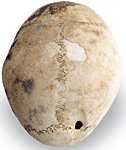
Anagnostis Aggelarakis has a very interesting piece in Archaeology Magazine detailing his study of a skull from the Greek colony of Abdera. The woman had received a blow by a missile to the back of the head which fractured her skull, but a type of surgery that is first described in the Hippocratic corpus, dating from the 5th-4th centuries BC, was able to save her life. The woman was thus able to live for another twenty years.

Artful Surgery (excerpt):

But new evidence, on which the story of the wounded young woman at the head of this article is based, will rewrite our history of the development of ancient medical practice. The patient was among those sent north by Clazomenae, a Greek city in Ionia, to establish a colony at Abdera around 654 B.C. She was successfully treated--a difficult operation performed by a master surgeon saved her--and lived for another 20 years. Her remains, which were excavated at Abdera by Eudokia Skarlatidou of the Greek Archaeological Service and which I have had the privilege to study, provide incontrovertible evidence that two centuries before Hippocrates drew breath, surgical practices described in the treatise On Head Wounds were already in use.

On Head Wounds sets forth diagnostic procedures for identifying and treating a range of cranial injuries caused by different weapons. In most cases, a wound on the back of the head--"where the bone is thicker and oozing puss will take longer to reach the brain"--was less likely to be fatal than one in the front. But, as in the case of the woman from Abdera, "When a suture shows at the exposed bone area of the wound--of a wound anywhere on the head--the resistance of the bone to the traumatic impact is very weak should the weapon get wedged in the suture." So, according to the Hippocratic text, the case was a serious one. It was made more so because of the nature of the weapon, a missile from a sling, because, "Of those weapons that strike the head and wound close to the cranial bone and the cranium itself, that one that will fall from a highest level rather than from a trajectory parallel to the ground, and being at the same time the hardest, bluntest, and heaviest...will crack and compress the cranial bone."

For compressed head fractures, On Head Wounds recommends trepanation, removal of a disk of bone from the skull using a drill with a serrated circular bit. This would eliminate the danger of bone splinters and radiating fracture fissures. It would also permit the removal of bone fragments that had been crushed inward, allowing the brain to swell from the contusion without pressing against loose bone fragments with sharp edges that might puncture the dura mater. But there was one cranial area where a scraping approach was strongly recommended instead of trepanation: "It is necessary, if the wound is at the sutures and the weapon penetrated and lodged into the bone, to pay attention for recognizing the kind of injury sustained by the bone. Because...he who received the weapon at the sutures will suffer far greater impact at the cranial bone than the one who did not receive it at the sutures. And most of those require trepanation, but you must not trepan the sutures themselves...you are required to scrape the surface of the cranial bone with a rasp in depth and length, according to the position of the wound, and then cross-wise to be able to see the hidden breakages and crushes...because scraping exposes the harm well, even if those injuries...were not otherwise revealed."

Faced with a compressed fracture with radiating fissure fractures and fearing damage to the dura mater, the surgeon scraped the bone in length, width, and depth, removing fragments and eliminating the fissures through scraping and not trepanation. He then would have tended to any adjacent injured tissues.

While the reconstruction of the patient's treatment is in part conjecture, based on the Hippocratic text itself, the size and shape of the surgical intervention and use of the rasp rather than trepanation is certain from traces on the bone itself. So the surgical procedure matches perfectly what was recommended two centuries later in On Head Wounds for this type of injury in this location.

We do not know exactly how the Clazomeneans chose the colonists who sailed to Abdera. Were they an elite group, the less wealthy who were willing to risk the venture, or the politically and socially disfavored? We do know, however, that among them there was a masterful surgeon, Hippocrates' predecessor, who was among the earliest of the Ionian school of medical practitioners.

February 20, 2006

More on CASP12 evolution

Afarensis points me to another new paper that deals with evolution in the CASP12 gene. As I detailed in my previous post, the inactive form of the gene has been positively selected in non-Africans. The new study quantifies the advantage that the inactive form ("pseudogene") conferrred at 0.9% and times it to just before the most recent Out-of-Africa migration.

PLoS Biology Volume 4 | Issue 3 | MARCH 2006

Gene Losses during Human Origins

Xiaoxia Wang et al.

Pseudogenization is a widespread phenomenon in genome evolution, and it has been proposed to serve as an engine of evolutionary change, especially during human origins (the “less-is-more” hypothesis). However, there has been no comprehensive analysis of human-specific pseudogenes. Furthermore, it is unclear whether pseudogenization itself can be selectively favored and thus play an active role in human evolution. Here we conduct a comparative genomic analysis and a literature survey to identify 80 nonprocessed pseudogenes that were inactivated in the human lineage after its separation from the chimpanzee lineage. Many functions are involved among these genes, with chemoreception and immune response being outstandingly overrepresented, suggesting potential species-specific features in these aspects of human physiology. To explore the possibility of adaptive pseudogenization, we focus on CASPASE12, a cysteinyl aspartate proteinase participating in inflammatory and innate immune response to endotoxins. We provide population genetic evidence that the nearly complete fixation of a null allele at CASPASE12 has been driven by positive selection, probably because the null allele confers protection from severe sepsis. We estimate that the selective advantage of the null allele is about 0.9% and the pseudogenization started shortly before the out-of-Africa migration of modern humans. Interestingly, two other genes related to sepsis were also pseudogenized in humans, possibly by selection. These adaptive gene losses might have occurred because of changes in our environment or genetic background that altered the threat from or response to sepsis. The identification and analysis of human-specific pseudogenes open the door for understanding the roles of gene losses in human origins, and the demonstration that gene loss itself can be adaptive supports and extends the “less-is-more” hypothesis.

Link

Y-chromosomes of Eastern India

This paper seems to take an opposite position compared to the other one by the same authors. From the paper:
Haplogroups H* and R2 were the two most common paternal lineages found in Orissa, although the frequency varied among populations. Caste populations displayed clear imprints of M17 (R1a1) at 38.5% and M172 (J2) at 5.7%, which are also found in high frequency in Eastern Europe and Central Asia (Semino et al., 2000; Underhill et al., 2000; Wells et al., 2001) and in the Middle East (Quintana-Murci et al., 2001), respectively. Among the Austro-Asiatic tribal groups, all the Juang Y-chromosomes exhibited the O2a lineage, which is common in eastern Asia (Karafet et al., 2001), while the Saora harbored lineages consisting of the F*, H, O2a, and P* haplogroups. The C haplogroup, which was associated with an early coastal migration of modern humans (Underhill et al., 2001), was found at a low frequency (1.6%) in the Paroja, and was completely absent in Austro-Asiatic tribes and the caste populations.
As I have argued in my review of Indian Y-chromosome variation before, the origin of M17-related Y-chromosomes is not an either-or proposition between Central Asia and India, but rather it is possible that a group of such chromosomes are of Paleolithic antiquity in India, while a subset may have been of more recent introduction. No doubt, more light will be shed on this matter once the phylogeny of M17 is better developed.

Am J Phys Anthropol. 2006 Feb 16; [Epub ahead of print]

Phylogeography of mitochondrial DNA and Y-Chromosome haplogroups reveal asymmetric gene flow in populations of Eastern India.


Sahoo S, Kashyap VK.

Polymorphisms in mitochondrial (mt) DNA and Y-chromosomes of seven socially and linguistically diverse castes and tribes of Eastern India were examined to determine their genetic relationships, their origin, and the influence of demographic factors on population structure. Samples from the Orissa Brahmin, Karan, Khandayat, Gope, Juang, Saora, and Paroja were analyzed for mtDNA hypervariable sequence (HVS) I and II, eight Y-chromosome short tandem repeats (Y-STRs), and lineage-defining mutations diagnostic for Indian- and Eurasian-specific haplogroups. Our results reveal that haplotype diversity and mean pairwise differences (MPD) was higher in caste groups of the region (>0.998, for both systems) compared to tribes (0.917-0.996 for Y-STRs, and 0.958-0.988 for mtDNA haplotypes). The majority of paternal lineages belong to the R1a1, O2a, and H haplogroups (62.7%), while 73.2% of maternal lineages comprise the Indian-specific M*, M5, M30, and R* mtDNA haplogroups, with a sporadic occurrence of West Eurasian lineages. Our study reveals that Orissa Brahmins (a higher caste population) have a genetic affinity with Indo-European speakers of Eastern Europe, although the Y-chromosome data show that the genetic distances of populations are not correlated to their position in the caste hierarchy. The high frequency of the O2a haplogroup and absence of East Asian-specific mtDNA lineages in the Juang and Saora suggest that a migration of Austro-Asiatic tribes to mainland India was exclusively male-mediated which occurred during the demographic expansion of Neolithic farmers in southern China. The phylogeographic analysis of mtDNA and Y-chromosomes revealed varied ancestral sources for the diverse genetic components of the populations of Eastern India.

Link

February 18, 2006

mtDNA of Ancient Peruvians

One more for the Ancient DNA Compendium

Am J Phys Anthropol. 2006 Feb 16; [Epub ahead of print]

Mitochondrial DNA analysis of ancient Peruvian highlanders.

Shinoda KI, Adachi N, Guillen S, Shimada I.

Ancient DNA recovered from 57 individuals excavated by Hiram Bingham at the rural communities of Paucarcancha, Patallacta, and Huata near the famed Inca royal estate and ritual site of Machu Picchu was analyzed by polymerase chain reaction, and the results were compared with ancient and modern DNA from various Central Andean areas to test their hypothesized indigenous highland origins. The control and coding regions of the mitochondrial DNA (mtDNA) of 35 individuals in this group were sequenced, and the haplogroups of each individual were determined. The frequency data for the haplogroups of these samples show clear proximity to those of modern Quechua and Aymara populations in the Peruvian and Bolivian highlands, and contrast with those of pre-Hispanic individuals of the north coast of Peru that we defined previously. Our study suggests a strong genetic affinity between sampled late pre-Hispanic individuals and modern Andean highlanders. A previous analysis of the Machu Picchu osteological collection suggests that the residents there were a mixed group of natives from various coastal and highland regions relocated by the Inca state for varied purposes. Overall, our study indicates that the sampled individuals from Paucarcancha and Patallacta were indigenous highlanders who provided supportive roles for nearby Machu Picchu.

Link

February 17, 2006

Documenting domestication: the intersection of genetics and archaeology

A pretty good review of the archaeology and genetics of domesticated plants and animals.

Trends in Genetics (Article in Press)

Documenting domestication: the intersection of genetics and archaeology

Melinda A. Zeder et al.

Domestication, a process of increasing mutual dependence between human societies and the plant and animal populations they target, has long been an area of interest in genetics and archaeology. Geneticists seek out markers of domestication in the genomes of domesticated species, both past and present day. Archaeologists examine the archaeological record for complementary markers – evidence of the human behavior patterns that cause the genetic changes associated with domestication, and the morphological changes in target species that result from them. In this article, we summarize the recent advances in genetics and archaeology in documenting plant and animal domestication, and highlight several promising areas where the complementary perspectives of both disciplines provide reciprocal illumination.

Link

Quantitative trait loci for intelligence

It appears that the hunt for genes affecting intelligence is not going well. I can't say that I'm surprised, because I have always maintained that intelligence is an emergent property of a set of co-operating genes during development in a particular environment and I don't anticipate that the geno-centric approach will take us closer to understanding it.

Intelligence, and -I believe- other complex traits are like complex dishes with many ingredients. The ingredients themselves (e.g., salt, lettuce, or chicken) are themselves unremarkable, but it is the way that they are put together and turned on and off by internal and external stimuli (the pot, the temperature, time, etc.) that makes a good dish.

Intelligence (Article in Press)

The quest for quantitative trait loci associated with intelligence

Robert Plomin et al.

Abstract

Progress towards identifying quantitative trait loci (QTLs) for complex traits like intelligence and common disorders like mental retardation has been slower than expected. An important factor is that most QTL effects may be much smaller than expected—not just 1% effect sizes but perhaps effects as small as .1%. If so, this would mean that studies have been seriously underpowered to detect and to replicate QTL effects. We have used microarrays to genotype DNA pooled for groups of low versus high intelligence in order to screen very large numbers of single nucleotide polymorphisms (SNPs) on very large samples in the quest for QTLs of very small effect size: We find no effect sizes greater than .5%. Microarrays with 500,000 SNPs are now available that facilitate genomewide scans which will make it possible to identify nearly all SNP associations that account for 1% of the variance of intelligence—if there are any QTL effect sizes as large as 1%.

Link

Sex-biased migration in humans

Bioessays. 2006 Feb 14;28(3):290-300 [Epub ahead of print]

Sex-biased migration in humans: what should we expect from genetic data?

Wilkins JF, Marlowe FW.

Different patterns of mitochondrial and Y-chromosome diversity have been cited as evidence of long-term patrilocality in human populations. However, what patterns are expected depends on the nature of the sampling scheme. Samples from a local region reveal only the recent demographic history of that region, whereas sampling over larger geographic scales accesses older demographic processes. A historical change in migration becomes evident first at local geographic scales, and alters global patterns of genetic diversity only after sufficient time has passed. Analysis of forager populations in the ethnographic record suggests that patrilocality may not have predominated among pre-agricultural humans. The higher female migration rate inferred by some genetic studies may reflect a shift to patrilocality in association with the emergence of agriculture. A recent global survey does not show the expected effects of higher female migration, possibly because the sampling scheme used for this study is accessing pre-agricultural human migration patterns. In this paper, we show how the demographic shift associated with agriculture might affect genetic diversity over different spatial scales. We also consider the prospects for studying sex-biased migration using the X-linked and autosomal markers. These multi-locus comparisons have the potential of providing more robust estimates of sex differences than Y-linked and mitochondrial data, but only if a very large number of loci are included in the analysis. BioEssays 28: 290-300, 2006. (c) 2006 Wiley Periodicals, Inc.

Link

February 16, 2006

Co-operation in structured heterogeneous populations

Proc. Natl. Acad. Sci. USA, 10.1073/pnas.0508201103

Evolutionary dynamics of social dilemmas in structured heterogeneous populations

F. C. Santos et al.

Real populations have been shown to be heterogeneous, in which some individuals have many more contacts than others. This fact contrasts with the traditional homogeneous setting used in studies of evolutionary game dynamics. We incorporate heterogeneity in the population by studying games on graphs, in which the variability in connectivity ranges from single-scale graphs, for which heterogeneity is small and associated degree distributions exhibit a Gaussian tale, to scale-free graphs, for which heterogeneity is large with degree distributions exhibiting a power-law behavior. We study the evolution of cooperation, modeled in terms of the most popular dilemmas of cooperation. We show that, for all dilemmas, increasing heterogeneity favors the emergence of cooperation, such that long-term cooperative behavior easily resists short-term noncooperative behavior. Moreover, we show how cooperation depends on the intricate ties between individuals in scale-free populations.

Link

February 15, 2006

Teens made Paleolithic cave art (?)

FAIRBANKS, Alaska -- Long accustomed to lifting mammoth bones from mudbanks and museum shelves and making sketches from cave art to gather details about Pleistocene animal anatomy, renowned paleobiologist and artist R. Dale Guthrie offers a fascinating and controversial interpretation of ancient cave art in his new book “The Nature of Paleolithic Art.”

This ancient art was made during the late Pleistocene, about 10,000 to 35,000 years ago, and has typically been the purview of art historians and anthropologists, many of whom view Paleolithic art as done by accomplished shaman-artists. “This assumption may be true of a few of the best known and better-drawn images, but these are a small proportion of preserved Paleolithic art,” Guthrie said.

Using new forensic techniques on fossil handprints of the artists and examining thousands of images, “I found that all ages and both sexes were making art, not just the senior male shamans,” Guthrie said. These included hundreds of prints made as ocher, manganese, or clay negatives and a few positive prints made with pigments or mud applied to hands that were then placed on cave surfaces.

“The possibility that adolescent giggles and snickers may have echoed in dark cave passages as often as the rhythm of a shaman’s chant demeans neither artists nor art,” writes Guthrie.

“I was using Paleolithic art both to appreciate the colorful renditions and to find useful and interesting details about Pleistocene animal anatomy,” said Guthrie, professor emeritus of the Institute of Arctic Biology at the University of Alaska Fairbanks. A symposium of Paleolithic art scholars in 1979 “... set me on a new course of trying to place Paleolithic art in a larger dimension of natural history and linking artistic behavior to our evolutionary past,” writes Guthrie.

The book, which contains more than 3,000 images all drawn by Guthrie, is about more than art. It’s about good parenting, children, romantic love, lust, play, graffiti, risk-proneness, missing shields, hour-glass figures, striped horses, seas of grasses, and cold dry winds – it’s about life on the margins of the Ice Age Mammoth Steppe.

Link

An utter refutation of the 'Fundamental Theorem of the HapMap'

This sounds potentially very important, but it will take some reading before I can make sense of it. Interestingly, the first author has five different institutional affiliations, which has to be some kind of record...

Read also HapMap publication explosion.

European Journal of Human Genetics (online early)

An utter refutation of the 'Fundamental Theorem of the HapMap'

Joseph D Terwilliger and Tero Hiekkalinna

Abstract

The International HapMap Project was proposed in order to quantify linkage disequilibrium (LD) relationships among human DNA polymorphisms in an assortment of populations, in order to facilitate the process of selecting a minimal set of markers that could capture most of the signal from the untyped markers in a genome-wide association study. The central dogma can be summarized by the argument that if a marker is in tight LD with a polymorphism that directly impacts disease risk, as measured by the metric r2, then one would be able to detect an association between the marker and disease with sample size that was increased by a factor of 1/r2 over that needed to detect the effect of the functional variant directly. This 'fundamental theorem' holds, however, only if one assumes that the LD between loci and the etiological effect of the functional variant are independent of each other, that they are statistically independent of all other etiological factors (in exposure and action), that sampling is prospective, and that the estimates of r2 are accurate. None of these are standard operating assumptions, however. We describe the ramifications of these implicit assumptions, and provide simple examples in which the effects of a functional variant could be unequivocally detected if it were directly genotyped, even as markers in high LD with the functional variant would never show association with disease, even in infinite sample sizes. Both theoretical and empirical refutation of the central dogma of genome-wide association studies is thus presented.

Link

More on genetic ancestry with 10,000+ SNPs (or just 10)

See previous post here.

A very exciting new paper has just appeared in AJHG. The authors have used the 10,000+ SNP array by Affymetrix to study the individuals from the Y chromosome consortium panel. Note that these individuals were originally collected to study Y chromosomal variation, but in this case, they were studied because they represent a globally diverse set of people, and their genomic variation was studied.

The researchers were able to discern the population origin of these 76 individuals using just 10 SNPs. So, it only takes 10 nucleotides to infer whether someone is Sub-Saharan African, West Eurasian, East Asian, or Native American.

Of course, this ability could be due to overfitting in the small 76-individual sample. So, they tested against the larger 1000+ individual CEPH panel which includes 50+ populations from around the world, and were able to correctly infer the ancestry of all individuals.

Thus, it is demonstrated that a very small set of carefully selected polymorphisms are enough to discover the continental origin of an individual:


Finally, the authors also asked why the very informative SNPs show such high frequency differences in the studied populations:
Thus, although the SNPs from the whole-genome analyses used to identify ancestry-informative markers were noncoding, our data indicate that the significant population differences of the markers with maximum informativeness of ancestry seem to be shaped by positive selection rather than by genetic drift.


Am. J. Hum. Genet. (online early)

Proportioning Whole-Genome Single-Nucleotide–Polymorphism Diversity for the Identification of Geographic Population Structure and Genetic Ancestry

Oscar Lao et al.

The identification of geographic population structure and genetic ancestry on the basis of a minimal set of genetic markers is desirable for a wide range of applications in medical and forensic sciences. However, the absence of sharp discontinuities in the neutral genetic diversity among human populations implies that, in practice, a large number of neutral markers will be required to identify the genetic ancestry of one individual. We showed that it is possible to reduce the amount of markers required for detecting continental population structure to only 10 single-nucleotide polymorphisms (SNPs), by applying a newly developed ascertainment algorithm to Affymetrix GeneChip Mapping 10K SNP array data that we obtained from samples of globally dispersed human individuals (the Y Chromosome Consortium panel). Furthermore, this set of SNPs was able to recover the genetic ancestry of individuals from all four continents represented in the original data set when applied to an independent, much larger, worldwide population data set (Centre d'Etude du Polymorphisme Humain–Human Genome Diversity Project Cell Line Panel). Finally, we provide evidence that the unusual patterns of genetic variation we observed at the respective genomic regions surrounding the five most informative SNPs is in agreement with local positive selection being the explanation for the striking SNP allele-frequency differences we found between continental groups of human populations

Link

February 14, 2006

Anatomically modern humans

I think that this definition by Lahr & Wright is useful enough as a reference, augmented with links explaining various terms:
...it is generally agreed that a modern skull should present a relatively small face tucked under the vault that is relatively short and high, a relatively vertical forehead, parietal enlargement, a relatively rounded occiput, a flexed cranial base, a canine fossa, an occipital protuberance in the occipital bone and mental eminence or chin. Most descriptions of modern H. sapiens would also include skeletal gracility as characterizing the group.
But read the Modernity mess as well by Wolpoff & Caspari.

Lahr, M.M. & Wright, R.S.V. (1996) The question of robusticity and the relationship between cranial size and shape in Homo sapiens. Journal of Human Evolution, 31: 157-191.

February 11, 2006

The second search for Peking Man

Many cranial fossils have strange histories. Some, like Piltdown Man and Galley Hill and Vogelherd persist for decades as important prehistoric remains, even though later dating reveals them to be much more recent than originally thought. Others like Kennewick Man become objects of a legal battle as to whether or not they should be buried and lost for science, or studied. And there are others like Combe Capelle who was lost during World War II, and then found decades later.

There are casts of all important skulls, so the loss of a specimen does not mean that it can no longer be studied by anthropologists. Unfortunately, newer techniques involving the extraction of DNA from bones only work with real skulls; hence, the urgency to rediscover misplaced fossils.

The Peking Man was lost during World War II as well. Thankfully, Franz Weidenreich had made casts of the skulls only years after they had been brought to the ground, and these casts have played a key role in subsequent discussions on human origins.

Now, a news story hints that Peking Man may not have been lost forever:
ZHOUKOUDIAN, CHINA -- For more than two decades, Yang Shoukai had hoarded his secret, unsure what to do with a possible clue to one of China's most baffling mysteries.

As construction supervisor on the site of an abandoned U.S. military barracks in Tianjin in 1982, he had discovered a strange cement box in the basement of the old wartime barracks. He tried to dig it up, but lacked the proper tools, and the box was buried under a new medical laboratory.

Mr. Yang, now retired and in poor health, is convinced that the box contains a 500,000-year-old archeological treasure that China has hunted for in vain since the Second World War: the missing skulls of Peking Man, one of the most famous links in the evolution of prehistoric humans.

...

Chinese specialists have conducted many failed searches for the skulls, but the new committee is optimistic. "I think we will find them," said Dong Cuiping, vice-director of the Peking Man Museum.

"Since 1941, the searches were always done by non-governmental people. Now this work is on the government's agenda. We're drawing more attention from society, and more clues - not only from China but outside China too."

If the skulls are recovered, they could become the basis for a major breakthrough in the understanding of human evolution, she said.

"When we first found the skulls, our science was not very advanced. Now we have much better technology. If we recover them, we could make new scientific discoveries."

Let's hope they succeed.

Lucky find reveals biggest ancient cave


Link (Kathimerini)

A farmer in northern Greece has stumbled across a 2,300-year-old chiseled cave with eight chambers and measuring some 63 square meters — the biggest ever discovered in this country — it was revealed yesterday.

The cave was found near the ancient city of Pella, which was the capital of the Macedonian kingdom. Archaeologists are studying the cave and believe it was probably used as a tomb by a wealthy Macedonian family between the second and third centuries BC, the Athens News Agency reported.

Two gold earrings, several bronze coins, three marble funerary stelae and a number of ceramic vessels were found inside the cave.

Previously, the largest chiseled cave found in Greece had three chambers. The cave near Pella has partly retained its original wall coloring of red, sky blue and gold.