Showing posts with label altruism. Show all posts

June 04, 2012

Broad-faced men more co-operative in inter-group conflict

rom the press release:
The researchers gave University of St Andrews students money to play a game in groups where they could either benefit themselves and free-ride on the cooperation of others or they could risk their money to benefit their group. Half of the students were told that the outcomes of the game would be compared between St Andrews students, the other half that they would be compared with a rival university. The prediction was that the wider faced men would respond to the rivalry in the second condition and sacrifice their money for their own group.

The results of the study confirmed their hypotheses and turned the typical associations with facial width on their head: the more robust looking, wider faced men in the study were more self-sacrificing than other men.

"It was surprising that our predictions were confirmed," reports Dr. Stirrat. "When we mentioned Edinburgh University, our St Andrews participants with wider faces were more cooperative than the other men. When we didn't mention the rivalry, they were less cooperative than other men."
Related links between wide faces and aggression, trustworthiness, company performance and unethical behavior.

Psychological Science doi: 10.1177/0956797611435133

Face Structure Predicts Cooperation Men With Wider Faces Are More Generous to Their In-Group When Out-Group Competition Is Salient

M. Stirrat and D. I. Perrett

Male facial width-to-height ratio appears to correlate with antisocial tendencies, such as aggression, exploitation, cheating, and deception. We present evidence that male facial width-to-height ratio is also associated with a stereotypically male prosocial tendency: to increase cooperation with other in-group members during intergroup competition. We found that men who had wider faces, compared with men who had narrower faces, showed more self-sacrificing cooperation to help their group members when there was competition with another group. We propose that this finding makes sense given the evolutionary functions of social helpfulness and aggression.

Link

January 31, 2010

Altruistic adopting forest chimpanzees

PLoS ONE doi:10.1371/journal.pone.0008901

Altruism in Forest Chimpanzees: The Case of Adoption

Christophe Boesch et al.

Abstract

In recent years, extended altruism towards unrelated group members has been proposed to be a unique characteristic of human societies. Support for this proposal seemingly came from experimental studies on captive chimpanzees that showed that individuals were limited in the ways they shared or cooperated with others. This dichotomy between humans and chimpanzees was proposed to indicate an important difference between the two species, and one study concluded that “chimpanzees are indifferent to the welfare of unrelated group members”. In strong contrast with these captive studies, consistent observations of potentially altruistic behaviors in different populations of wild chimpanzees have been reported in such different domains as food sharing, regular use of coalitions, cooperative hunting and border patrolling. This begs the question of what socio-ecological factors favor the evolution of altruism. Here we report 18 cases of adoption, a highly costly behavior, of orphaned youngsters by group members in Taï forest chimpanzees. Half of the adoptions were done by males and remarkably only one of these proved to be the father. Such adoptions by adults can last for years and thus imply extensive care towards the orphans. These observations reveal that, under the appropriate socio-ecologic conditions, chimpanzees do care for the welfare of other unrelated group members and that altruism is more extensive in wild populations than was suggested by captive studies.

Link

November 02, 2009

Maternal vs. Paternal grandmother and grandchild survival

From the paper:

Grandsons and granddaughters differ in the proportion of their X-chromosomes shared with MGMs and PGMs (figure 1). According to our proposed X-linked grandmother hypothesis, if grandmothers invest in grandchildren because of their genetic relatedness with them, then their adaptive incentive to invest may vary in a way that mirrors this variation in genetic relatedness. As a consequence, grandmothers’ differential investment in grandchildren could cause differential survivorship of those grandchildren.

...

Therefore, MGMs and grandchildren are likely to share 25 per cent of their genomes, while PGM and granddaughter may share a total of approximately 31 per cent of their genes, with a likelihood of 27 per cent inheritance, while a PGM and grandson may share only approximately 23 per cent.

...

Genetic relatedness between kin is often used to explain behavioural phenomena associated with altruism and caretaking, as well as biological traits and developmental trends. The grandmother hypothesis is the prevailing theory to explain why human female longevity extends beyond menopause. It suggests that elderly women are able to contribute to their grandchildren's survivorship through nutritional provisioning, which would increase a woman's inclusive fitness because she shares one-quarter of her genes with a grandchild. In seven previously studied populations, separating grandchild survivorship rates by sex reveals that X-chromosome relatedness correlates with grandchild survival in the presences of MGMs and PGMs. In all seven populations, boys survive better in the presence of their MGM than PGM. In all bar one population, the PGM has a more beneficial effect on girls than on boys. Our X-linked grandmother hypothesis demonstrates how the effects of grandmothers could be sex-specific because of the unusual inheritance pattern of the X-chromosome. This provides a more universally applicable model to explain differential survival of grandchildren in the presence of their grandmothers.
Proceedings of the Royal Society B doi: 10.1098/rspb.2009.1660

Grandma plays favourites: X-chromosome relatedness and sex-specific childhood mortality

Molly Fox et al.

Abstract

Biologists use genetic relatedness between family members to explain the evolution of many behavioural and developmental traits in humans, including altruism, kin investment and longevity. Women's post-menopausal longevity in particular is linked to genetic relatedness between family members. According to the ‘grandmother hypothesis’, post-menopausal women can increase their genetic contribution to future generations by increasing the survivorship of their grandchildren. While some demographic studies have found evidence for this, others have found little support for it. Here, we re-model the predictions of the grandmother hypothesis by examining the genetic relatedness between grandmothers and grandchildren. We use this new model to re-evaluate the grandmother effect in seven previously studied human populations. Boys and girls differ in the per cent of genes they share with maternal versus paternal grandmothers because of differences in X-chromosome inheritance. Here, we demonstrate a relationship between X-chromosome inheritance and grandchild mortality in the presence of a grandmother. With this sex-specific and X-chromosome approach to interpreting mortality rates, we provide a new perspective on the prevailing theory for the evolution of human female longevity. This approach yields more consistent support for the grandmother hypothesis, and has implications for the study of human evolution.

Link

November 13, 2008

Warfare and human evolution

The New Scientist has an interesting article on war and its role in human evolution (How warfare shaped human evolution )
Now a new theory is emerging that challenges the prevailing view that warfare is a product of human culture and thus a relatively recent phenomenon. For the first time, anthropologists, archaeologists, primatologists, psychologists and political scientists are approaching a consensus. Not only is war as ancient as humankind, they say, but it has played an integral role in our evolution.

...

These ideas emerged at a conference last month on the evolutionary origins of war at the University of Oregon in Eugene. "The picture that was painted was quite consistent," says Mark Van Vugt, an evolutionary psychologist at the University of Kent, UK. "Warfare has been with us for at least several tens, if not hundreds, of thousands of years."
Here is the website of this conference: Evolutionary Perspectives on War Conference. More from the New Scientist article:
Studies suggest that warfare accounts for 10 per cent or more of all male deaths in present-day hunter-gatherers. ... Primatologists have known for some time that organised, lethal violence is common between groups of chimpanzees, our closest relatives. ... Such raids are possible because humans and chimps, unlike most social mammals, often wander away from the main group to forage singly or in smaller groups, says Wrangham. ... Several participants presented the strongest evidence yet that males - whose larger and more muscular bodies make them better suited for fighting - have evolved a tendency towards aggression outside the group but cooperation within it. ... Aggression in women, she notes, tends to take the form of verbal rather than physical violence, and is mostly one on one.

...

Some of this behaviour could arguably be attributed to conscious mental strategies, but anthropologist Mark Flinn of the University of Missouri at Columbia has found that group-oriented responses occur on the hormonal level, too. He found that cricket players on the Caribbean island of Dominica experience a testosterone surge after winning against another village. But this hormonal surge, and presumably the dominant behaviour it prompts, was absent when the men beat a team from their own village, Flinn told the conference. "You're sort of sending the signal that it's play. You're not asserting dominance over them," he says. Similarly, the testosterone surge a man often has in the presence of a potential mate is muted if the woman is in a relationship with his friend. Again, the effect is to reduce competition within the group, says Flinn. "We really are different from chimpanzees in our relative amount of respect for other males' mating relationships."

...

Though women seem to help broker harmony within groups, says Van Vugt, men may be better at peacekeeping between groups.

October 14, 2008

Altruism and sexual attractiveness

Altruism towards non-relatives is often explained within the framework of Robert Trivers' reciprocal altruism. What this paper demonstrates is that people (and especially women) find altruists more attractive. Thus, altruism can be seen as a sexually selected trait, and advertisement of one's propensity to be giving, and hence, presumably be a good parent and provider.

British Journal of Psychology doi: 10.1348/000712608X298467

Do humans prefer altruistic mates? Testing a link between sexual selection and altruism towards non-relatives

Tim Phillips et al.

Abstract

Humans are often seen as unusual in displaying altruistic behaviour towards non-relatives. Here we outline and test a hypothesis that human altruistic traits evolved as a result of sexual selection. We develop a psychometric scale to measure mate preference towards altruistic traits (the MPAT scale). We then seek evidence of whether mate choice on the basis of altruistic traits is present and find it in one study (N=170 couples). We also predict that a stronger female MPAT, as measured by responses to the MPAT scale, will be expressed - a result found in all three studies (Ns=380, 340, and 398). Both sets of results are consistent with the hypothesized link between human altruism towards non-relatives and sexual selection.

Link

October 07, 2008

Competition between groups leads to increased within-group cooperation

From the paper:
A key factor in determining the importance of group competition for within-group cooperation is the relative strength of between- and within-group competition. In our study, the effect of between-group competition was only as strong as within-group competition, but it was sufficient to radically increase cooperation within groups. There can be little doubt that stronger between-group competition would result in even higher levels of within-group cooperation, as cooperation then would be the most profitable strategy for both individuals and groups.
Proceedings of The Royal Society B doi: 10.1098/rspb.2008.1060

Between-group competition and human cooperation

Mikael Puurtinen* & Tapio Mappes

Abstract

A distinctive feature of human behaviour is the widespread occurrence of cooperation among unrelated individuals. Explaining the maintenance of costly within-group cooperation is a challenge because the incentive to free ride on the efforts of other group members is expected to lead to decay of cooperation. However, the costs of cooperation can be diminished or overcome when there is competition at a higher level of organizational hierarchy. Here we show that competition between groups resolves the paradigmatic ‘ public goods’ social dilemma and increases within-group cooperation and overall productivity. Further, group competition intensifies the moral emotions of anger and guilt associated with violations of the cooperative norm. The results suggest an important role for group conflict in the evolution of human cooperation and moral emotions.

Link

October 01, 2008

"Let there be one ruler, one king"

Related to the Homeric verse of the title.

Proceedings of the Royal Society B doi: 10.1098/rspb.2008.1082

Constraining free riding in public goods games: designated solitary punishers can sustain human cooperation

Rick O'Gorman et al.

Abstract

Much of human cooperation remains an evolutionary riddle. Unlike other animals, people frequently cooperate with non-relatives in large groups. Evolutionary models of large-scale cooperation require not just incentives for cooperation, but also a credible disincentive for free riding. Various theoretical solutions have been proposed and experimentally explored, including reputation monitoring and diffuse punishment. Here, we empirically examine an alternative theoretical proposal: responsibility for punishment can be borne by one specific individual. This experiment shows that allowing a single individual to punish increases cooperation to the same level as allowing each group member to punish and results in greater group profits. These results suggest a potential key function of leadership in human groups and provides further evidence supporting that humans will readily and knowingly behave altruistically.

Link

August 30, 2008

Evolution of bravery and belligerence

Both bravery and belligerence increase an individual's chance of getting killed. This article proposes that this combination of traits may co-evolve: groups with belligerent cowards may start wars but not win them; groups with peaceful brave men will not start wars and, therefore, will not expand territorially; groups with belligerent and brave men will both start wars and win them, increasing the resources; thereby, its surviving men and women of their group will multiply.

This reminds me of a recent paper on parochial altruism. In that paper the authors argued for the co-evolution of parochialism (favoritism for one's group at the expense of others) and altruism (willingness to risk one's life for it). These traits are quite similar to belligerence and bravery. In the earlier paper, it was also suggested that parochialism increases the chance of intergroup conflict, and the two traits increase the probability of winning in such conflicts.

Personally, I am a bit skeptical of these theories of war, at least in the case of Greece. There may be something to them, but I don't think they explain the facts adequately.

An important fact is that the modern practice of men without offspring participating in wars does not reflect the facts of antiquity. While such men did participate in wars, so did their fathers. If we take the famed Paean of Salamis...
Forward, sons of the Greeks,
Liberate the fatherland, liberate
Your children, your women, the altars of the gods of your fathers
And the graves of your forebears:
Now is the fight for everything.
...we see a fairly explicit expression of war as sacrifice for one's women and children. So, while a case can be made for war as a calculated risk which may enhance one's future breeding opportunities, a case can also be made for it as regular kin selection, where men sacrifice themselves for their existing kin.

A second important point is the prevalence of the defensive war in the Greek tradition, which later became a part of the Western tradition. If war-like behavior and bravery had evolved in an offensive setting, then why was the need always felt to justify it in defensive terms, rather than as an opportunistic grab at the enemy's resources?

A culture of shame more than belligerence or opportunism accounts for willingness to go to war. Wars may start as random fluctuations in inter-group relations, or as real conflicts for resources. But, people participate in them not so much because they envision opportunities for themselves, but because of the shame that the alternative would bring. Known cowards who do not join the ranks or abandon the field would suffer consequences much more terrifying as an incentive than the positive incentive of conquering an enemy's land.

Finally, a special note must be made on "imperialistic" belligerence. We can assume that voluntary or coercive aggregation of tribes over the past led to an uneven distribution of the sizes of political entities. Whenever a large state found itself next to a small one, the temptation to conquer it would have been great, as such conquest would entail little risk.

Large states could both gather the required human resources for war (because men with the right psychological profile or need could be found in its larger territory), and to wage such wars successfully.

Proceedings of the Royal Society B doi: 10.1098/rspb.2008.0842

War and the evolution of belligerence and bravery

Laurent Lehmann, Marcus W. Feldman

Abstract

Tribal war occurs when a coalition of individuals use force to seize reproduction-enhancing resources, and it may have affected human evolution. Here, we develop a population-genetic model for the coevolution of costly male belligerence and bravery when war occurs between groups of individuals in a spatially subdivided population. Belligerence is assumed to increase an actor's group probability of trying to conquer another group. An actor's bravery is assumed to increase his group's ability to conquer an attacked group. We show that the selective pressure on these two traits can be substantial even in groups of large size, and that they may be driven by two independent reproduction-enhancing resources: additional mates for males and additional territory (or material resources) for females. This has consequences for our understanding of the evolution of intertribal interactions, as hunter-gatherer societies are well known to have frequently raided neighbouring groups from whom they appropriated territory, goods and women.

Link

June 02, 2008

Strong Reciprocity and the Emergence of Large-Scale Societies

Philosophy of the Social Sciences, Vol. 38, No. 2, 192-210 (2008)
DOI: 10.1177/0048393108315509

Strong Reciprocity and the Emergence of Large-Scale Societies

Benoît Dubreuil

The paper defends the idea that strong reciprocity, although it accounts for the existence of deep cooperation among humans, has difficulty explaining why humans lived for most of their history in band-size groups and why the emergence of larger societies was accompanied by increased social differentiation and political centralization. The paper argues that the costs of incurring an altruistic punishment rise in large groups and that the emergence of large-scale societies depends on the creation of institutions that render control of these costs possible through a social division of sanction.

Link

May 02, 2008

Selfishness as second-order altruism

Science Daily explains it all quite well.

Proc. Natl. Acad. Sci. USA, 10.1073/pnas.0712173105

Selfishness as second-order altruism

Omar Tonsi Eldakar, and David Sloan Wilson

Abstract

Selfishness is seldom considered a group-beneficial strategy. In the typical evolutionary formulation, altruism benefits the group, selfishness undermines altruism, and the purpose of the model is to identify mechanisms, such as kinship or reciprocity, that enable altruism to evolve. Recent models have explored punishment as an important mechanism favoring the evolution of altruism, but punishment can be costly to the punisher, making it a form of second-order altruism. This model identifies a strategy called "selfish punisher" that involves behaving selfishly in first-order interactions and altruistically in second-order interactions by punishing other selfish individuals. Selfish punishers cause selfishness to be a self-limiting strategy, enabling altruists to coexist in a stable equilibrium. This polymorphism can be regarded as a division of labor, or mutualism, in which the benefits obtained by first-order selfishness help to "pay" for second-order altruism.

Link

January 10, 2008

Edward O. Wilson changes mind on group selection

A Sunday Times article, We're not as selfish as we think, outlines pretty well Wilson's new conclusions regarding the evolution of altruism. An excerpt:
The first answer, proposed by the great British biologist William Hamilton and popularised by Dawkins in his book The Selfish Gene, is “kin selection”. Genes exist to replicate themselves. This is ideally done by ensuring that the individual reproduces. But it might also be done by ensuring that relatives of the individual reproduce because they share many of the same genes. So altruism starts with family members. Altruism towards strangers, meanwhile, is explained by game theory - computer models show that a cautiously benign approach to strangers is the best evolutionary strategy. Either way, Dawkins’s “selfish gene” is at the heart of the whole process.

...

“Kin selection was a very seductive idea,” Wilson explains, “and I promoted it heavily in my books in the 1970s. Unfortunately it has produced a little industry with its own mathematical models. It hasn’t produced much else and, meanwhile, sociobiology has flourished.”

...

“We are united in our view of group selection,” the Wilsons [E.O. and David Sloan Wilson] concluded, “which we converged upon through separate lines of inquiry.” Group selection says that evolution acts on many levels. Take the ants again. “They are constantly at war,” says Wilson. “Give ants nuclear weapons and the world would be destroyed in a week.”

Warring ants will be better off if the entire fitness of the colony can be improved. If it is improved then the methods of that colony will be successful in war and the genes that carried the improvement will be disseminated to a wider ant population. Kin selection may play a part within the colony. But group selection is the far more potent evolutionary force. In his next book Wilson is to study the implications of this new paradigm for humans. Knowing him, it may well turn out to be the first great scientific statement of the 21st century.


From a EurekAlert release:

Eusociality is a challenge for biologists to understand because worker castes in eusocial species forgo individual reproduction but rear young that are not their own, a behavior that biologists label altruistic. Wilson’s current view about eusociality differs from the assessment in his seminal book Sociobiology: The New Synthesis (1975). According to that widely accepted earlier account, selection acting on individuals that are related (kin selection), rather than on whole colonies, explains eusociality in Hymenoptera. Kin selection is thought to be especially powerful in these animals because of an unusual genetic system, known as haplodiploidy, that they share.

Wilson’s survey in BioScience, which examines the findings of a number of researchers, points out aspects of the occurrence of eusociality that the standard explanation has difficulty accounting for. Eusociality has evolved only a few times, and not all of them were in haplodiploid species. Furthermore, the great majority of haplodiploid species are not eusocial. Wilson holds that selection acting on traits that emerge at a group level provides a more complete explanation for eusociality’s rare instances than kin selection. Kin selection is, he writes, “not wrong” but incomplete.


October 28, 2007

How humans became warlike altruists

Via Yann, I am alerted to a new Science report on the evolution of parochial altruism. The authors describe how hypothetical genes for parochialism (P) and altruism (A) could have co-evolved. Parochial altruists (PA) risk death in combat with other groups. How could the PA combination evolve? 

The authors suggest that PA fighters do risk death, but in conflicts between groups, it is the groups with more PAs that have a higher chance of winning. Thus, while parochial altruists are selected against (because they risk their lives for their group), they are also selected for (because they kill off more members of less-PA groups in violent conflicts). Moreover, the losing side's numbers are replenished by conquerors' genes (thus becoming more PA).

The authors contend that archeologically-derived estimates of group warfare are consistent with their scenario for the evolution parochial altruism. One would think that other, more recent, historical examples could also be used, e.g., between city-state warfare in classical Greece. 

The paper's innovation is that a seemingly "irrational" behavior from selfish genes' point of view could nonetheless evolve. The genes that cause their bearers to die in patriotic battles may die, but their competing alleles on the losing side may suffer more.


Science 26 October 2007:
Vol. 318. no. 5850, pp. 636 - 640
DOI: 10.1126/science.1144237

The Coevolution of Parochial Altruism and War

Jung-Kyoo Choi1 and Samuel Bowles2*

Altruism—benefiting fellow group members at a cost to oneself—and parochialism—hostility toward individuals not of one's own ethnic, racial, or other group—are common human behaviors. The intersection of the two—which we term "parochial altruism"—is puzzling from an evolutionary perspective because altruistic or parochial behavior reduces one's payoffs by comparison to what one would gain by eschewing these behaviors. But parochial altruism could have evolved if parochialism promoted intergroup hostilities and the combination of altruism and parochialism contributed to success in these conflicts. Our game-theoretic analysis and agent-based simulations show that under conditions likely to have been experienced by late Pleistocene and early Holocene humans, neither parochialism nor altruism would have been viable singly, but by promoting group conflict, they could have evolved jointly.


August 24, 2006

Altruistic punishment in Papua New Guinea

See a previous entry on altruistic punishment.

Nature 442, 912-915(24 August 2006) | doi:10.1038/nature04981

Parochial altruism in humans

Helen Bernhard et al.

Social norms and the associated altruistic behaviours are decisive for the evolution of human cooperation1,2,3,4,5,6,7,8,9 and the maintenance of social order10, and they affect family life, politics11 and economic interactions12. However, as altruistic norm compliance and norm enforcement often emerge in the context of inter-group conflicts13,14, they are likely to be shaped by parochialism15—a preference for favouring the members of one's ethnic, racial or language group. We have conducted punishment experiments16, which allow 'impartial' observers to punish norm violators, with indigenous groups in Papua New Guinea. Here we show that these experiments confirm the prediction of parochialism. We found that punishers protect ingroup victims—who suffer from a norm violation—much more than they do outgroup victims, regardless of the norm violator's group affiliation. Norm violators also expect that punishers will be lenient if the latter belong to their social group. As a consequence, norm violations occur more often if the punisher and the norm violator belong to the same group. Our results are puzzling for evolutionary multi-level selection theories based on selective group extinction2,3,4,5 as well as for theories of individual selection17,18,19; they also indicate the need to explicitly examine the interactions between individuals stemming from different groups in evolutionary models.

Link

Amoebas sacrifice themselves for their kin

Nature has a new article demonstrating kin preference in the social amoeba Dictyostelium purpureum. From EurekAlert:
Recognizing one's own family is a common trait among animals – be they chimpanzees, ground squirrels or paper wasps – and because kin recognition can strongly influence cooperative behaviors it can also significantly impact the social evolution of species.

While scientists have repeatedly documented cases of kin recognition, the Rice study is among the first to document the more sophisticated trait of kin discrimination in a social microorganism.


Nature 442, 881-882(24 August 2006) | doi:10.1038/442881a

Social evolution: Kin preference in a social microbe

Natasha J. Mehdiabadi et al.

Kin recognition helps cooperation to evolve in many animals, but it is uncertain whether microorganisms can also use it to focus altruistic behaviour on relatives. Here we show that the social amoeba Dictyostelium purpureum prefers to form groups with its own kin in situations where some individuals die to assist others. By directing altruism towards kin, D. purpureum should generally avoid the costs of chimaerism experienced by the related D. discoideum

Link

June 23, 2006

Gene-culture co-evolution of costly punishment

Science 23 June 2006:
Vol. 312. no. 5781, pp. 1767 - 1770

Costly Punishment Across Human Societies

Joseph Henrich et al.

Recent behavioral experiments aimed at understanding the evolutionary foundations of human cooperation have suggested that a willingness to engage in costly punishment, even in one-shot situations, may be part of human psychology and a key element in understanding our sociality. However, because most experiments have been confined to students in industrialized societies, generalizations of these insights to the species have necessarily been tentative. Here, experimental results from 15 diverse populations show that (i) all populations demonstrate some willingness to administer costly punishment as unequal behavior increases, (ii) the magnitude of this punishment varies substantially across populations, and (iii) costly punishment positively covaries with altruistic behavior across populations. These findings are consistent with models of the gene-culture coevolution of human altruism and further sharpen what any theory of human cooperation needs to explain.

Link

March 03, 2006

Altruistic human infants

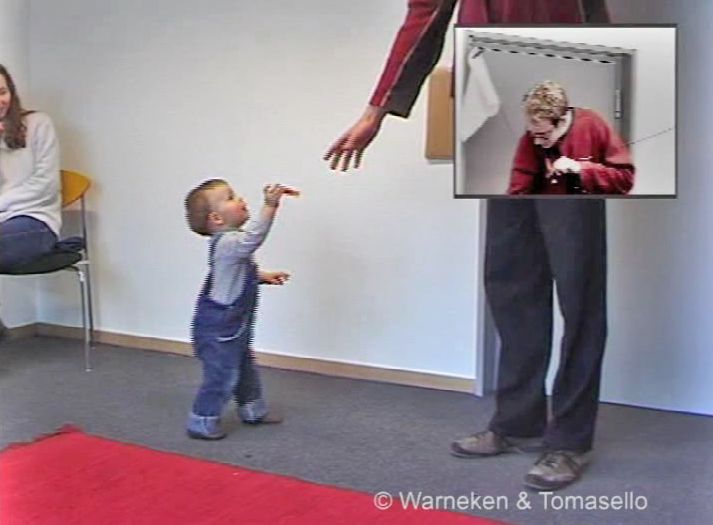
A new paper in Science demonstrates the altruism exhibited by 18-month old infants. Altruism involves spending effort to do something to help another person, even if the altruist derives no benefit. In many situations the infants helped strangers, even people they had just met to achieve some simple tasks. The same experiments were also carried with chimpanzees, who helped much less. According to the authors, to perform an altruistic act requires some cognitive complexity, i.e., to realize what the person is trying to achieve, to realize that they are hindered, and to know what one can do to help them, and of course to be able to physically help them. These experiments with infants demonstrate that human individuals are altruistic very early in their life, just as they become able to offer their assistance.

The authors also tried to see if chimpanzees would act altruistically in similar situations. They did so, but at a lower rate than human infants, indicating that some degree of altruism may have been present in the common ancestor of humans and chimpanzees.

Science Vol. 311. no. 5765, pp. 1301 - 1303

Altruistic Helping in Human Infants and Young Chimpanzees

Felix Warneken and Michael Tomasello

Human beings routinely help others to achieve their goals, even when the helper receives no immediate benefit and the person helped is a stranger. Such altruistic behaviors (toward non-kin) are extremely rare evolutionarily, with some theorists even proposing that they are uniquely human. Here we show that human children as young as 18 months of age (prelinguistic or just-linguistic) quite readily help others to achieve their goals in a variety of different situations. This requires both an understanding of others' goals and an altruistic motivation to help. In addition, we demonstrate similar though less robust skills and motivations in three young chimpanzees.

Link

January 18, 2006

Chimpanzees aren't altruistic

In Spite of Ourselves

In Jensen's study, chimpanzees from the Wolfgang Koehler Primate Research Centre in Leipzig were given a choice; by pulling on a rope they could either deliver food to another chimpanzee or they could deliver it to an empty room. In both cases, the chimpanzee pulling the rope did not receive any food itself. Contrary to initial expectations the chimpanzees behaved neither altruistic nor spiteful. According to the researchers, both characteristics therefore seem to be human-specific.

An altruistic chimpanzee would give food to its neighbour, despite the effort in pulling the food, and a spiteful chimpanzee would prevent its neighbour from having the food by delivering it to the empty room.

'I predicted chimps would be spiteful. I thought if they knew they couldn't have the food, they wouldn't let anyone else have it.' Jensen found that half the time, the chimpanzees did nothing. A quarter of the time they delivered food to their neighbour, then a quarter of the time to the empty room. This demonstrated neither altruism nor spite.

'They didn't seem to care about the other guy one way or the other. All that concerned them was getting the food and they were completely focused on that. Even when they knew they couldn't have the food, they didn't help the other chimp but they weren't spiteful either.'

In contrast, humans are obviously altruistic. We give blood, we donate money to charity, and we volunteer to help strangers. This kind of altruism has never been demonstrated in any other animal except for humans and some believe it is one of the characteristics that makes us human. But Jensen says spite is just as important. As a form of punishment, spite can encourage cooperative behaviour by penalising cheaters.

'Punishing others is usually costly to yourself, whether that's the taxpayer or the lawmakers but punishment is still a natural part of modern society. We punish theft, murder and countless other crimes to keep the fabric of society together. Perhaps human society is where it is today because spite exists and there is a mechanism to punish cheaters.'

If altruism and spite are unique to humans and are not present in chimpanzees, then it is likely that these characteristics have arisen in the last 6 million years since humans and chimpanzees shared a common ancestor. Humans' intense regard for each other, either positive or negative, may have made an important contribution to our ability to cooperate, our sense of fairness, and the morality that defines today's society.

November 08, 2005

Hamilton's Rule invalid?

Hamilton's rule specifies when altruistic behavior is adaptive and is the cornerstone of kin selection theory. A new paper argues that it is invalid:
Hamilton’s rule, and the model of kin selection on which it is based, was derived in the 1960s, when there was great emphasis on the individual, and on the gene, as the unit of selection. The concept of inclusive fitness encapsulated the notion that a gene that lowered the fitness of its bearer could promote behaviors that increased the fitness of consanguineous relatives, therefore increasing the frequency of the gene. Therefore it was the inclusive fitness of the gene that was assumed to predict the evolutionary increase or decrease of that gene. The extension of this concept into more teleological parlance became the selfish gene hypothesis. Hamilton’s model of kin selection has had a great influence on biology, anthropology, economics, and other fields. My results indicate, however, that although kin selection may occur, Hamilton’s rule is invalid.
Human Biology
Volume 77, Number 4, August 2005

Kin Selection in Human Populations: Theory Reconsidered

B. J. Williams

Abstract:

Past considerations of kin selection have assumed a dyadic fitness exchange relationship between altruist and recipient. This approach does not account for all alleles affected by altruistic behavior. This can be corrected by focusing on matings rather than on individuals. I present a model that tries to account for fitness changes resulting from altruistic acts, not only for the altruist and recipient but also for their spouses, in an evolving population. Results from this model indicate that Hamilton's rule fails to predict when the altruism allele will increase in frequency and, more important, suggest that kin selection can, at most, account for low levels of a gene for altruism but only if fairly extreme conditions are met.

Link

October 06, 2004

Hamilton's Rule or Why Ethnic Nepotism is not (usually) Adaptive

Continuing the previous entry on Ethnic Nepotism and Kin Selection to make the points raised there more formal. The bedrock of kin selection theory is Hamilton's rule, which states that altruistic behavior of X towards an individual Y is adaptive depending on three factors:
  • The relatedness r of X to Y
  • The cost C of the altruistic behavior (reduction in fitness of X)
  • The benefit B of the altruistic behavior (increase in fitness of Y)

Hamilton's Rule states that altruistic behavior is adaptive when the inequality rB-C>0 holds. Equivalently, an altruistic behavior is adaptive if its cost is C<rB. Since r between co-ethnics is low, most altruistic behavior towards them is non-adaptive; or as I stated informally, it is the few "dramatic actions" which are only adaptive.

Sure, it's better to do an altruistic act for a co-ethnic than a foreigner. But it's better in the sense that you lose less if you help a co-ethnic than a foreigner. Your genes don't gain anything in either case. Altruism is adaptive for your close kin. Altruism for your co-ethnics or foreigners is (usually) a strictly lose or lose-more proposition.